Best Hair Color for Your Skin Tone: Complete Visual Guide
Find the best hair color for your skin tone with an AI simulator. Try colors on your photo for free and discover which shades truly flatter you.
Blendsor
Blendsor Team
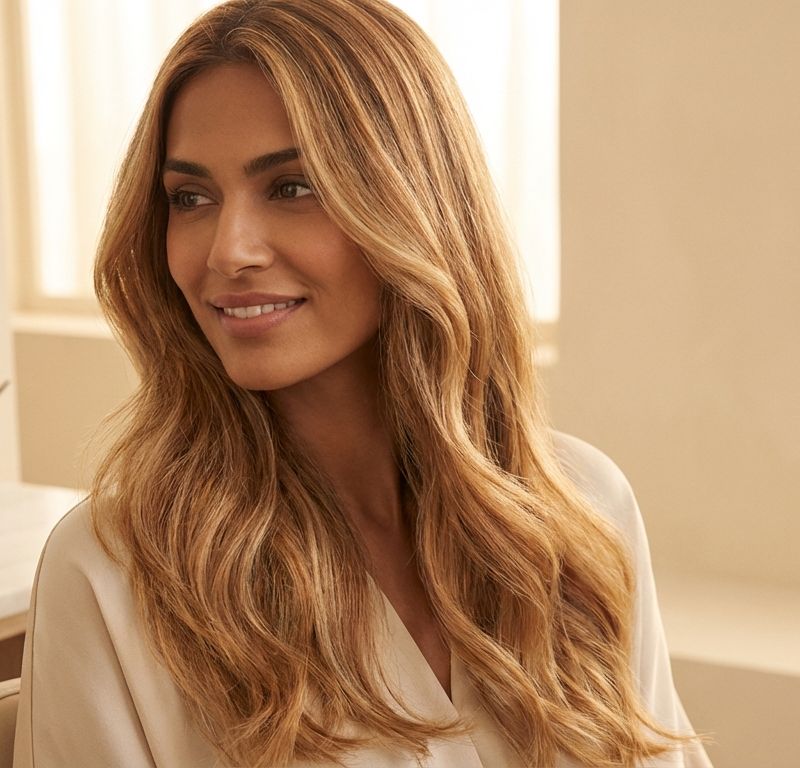
You’ve saved the photo. You’ve stared at it for days. But you still don’t know if that honey blonde would actually look good on you.
Choosing a hair color based on someone else’s photo is like picking a dress from a catalog — it might look completely different on you. Your skin tone, undertone, and natural contrast determine which colors flatter you and which wash you out.
This guide breaks down exactly how to find the best hair color for your skin tone — and how to see it on your own face before committing.
How skin tone determines your ideal hair color
The best hair color for your skin tone depends on three specific factors: your undertone, your natural contrast level, and your eye color. It’s not about personal preference — it’s about color theory.
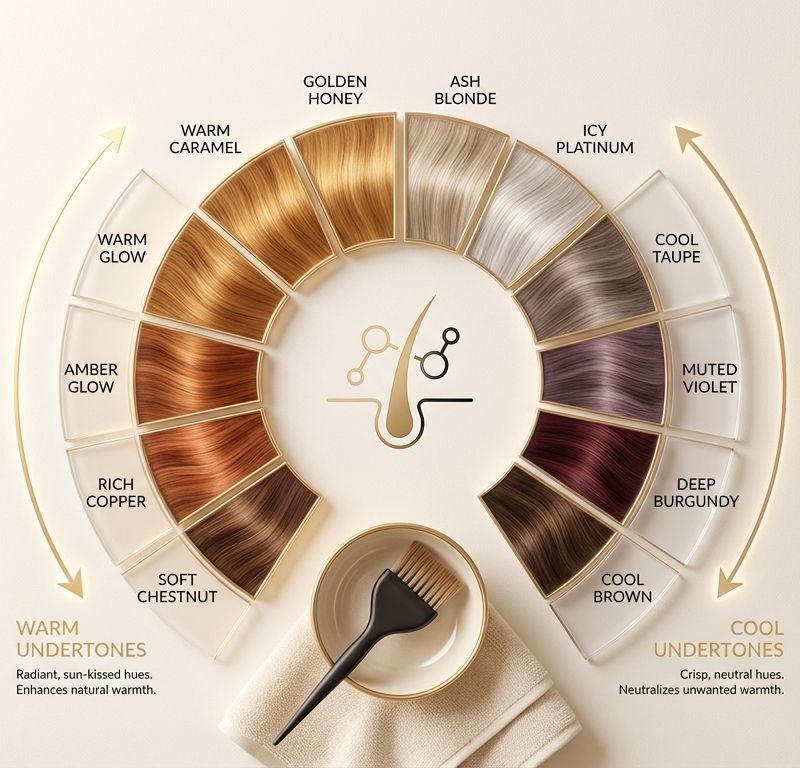
Undertone: warm, cool, or neutral
Your undertone is what makes certain colors light up your face and others make you look tired.
| Undertone | Signs | Colors that flatter | Colors to avoid |
|---|---|---|---|
| Warm | Greenish veins, tan easily, gold jewelry suits you | Honey blonde, copper, golden brown, chocolate | Ash blonde, blue-black |
| Cool | Bluish veins, burn easily, silver jewelry suits you | Ash blonde, cool brown, black, burgundy | Golden blonde, intense copper |
| Neutral | Mix of both signs, both gold and silver work | Almost anything — especially caramel, bronde, hazel | Extreme warm or cool tones |
Not sure about your undertone? Take our free color analysis quiz. Nine questions, three minutes, and you’ll know your color season.
Natural contrast: high, medium, or low
Contrast is the difference between your skin color and your natural hair color.
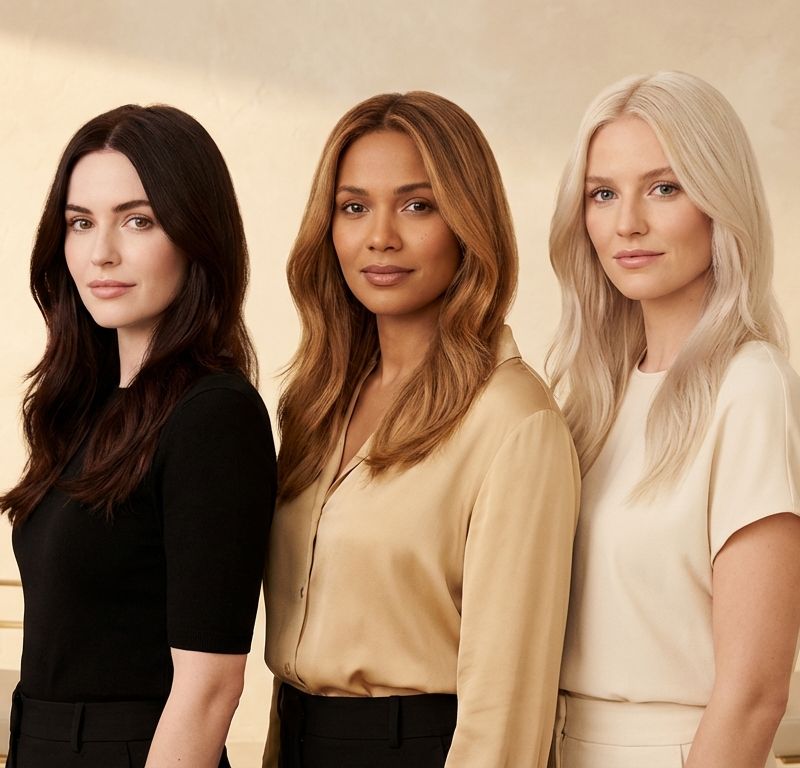
- High contrast (fair skin + dark hair): dramatic changes work well. Platinum blonde or jet black can look stunning.
- Medium contrast (skin and hair in similar tones): intermediate shades like copper brown or dark blonde are the most harmonious.
- Low contrast (light skin + light hair, or dark skin + dark hair): subtle shifts of 1-2 levels are the most flattering.
Eye color
Your eyes complete the picture. Hair colors that make your eyes pop = hair colors that flatter you.
| Eye color | Hair colors that enhance |
|---|---|
| Dark brown | Caramel, copper, honey blonde |
| Light brown / hazel | Chocolate, bronde, golden highlights |
| Green | Copper, burgundy, ash blonde |
| Blue | Ash blonde, cool brown, platinum |
| Gray | Black, ash blonde, burgundy |
How to try a color before going to the salon
Theory is useful, but nothing replaces seeing the color on your face. According to a Perfect Corp. study, 78% of people who try a color virtually feel more confident when they arrive at the salon.
Option 1: AI color simulator (most realistic)
The Blendsor hair color simulator uses generative AI — not a filter. The AI creates a brand-new image where the color integrates with your hair’s actual texture.
How it works:
- Upload a front-facing photo with good lighting
- Choose from 17 predefined colors
- Get your photorealistic result in 3-10 seconds
- Free, no sign-up, up to 3 simulations per day
The difference from Instagram filters or makeup apps: the simulator doesn’t “paint” your hair. It generates a new image that respects your texture, volume, and natural highlights.
Option 2: online color analysis quiz
If you prefer a step-by-step approach before seeing visual results, the color analysis quiz evaluates your undertone, contrast, and style to recommend a personalized palette.
Option 3: professional consultation
For changes of more than 3 levels (for example, from dark brown to blonde), it’s always worth consulting a professional colorist. The simulator gives you the perfect visual reference to bring to your appointment.
The 10 most flattering hair colors (and who they suit)
Based on 2026 trends and color theory principles, these are the colors that work best for each profile:
| Color | Best for | Maintenance level | Try it |
|---|---|---|---|
| Honey blonde | Warm undertones, medium contrast | Medium (touch-up every 6-8 weeks) | Simulate here |
| Chocolate brown | Universal, especially neutral undertones | Low | Simulate here |
| Copper | Warm undertones, green/brown eyes | High (copper fades quickly) | Simulate here |
| Ash blonde | Cool undertones, high contrast | High (requires regular toning) | Simulate here |
| Bronde (golden brown) | Almost all profiles | Low-medium | Simulate here |
| Blue-black | Cool undertones, fair skin | Very low | Simulate here |
| Caramel | Warm-neutral undertones | Medium | Simulate here |
| Burgundy | Cool undertones, dark eyes | Medium-high | Simulate here |
| Strawberry blonde | Warm undertones, fair skin | High | Simulate here |
| Hazelnut | Universal, especially medium skin | Low | Simulate here |
Common mistakes when choosing a hair color
These are the three mistakes that keep happening — and how to avoid them.
-
Choosing only from a reference photo: The same platinum blonde photo looks completely different on warm skin versus cool skin. A color that looks incredible on someone else may not flatter you at all. Solution: try it on your own photo first with the simulator.
-
Ignoring maintenance level: An intense copper requires touch-ups every 3-4 weeks. A chocolate brown needs attention every 8-10 weeks. If you don’t have time to maintain it, choose lower-maintenance colors.
-
Attempting too drastic a change at once: Going from brunette to platinum blonde in one session isn’t realistic (and can seriously damage your hair). Changes of more than 3-4 levels require multiple progressive sessions.
Frequently asked questions
How do I know what hair color suits my skin tone without going to a salon?
The quickest way is to use an AI color simulator. Upload your photo, pick a color, and see the result in seconds. You can also take an online color analysis quiz to determine your undertone and which palette works best.
Does age affect which hair color suits me?
Not directly. What changes with age is skin tone (it tends to lose saturation) and the appearance of gray hair. This can mean colors that used to flatter you no longer work as well. The general rule: as you age, slightly lighter and warmer tones tend to brighten the face more.
How accurate are AI hair color simulators?
They provide a visual approximation, not a guarantee. AI generative simulators are significantly more realistic than AR filters, especially for techniques like balayage or highlights. Use it as a reference for your colorist, not as an exact result.
Can I rely solely on my undertone to choose a hair color?
Undertone is the most important factor, but not the only one. Natural contrast and eye color also play a role. That’s why we recommend taking the complete quiz rather than basing your decision only on whether you’re “warm” or “cool.”
What if I don’t know my undertone?
Two quick tricks: check the color of your wrist veins (greenish = warm, bluish = cool) and try gold versus silver jewelry in front of a mirror. Whichever one brightens your face more indicates your undertone. For a more precise result, take the color analysis quiz.
Does the simulator work on curly or gray hair?
Yes. The AI respects your natural hair texture. With gray hair, it shows the result assuming full coverage — actual coverage depends on the dye type and technique used.
Key takeaways
- Your skin undertone is the key: warm → golden tones; cool → ashy tones; neutral → almost anything works.
- Natural contrast matters: subtle changes for low contrast, dramatic for high contrast.
- Try before you commit: the AI color simulator shows you the result on your own photo in seconds, for free.
Try your ideal color now
Want to see how honey blonde, copper, or that chocolate brown you’ve been eyeing would look on you?
Try the Blendsor color simulator — upload your photo, pick a shade, and discover which one flatters you most. Free, no sign-up required.
Related articles


Practice with our free tools
Calculators, neutralization wheel, AI consultation...
Apply this theory with precision
Blendsor analyzes 70+ variables and generates exact formulas based on real colorimetry. Try our free color consultation or download the app.
Download freeWritten by the Blendsor team
Professional hair colorimetry experts with experience in AI-assisted formulation. We combine color science, salon practice and technology to help colorists formulate with precision.