How to Change Hair Color Without Damage: What You Need to Know
Learn how to change hair color while minimizing damage. Dye types, care routines, when to see a pro, and options that don't require bleaching.
Blendsor
Blendsor Team
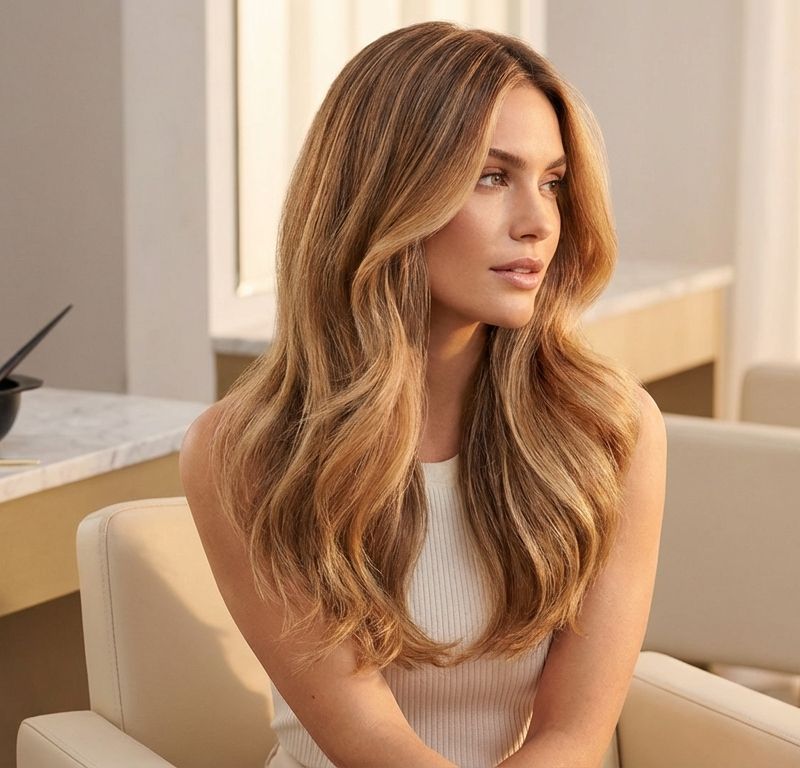
You want to change your color, but you don’t want to end up with dry, broken, lifeless hair. It’s the number one concern when someone considers coloring.
The reality: every chemical process affects hair to some degree. But there’s an enormous difference between a well-planned change and a poorly executed one. The key lies in choosing the right type of dye, respecting timing, and caring for your hair before, during, and after.
Dye types ranked by damage level
Not all dyes work the same way or affect hair equally. The difference comes down to whether they open the cuticle (potential damage) or deposit color on top (minimal damage).
| Dye type | How it works | Duration | Damage level | Best for |
|---|---|---|---|---|
| Permanent dye | Opens cuticle with ammonia + oxidizes melanin | Until it grows out | Medium-high | Gray coverage, permanent changes |
| Semi-permanent | Deposits on the cuticle surface | 6-12 washes | Low | Testing a color, refreshing tone |
| Demi-permanent | Slightly penetrates without ammonia | 20-28 washes | Low-medium | Shine, toning, partial gray coverage |
| Vegetable dye (henna) | Adheres to hair surface | Permanent (builds up) | Very low | Those seeking natural options |
| Gloss / color treatment | Deposits pigment + conditioner | 4-8 washes | Almost zero | Shine, subtle correction, first color experience |
Simple rule: the longer the color lasts, the more aggressive the process. Temporary or semi-permanent changes are always safer for your hair.
Changes that DON’T require bleaching
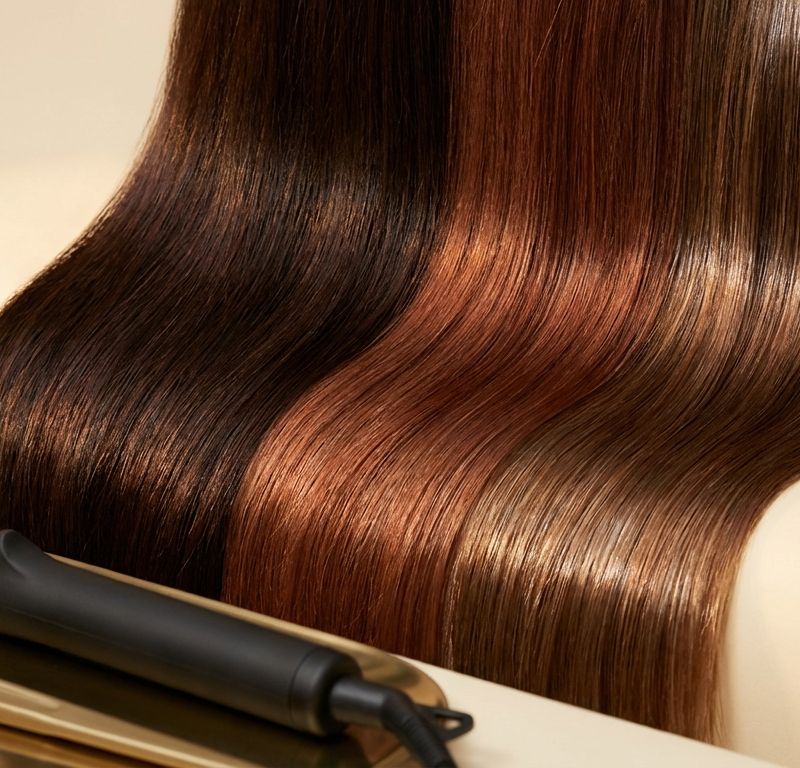
If you want to change your color without going through bleaching (the most aggressive process), here are your options:
Going darker (always safe)
Going from blonde to brown, or from light brown to dark brown, doesn’t require bleaching. You only need a permanent or demi-permanent dye in the desired shade. Damage is minimal.
Changing tone without changing level
Going from golden brown to ash brown, or from warm blonde to cool blonde, is a tonal shift that generally doesn’t require bleaching. A toner or gloss is usually enough.
Adding dimension with highlights
Techniques like balayage or babylights lighten only sections of hair, reducing damage compared to all-over bleaching. Untreated hair acts as a “safe zone.”
Want to see how these changes would look on you? Try them in the Blendsor color simulator — upload your photo and choose from 17 colors. Free, no sign-up.
7 rules to minimize color damage
1. Start with a hair assessment
Before any change, evaluate your hair’s condition: elasticity, porosity, chemical history. If your hair is already damaged, treat it first before adding more chemistry.
2. Respect timing between sessions
Minimum 4-6 weeks between any chemical process. Hair needs time to recover. Sessions too close together accumulate damage.
3. Use bond builders
Products like Olaplex, K18, or Fibreplex protect your hair’s internal bonds during chemical processing. They’re not optional if you’re lightening.
4. Choose the lowest developer volume possible
A professional knows how to adjust peroxide volume (10, 20, 30, 40 vol.) based on the desired result. More volume = more lift, but also more damage. For gray coverage, 20 vol. is usually sufficient.
5. Don’t wash your hair right before coloring
Your scalp’s natural oils act as a protective barrier. Coloring freshly washed hair removes that protection. Ideal: don’t wash for 24-48 hours before.
6. Invest in post-color products
Sulfate-free shampoo, weekly mask, heat protectant, oil for ends. Aftercare is as important as the process itself.
7. Reduce heat styling
Colored hair is more susceptible to heat damage. If you can, air dry. If you use a flat iron or blow dryer, always with protectant and medium temperature.
Signs your hair needs a break
It’s not always the right time to color. If you notice any of these signs, it’s time to pause and recover first:
- Excessive elasticity: wet hair stretches like gum and doesn’t spring back
- Ends breaking when you comb: a sign of cuticle damage
- Color fading within days: overly porous hair can’t retain pigment
- Irritated scalp: redness, itching, or flaking
In these cases, 4-8 weeks of repair treatments before coloring again.
Try before you commit
The best way to reduce damage is to get it right the first time. There’s no worse scenario than coloring your hair a shade you don’t like and having to correct it (double process = double damage).
The Blendsor color simulator lets you see the result before committing. Try multiple colors on your photo, choose the one you love most, and bring that reference to your colorist.
Frequently asked questions
Can you change hair color without any damage at all?
Technically, any chemical process alters hair structure to some degree. But semi-permanent dyes, glosses, and toning techniques cause practically unnoticeable damage. For dramatic changes, some damage is inevitable but can be greatly minimized with proper care.
Do ammonia-free dyes cause less damage?
Yes, but context matters. Ammonia-free dyes use alternative agents (like MEA) that open the cuticle less. They cover fewer grays and don’t last as long, but they’re significantly gentler on the hair fiber.
How often can you dye your hair per year without damage?
It depends on the dye type. With permanent dye, 4-6 times per year (every 2-3 months) is a sustainable pace if you care for your hair between sessions. With semi-permanent or gloss, you can color more frequently since the damage is minimal.
What’s worse for hair: bleaching or dyeing?
Bleaching is significantly more aggressive. Dye deposits pigment; bleaching removes it by opening the cuticle and destroying melanin. Both combined (bleach + dye) is the most damaging — which is precisely what’s needed to go from dark to light.
Does virgin (never-colored) hair take less damage from coloring?
Generally yes. Virgin hair has an intact cuticle and responds better to chemical processes. Previously treated hair already has a compromised cuticle and is more susceptible to cumulative damage.
Is it possible to lighten hair without bleach?
For 1-2 levels, yes — a high-lift dye can lighten without pre-bleaching. For more than 2 levels of lift, bleaching is necessary.
Key takeaways
- Choose the right dye type: semi-permanent to experiment, permanent for lasting changes, gloss for minimal damage.
- Respect timing: minimum 4-6 weeks between processes.
- Care before, during, and after: bond builders, sulfate-free products, heat protection.
- Try before you dye: the Blendsor simulator saves you costly mistakes (for your hair and your wallet).
Try your new color risk-free
Want to see how you’d look before putting chemicals in your hair? The Blendsor color simulator shows you on your own photo, in seconds, no sign-up.
A better color change starts with an informed decision.
Related articles

Practice with our free tools
Calculators, neutralization wheel, AI consultation...
Master this technique with exact formulas
Blendsor generates the precise formula for each technique with your brand products. Try the mix calculator or download the app.
Download freeWritten by the Blendsor team
Professional hair colorimetry experts with experience in AI-assisted formulation. We combine color science, salon practice and technology to help colorists formulate with precision.