Color Drenching: The Technique Replacing Balayage in 2026
What is color drenching, how to formulate it, and why it's replacing balayage. Professional guide with formulas by color family, technique, and mistakes to avoid.
Blendsor
Blendsor Team
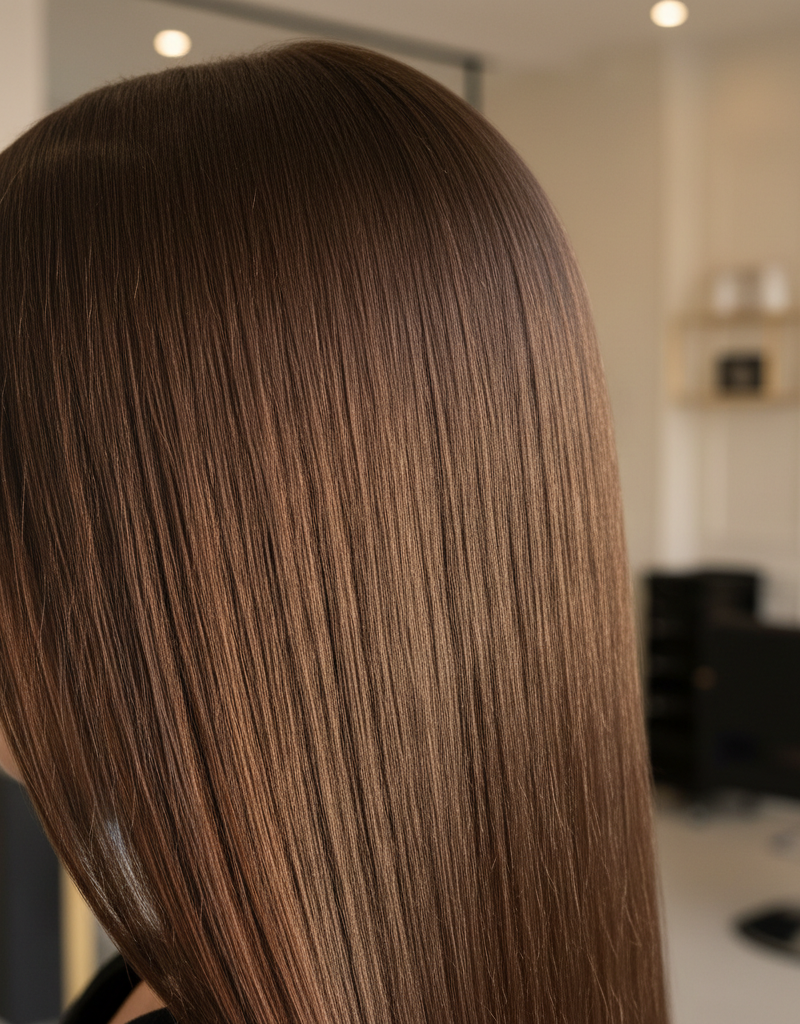
Are your clients starting to ask for “a solid color, no highlights, something intense and shiny”?
If you’re a professional colorist, you’ve noticed the shift. After years of balayage, highlights, and dimension techniques, the trend is swinging in the opposite direction: a single tone, saturated from root to tip, with depth that comes from undertones rather than contrast.
This is color drenching, and according to The Zoe Report, it’s the technique replacing balayage in 2026. This article is part of our complete guide to professional coloring techniques.
Quick summary: Color drenching saturates hair root to tip in a single intensely pigmented shade, with depth created by undertones rather than contrast. Formulation follows a primary + secondary double-reflect structure (e.g., 5.0 + 5.35 at 60/40 with 20 vol). A final gloss — 10 vol on damp hair for 5-10 minutes — is mandatory to achieve the mirror shine that defines the technique.
What Is Color Drenching and Why Is It Trending?
Color drenching is a total coloring technique that saturates hair root to tip in one intensely pigmented shade — no highlights, no contrast. Depth comes from secondary undertones (e.g., .35, .44, .66) rather than dimension between tones. Chair time is 1-2 hours vs 2-4 for balayage, with no lightener required.
Color drenching is a total coloring technique that saturates hair from root to tip in a single, intensely pigmented shade. Unlike balayage or highlights, it doesn’t seek visible contrast or dimension. The entire head is “drenched” in the same color.
But here’s the key: it’s not flat color. The depth comes from carefully chosen undertones that make hair shift subtly under different lighting. A chocolate brown with warm red undertone, for example, looks different under natural light than under artificial light.
Why it’s replacing balayage
If you’re not clear on the differences between the techniques it’s replacing, our balayage vs highlights comparison covers the fundamentals.
| Factor | Balayage | Color drenching |
|---|---|---|
| Effect | Contrast, visible dimension | Total saturation, subtle depth |
| Maintenance | Touch-up every 8-12 weeks | Gloss every 4-6 weeks, simpler |
| Chair time | 2-4 hours | 1-2 hours |
| Damage | Lightener + toner | Color only (no lightener) |
| Best for | Those wanting natural contrast | Those wanting impact and intense shine |
| Cost | $150-400 | $80-200 |
According to Wella Professional, color drenching paired with a clear or tonal gloss makes hair look healthier, richer, and more vibrant.
How Do You Formulate Color Drenching Professionally?
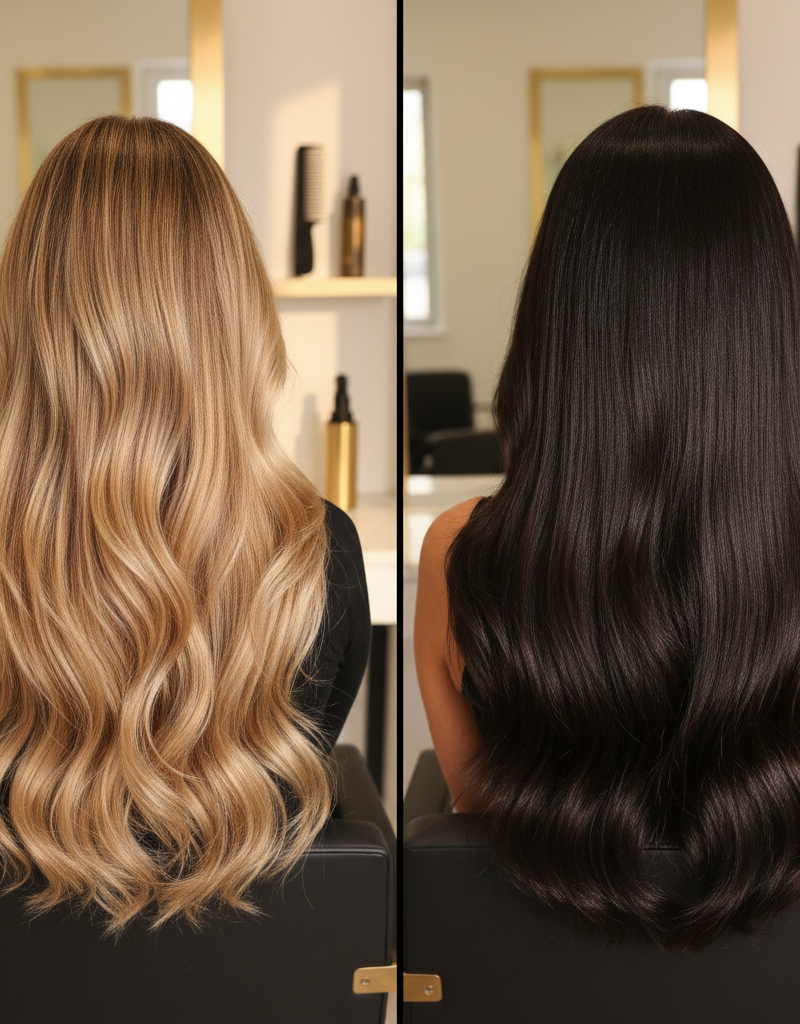
Color drenching formulas follow a primary + secondary double-reflect structure. The primary gives the base level; the secondary creates the vibrancy that shifts under light. Standard ratio is 60/40 or 50/50 with 20 vol, 30-35 minutes. Never use a pure .0 shade alone — flat results without undertone are the most common formulation mistake.
Formulation in color drenching is simpler than balayage, but requires precision in undertone selection. A half-tone error shows across the entire head, not just a few highlights.
Formulas by color family
| Family | Base formula | Secret undertone | Developer | Time |
|---|---|---|---|---|
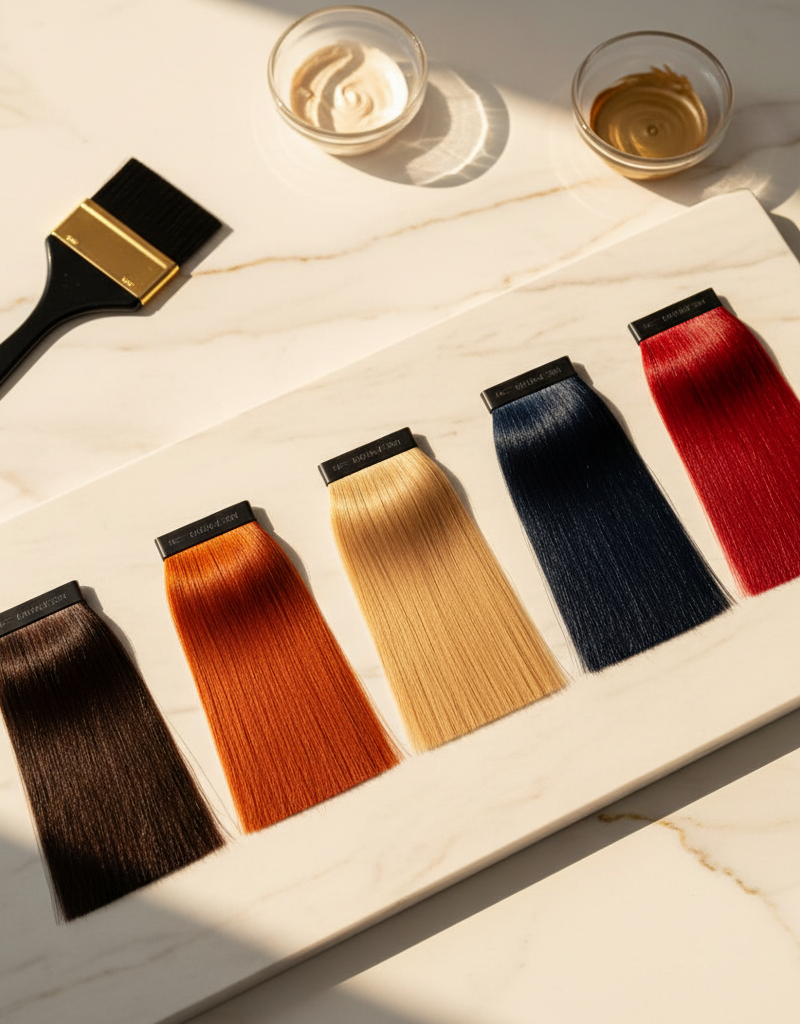
| Chocolate brown | 5.0 + 5.35 (60/40) | Warm mahogany | 20 vol. | 35 min |
| Deep black | 2.0 + 1.1 (70/30) | Cool blue | 20 vol. | 30 min |
| Intense copper | 6.4 + 6.44 (50/50) | Double copper | 20 vol. | 35 min |
| Solid honey blonde | 8.3 + 8.0 (60/40) | Golden neutral | 20 vol. | 30 min |
| Cherry red | 5.6 + 5.66 (50/50) | Double red | 20 vol. | 35 min |
| Espresso | 4.0 + 3.0 (50/50) | Deep neutral | 20 vol. | 35 min |
Pro tip: The secret of color drenching is the proportion of reflects. Using a double-reflect shade (.44, .66, .35) as the secondary gives that “drenched” intensity you can’t get with simple series. It’s the difference between flat brown and brown that vibrates.
The final gloss: mandatory
Color drenching without gloss is just regular hair color. What makes it a trend technique is the final step:
- Clear gloss: Seals the cuticle, adds mirror-like shine
- Tonal gloss: Reinforces the chosen undertone and amplifies depth
- Apply on damp hair: 5-10 minutes, no heat
Always use 10 vol. or lower developer for the gloss. The goal is to deposit and seal, not lift.
What Is the Step-by-Step Color Drenching Technique?
Color drenching follows nine steps: diagnose porosity and color history, do a mandatory strand test on previously lightened hair, apply filler base to porous ends before color, apply formula root to mid-length first, saturate ends in the last 10 minutes, check visually every 10 minutes, emulsify 2-3 minutes before rinsing, apply gloss on damp hair for 5-10 minutes, rinse with cool water.
Preparation
- Diagnose: Natural level, porosity, color history. In color drenching, porosity is critical because uneven absorption shows much more than in balayage
- Strand test is mandatory: On previously lightened or highlighted hair, color can absorb unevenly
- Pre-color on ends: If the ends are porous, apply a filler base (.0 diluted) before the final color
Application
- Roots first: Apply formula from roots to mids, leaving ends for last
- Total saturation: Every section must be completely covered. Don’t skimp on product. The name says it: drench
- Ends last: Apply on ends during the last 10 minutes of processing (they absorb faster)
Processing and finishing
- Visual check every 10 minutes: Open one front section and one back section
- Emulsify before rinsing: Add water to the hair and massage for 2-3 minutes. This evens out color and closes the cuticle
- Apply the gloss: On damp hair, 5-10 minutes, rinse with cool water
Which Shades Work Best for Color Drenching?
The highest-impact shades for color drenching are deep espresso (4.0+3.0), blue-black (2.0+1.1), fiery copper (6.4+6.44), and cherry red (5.6+5.66). Solid honey blonde requires uniform pre-lightening first. Shades with natural depth and rich undertones outperform flat neutrals in total-saturation techniques.
Not all colors work equally well in color drenching. The shades that respond best are those with natural depth and rich undertones:
| Shade | Impact level | Ease | Best for |
|---|---|---|---|
| Deep espresso | Very high | Easy | Clients who want drama without risk |
| Milk chocolate | High | Easy | Universal base, rejuvenating |
| Fiery copper | Very high | Medium | Warm skin tones, bold personalities |
| Solid honey blonde | High | Medium-high | Requires uniform pre-lightening |
| Blue-black | Very high | Easy | Most impactful, extreme shine |
| Cherry red | High | Difficult | High pigmentation, potential staining |
Pro tip: For clients transitioning from balayage to color drenching, don’t try to cover highlights in a single session. Do a pre-pigmentation session to fill porous areas, then apply color drenching. Two sessions = professional result.
What Are the Most Common Color Drenching Mistakes?
The four mistakes that ruin color drenching results are: skipping the filler on porous or highlighted hair (causes dark absorption spots), applying formula to ends from the start instead of the last 10 minutes (over-processes and darkens ends), skipping the mandatory final gloss (produces flat regular color instead of the mirror-shine technique), and using pure .0 shades without a secondary reflect.
- Forgetting filler on porous hair: If your client has highlights or previous lightening, porous areas absorb more pigment. Result: dark spots on a lighter background. Solution: pre-pigment with a diluted .0 shade
- Same processing time for roots and ends: Ends are more damaged and absorb faster. Apply on ends during the last 10 minutes, not at the start
- Skipping the gloss: Without gloss, the result is flat color. The gloss is what transforms regular color into color drenching with that characteristic mirror shine
- Choosing a shade without undertone: Pure series (.0) give flat, lifeless results. Always include a secondary reflect to create the depth that shifts with light
Frequently asked questions
Does color drenching damage hair?
Color drenching is less aggressive than balayage because it doesn’t require lightener. It works only with permanent color and developer. The final gloss seals the cuticle and adds shine, leaving hair in better condition than before the service.
Can I do color drenching over existing highlights?
Yes, but you need a pre-pigmentation session to fill the lightened areas. Without this step, color absorbs unevenly and the result looks patchy instead of uniform.
How long does color drenching last?
With a maintenance gloss every 4-6 weeks, color drenching can last 3-4 months with good intensity. Without the maintenance gloss, saturation starts fading at 6-8 weeks.
What’s the difference between color drenching and color melting?
Color melting blends 2-3 shades with no visible lines, creating gradual transitions. Color drenching uses a single shade from root to tip, with depth that comes from the undertone rather than from transitions between shades.
Key takeaways
- Color drenching = one shade, maximum saturation: Depth comes from undertones, not from contrast between highlights
- The gloss is mandatory: Without it, it’s regular color. With it, it’s the trend technique of 2026
- Faster, cheaper, less damage than balayage: 1-2 hours vs 2-4, no lightener needed
Calculate professional formulas with AI
Want to generate custom color drenching formulas based on each client’s target shade and starting level?
Use the hair color mixing calculator to calculate exact primary-to-secondary reflect ratios for any color drenching shade.
Try Blendsor free - 5 formulas per month, no credit card required.
Have you tried color drenching in your salon? What shade gave you the best results?
Related articles
Practice with our free tools
Calculators, neutralization wheel, AI consultation...
The Monday Briefing
Color techniques and trends for professionals. No spam.
Master this technique with exact formulas
Blendsor generates the precise formula for each technique with your brand products. Try the mix calculator or download the app.
Download freeWritten by the Blendsor team
Professional hair colorimetry experts with experience in AI-assisted formulation. We combine color science, salon practice and technology to help colorists formulate with precision.