Color Melting Technique: Step-by-Step for Seamless Transitions
Learn the color melting technique step-by-step with professional formulas by level. Seamless transitions your clients will be asking for in 2026.
Blendsor
Blendsor Team
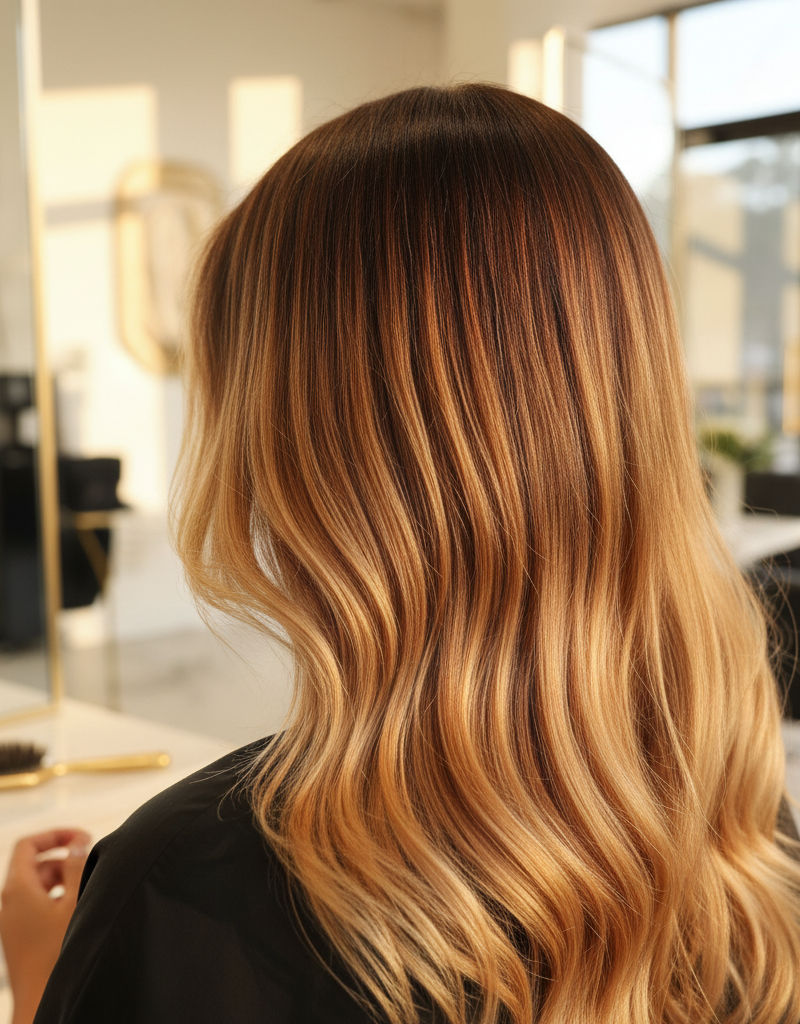
Have you ever had a client ask for a gradient “with no lines,” but even with balayage there’s still a visible transition between the root and the ends?
If you’re a professional colorist, you know exactly what that feels like. That moment when the client points to an Instagram photo and says “I want this, where you can’t tell where one color starts and the other ends.” And you think: that’s not balayage, that’s something else.
That’s color melting. A technique that blends the base color with lightened tones to create the illusion that one shade melts into the next, with no visible demarcation. According to the Society of Cosmetic Chemists, gradual transition techniques best preserve hair fiber integrity because they distribute the oxidizing agent progressively. In this guide, you’ll learn exactly how to execute it, with real formulas by starting level. This article is part of our complete guide to professional coloring techniques.
What Is Color Melting and How Does It Work
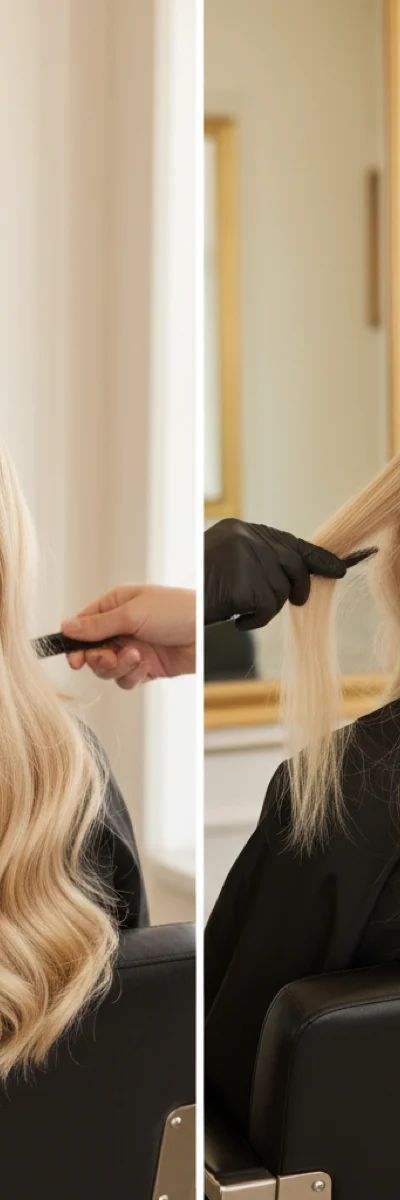
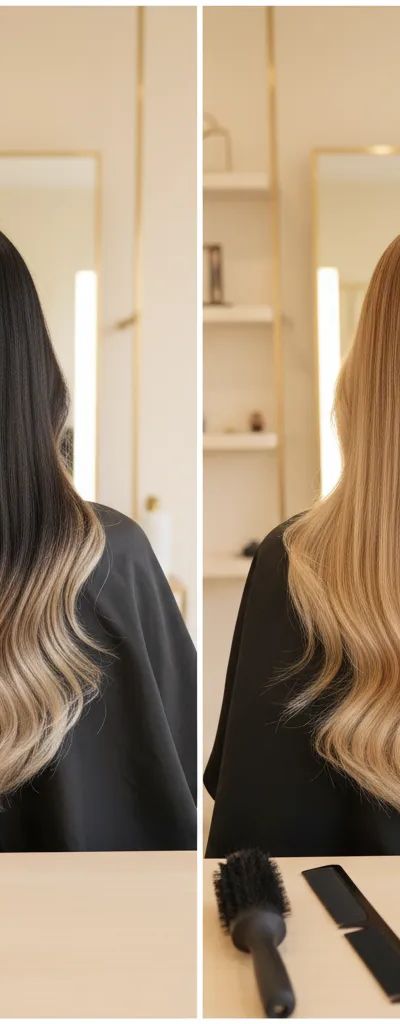
The color melting hair technique is a coloring method that involves applying two or more consecutive tones from root to ends, blending each junction so that no demarcation line exists. The result is an ultra-subtle gradient where each tone “melts” into the next.
Unlike other lightening techniques, color melting doesn’t use foils or freehand painting. It’s applied directly onto the hair, section by section, and the key is the overlap zone: the area where one tone meets the next.
The process works like this:
- Divide the hair into horizontal sections
- Apply the darkest tone at the root (usually the base color or a shade close to it)
- Apply a mid-tone through the mids
- Apply the lightest tone on the ends
- At each transition zone, blend both tones with the brush directly on the strand
The magic is in step 5. That manual blending is what sets color melting apart from a simple three-color gradient.
Why It’s Trending in 2026
Vogue Spain dedicated a feature to color melting in November 2025, and Glamour UK included it in their February 2026 trends roundup. The reason is clear: it’s the technique that best answers the demand for “I want a change that looks natural.” Less contrast than an ombre, more blended than a balayage.
Color Melting vs Balayage vs Ombre vs Babylights
This is the most common question. And the short answer is: it depends on the type of transition you’re looking for.
| Feature | Color Melting | Balayage | Ombre | Babylights |
|---|---|---|---|---|
| Application method | Direct, no foil | Freehand brush, no foil | Horizontal gradient | Ultra-fine weave with foil |
| Transition type | Total fusion between tones | Gradual sweep | Contrast between root and ends | Diffuse dimension, no gradient |
| Demarcation line | Invisible | Soft but visible | Marked (intentional) | Not applicable |
| Levels of lift | 1-3 levels | 2-4 levels | 3-6 levels | 1-2 levels |
| Maintenance | Every 8-12 weeks | Every 8-14 weeks | Every 10-16 weeks | Every 6-10 weeks |
| Best for | Seamless transitions | Sun-kissed effect | Dramatic change | Natural shine without visible change |
Pro tip: Color melting is ideal as a complementary technique. If you’ve already done a balayage or foilyage and the client wants softer transitions at the next touch-up, melting is your perfect tool.
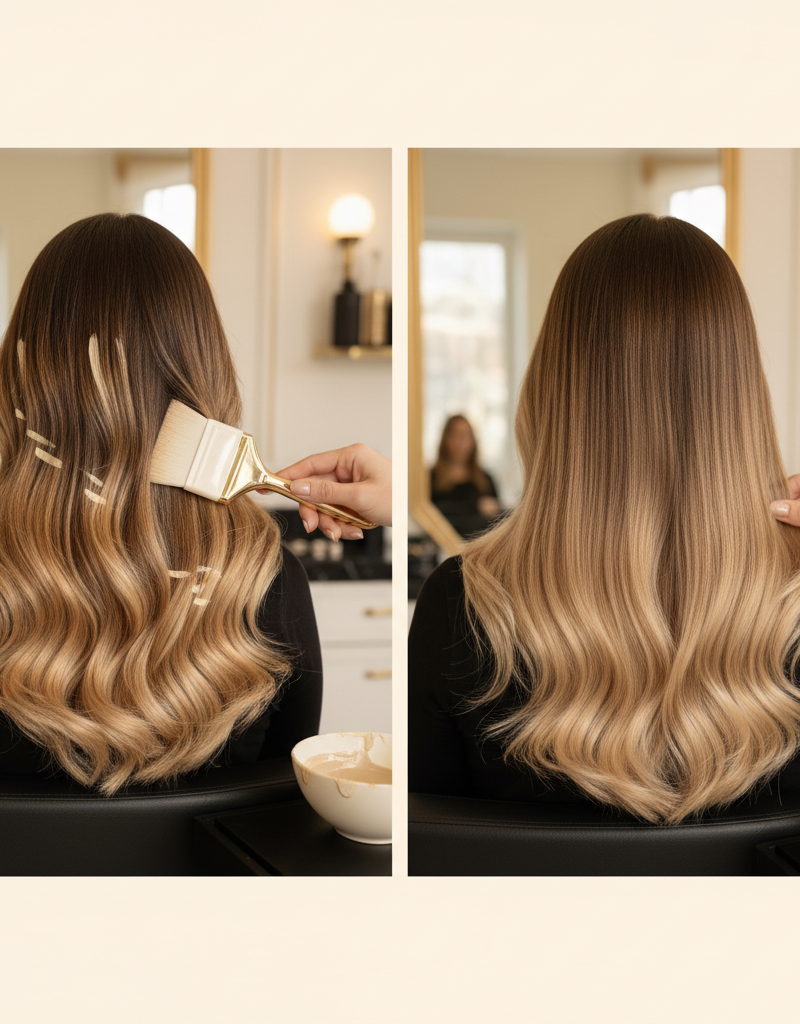
The key difference: with balayage, tones are placed on the hair. With color melting, tones are fused together. It’s a matter of how you work the junction zone.
Color Melting Step by Step
This protocol works for most starting levels. Adjust formulas according to the table in the next section.
Step 1: Diagnosis and Tone Selection
Assess the natural level, color history, and porosity. Select 3 consecutive tones: one for root (darkest), one for mids (intermediate), and one for ends (lightest). The maximum distance between root tone and end tone should be 3 levels.
Step 2: Hair Preparation
Work on dry, unwashed hair (1-2 days). Don’t apply any pre-products. Divide the hair into 4 quadrants and within each quadrant, create horizontal sections 1-2 cm thick.
Step 3: Root Tone Application
Apply the darkest tone from the root to where you want the transition to begin (usually 3-5 cm). Don’t over-saturate — you need the product to be workable for the next step.
Step 4: Mid-Tone Application
Apply the mid-tone starting 1 cm before where the root tone ends. That overlap is the key. Extend through the mids.
Step 5: First Transition Blending
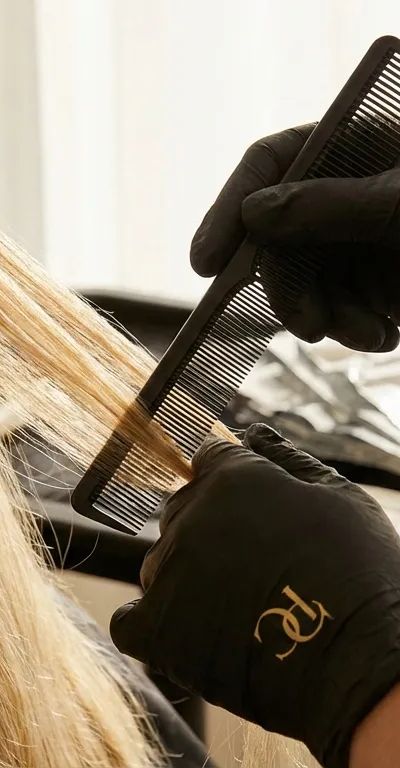
Using the edge of the brush, blend the zone where the root and mid-tones overlap. Gentle vertical strokes, top to bottom. Don’t drag the product — melt it.
Step 6: End Tone Application
Apply the lightest tone on the ends, starting 1 cm before where the mid-tone ends. Same overlap logic.
Step 7: Second Transition Blending
Repeat the blending with the edge of the brush at the junction between mids and ends.
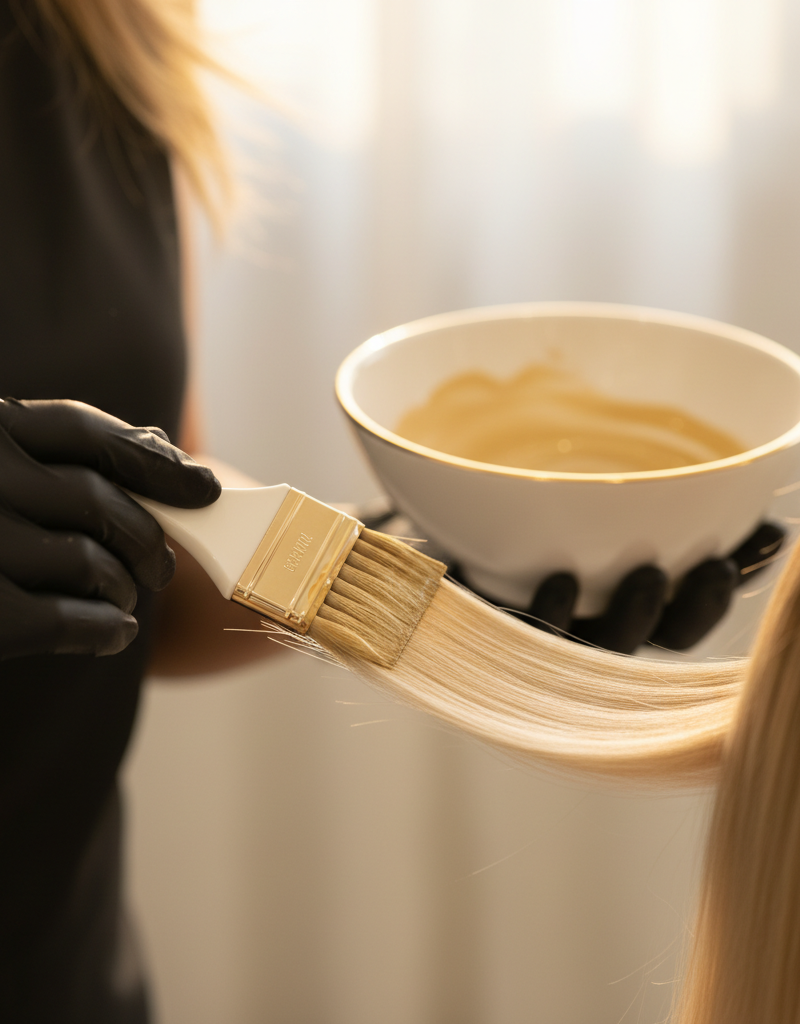
Step 8: Processing and Rinsing
Processing time: 25-35 minutes depending on the developer volume and the level of lift needed. Monitor the transition zones — they should process at the same rate. Rinse with lukewarm water, root to ends.
Color Melting Formulas by Level
These are reference formulas. Each brand has its own numbering system, but the principles remain the same.
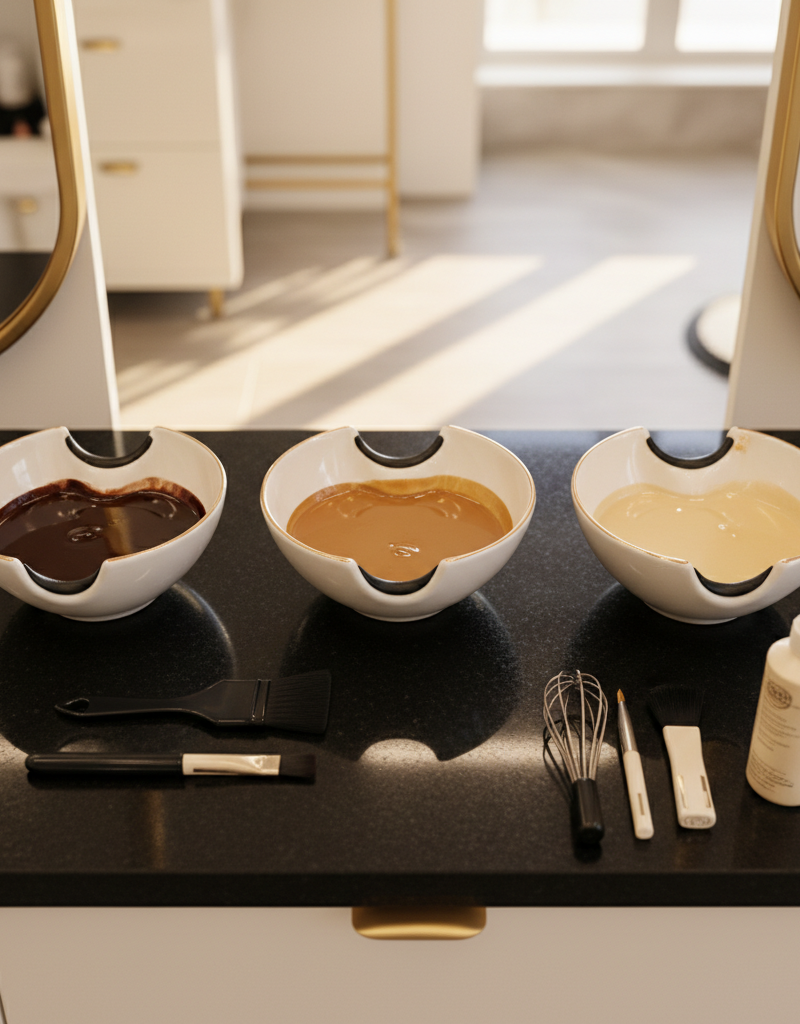
Color Melting on Dark Hair (Levels 3-5)
| Zone | Target Level | Base Formula | Developer | Ratio |
|---|---|---|---|---|
| Root | 4 (medium brown) | 4.0 + 4.35 | 20 vol | 1:1 |
| Mids | 6 (dark blonde) | 6.0 + 6.34 | 20 vol | 1:1 |
| Ends | 7 (medium blonde) | 7.0 + 7.3 | 20 vol | 1:1 |
Color Melting on Medium Hair (Levels 6-7)
| Zone | Target Level | Base Formula | Developer | Ratio |
|---|---|---|---|---|
| Root | 6 (dark blonde) | 6.0 + 6.1 | 20 vol | 1:1 |
| Mids | 8 (light blonde) | 8.0 + 8.31 | 20 vol | 1:1 |
| Ends | 9 (very light blonde) | 9.0 + 9.31 | 20 vol | 1:1.5 |
Color Melting on Light Hair (Levels 8-10)
| Zone | Target Level | Base Formula | Developer | Ratio |
|---|---|---|---|---|
| Root | 8 (light blonde) | 8.1 + 8.01 | 10 vol | 1:1.5 |
| Mids | 9 (very light blonde) | 9.1 + 9.01 | 10 vol | 1:1.5 |
| Ends | 10 (platinum blonde) | Toner 10.1 + 10.01 | 10 vol | 1:2 |
Pro tip: At high levels (8-10), drop to 10 volume. You don’t need lifting power — you need to deposit tone. Color melting on blondes is more of a toning exercise than a lifting one.
Common Color Melting Mistakes
These are the ones seen most frequently:
-
Leaving demarcation lines between zones: If you don’t blend enough in the overlap zones, you end up with three color bands instead of a transition. Solution: spend twice as long blending as you do applying
-
Choosing tones that are too far apart: If you go from level 4 at the root to level 9 at the ends, it’s impossible to create a believable transition with just 3 tones. Maximum 3 levels of difference, or add a fourth intermediate tone
-
Over-saturating product at the root: Too much product at the root migrates downward by gravity and contaminates the mid-zone. Apply just enough
-
Using high developer to compensate: If the tone isn’t lifting as expected, don’t go from 20 to 30 volume. Color melting needs control, not power. More time with less volume is the rule — the same principle we explain for bleaching with metals present
-
Not respecting overlap timing: The transition zones need to process at the same time as the rest. If you apply the root 10 minutes before the ends, the root will be over-processed when the ends are barely starting
Frequently Asked Questions
What is color melting for hair?
Color melting is a coloring technique that fuses several consecutive tones onto the hair to create invisible transitions, with no demarcation line. Unlike balayage or highlights, the tones are blended directly into each other during application.
What is the difference between color melting and balayage?
Balayage applies product with brushstrokes onto the hair and transitions depend on brush pressure. Color melting applies consecutive tones and manually fuses them at the junction zones. The melting result is more subtle — the transition is practically invisible.
How long does a color melt last?
Between 3 and 6 months depending on the contrast and growth rate. Since there’s no demarcation line at the root, growth integrates more naturally than with other techniques. Touch-ups are typically every 8-12 weeks.
How much does a color melt cost?
Pricing varies by salon and hair length. In the US, expect between $150 and $300. In Spain, between 80 and 180 euros. The main factor is the number of tones and the complexity of the transitions.
Can you do color melting at home?
It’s not recommended. The technique requires precise control of the blending between zones, something that’s very difficult to achieve without full visibility of the back. Poor blending leaves color bands that then require professional color correction.
Key Takeaways
- Color melting fuses consecutive tones to create invisible transitions — it’s the most subtle gradient technique that exists
- The key is in the blending of the overlap zones, not in the tone application itself
- Maximum 3 levels of difference between root and ends to maintain transition credibility
- 20 volume is enough in almost every case — melting needs control, not power
- Ideal as a complement to balayage or foilyage for softening transitions at touch-ups
Calculate Color Melting Formulas with AI
Want to generate personalized color melting formulas based on each client’s starting level and desired result?
Try Blendsor free - 5 formulas per month, no credit card required.
Related articles

Practice with our free tools
Calculators, neutralization wheel, AI consultation...
Master this technique with exact formulas
Blendsor generates the precise formula for each technique with your brand products. Try the mix calculator or download the app.
Download free