Halo Highlights: Face-Framing Highlights That Glow
Learn the halo highlights technique step by step. Strategic face-framing highlights that create natural luminosity with low maintenance and soft regrowth.
Blendsor
Blendsor Team
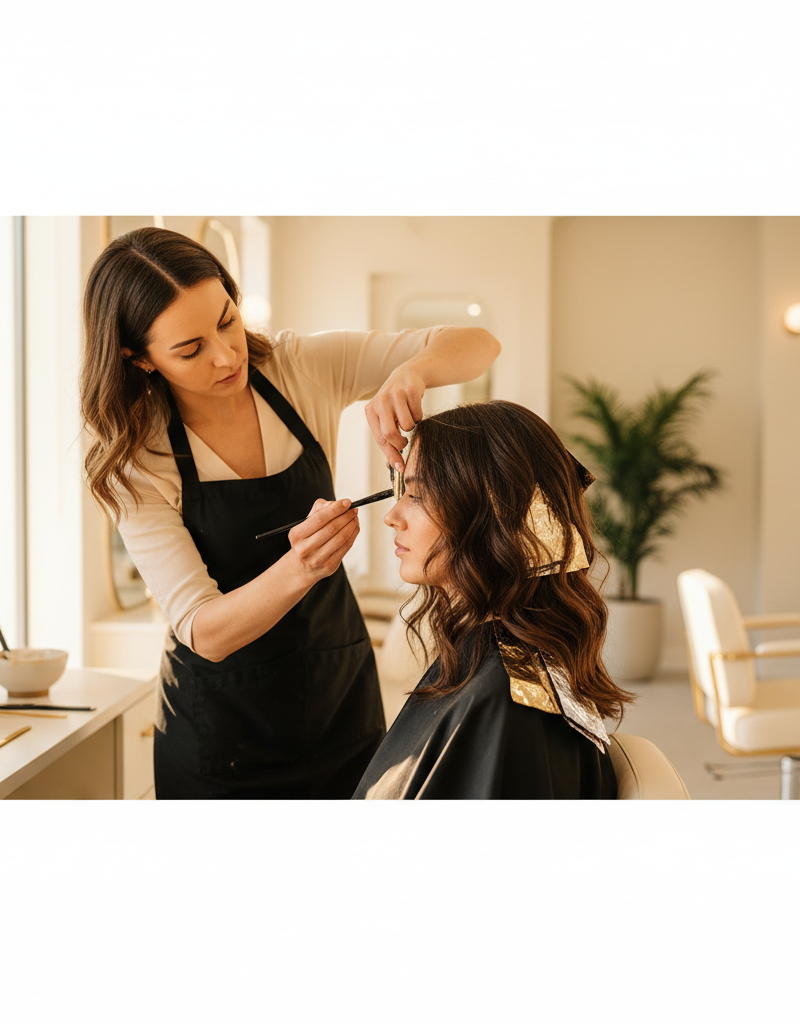
Does your client want to brighten their face without walking out of the salon looking “just done”? That kind of natural luminosity that looks like it came from the sun, not from foil?
If you’re a professional colorist, you know the difference between highlights that illuminate and highlights that overwhelm comes down to placement. And that’s exactly where halo highlights come in.
Let’s break down what they are, how to apply them step by step, and why this technique has become the go-to for clients who want light with minimal upkeep. This article is part of our complete guide to professional coloring techniques.
What are halo highlights and why do they work so well
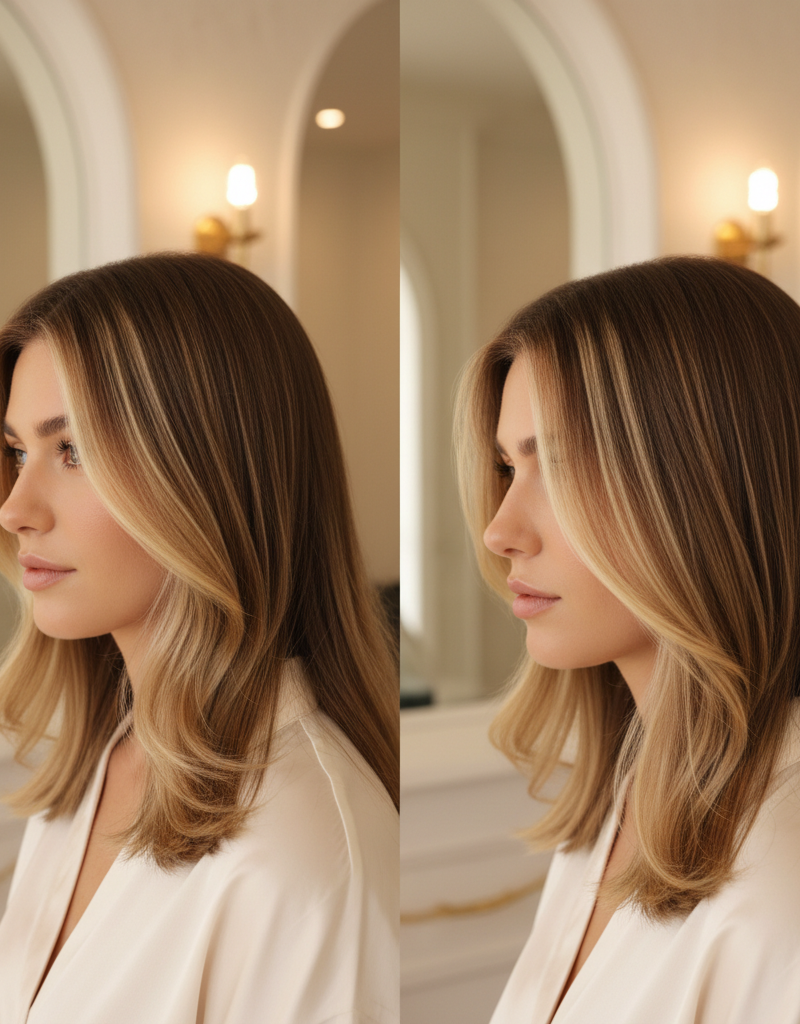
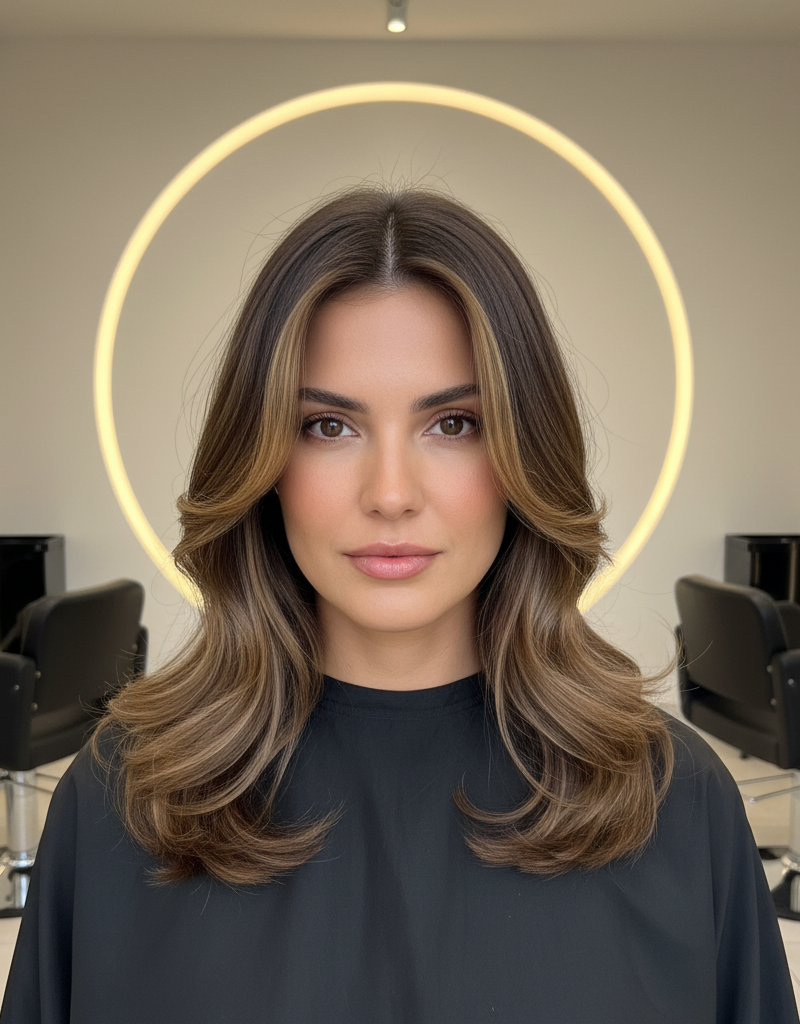
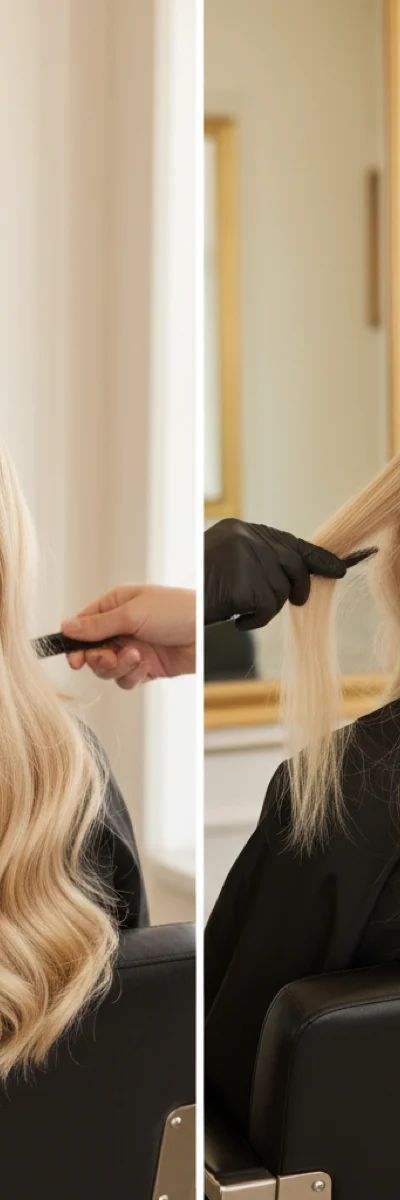
Halo highlights are fine highlights placed strategically around the hairline and crown, creating a ring of light that frames the face. Unlike a full head of highlights, only the most visible sections are lightened: the face frame, the part line, and the top of the crown.
According to the Professional Beauty Association, partial lightening techniques like halo highlights represent one of the fastest-growing salon services due to their balance between visual impact and chair time.
The result is a “sun around the face” effect that achieves three goals at once:
- Illuminates without harsh contrast: highlights are only 2-3 shades lighter than the base
- Low maintenance: since the nape and internal sides aren’t touched, regrowth blends naturally for weeks
- Versatility: works on blondes, brunettes, and dark bases alike
Pro tip: Don’t confuse halo highlights with a money piece. A money piece is two chunky, high-contrast strands on each side of the part. A halo is a complete ring of fine highlights around the entire hairline — much more subtle and diffused.
How to apply halo highlights step by step
1. Section with a horseshoe parting
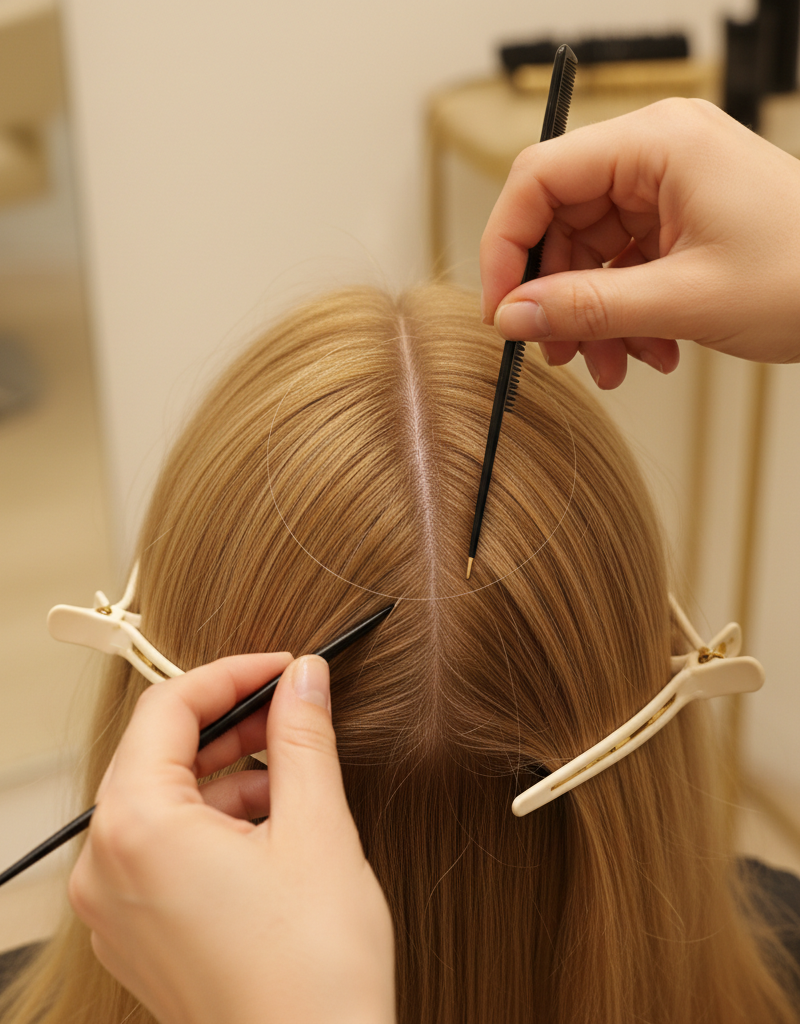
Separate the hair with a horseshoe parting from the crown. Divide that section in half. The rest of the hair stays clipped away and untouched.
2. Start at the face frame
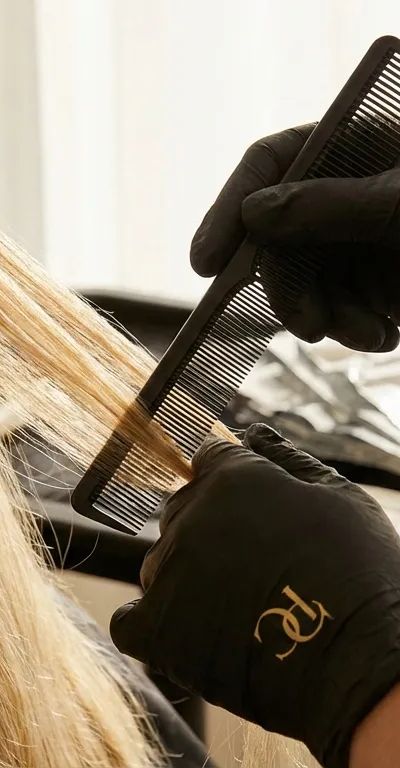
Take a diagonal-back section from the hairline. Weave out a fine section, apply a light backcomb at the root, and paint lightener from where the backcombing ends through to the tips. The backcombing diffuses the line of demarcation and creates a natural gradient.
3. Work toward the crown
Transition from diagonal subsections to vertical ones as you move into the crown. According to the technique documented by Kenra Professional, sections should be denser at the front and more spaced out toward the back for concentrated brightness where it matters most.
4. Mixing and processing
| Element | Recommendation |
|---|---|
| Lightener | Powder lightener with bonding agent |
| Developer | 20 vol (6%) for 1-2 levels of lift |
| Ratio | 1:2 (lightener:developer) |
| Processing time | 25-35 min depending on starting level |
| Target level | Reach underlying pigment at level 8-9 |
5. Tone
After lifting, apply a semi-permanent toner to neutralize and define the final shade. A soft ash or beige tone works well for most base colors.
| Client’s base | Recommended toner | Result |
|---|---|---|
| Dark brunette (4-5) | Golden beige | Warm, natural contrast |
| Medium brunette (6-7) | Ash beige | Cool luminosity |
| Dark blonde (7-8) | Champagne | Subtle glow |
| Very dark (2-3) | Caramel | Warmth at the frame |
Halo highlights vs other partial lightening techniques
When should you choose halo highlights over other options? This table helps you decide based on what your client wants:
| Technique | Coverage | Contrast | Maintenance | Best for |
|---|---|---|---|---|
| Halo highlights | Face frame + crown only | Subtle (2-3 shades) | Low (8-10 weeks) | Wants facial glow without drastic change |
| Money piece | Two front strands | High (4-5 shades) | Medium (6-8 weeks) | Wants bold, visible front impact |
| Balayage | Mids to ends overall | Variable | Low | Wants natural-looking gradient |
| Babylights | Ultra-fine throughout | Very subtle | Medium | Wants “childhood hair” effect |
| Full highlights | Entire head | High | High (4-6 weeks) | Wants a complete look change |
The competitive advantage of the halo is clear: maximum visual impact with minimum hair processed. Less damage, less chair time, fewer touch-up visits.
Which face shapes benefit the most
Halo highlights work on every face shape, but the effect changes depending on where you concentrate the light:
- Oval face: even distribution around the entire hairline. This shape gives you the most freedom.
- Round face: concentrate the lightest highlights at the temples and part line. Avoid excess brightness at cheek level.
- Long face: extend the highlights toward the sides to create a sense of width. More density on the sides than at the crown.
- Square face: soften with more diffused highlights at the corners of the forehead. Extra backcombing in those areas helps.
Pro tip: Ask your client to pull their hair back before deciding on placement. You’ll see exactly which areas of the face need more light and which already have enough visual volume.
Common mistakes when applying halo highlights
-
Over-lightening: the halo needs only 2-3 shades of difference. If you lift 5 levels, you lose the subtle effect and it looks like a poorly executed money piece.
-
Skipping the backcomb: without backcombing at the root, the demarcation line shows clearly and regrowth becomes visible within 3 weeks. The backcomb is what turns regular highlights into a halo.
-
Sections too thick: the halo depends on fine weaves. If you take sections thicker than 0.5 cm, the result loses its natural quality and looks like a standard highlight job.
-
Not adapting to the base tone: a halo on a level 3 brunette requires a different approach than on a level 6. Adjust the developer and timing — don’t try to reach the same blonde on both.
-
Ignoring the back of the crown: the “halo” is a complete ring. If you only brighten the front, the effect disappears when the client ties their hair up.
Frequently asked questions
How long do halo highlights last without a touch-up?
Between 8 and 10 weeks, depending on growth rate. The root backcombing diffuses regrowth naturally, which extends the time between appointments. It’s one of the techniques with the lowest touch-up frequency.
Can you do halo highlights on dark hair?
Yes, but carefully. On levels 2-4, you’ll likely need two sessions to reach a luminous tone without compromising hair integrity. A first lift to level 6-7, then a second to refine the shade. Don’t try to go from level 3 to level 9 in a single session.
What’s the difference between halo highlights and a money piece?
A money piece consists of two chunky, high-contrast strands on each side of the part — very visible and intentional. Halo highlights are many fine highlights distributed around the entire hairline and crown, creating a diffused glow effect. The money piece aims for impact; the halo aims for natural radiance.
Can I combine halo highlights with other techniques?
Absolutely. Halo highlights work well as a complement to a balayage on mids and ends, or as an addition to an all-over color service. The key is that the halo should be subtler than the rest of the work so it acts as a frame, not a competing element.
Key takeaways
- Halo highlights illuminate the face frame and crown with fine, subtle highlights
- The technical key is in the backcomb, fine sections, and limiting the lift to 2-3 shades
- Low maintenance: touch-ups every 8-10 weeks thanks to root diffusion
- Work on any base, from dark brunettes to blondes, adjusting formulation and timing
Calculate professional formulas with AI
Want to generate personalized formulas for highlights and partial lightening techniques based on each client’s starting level?
Try Blendsor for free - 5 formulas per month, no credit card required.
Related articles

Practice with our free tools
Calculators, neutralization wheel, AI consultation...
Master this technique with exact formulas
Blendsor generates the precise formula for each technique with your brand products. Try the mix calculator or download the app.
Download free