How Long Does Hair Color Last (and How to Make It Last Longer)
Find out how long each type of hair dye lasts and the 6 factors that fade color fastest. Free calculator and professional tips to maximize longevity.
Blendsor
Blendsor Team
How many times has a client called you three weeks later saying “the color just isn’t the same anymore”?
If you work with color every day, you know that longevity is one of the most common questions in the chair. And you also know the answer is never a fixed number: it depends on what happens after the client leaves the salon.
Let’s break down exactly how long each type of hair dye lasts, which factors shorten it, and what you can do (and recommend) to maximize color life. At the end, you can use a free hair color longevity calculator to estimate weeks based on real data.
How long each type of hair dye lasts
Hair color duration fundamentally depends on how deep the pigment penetrates. The deeper the color goes, the longer it stays. According to the Society of Cosmetic Chemists, oxidative dyes penetrate the cortex and modify melanin, while direct dyes adhere to the cuticle surface.
Here are the baseline ranges for each type:
| Dye type | Baseline duration | Mechanism | When fading shows |
|---|---|---|---|
| Permanent | 6-8 weeks | Penetrates the cortex | Root regrowth visible |
| Demi-permanent | 4-6 weeks | Partially penetrates cuticle | Gradual fading |
| Semi-permanent | 2-4 weeks | Deposits on the cuticle | Loses intensity each wash |
| Direct dye | 1-3 weeks | Adheres to the surface | Visible loss from first wash |
These numbers assume average conditions. In practice, a permanent with an optimal routine can last over 10 weeks, and a direct dye with daily washing and hard water can fade in under a week.
Pro tip: When a client asks “how long will this last?”, the dye type is just the starting point. Maintenance factors can double or halve that number.
The 6 factors that shorten color life the most
Beyond dye type, six external factors determine how many weeks color keeps its intensity. Understanding them lets you give personalized recommendations that actually work.
1. Hair porosity
This is the most decisive factor alongside dye type. High-porosity hair absorbs pigment quickly but releases it just as fast because the cuticle is open. Low-porosity hair takes longer to absorb but retains better.
If you don’t assess porosity before formulating, you’re working blind. You can use our porosity test for a quick 2-minute diagnosis.
2. Wash frequency
Daily washing is the habit that shortens color life the most. Each wash strips a layer of pigment, especially with hot water. The difference between washing daily and every 3 days can mean 2-3 extra weeks of color.
| Frequency | Impact on duration | Recommendation |
|---|---|---|
| Daily | Reduces ~35% | Space with dry shampoo |
| Every 2 days | Reduces ~20% | Acceptable, improvable |
| Every 3 days | Reduces ~5% | Ideal for color |
| Weekly | Neutral/positive | Maximum retention |
3. Shampoo type
Sulfates (SLS, SLES) are harsh detergents that strip pigment with every wash. Switching to a sulfate-free or color-specific shampoo is the simplest change with the biggest impact: it can extend color life by 10-20%.
4. Heat styling
Blow dryers and flat irons open the cuticle and let pigment escape. With frequent use (3+ times per week) without thermal protection, color can lose up to 25% of its longevity. The solution isn’t to stop using heat, but to always use thermal protection and keep temperature at 180°C / 350°F maximum.
5. Water type
Hard water minerals (calcium, magnesium, iron) deposit on the cuticle and accelerate pigment oxidation. The result is dull color that shifts brassy or greenish. A shower filter or chelating treatment every 2-3 weeks reduces the impact noticeably.
6. Sun exposure
UV radiation breaks the chemical bonds of pigment. Intense sun exposure can reduce color longevity by up to 20%. Hair sunscreens with UV filters are the most effective prevention, especially in summer.
Calculate the estimated duration for your case
With these 6 factors in mind, we’ve created a hair color longevity calculator that estimates in weeks how long the dye will last based on each specific combination. You select color type, porosity, wash frequency, water, heat, shampoo, and sun, and get the estimated range with personalized tips.
It’s a free tool you can use with your client during the consultation to reinforce maintenance recommendations.
How to maximize hair color longevity
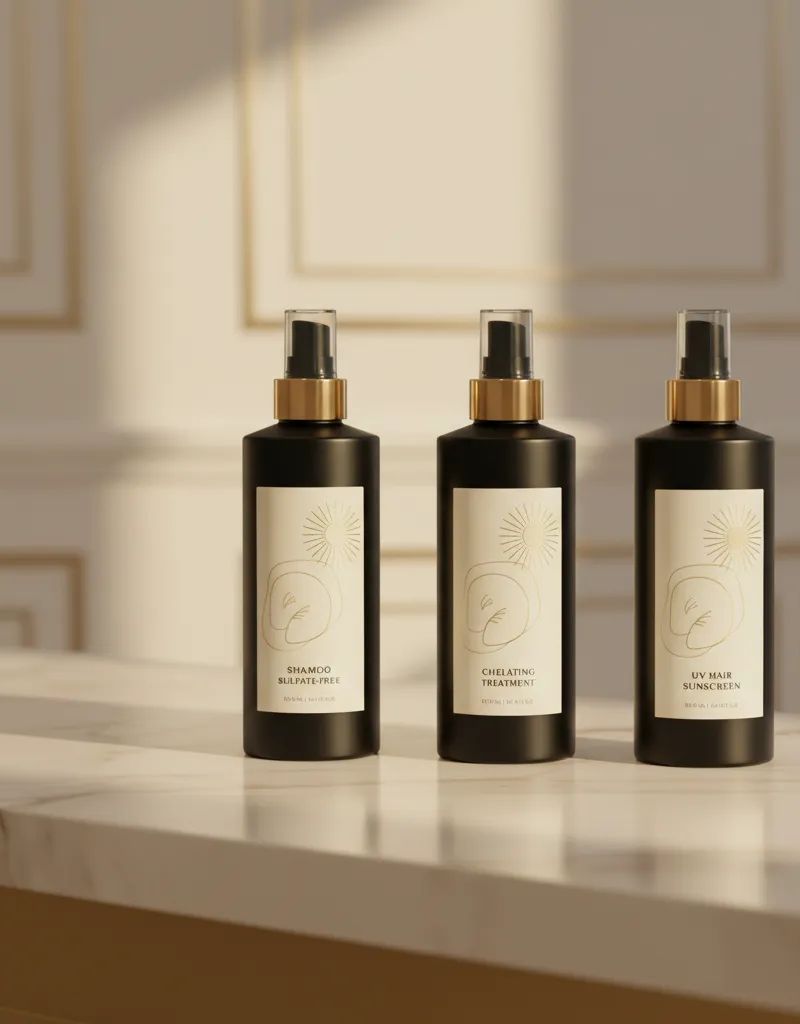
The most effective combination for extending color life:
-
Sulfate-free or color-specific shampoo: The change with the biggest immediate impact. Sulfates strip pigment with every wash.
-
Wash every 2-3 days: Use dry shampoo between washes. Hot water opens the cuticle, so when washing, use lukewarm or cool water for the final rinse.
-
Thermal protection always: Not optional if using a dryer or flat iron. Keep temperature at 180°C / 350°F maximum.
-
Biweekly chelating treatment: If the local water is hard, a chelating treatment removes the mineral deposits that oxidize pigment.
-
Hair sunscreen: Especially from May to September. UV damage is cumulative.
-
Cuticle sealing post-color: An acidic or keratin treatment immediately after coloring can extend color by up to 30%. It’s the most commonly skipped step.
Pro tip: Give every client a specific “maintenance plan.” It’s not enough to say “take care of the color.” Specify: “wash every 3 days with this shampoo, always use thermal protection, and if you notice it losing shine, apply this treatment every 2 weeks.” Specific instructions get followed; vague ones get forgotten.
What about semi-permanent and direct dyes
Toners and demi-permanents have a shorter baseline duration because they don’t penetrate the cortex. For these color types, the maintenance routine is even more critical:
- Cool water rinse: Closes the cuticle and retains more surface pigment.
- Color-specific shampoo: Sulfate-free is mandatory, not optional.
- Avoid clarifying treatments: They strip the pigment deposited on the cuticle.
If you work a lot with semi-permanents, the toner selector helps you choose the right tone based on the starting level and undertone.
Frequently asked questions
How long does permanent hair dye last exactly?
Between 6 and 8 weeks as a baseline. With an optimal care routine (sulfate-free shampoo, washing every 3 days, thermal protection), it can exceed 10 weeks. Root regrowth will be more visible than the actual color loss.
Why does color fade so fast with hard water?
Hard water minerals (calcium, magnesium, iron) deposit on the cuticle and accelerate pigment oxidation. They can also cause unwanted color shifts (brassy in blondes, greenish in ash tones). A shower filter is the most practical solution.
Does developer volume affect how long color lasts?
Indirectly, yes. A higher-volume developer opens the cuticle more to deposit pigment, but can also damage it if overused. Damaged cuticle = high porosity = color that fades faster. Using the correct volume for each service is key.
Does virgin hair hold color better?
Generally yes, because the cuticle is intact and porosity is more uniform. Previously treated hair (bleached, chemically straightened) usually has uneven high porosity, which means pigment deposits unevenly and fades sooner.
Is there a difference between brands in terms of longevity?
Yes. Formulas vary in pigment concentration, base type, and conditioning agents. Some professional brands include polymers that seal pigment inside the cortex. But the difference between brands is smaller than the difference between a good and bad maintenance routine.
Key takeaways
- Dye type sets the baseline: permanent (6-8 wks), demi (4-6), semi (2-4), direct (1-3).
- Porosity and washing are the two factors that shorten longevity the most.
- Sulfate-free shampoo + washing every 3 days is the simplest change with the biggest impact.
- Every case is different: use the longevity calculator for a personalized estimate.
Calculate professional formulas with AI
Want to generate optimized formulas so color lasts as long as possible based on each client’s diagnosis?
Try Blendsor for free - 5 formulas per month, no credit card required.
Related articles
Practice with our free tools
Calculators, neutralization wheel, AI consultation...
Master this technique with exact formulas
Blendsor generates the precise formula for each technique with your brand products. Try the mix calculator or download the app.
Download free