How to say no to a client without losing her: the honest consult framework
Operational framework for the honest consult: how to say no to a salon client without losing credibility or future bookings. Sequence, language, alternatives.
Blendsor
Blendsor Team
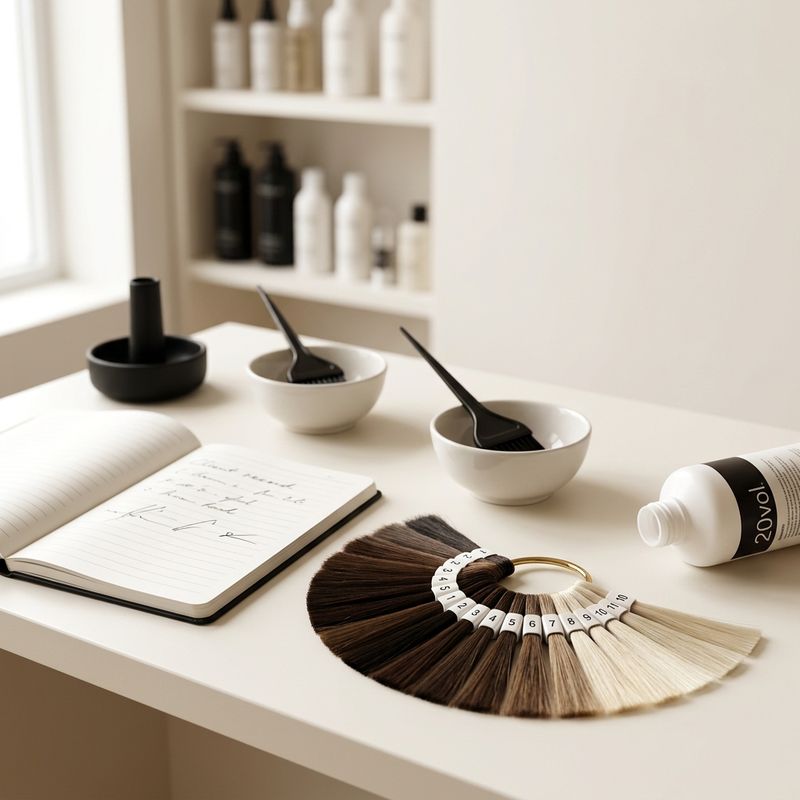
Imagine someone walks into your salon with shoulder-length natural level 4 brown hair, cosmetic dark dye on the lengths from two years ago and a noticeable percentage of grey at the temples. She shows you a magazine-sharp photo of cool platinum, intact hair, glossy finish. She wants to walk out today with that result.
You know from minute one that result is impossible in one session without destroying the hair. And still, you feel the classic pressure of the trade: if you say no, she goes to the competitor. If you say yes, you lose both ways, with broken hair and an angry client.
This guide is not about motivation or “learning to set limits”. It is about a concrete operational framework: how to say no to a salon client in a way that the person leaves perceiving you as technical authority, books with you again, and ideally pays for the consult itself. No freelance bravado, no moralising tone. Just chemistry, sequence and language.
Why saying yes to everything destroys the craft
Color chemistry does not negotiate with desire. Natural level 4 hair with historic oxidative dye does not become platinum 10 in one session, no matter how much is paid or how urgent the request. The Wella Koleston Perfect manual describes the operational limit: peroxide kinetics allow safe controlled lift between 3 and 4 levels per session on virgin hair, and that range drops sharply when there is previous color, cosmetic dark base or a high percentage of resistant grey.
When a professional colorist accepts the impossible to avoid losing the booking, three things cascade:
- Visible structural damage to the hair: breakage, extreme porosity, loss of elasticity. The cuticle does not recover with a single treatment, as Schwarzkopf technical literature on hair oxidation describes.
- The result disappoints anyway: even with maximum damage, the promised platinum is not reached. It ends in flag yellow, orange or, at best, dirty blonde.
- The client is lost regardless: she does not return, leaves a negative review and, most expensively, tells her circle. Loyalty breaks in a single session.
The honest consult flips the logic: refusing the impossible is what retains the client. Recognisable technical authority becomes the reason for loyalty.
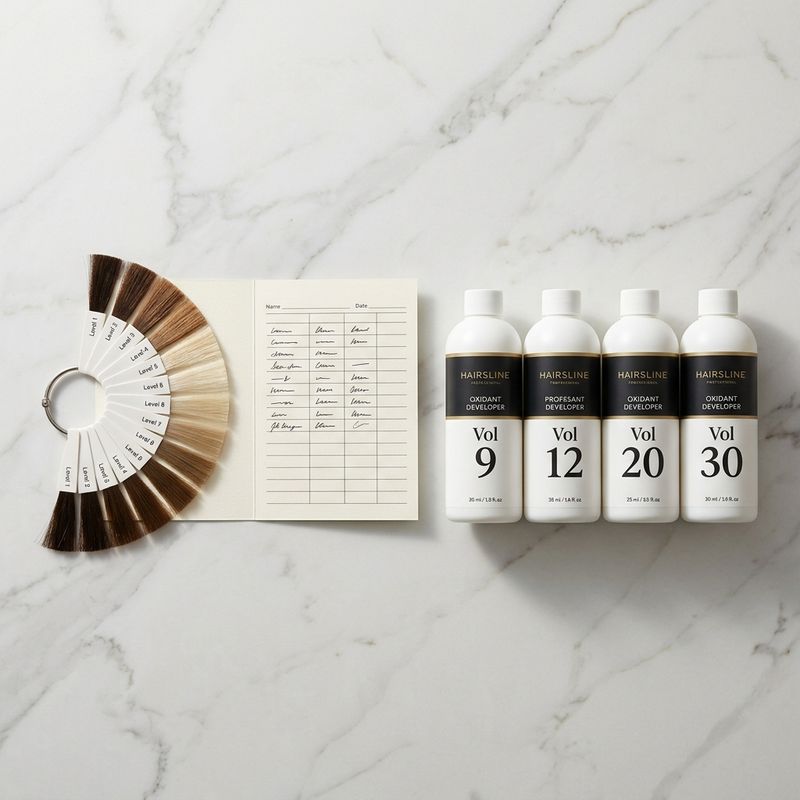
The honest consult sequence in four steps
The honest consult is not improvisation. It is a replicable protocol lasting between 15 and 25 minutes, executed before proposing any service. Done well, the “no” arrives as a shared natural conclusion, not as rejection.
Step 1: Listen without interrupting
Open question: “Tell me what you are looking for and how you arrived at this reference”. Let her speak for 2 to 4 minutes without proposing anything. Key information appears in what is told without being asked: the last service, the emotional reason for the change, prior experiences with other salons.
Take literal notes of the request (“I want to look like this photo”) and of the motivation (“I am getting married in three months, I want to look different”). The two will be separated later.
Step 2: Diagnose visually with the swatch ring
Take out the level swatch ring. Identify the natural base at the root (separate visible grey from real level). Identify the cosmetic level on lengths and ends. Quantify the percentage of grey in facial zone, temple and nape separately.
Check porosity with a strand from the side: if it absorbs water immediately and bends without elasticity, there is previous damage. Check elasticity by stretching a wet strand: if it breaks without recovering, there is no margin for further oxidation.
Step 3: Explain the chemistry in clear language
The explanation is NOT jargon. It is an honest translation. Three sentences are enough:
“Your hair is at level 4 today. The photo you are showing me is level 10. To get there, six levels need to be lifted, and the chemistry allows that safely in maximum 3 levels per session on healthy hair. Yours also has previous dye, which reduces that margin.”
The person leaves with a concrete data point she can understand, not with “it can’t be done”. The “no” stops being opinion and becomes a shared technical observation.
Step 4: Offer an alternative before closing
Here is the golden rule that separates the honest consult from plain rejection: never say no without proposing a plan. Two concrete alternatives, with calendar and realistic visualisable result.
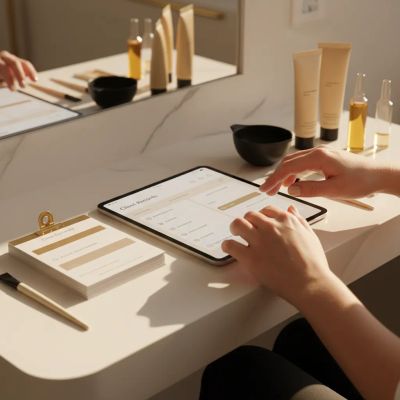
This sequence is documented as a flow in the salon’s client record. Color professionals who systematise it describe greater agenda stability and fewer corrective services on their own work.
Specific language: scripts to say no without sounding like rejection
The language of the honest consult avoids two extremes: the dry “it can’t be done” and the compliant “let’s try”. These phrases are written to reframe the “no” as “not yet” or “not like this”.
| Typical request | Honest consult phrase |
|---|---|
| ”I want to walk out today with this platinum" | "Clean platinum is reachable, but it requires a plan over 3 sessions. Today we can take the real first step, not the illusion of the final result." |
| "My previous stylist did it in one go" | "Each hair has a different starting point. Yours today allows safe progress up to level 7, no further." |
| "I don’t mind if it breaks a bit" | "If it breaks, we can’t do the next service in six weeks. I prefer to protect the canvas so we have real margin." |
| "Why don’t we try and see?" | "Chemistry doesn’t allow trial runs. Each bleach wash is structural. Better to design the plan than to improvise." |
| "But on TikTok they do it like this" | "Those videos usually show the result, not the starting base or session four. We are seeing the end, not the path.” |
The common pattern: turn the rejection into a shared plan. The person stops feeling something is being denied and starts feeling that a realistic path is being offered.
Constructive alternatives: the catalogue of “no, but this instead”
Saying no works when accompanied by a concrete alternative the person can visualise. These are the most useful when an impossible request comes in.
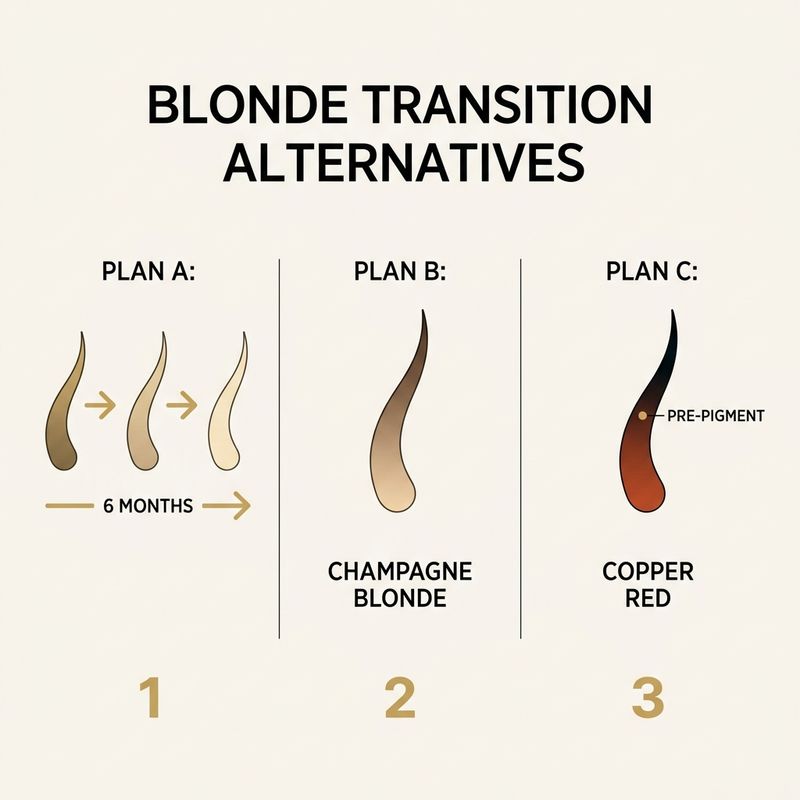
Alternative to platinum on level 4 base with previous dye
Plan A — Babylights with a six-month calendar: strategic babylights around the face and crown, leaving the rest of the lengths intact as anchor depth. Three sessions spaced 8 to 12 weeks apart, as the L’Oréal Professionnel manual on progressive balayage describes. Intermediate result: hair with light, not platinum, but with dimension and movement. Final result at six months: sustainable multidimensional blonde.
Plan B — Champagne gloss over a progressive level 7 base: if the person accepts a transition to level 7-8 (not platinum 10), the first session combines soft lightening in highlights with a final champagne gloss. Result: cool golden blonde hair with intact shine, far from platinum but radically different from the initial level 4 brown.
Alternative to full coverage for clients with high grey percentage who want lighter hair
Instead of level 7 cover dye over 100% grey, propose grey blending with lowlights at the natural base level, leaving the grey integrated as a reflection. Reduces touch-up frequency from 4 to 8 weeks, lowers annual cost and produces a more natural result long term.
Alternative to radical change from brunette to redhead in one session
Mandatory pre-pigmentation with warm copper/gold pigment before the final color, as the Wella manual on dark-to-warm transformations describes. Usually requires two sessions to avoid the green or muddy effect of direct copper over a dark base.
When to charge for the consult and how to present it
The well-executed honest consult has real economic value: 20-25 minutes of qualified professional time, structural hair diagnosis, a documented plan of future services. Charging for it positions knowledge as a service, not as a courtesy gift, and it belongs in your hair coloring service pricing.
When to introduce the charge:
- When the consult lasts more than 15 minutes
- When it includes damage diagnosis and elasticity test
- When a written plan with session calendar is delivered
- When the person specifically comes “for advice” without booking a service
How much to charge: the typical range in the sector falls between 30 and 50 euros (or local currency equivalent), depending on market and city. The amount matters less than the principle: charging signals that technical knowledge has a price and reduces the flow of people coming to “ask just to ask”.
How to present it on the booking system: as an independent service with a clear name: “Pre-color diagnostic consult (30 minutes)”. If the person books the main service afterwards, a common commercial practice in the sector is to deduct the consult fee from the first service. That turns the consult into a filter: serious people move forward, those who only want loose information do not.
Professional tip: Documenting the consult in the salon’s client record with pre-photos, swatch-against-base reading and a plan signed by the client converts an ephemeral service into a business asset. If she returns six months later, the session starts with context, not from zero.
How to document the “no” in the client record
The salon’s client record is not just a register of formulas applied. It is the operational memory of the business. When a request is refused, the documentation must capture the decision and the proposed alternative so it is consultable on future visits.
Minimum fields in the record after an honest consult that ends in “no”:
| Field | Content | Example |
|---|---|---|
| Original request | Literal phrase from the person | ”Cool platinum like this photo, today” |
| Declared motivation | Why she wants the change | ”Wedding in three months, life-stage shift” |
| Starting diagnosis | Root level, lengths, % grey, porosity, elasticity | ”Base 4 root, cosmetic level 5 lengths, 35% grey at temple, medium-high porosity, reduced elasticity” |
| Reason for the no | Concrete technical reason | ”Six-level jump impossible in 1 session without breakage. Previous dye reduces safe margin to 2 levels” |
| Proposed alternative | Plan A and Plan B with calendar | ”Plan A: babylights x3 over 6 months. Plan B: champagne gloss over level 7 in 1 session” |
| Final decision | What the person chose | ”Plan A. First session booked May 15” |
| Next review date | When to reopen the case | ”8 weeks after first session” |
That record has three direct uses. If the person returns, the diagnosis is not started over. If she leaves and comes back months later regretting the competitor salon, there is a registered original proposal. If another person from the same circle (family, friend) is attended, there is context.
The opposite mistake: saying no without an alternative
There is a pattern that also loses the client and tends to go unnoticed: the technically well-grounded “no” without a concrete proposal.
“That can’t be done. Your hair is too dark and has previous dye. I won’t do it.”
This phrase, even if technically correct, leaves the person without a way out. She leaves feeling judged, not advised. And because she still needs to resolve the original desire (the image change, the event, the emotional motivation), she looks for someone who will say yes. She finds that someone easily, usually someone with less professional rigour.
The honest consult requires both parts: the technical no AND the visualisable alternative. Without the second, the first loses value.
Common variation of the mistake: the “no” with a moralising or superior tone. Phrases like “they did this badly to you somewhere else” or “I already told you not to do that” trigger defence, not openness. The person stops listening to the technical content.
The operational rule: the tone of the honest consult is technical-kind, not technical-corrective. What matters is that the person leaves with a plan, not with a lecture.
How the honest consult improves medium-term retention
Sector publications documenting salon retention, such as Professional Beauty Association reports, agree that the leading cause of clientele loss is not price but the perception of technical inconsistency, a factor at the center of any client retention strategy. When a person perceives that her colorist improvises or accepts requests without filter, confidence in the result drops and price sensitivity rises.
The honest consult produces three measurable effects in the agenda over six months:
- Reduction of corrective services on one’s own work: by not accepting the impossible, there are no urgencies to repair self-caused damage.
- Progressive average ticket increase: people who accept the multi-session plan book in advance, securing future agenda.
- Greater flow of qualified referral: the person who experienced an honest consult values technical rigour and recommends by explaining that rigour, attracting a similar profile.
The compound effect: fewer urgencies, more predictable agenda, clientele profile better aligned with service price. The occasional loss of the person who refused the plan is compensated many times over by the rest.
Frequently Asked Questions
How to say no to a client without offending her?
The no is accepted when it arrives as a shared technical conclusion, not as personal rejection. The sequence is: listen to the request without interrupting, diagnose visually with the swatch ring, explain the chemistry with one concrete data point and offer at least one alternative with a calendar. The key phrase is “we can get there, but not in one session and not like this”.
Is it legitimate to charge for the color consult even if the client does not book afterwards?
Yes, and in fact charging for it filters the flow. A 20-30 minute consult with structural diagnosis and documented plan is a professional service. The typical range in the sector falls between 30 and 50 euros (or equivalent). If the main service is booked next, a widespread commercial practice is to deduct the consult from the first service. That transforms the consult into a filter: serious people move forward.
What if the person insists she has already accepted the risk of damage?
Verbal acceptance of the risk does not transfer technical responsibility. You remain the professional who applied the service and the one responsible for the result. Besides, the “I accept the risk” tends to evaporate when the person sees broken hair in the mirror. The operational rule: a service known to damage the hair is not applied, even if the person insists. The “no” is documented in the record and an alternative is offered.
What do I do if the client threatens to go to another salon?
That phrase is the final test of the honest consult. If the person leaves, she leaves. But she usually returns: the other salon, if it accepts the impossible, produces the predictable damage and the person looks for someone to repair. If she shows up at that second visit, the documented original honest consult is gold. If she does not leave and books the plan, the business gains a qualified high-value client.
How to document the honest consult in the record without making it endless?
Minimum template of seven fields: literal original request, declared motivation, starting diagnosis (root level, lengths, % grey, porosity, elasticity), reason for the no, proposed alternative (Plan A and Plan B), final decision and next review date. Three to five minutes of registration after the consult. Indefinitely reusable.
In summary
- Saying yes to the impossible does not retain: it produces structural damage, disappoints the result and loses the client anyway. Recognisable technical authority is what retains.
- The honest consult is a protocol, not improvisation: four sequential steps (listen, diagnose, explain chemistry, offer alternative) that transform the “no” into a shared plan.
- Language matters: turning the rejection into “not yet” or “not like this” reframes the conversation. Scripted phrases avoid the dry “it can’t be done” and the compliant “let’s try”.
- Charging for the consult positions knowledge as a service: typical sector range between 30 and 50 euros, deductible from the first service if booked. Filters flow and elevates the perception of value.
- Documenting the “no” in the record is a business asset: seven minimum fields (request, motivation, diagnosis, reason, alternative, decision, review) turn an ephemeral service into operational memory.
Calculate the realistic session plan with Blendsor
When you say no to the impossible platinum and propose a plan over 3 sessions, the next step is calculating the full formula for each one. Blendsor’s professional formulas estimate sessions, developer and toner based on starting level, porosity, cosmetic history and grey percentage, turning your verbal plan into a documented technical protocol.
Do you have a different honest consult sequence that works in your salon? The conversation between color professionals is where the craft is refined.
Related articles



The Blendsor newsletter
Color techniques and trends for professionals. No spam.
Every client, one tap from their history
Formulas, hair health and evolution saved on their own. You and your team open the card and pick up where you left off.
See how it worksWritten by the Blendsor team
Professional hair colorimetry experts with experience in AI-assisted formulation. We combine color science, salon practice and technology to help colorists formulate with precision.