Lowlights: Depth and Dimension Guide
Master the lowlights hair technique step by step. Dark highlights that add dimension, break monotony, and create multidimensional blondes.
Blendsor
Blendsor Team
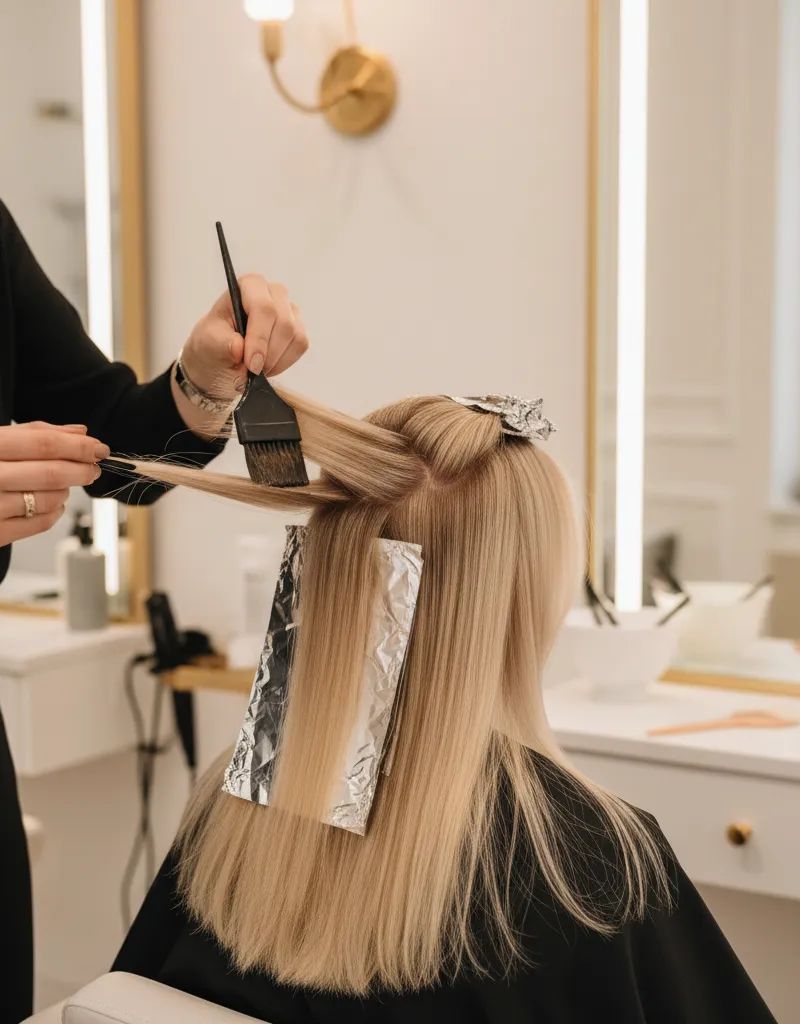
Do your blonde clients complain that their color looks “flat,” lifeless, like a uniform block? Or do you have clients who want to disguise their gray hair naturally without committing to full coverage?
Lowlights are dark highlights—darker than the base color—that add depth, dimension, and movement. They’re the perfect complement to highlights and a technique every professional colorist should master.
In this guide, you’ll learn what they are, how to apply them step by step, formulas for different objectives, and the mistakes to avoid. This article is part of our complete guide to professional coloring techniques.
Quick summary: Lowlights are strands colored 1-3 levels darker than the base, applied with permanent or semi-permanent dye without bleach. They add depth and dimension to flat blondes, help disguise scattered grays, and last 6-8 weeks with minimal hair damage.
What Are Lowlights and Why Do They Work?
Lowlights are strands colored 1-3 levels darker than the base color, applied with permanent or semi-permanent dye — no bleach required. Placed in shadow zones like the nape and inner layers, they create tonal contrast that the eye reads as depth and volume, making hair appear thicker, healthier, and more dimensional.
Lowlights are strands colored 1-3 levels darker than the base color. Unlike highlights (which lighten), lowlights darken strategic sections to create depth, dimension, and movement. They use permanent or semi-permanent dye without bleach, making them one of the lowest-damage coloring techniques.
| Factor | Lowlights | Highlights |
|---|---|---|
| Action | Darken strands | Lighten strands |
| Product | Dye (no bleach) | Bleach |
| Objective | Depth and dimension | Light and brightness |
| Damage | Minimal | Variable by developer |
| Ideal for | Flat blondes, disguising grays | Dark hair wanting light |
| Maintenance | Fades gradually | Visible regrowth |
According to the Society of Cosmetic Chemists, the perception of depth in hair depends on tonal contrast. When all hair has the same level, the eye perceives it as flat. By introducing tonal variations—lights and darks—we create an illusion of volume and movement.
Characteristic Results
- Real dimension: Hair appears thicker and fuller
- Breaks monotony: Eliminates the “helmet” effect of uniform color
- Natural depth: Mimics how hair grows naturally
- Disguises gray: Integrates it into the overall tonal variation
When to Choose Lowlights
| Situation | Lowlights? |
|---|---|
| Blonde that looks flat or lifeless | Yes |
| Wants to disguise gray without full coverage | Yes |
| Balayage too uniform at the ends | Yes |
| Over-processed blonde that needs an “anchor” | Yes |
| Dark client who wants to lighten | No (highlights better) |
| First color service | Depends on objective |
How to Apply Lowlights Step by Step?
Lowlights follow six steps: assess porosity and current level, prepare dye 1-3 levels darker with 10-20 vol developer, place strategically in shadow zones (nape, inner layers), weave selectively while alternating untreated sections, process 15-35 min depending on porosity, then rinse and finish with gentle shampoo and conditioner.
The lowlights technique is similar to traditional highlights, but with some key differences in formulation and placement.
Step 1: Evaluation and Consultation
Before starting, analyze your client’s hair:
- Current level: Is it natural blonde, bleached, or dyed?
- Porosity: Porous hair absorbs more pigment
- Distribution: Where does she need more depth?
- Objective: Subtle dimension or visible contrast?
Pro tip: In highly bleached hair, lowlights may oxidize differently. Always do a strand test to verify the final result.
Step 2: Product Preparation
Lowlights don’t require bleach. We work with permanent or semi-permanent dye.
Base formula for lowlights:
Dye 1-3 levels darker than base
+ 10-20 vol developer
Ratio: 1:1 or per manufacturer
The choice between permanent and semi-permanent depends on desired durability and hair condition.
Step 3: Strategic Placement Pattern
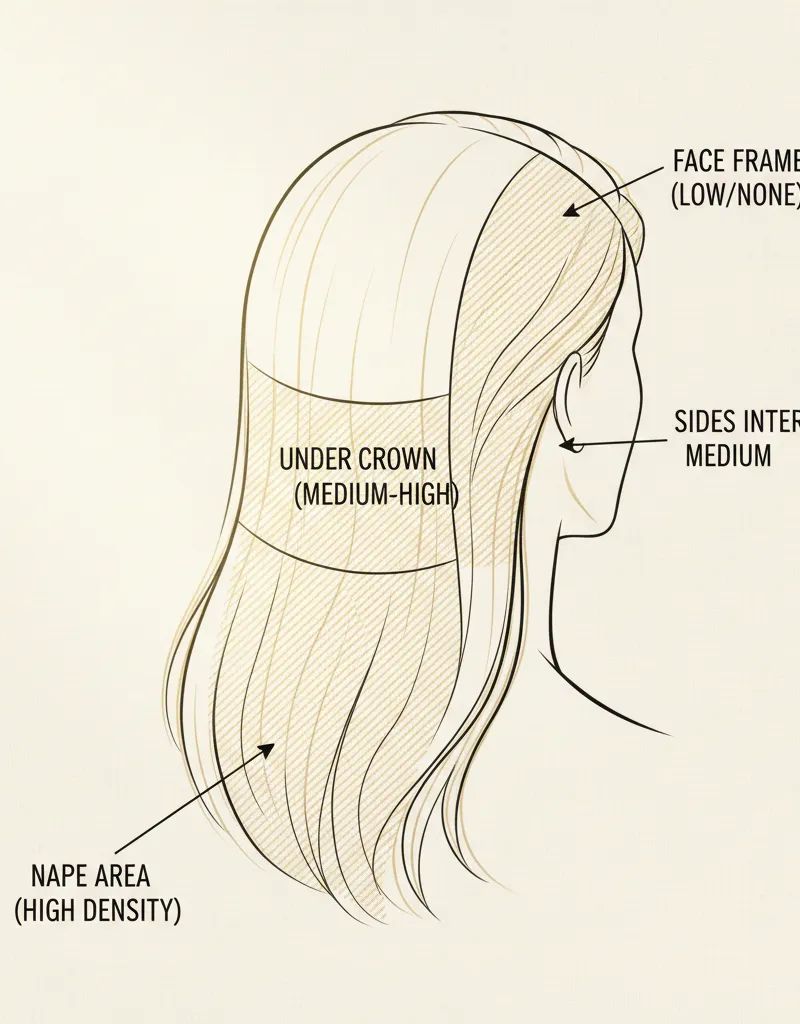
Unlike highlights that concentrate in natural light zones, lowlights are placed in shadow zones:
| Zone | Density | Objective |
|---|---|---|
| Nape | High | Depth in less visible area |
| Under crown | Medium-high | Contrast when hair moves |
| Sides (interior) | Medium | Dimension in inner layers |
| Face frame | Low or none | Maintain light around face |
| General roots | Variable | Simulate natural depth |
Key rule: Less is more. Too many lowlights can darken the overall result.
Step 4: Application Technique
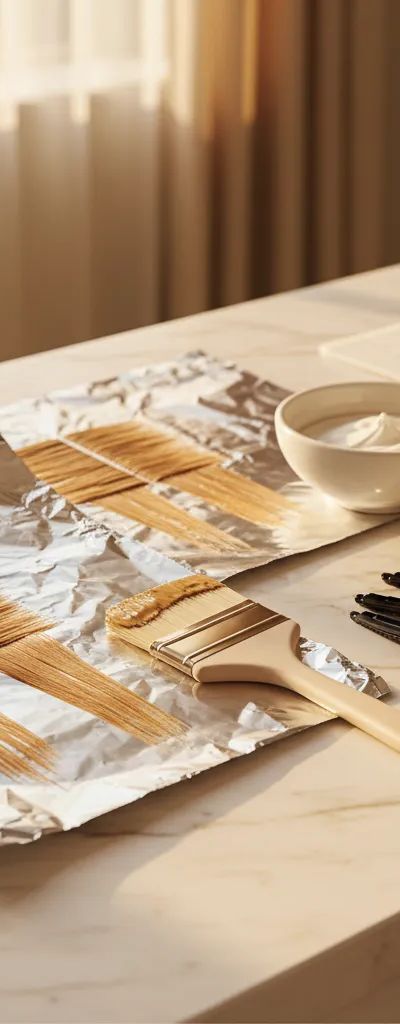
- Section the hair into panels (nape, sides, crown)
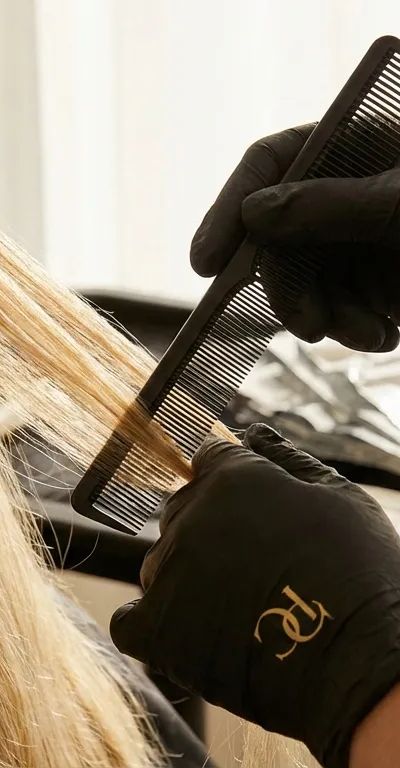
- Selective weave: Take fine to medium strands
- Place foil underneath
- Apply dye from roots toward mids (not always ends)
- Close foil without pressing
- Alternate with untreated sections
Step 5: Processing Time
Lowlights process faster in porous hair:
- Virgin or low-porosity hair: 25-35 minutes
- Bleached or porous hair: 15-25 minutes
- Semi-permanent: 20 minutes maximum
Pro tip: Monitor lowlights closely on bleached hair. With the cuticle open, pigment penetrates quickly and can end up darker than expected.
Step 6: Rinse and Finish
- Remove foils when color has developed
- Emulsify with lukewarm water
- Wash with gentle shampoo
- Conditioner to seal cuticle
- Evaluate result when dry to see true contrast
How to Formulate Lowlights by Level and Objective?
For natural blondes at level 7-8, use a level 6 lowlight with natural or ash reflect and 20 vol developer for 25-30 min. For highly bleached blondes at level 9-10, use level 8 with 10 vol developer for only 20-25 min to avoid over-darkening. On porous hair, always reduce processing time by 10-15 minutes regardless of formula.
The key to successful lowlights is choosing the right tone. Here are formulas for different scenarios:
For Natural Blondes (Level 7-8) Who Want Dimension
Objective: Add subtle depth
Lowlight:
- 6N + 6.0 (1:1) → natural dark blonde
- 20 vol developer
- Time: 25-30 min
For Bleached Blondes (Level 9-10) Who Look Flat
Objective: Break monotony without over-darkening
Lowlight:
- 8N + 8.1 (2:1) → ash blonde
- 10 vol developer
- Time: 20-25 min
To Disguise Early Grays in Brunettes
Objective: Integrate grays into tonal variation
Lowlight:
- 5N + 5.3 (1:1) → light golden brown
- 20 vol developer
- Apply in gray-free zones to create contrast
Lowlights in Warm vs Cool Tones
| Objective | Recommended Reflect | Example |
|---|---|---|
| Warm dimension | Gold, copper | 7.3, 7.4 |
| Cool dimension | Ash, beige | 7.1, 7.2 |
| Neutral natural | Natural | 7N, 7.0 |
To better understand tone interactions, see our article on how to neutralize unwanted tones.
Lowlights vs Highlights: When to Use Each?
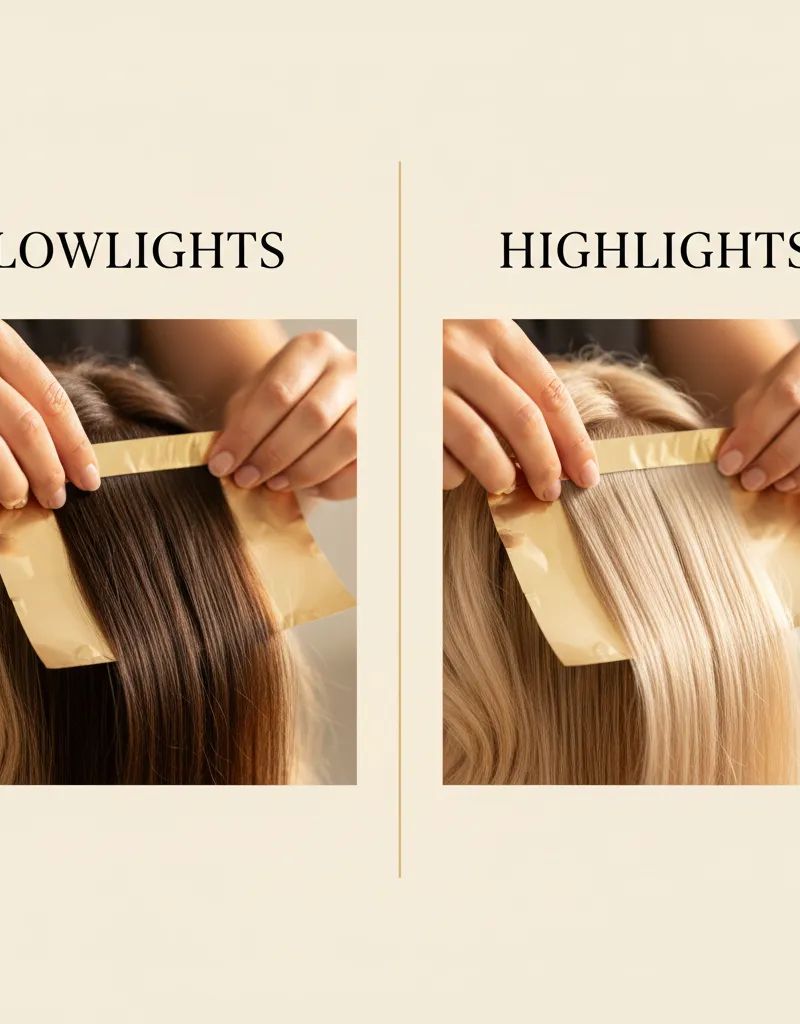
Lowlights darken 1-3 levels using dye without bleach, ideal for flat blondes or disguising grays. Highlights lighten with bleach and suit darker hair wanting brightness. The most dimensional results combine both: highlights at the crown and face frame, lowlights at the nape and inner layers — no single technique achieves that three-dimensional effect alone.
Many clients confuse these techniques. Here’s the clear comparison:
| Factor | Lowlights | Highlights |
|---|---|---|
| Action | Darken strands | Lighten strands |
| Product | Dye | Bleach |
| Objective | Depth, dimension | Light, brightness |
| Ideal for | Flat blondes | Darker hair wanting light |
| Damage | Minimal (no bleach) | Variable by developer |
| Maintenance | Fades gradually | Visible regrowth |
The Perfect Combination: Highlights + Lowlights
Most multidimensional colorations combine both techniques:
- Highlights in natural light zones (crown, face frame)
- Lowlights in shadow zones (nape, inner layers)
This combination creates a three-dimensional effect that neither technique achieves alone. See our guide on balayage vs traditional highlights for more details on combinations.
What Are the Best Combinations with Lowlights?
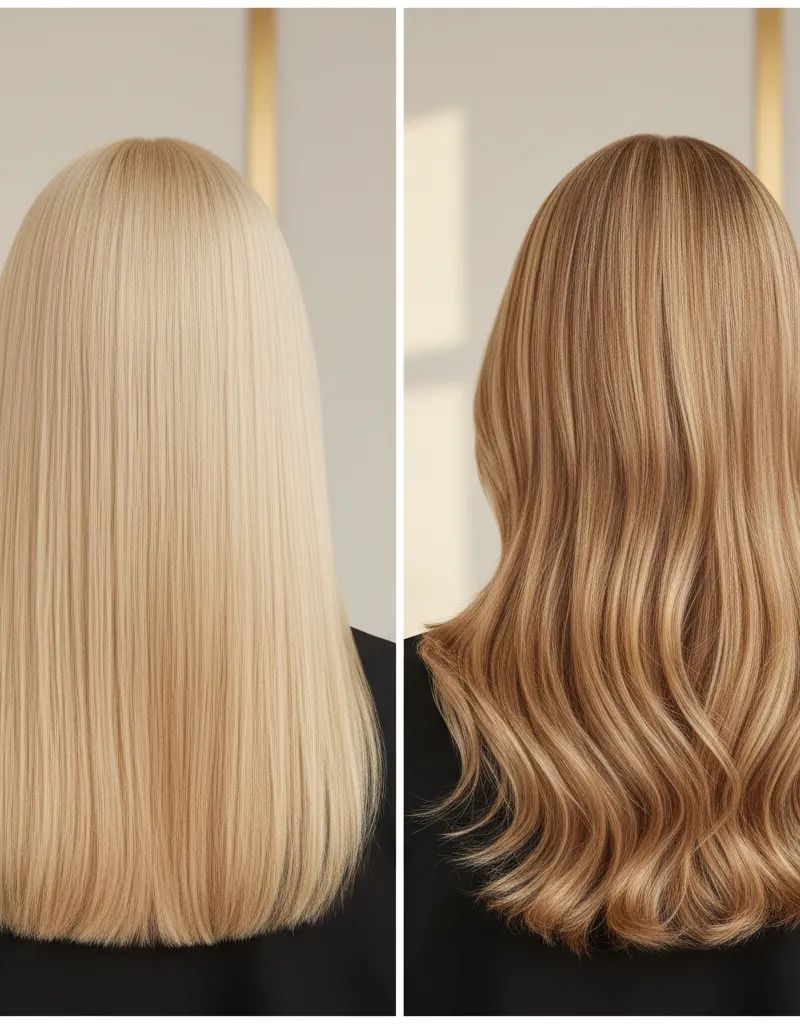
Lowlights pair well with three key techniques: with balayage, adding root depth when the gradient looks flat; with babylights, creating a three-dimensional blonde that balances light and shadow; and with partial gray coverage, integrating scattered grays into tonal variation rather than covering them completely.
Balayage + Lowlights
When balayage needs more depth:
- Existing balayage on mids and ends
- Lowlights at roots and upper mid-section
- Result: Gradient with dimension, not a “dry ends” effect
Babylights + Lowlights
For blondes who want subtle dimension:
- Babylights for brightness and light
- Lowlights to anchor and add body
- Result: Dimensional blonde, not flat or “helmet-like”
To master babylights, visit our guide on babylights natural technique.
Gray Coverage + Lowlights
Alternative to full coverage:
- Partial coverage in more concentrated areas
- Lowlights to integrate grays into overall variation
- Result: Natural look, not “salon dyed”
What Are the Most Common Lowlight Mistakes and How to Avoid Them?
The five most damaging mistakes are: choosing a tone 4-5 levels darker than the base (maximum 2-3 for a natural result), placing lowlights on the face frame (creates a dirty look — they belong in shadow zones), not reducing time on porous hair (risk of turning black), taking product all the way to the ends on damaged hair, and applying on consecutive sections without any untreated gaps.
1. Lowlights Too Dark
The mistake: Choosing a tone 4-5 levels darker than base.
The consequence: Dark streaks that look like dirt, not dimension.
The solution: Maximum 2-3 levels difference for a natural result.
2. Concentrating in Visible Zones
The mistake: Placing lowlights on face frame and crown.
The consequence: “Dirty” effect in the most visible areas.
The solution: Lowlights go in shadow zones: nape, under crown, inner layers.
3. Not Considering Porosity
The mistake: Applying the same time on virgin hair as on bleached.
The consequence: Lowlights that turn black on porous hair.
The solution: Reduce time by 10-15 minutes on previously bleached hair.
4. Lowlights to the Ends on Damaged Hair
The mistake: Taking product all the way down on dry ends.
The consequence: Ends that absorb too much and become very dark.
The solution: Stop application 3-5 cm before ends on damaged hair.
5. Not Alternating with Clean Sections
The mistake: Doing lowlights on consecutive sections.
The consequence: Entire dark areas without contrast.
The solution: For each lowlight section, leave 1-2 untreated.
Frequently Asked Questions
How Long Do Lowlights Last?
Lowlights with permanent dye last 6-8 weeks visibly. Unlike highlights, they don’t show marked regrowth because the dark tone gradually fades with washes. Lowlights with semi-permanent last 4-6 weeks depending on porosity.
Do Lowlights Damage Hair?
Practically not at all. Lowlights use dye, not bleach, so damage is minimal. In highly processed hair, they can even improve appearance by giving the illusion of body and health that damaged hair loses.
Can You Do Lowlights on Dyed Hair?
Yes, and it’s one of the best applications. Uniformly dyed hair benefits greatly from lowlights to break monotony. Just make sure the lowlight tone is compatible with the existing dye.
Lowlights or Full Color to Disguise Grays?
Lowlights are ideal for scattered grays (less than 30%). They create tonal variation where grays integrate as part of the pattern. For more than 50% gray, consider partial coverage combined with strategic lowlights.
In Summary
Lowlights are an essential tool for creating real dimension in hair:
- Break monotony: Transform flat blondes into vibrant blondes
- Disguise grays: Without the commitment of full coverage
- Low damage: No bleaching required
- Complement other techniques: Ideal with highlights, balayage, or babylights
Mastering lowlights allows you to offer a service that few colorists execute well. It’s the difference between a “salon blonde” and a blonde that looks natural, alive, and moving.
Want to calculate precise formulas for lowlights and other techniques? Use the hair color mixing calculator to verify the resulting tone before applying. Try Blendsor free. The AI analyzes your client’s hair and suggests optimal formulation based on her current level and desired result.
This article is part of our complete guide to professional coloring techniques. Explore other techniques like babylights, foilyage, and balayage.
Related articles
Practice with our free tools
Calculators, neutralization wheel, AI consultation...
The Monday Briefing
Color techniques and trends for professionals. No spam.
Master this technique with exact formulas
Blendsor generates the precise formula for each technique with your brand products. Try the mix calculator or download the app.
Download freeWritten by the Blendsor team
Professional hair colorimetry experts with experience in AI-assisted formulation. We combine color science, salon practice and technology to help colorists formulate with precision.