Oxidation Diagnosis Before Bleaching a Box-Dye Black
Before taking a box-dye black to blonde, the oxidation diagnosis by zone decides whether it lands in one appointment or three. The 3 questions that predict it.
Blendsor
Blendsor Team
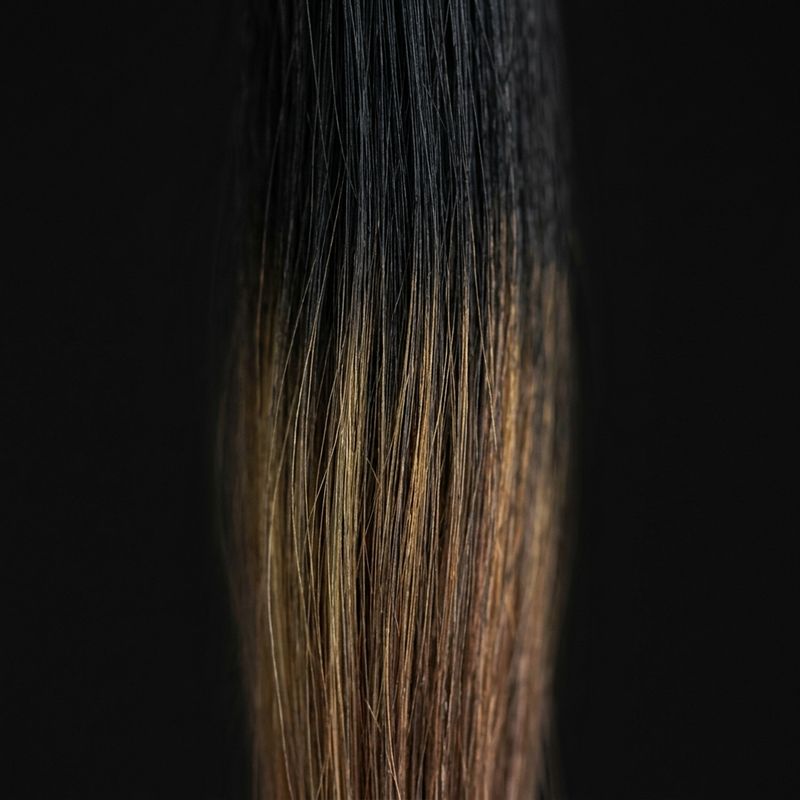
Someone walks in asking for blonde. They’ve been touching up their roots at home with a box-dye black for three years, tone on tone, every month. And the question is always the same: “Can you get me there today?”
If you formulate color behind the chair, you know the formula isn’t decided there. Something else is decided first: what’s actually sitting under that black. Because a box-dye black is a layer of accumulated oxidation, uneven by zone, and it can lift at three different speeds along the same length.
This article is about the step that happens before you reach for the lightener: the oxidation diagnosis. The three questions that, done right, tell you whether that blonde lands in one appointment or three. And that separate a promise from a diagnosis you can defend.
Why box-dye black isn’t a level but a layer of oxidation
A box-dye black applied at home, month after month, over the same length, doesn’t behave like a natural level 2. Permanent oxidative dye develops its color inside the cortex, and that color doesn’t wash out. Every application deposits new pigment on top of the old.
The result is an uneven load by zone. The root gets retouched at home, yes, but every time the hair is combed through, product drags down into the mids and ends. That’s where it stacks up. The root from the last few months may carry less accumulated load than ends that have taken three years of deposit on deposit.
That has a direct consequence in the chair: lifting doesn’t move at the same speed across root, mids, and ends. Treat all three as a single level 2 and you’re formulating blind. What reads as “uniform black” is, underneath, three different chemical histories.
That’s why the diagnosis doesn’t start at the formula. It starts by reading that layer. And to read it, there are three questions.
The first question: the real history by zone, not the one you’re told
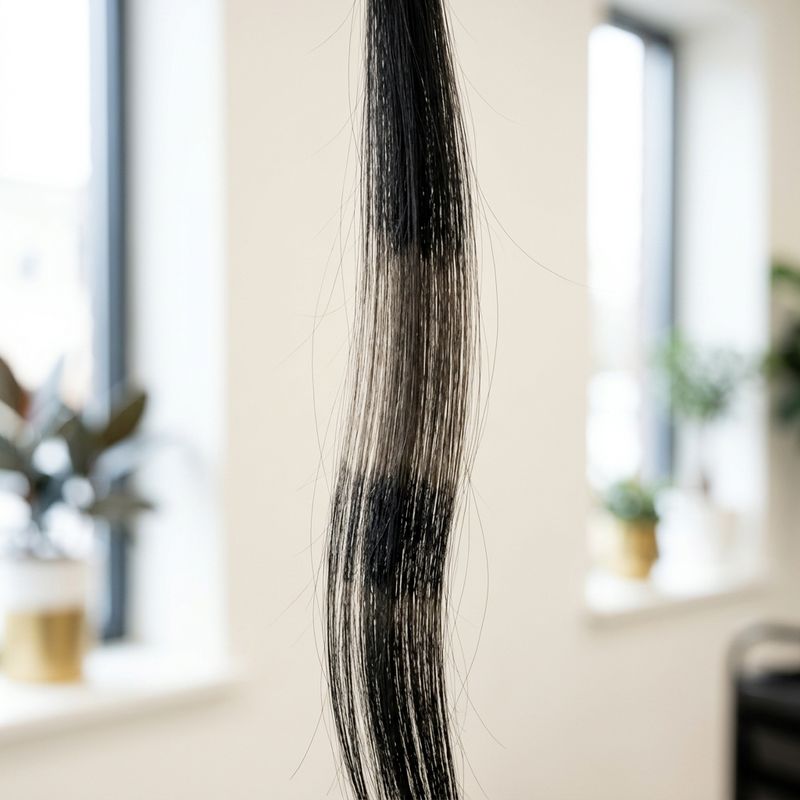
Q1: what’s the real oxidation history by zone? The one written in the fiber, which doesn’t always match the one you’re told.
You’ll most likely hear “I only use the same one as always.” Good info, but incomplete and sometimes optimistic. The history that matters isn’t only in the memory of the person in your chair: it’s in the hair. You read it, and you ask, because some of it (a compound henna, a dye that darkens a little more with every use) only that person can tell you.
Before you read anything, a safety check comes first: the incompatibility test, which looks for metallic salts. On a repeated home box-dye black you don’t assume it’s only oxidative dye: if that history includes compound henna or any dye with metallic salts, the peroxide in the lightener can react with them. The British Master Barbers Association describes the test on a cut strand placed in 20 ml of 6% hydrogen peroxide with 1 ml of ammonium hydroxide: if it produces bubbles or heat, or the hair disintegrates, the service must not go ahead. The page doesn’t say how long to watch. How to set it up with an untreated reference strand beside it, and which silent signs get missed, is in metals in hair and bleaching. It comes before the lift diagnosis because it decides whether there’s a service at all.
Three visible signals tell you:
- Color banding: hold the length to the light. Where sections look duller or denser, there’s more accumulated deposit. Ends are usually the heaviest zone.
- Differential porosity: run your fingers dry from root to ends. Where the feel turns rougher and grabs differently, the fiber is more compromised and tends to react to the lightener sooner.
- Retouch line: the point where the denser color begins tells you how much length carries old deposit versus fresh root.
Then the test you don’t skip with this history: the strand test by zone, with the same mix you’ll use on the service (how to run a strand test). One strand at the root, one at the mids, one at the ends. It’s what turns your visual read into data. Without it, you’re promising from a hunch. Once those test strands come out of the lightener, stretch them wet before you go on, and do the same whenever the length carries anything lightened (old highlights or, later on, the first session of this same plan). The elasticity test tells you whether the fiber can take another pass or whether lifting stops there.
Pro tip: run the strand test at the first visit, not on service day. It gives you room to adjust the plan and to quote an honest price based on what the fiber says, not on what you hoped for. Use that same visit for the allergy test on the toner or oxidative color that will finish the service, done the way its instructions say: in the Koleston Perfect leaflet, Wella asks for it 48 hours before any color service. How to plan both visits around it: scheduling the 48-hour allergy patch test.
The second question: the order of operations, not just the timing
Q2: at what point in the lift do I start reading the underlying pigment that surfaces, and with which neutralizer per level? The order decides the formula. Not just the exposure time.
This is where a lot of protocols go sideways. The temptation is to tone while you lift, to “get ahead.” The order that lets you read the result has two clear, separate phases:
First you lift. You remove pigment up to the target level, reading the underlying pigment that appears in each zone as it climbs. Then you tone, with a toner or glaze, choosing the neutralizer by the real level that zone reached, not the one you expected.
Why after and not during? Because the underlying pigment you need to neutralize only exists once the lift has revealed it. Schwarzkopf’s IGORA ROYAL technical manual for Spain makes it a step of its own in its blonde checklist (p. 29): before toning, assess the depth and tone direction of the lightening result. If the base hasn’t reached the level the target calls for, those levels are gained by lifting, as long as the fiber can take it. Toning over a base that hasn’t lifted enough just covers a problem that’s still sitting underneath.
To read that base, the sourced reference is the lightening curve Wella draws in the Koleston Perfect usage booklet (p. 23), which pairs each level with the pigment it exposes. It’s labeled by natural hair color level, so on a box-dye black it’s a starting point, and the strand confirms what’s really there. The neutralizer is the color opposite on the wheel, and each tone number comes from Wella’s guide to fixing hot roots (US professional store):
| Real level reached | Underlying pigment | Neutralizer | Tone here? |
|---|---|---|---|
| 4-5 | Reddish-brown (4) and reddish-orange (5) | Green against red, plus blue if it leans orange (in Wella, /2 and /28) | Not if the target is blonde: levels have to come up first |
| 6 | Orange | Blue (in Wella, /8) | Only if the target is a dark blonde at this level |
| 7 | Orange-yellow | Blue and violet (in Wella, /86) | Yes, if the target sits at this level |
| 8 | Yellow | Violet (in Wella, /6) | Yes, if the target sits at this level |
| 9-10 | Pale and very pale yellow | Violet, with a lighter hand | Yes, if the target sits at this level |
The last column is salon judgment: you tone once that zone has reached the level the target calls for. Look at the band at levels 4 and 5. That reddish base does have a complement, and Wella gives it a number in the same guide, but neutralizing it quiets the tone without raising the level: you’re still at a 4 or a 5. On the way to blonde, what’s missing is levels. Wella’s guide puts it in the same order when a root has been under-lightened: lift to the correct underlying level first, then tone. If the fiber can’t take more, the decision changes, and it’s laid out in relift or neutralize the bleach base.
You can go deeper on picking the exact neutralizer in the cool blonde without orange guide.
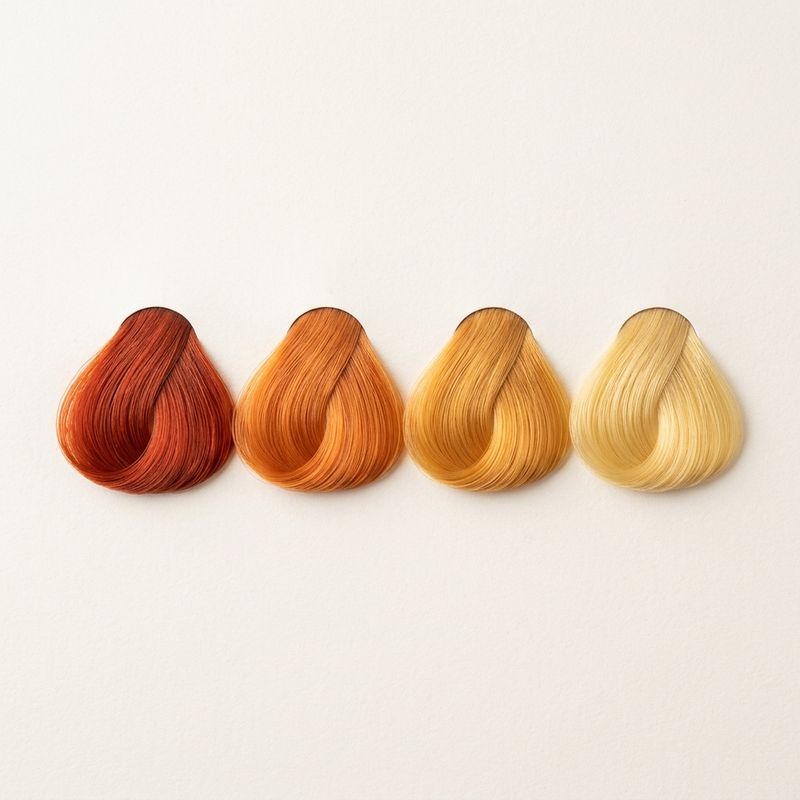
The third question: what underlying pigment you predict by zone
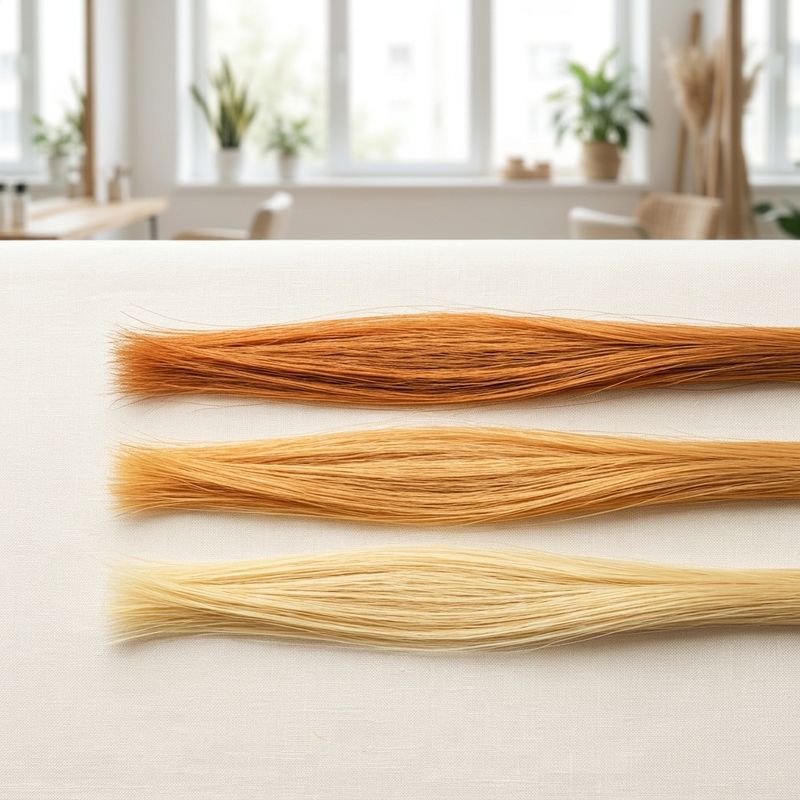
Q3: what underlying pigment is in each zone, and which one will surface as you lift it? Predicting this ahead of time is what lets you talk sessions with the person in front of you, before you mix anything.
On an accumulated box-dye black, the three zones don’t behave alike. The same pass of lightener can leave them at different levels in the same time. Your job is to anticipate where each one lands and confirm it on its strand:
| Zone | What usually happens | What to check on its test strand | What it decides |
|---|---|---|---|
| Root (new growth and the latest retouches) | Less deposit on top plus scalp heat: usually climbs first | Which base it reaches and whether it lifts evenly | Whether it reaches the target base in this appointment |
| Mids | Retouch layers dragged down: they resist | How far they lag behind the root | Whether they need more passes than the root |
| Ends | The heaviest load on the most porous fiber: they lift unevenly | Whether a reddish tone stays put, and how elasticity responds | Whether they’re worked separately or wait for another session |
The table is a map of expectations, with no levels or session counts fixed in advance: the strand from each zone supplies those before you promise anything. And it explains why the root can look clean on day one while the ends still pull copper. Wella describes it in the same hot-roots guide: the root benefits from the warmth of the scalp, and with a lightener it can lift clean while the lengths still look yellow. On a box-dye black the load adds to that, because the ends started with more pigment. You didn’t do it wrong.
When the length carries years of deposit, it’s worth checking how much residual pigment is left after the first lift. We cover it in residual pigment in bleached hair.
One appointment or three: how the diagnosis decides
Here’s where it all comes together. A lightener removes pigment, but not evenly when the previous load is uneven. Over accumulated oxidative pigment, like a repeated box-dye black, lifting can run slower and patchier than it would on a natural base of the same level.
Schwarzkopf’s IGORA ROYAL technical manual for Spain sums it up for any blonde (p. 28): the starting base and the target color decide whether it’s done in one step or needs a second, and in its checklist that second step is toning after the lift. The number of sessions a box-dye black needs shows up in each zone’s strand. With years of deposit on top, expect that the diagnosis may call for more than one to reach blonde without compromising the fiber. Forcing it all into a single pass is the shortest route to broken hair.
And here’s another decision the diagnosis drives: removing the artificial color before you bleach. Over accumulated oxidative pigment, the first step can be a reducing color remover instead of lightener, and they don’t do the same job. Wella’s fact sheet presents its Color Renew remover as a reducer of oxidative color that doesn’t lighten the natural hair color; lightener, on the other hand, also lifts melanin, and it’s what raises the level. If the strand shows that, once the deposit is out, the level underneath is already close to what you’re after, starting with the remover can spare an already-stressed fiber some oxidation. If it shows levels are missing, you still need to lift. How the strand reads that is in strand test: extractor or lightening, and why color can come back if the finish fails, in why color returns after a color remover.
That ties into the other two levers the diagnosis decides:
- Bond builder: in a service whose whole point is not breaking the fiber, it goes into the bowl from the start, at the dose its manufacturer sets. The reference brand’s dosing is broken down in bond-builder dosage in lightener.
- Developer volume: session count and volume are decided together. On the scalp, Wella caps its Blondor lighteners: its lightening product guide (US edition) asks for developer not exceeding 6% (20 vol), and in the Blondor usage booklet (UK edition) regrowth goes with 6%, while 9% and 12% only appear in techniques away from the scalp. With another lightener, follow its own instructions. What the zone-by-zone diagnosis saves you from is raising the volume on the lengths to squeeze into one appointment what the fiber needed spread over several.
So, one appointment or several? The diagnosis answers in conditions, not with a fixed number:
- If the strand test lifts clean and even in all three zones, and the fiber holds → it can land in one.
- If the mids resist and the ends stall at orange → plan on more than one, and decide at each close whether that in-between base needs a tone to leave the salon.
- If the ends are very porous, elasticity is borderline, or a reddish tone won’t lift → the plan goes in stages, and you say so from the start.
Promise one appointment when the diagnosis calls for several, and you end up with broken hair and someone who doesn’t come back to your chair. For the full picture of the lifting process itself, the professional bleaching guide covers stages, timing, and fiber protection.
Common mistakes that turn an appointment into a rescue
- Promising the blonde before the strand test: this is the root error. A promise without a diagnosis compromises the result before you start. Test first, then price and session count.
- Toning during the lift instead of after: the underlying pigment has to be read once it’s surfaced, not pre-empted. Lift to the level, then neutralize by the real level.
- Treating all three zones as one: root, mids, and ends of a box-dye black start from different loads. Same formula and same timing across all three = three different results.
- Confusing color removal with bleaching: over accumulated artificial pigment, removing the color first with a remover and lifting after isn’t the same as going straight in with lightener. Skip reading what’s under the deposit and you can end up putting oxidation on hair where removing the color would have been enough.
- Leaving the incompatibility test for last: it’s the first safety check and comes before the lift diagnosis (we covered it above). That test and the strand test are distinct, complementary checks: the first decides whether there’s a service, the second how it will go.
Frequently asked questions
Can I take a box-dye black to blonde in a single session?
Sometimes, but only the diagnosis decides. It depends on how much accumulated oxidation there is by zone and how it climbs in the strand test. If the ends carry years of deposit, the honest move is usually to plan several sessions so you don’t break the fiber.
Why does the root lift faster than the ends if the black looks the same?
Because the black that looks uniform isn’t, underneath. The ends accumulate deposit from every retouch dragged down the length, while the root only holds the color of the last few months and also works with the warmth of the scalp. More accumulated pigment tends to mean slower, patchier lifting.
Do I neutralize the orange while I lift, or after?
After. Neutralizing happens once the lift has revealed the underlying pigment and the zone has reached the target level. Toning during the lift covers a base that hasn’t climbed enough yet. If you see orange or red and the target is a blonde lighter than that base, you keep lifting, as long as elasticity allows.
What tests do I run before bleaching a box-dye black?
Before the lightener, two that don’t replace each other: the incompatibility test (in case there’s compound henna or metallic salts that react with the peroxide) and the strand test by zone (to predict lift speed and underlying pigment). The first is safety; the second is diagnosis. If the service closes with a toner or oxidative color, its allergy test goes 48 hours ahead, as its instructions ask, and once the hair has been lightened, elasticity gets checked on those same strands.
Key takeaways
- Box-dye black isn’t a level, it’s a layer of accumulated oxidation that’s uneven by zone. Root, mids, and ends lift at different speeds.
- Three questions make the diagnosis: the real history by zone (read, not declared), the order of operations (lift and read, tone after), and the underlying pigment predicted by zone.
- The order decides the formula: you neutralize by the real level reached, never during the lift itself.
- The diagnosis decides one appointment or several, and saying so before you start is what separates a promise from professional service.
Calculate color corrections with AI
Want to formulate step-by-step color corrections based on the starting level and the real chemical history of each client?
What happens if you bleach box-dyed black without an oxidation diagnosis?
In the app, we ask you a question like this one, but about your own client.
Up for this week’s case? → More on blondes and lightening →Related articles
Practice with our colorimetry tools
Calculators, neutralization wheel, AI consultation...
The Blendsor newsletter
Color techniques and trends for professionals. No spam.
A client in the chair right now?
The Blendsor advisor gives you the precise formula for this technique with your salon's brands — and saves it to your client's card.
Ask about your caseWritten by the Blendsor team
Professional hair colorimetry experts with experience in AI-assisted formulation. We combine color science, salon practice and technology to help colorists formulate with precision.