Chai Latte Hair: Professional Formula for a Flattering Tone
Learn what chai latte hair is and how to formulate it by starting level. The beige-cinnamon tone that flatters without going full blonde. Professional formulas included.
Blendsor
Blendsor Team
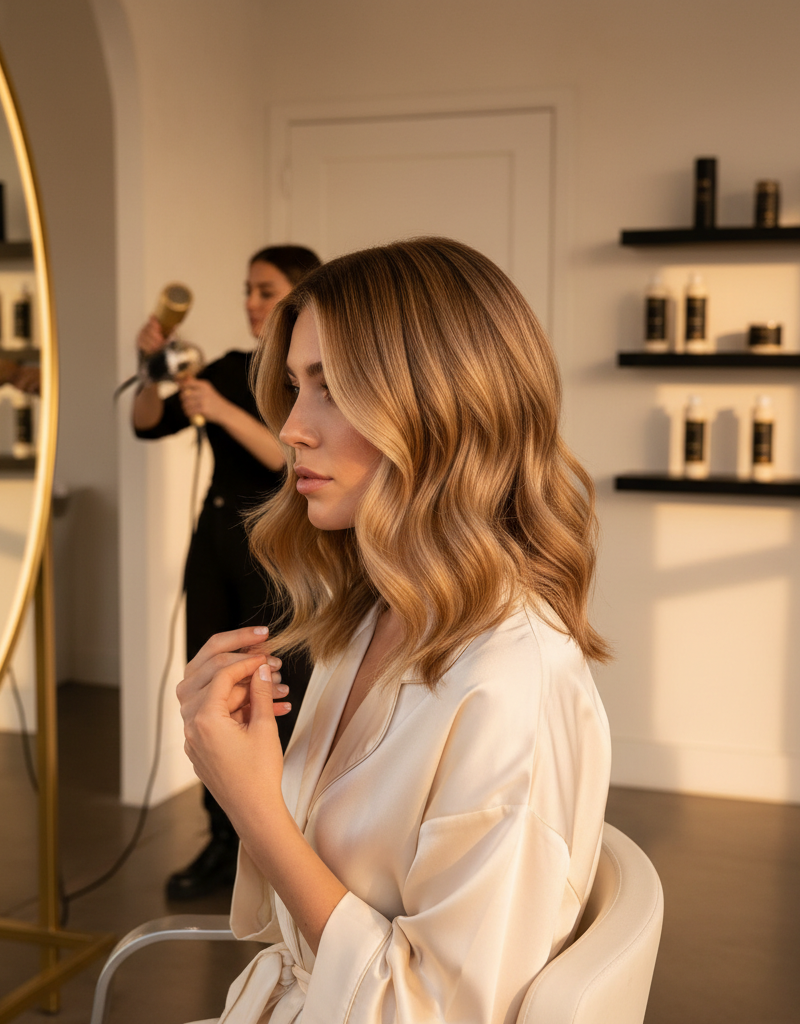
It’s not blonde. It’s not brunette. It’s the tone that makes your client look five years younger without anyone knowing exactly why.
If you’ve been doing color for a while, you already know this: the most flattering tones are rarely the lightest or the darkest. They’re the ones that play with temperature. And chai latte hair does it better than almost anything else right now.
Here’s what it actually is, how to formulate it by starting level, and how it differs from dirty blonde and milk tea hair. Real formulas, not Instagram mood boards.
Quick summary: Chai latte hair is a beige-golden base (levels 7-8) with cinnamon highlights (9.3 or 9.34 with 30 vol) and a creamy unifying toner (9.13 diluted with 10 vol). The colorimetric key is the .3 or .34 undertone — never ash. Roots last 8-10 weeks without visible regrowth because the tone grows in without harsh contrast.
What Is Chai Latte Hair?
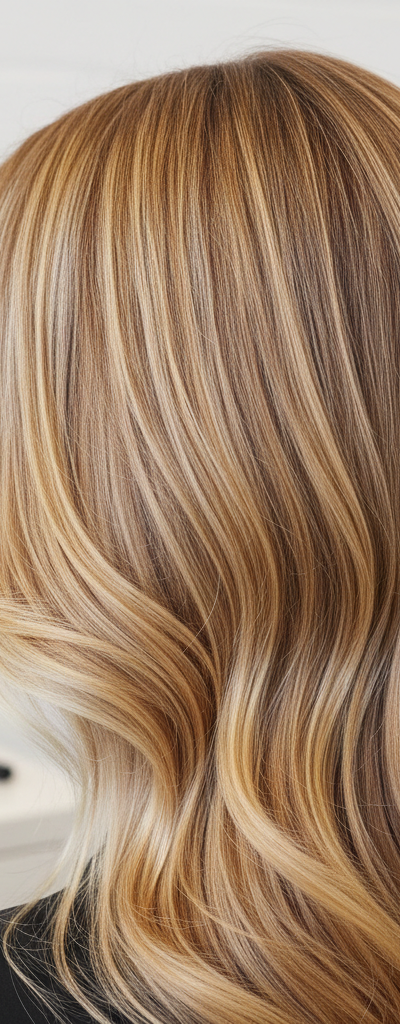
Chai latte hair is a beige-golden base (levels 7-8) with cinnamon-warm highlights and slightly lighter ends. It belongs to the neutral-warm blonde family with a .3 or .34 undertone. Unlike a flat golden blonde, its dimension comes from the interplay between a slightly darker base and cinnamon highlights that create depth without heaviness. Roots go 8-10 weeks without visible contrast.
Chai latte hair is a tone that combines a beige-golden base (levels 7–8) with cinnamon-warm highlights and slightly lighter ends. The result mimics the color of a chai tea latte: not flat blonde, not dark brunette, but that creamy in-between with warm spice notes.
Technically, it belongs to the neutral-warm blonde family with a softened golden-orange undertone (coordinate .3 or .34). What makes it distinct is the interplay between a slightly darker base and cinnamon highlights, which create depth without heaviness.
According to Behind The Chair, chai latte hair has become one of the most searched tones among professional colorists in 2025–2026, driven by celebrity references including Khloé Kardashian and Sydney Sweeney.
This tone works exceptionally well because:
- It softens facial features through its neutral-warm temperature
- It’s low maintenance — roots grow in without harsh contrast
- It suits warm and neutral skin tones (and with adaptation, cool tones too)
- It looks rejuvenating without the harshness of very light blonde
Pro tip: Chai latte hair is not a block color. Its magic is in the dimension: darker base, internal cinnamon highlights, slightly lifted ends. Without that interplay of levels, the result goes flat.
How Do You Formulate Chai Latte Hair Step by Step?
The structure for a level 6 starting point has three phases: base 7.3+7.34 (50/50) with 20 vol for 35-40 min, cinnamon highlights in 9.3 or 9.34 with 30 vol placed at mid-lengths and ends, and toner 9.13 diluted 50% with 10 vol for 10-15 minutes on damp hair. The toner is the step that unifies all tones and delivers the signature creamy finish.
This is the base structure for a client with a level 6 starting point. Below you’ll find the adaptation table for levels 5 through 8.
Step 1: Assess the Starting Point
Before mixing anything, identify:
- Natural level — with and without previous color
- Underlying pigment — at levels 6–7, expect orange to yellow-orange
- Porosity — porous hair absorbs warm pigment faster and more intensely
If there’s previous color with a saturated orange base, you may need a partial lightening step before toning. Check our guide on professional balayage vs highlights for technique options.
Step 2: Base Formula (Full Head or New Growth)
For a chai latte base from a level 6 starting point:
- Shade: 7.3 (golden blonde) + 7.34 (golden copper blonde) — 50/50
- Developer: 20 vol (6%)
- Timing: 35–40 minutes
- Expected result: level 7 base, golden-warm undertone
Step 3: Cinnamon Highlights (the Defining Element)
The highlights are what transforms a golden blonde into chai latte hair. Without them, the result is flat.
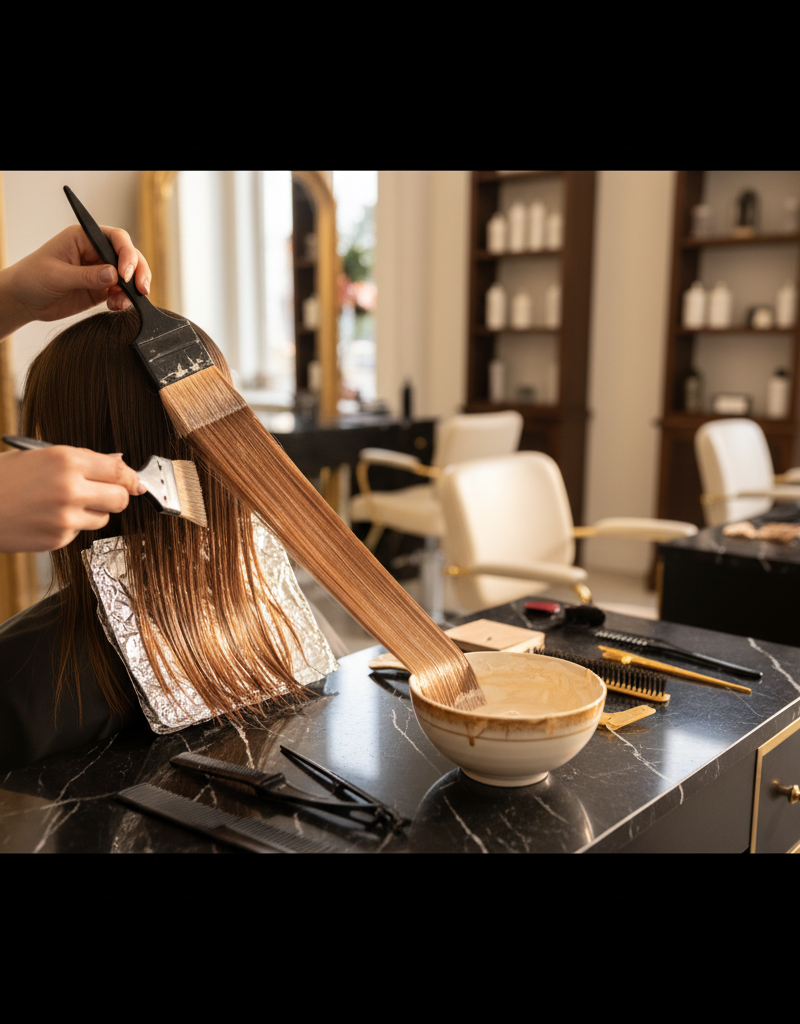
- Technique: balayage or foil highlights (medium sections, not fine babylights)
- Shade: 9.3 (light golden blonde) or 9.34 (light golden copper blonde)
- Developer: 30 vol (9%) for maximum lift on highlights
- Placement: concentrated in mid-lengths and ends, denser around the face
Step 4: Toner (the Latte Finish)
The toner is what ties everything together and gives that signature “latte” finish:
- Formula: 9.13 (light ash golden blonde) or 10.13 — diluted 50% with distilled water or neutral base
- Developer: 10 vol (3%) — just enough to activate, not lift
- Timing: 10–15 minutes on damp hair
- Result: unifies temperature, softens orange, adds creamy shine
How Does the Chai Latte Formula Adapt by Starting Level?
The formula changes significantly by level: level 5 (intense orange base) needs 7.34 + orange corrector 0.43 (80/20) and toner 9.13 diluted 60/40; level 6 uses 7.3+7.34 (50/50) and toner 9.13 at 50%; level 7 can go straight to highlights 10.3 with 30 vol; level 8 only needs fine highlights and direct toner. At levels 5-6, never skip the orange corrector step.
This table is the difference between a generic result and a truly personalized one. Chai latte hair color looks very different depending on the client’s starting point.
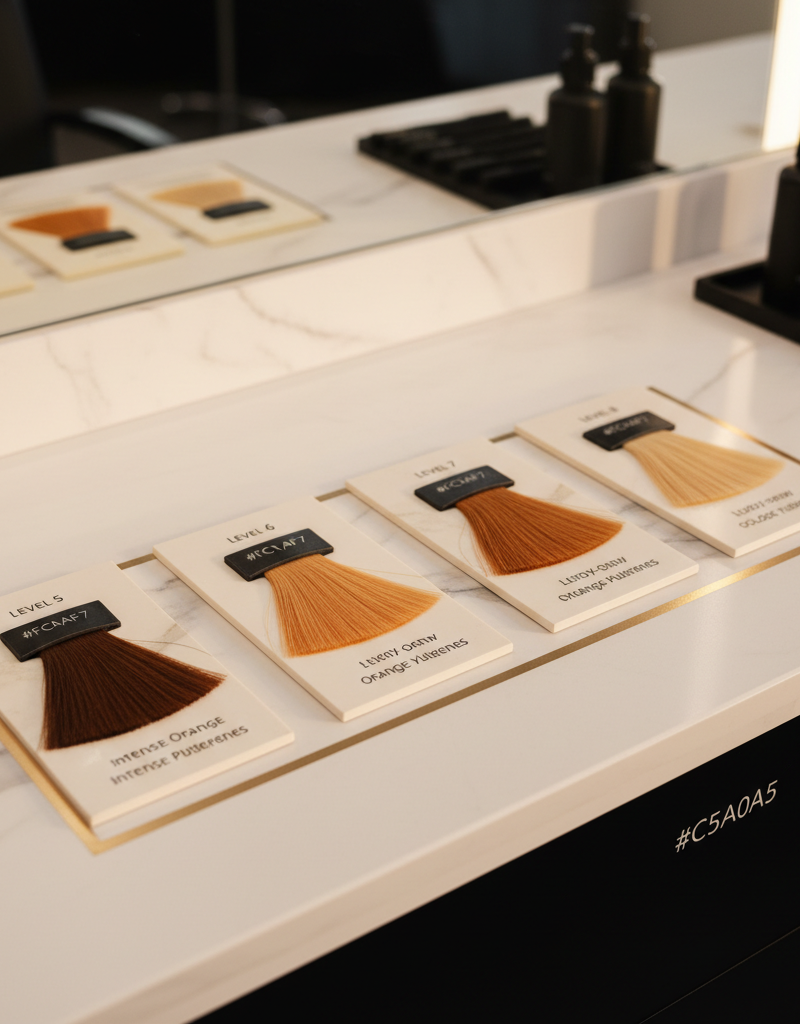
| Starting Level | Underlying Pigment | Base Formula | Highlights | Toner |
|---|---|---|---|---|
| 5 | Intense orange | 7.34 + orange corrector (0.43) 80/20, 20 vol | 9.3 with 30 vol | 9.13 diluted 60/40 with neutral base |
| 6 | Orange-yellow | 7.3 + 7.34 (50/50), 20 vol | 9.3 or 9.34, 30 vol | 9.13 diluted 50/50 |
| 7 | Yellow-orange | 8.3 with 20 vol, or go straight to toner | 10.3 with 30 vol | 10.13 or 9.13 diluted |
| 8 | Yellow | Toner + fine highlights only | 10.3 with 20 vol | 10.13 straight or with water |
For levels 5 and 6, do not skip the orange corrector if the underlying pigment is saturated. Chai latte hair is warm, but controlled warm — not orange.
For levels 7 and 8, the process simplifies considerably. You can often skip the base formula and work directly with highlights and toner.
How Does Chai Latte Hair Differ from Other Trending Tones?
The core difference from dirty blonde is undertone: chai latte uses .3 or .34 (warm golden-cinnamon), dirty blonde uses .1 or .17 (cool ash-beige). Milk tea sits at cool-neutral with beige-rose undertones. Honey blonde is warmer and more saturated. Teddy bear blonde is lighter (levels 8-9) and more uniform. Same level range, completely different temperature and visual effect.
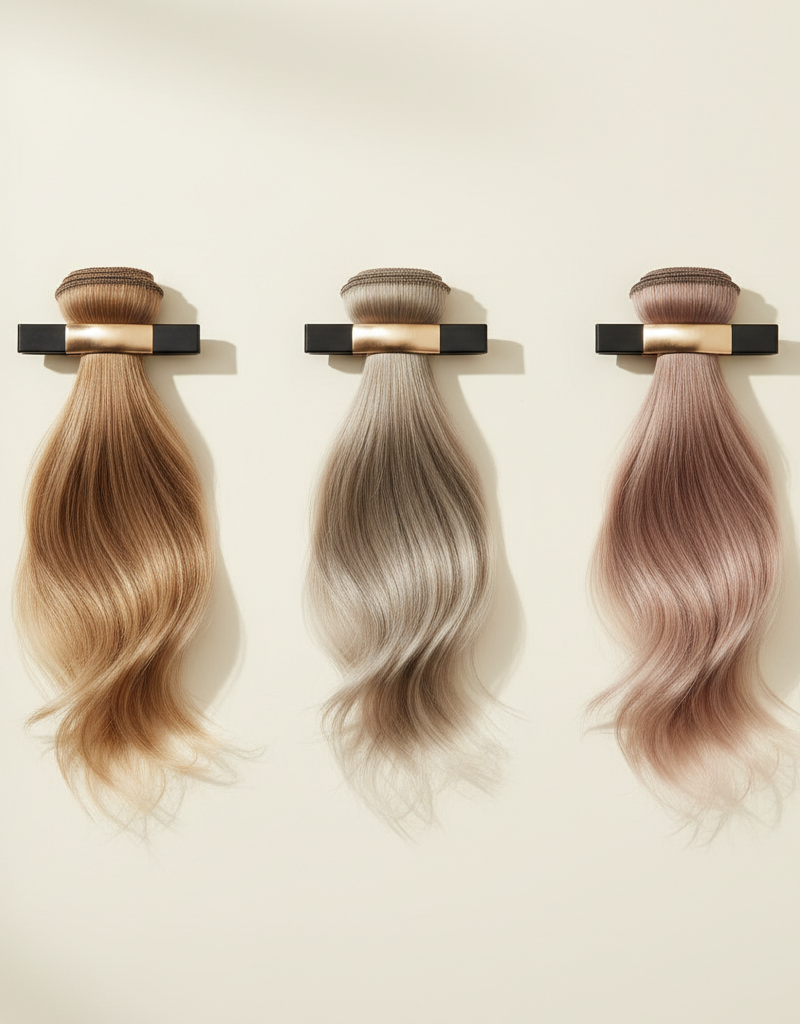
These tones get confused constantly if the underlying colorimetry isn’t clear. Here’s how they actually differ:
| Tone | Temperature | Dominant Undertone | Approx. Level | Key Difference |
|---|---|---|---|---|
| Chai latte hair | Warm-neutral | Golden + cinnamon | 7–8 | Cinnamon highlights + beige base |
| Dirty blonde | Cool-neutral | Ash + beige | 7–8 | No warmth, more grayish |
| Milk tea hair | Cool-neutral | Beige-rose | 7–9 | Cooler undertone, almost lavender |
| Honey blonde | Warm | Golden-honey | 7–8 | More saturated, more yellow |
| Vanilla chai | Warm-light | Vanilla + golden | 9–10 | Lighter, less cinnamon |
| Teddy bear blonde | Warm | Honey-butter | 8–9 | Lighter and more uniform than chai |
The core difference between chai latte and dirty blonde is undertone: chai has golden-cinnamon (.3 or .34), dirty blonde has ash-beige (.1 or .17). Similar levels, opposite temperatures.
If your client wants “something between blonde and brunette, warm but not orange,” chai latte hair is the answer. If she wants “muted, low-shine,” you’re heading toward dirty blonde. For a deeper look at warm tone construction, check our article on dimensional blonde techniques.
What Are the Most Common Chai Latte Hair Formulation Mistakes?
The five most common mistakes are: formulating with ash instead of golden undertone (result is flat and lifeless), skipping the final toner (the creamy finish depends entirely on this step), using highlights that are too fine (babylights lose dimension) or too thick (harsh contrast), applying the same formula regardless of starting level, and adding heat during processing (intensifies orange undertones and throws off tonal balance).
Mistake 1: Confusing It with Dirty Blonde
Chai latte is warm. Dirty blonde is not. If you formulate with ash expecting chai latte, you’ll get a flat, lifeless result. The cinnamon undertone is what defines this tone — it’s non-negotiable.
Mistake 2: Skipping the Toner
Without a final toner, the result can read as too orange, especially on levels 5–6. The toner unifies and delivers the creamy finish that makes this tone look like a proper chai latte.
Mistake 3: Wrong Highlight Size
Babylights are too fine — you lose dimension. Very thick sections create harsh contrast. The sweet spot is medium sections with balayage or foil in the mid-lengths. Technique matters as much as formula.
Mistake 4: Using the Same Formula Regardless of Base Level
A formula for level 5 and level 8 will look completely different. Always adapt by starting level and always assess the underlying pigment before mixing. The table above exists for a reason.
Mistake 5: Applying Heat During Processing
Chai latte hair processes better without additional heat. Heat can intensify orange tones and throw off the tonal balance you’re building.
Frequently Asked Questions
Does chai latte hair work on dark hair (levels 4–5)?
Yes, but it requires more preparation. At level 4, you’ll need to lighten to at least level 6–7 before toning. Without that lift, the chai latte pigments can’t express correctly and the result will look muddy or muted.
How long does chai latte hair last without a touch-up?
The base color can go 8–10 weeks before roots become visible, which is one of the reasons this tone is so popular — it grows out without harsh contrast. Highlights can last 5–6 months without needing full renewal. It’s one of the lowest-maintenance options in the warm blonde family.
What skin tones suit chai latte hair?
It works best on warm and neutral skin tones. For cool skin tones, adjust by reducing the cinnamon component (.34) and adding more neutral base or a touch of .1 in the toner. The result stays within the chai latte family but sits cooler and more wearable for that client.
What’s the difference between chai latte hair and teddy bear blonde?
Teddy bear blonde is lighter (levels 8–9) and more uniform, with a honey-butter undertone. Chai latte sits at levels 7–8 with more contrast between base and highlights, and a more visible cinnamon note. Both are warm, but chai latte has more depth and dimension. See our Teddy Bear Blonde 2026 formula guide for comparison.
Can I do chai latte hair with color melting technique?
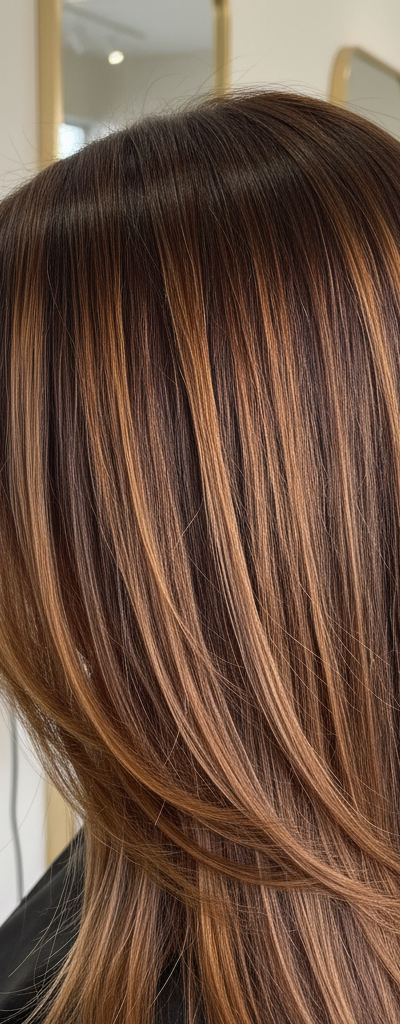
Yes, and it works beautifully. Color melting fuses the dark base with cinnamon highlights in a seamless transition without visible lines. It’s especially useful when the client has a noticeable dark root you want to integrate rather than fight against.
Summary
- Chai latte hair is a beige-golden base (levels 7–8) with cinnamon highlights and a creamy unifying toner
- The colorimetric key: undertone .3 or .34 — never ash
- Always adapt by starting level — the formula for level 5 and level 8 are very different
- The toner is non-negotiable — without it the result loses its signature finish
- It’s not dirty blonde: dirty blonde goes cool, chai latte goes warm-neutral
Calculate Professional Formulas with AI
Want to generate personalized chai latte hair formulas based on each client’s starting level?
Use the hair color mixing calculator to calculate exact proportions for base, highlights, and toner based on each client’s starting level.
Try Blendsor free — 5 formulas per month, no credit card required.
Have you done chai latte hair in your salon? Which starting level gave you the best result?
Related articles
Practice with our free tools
Calculators, neutralization wheel, AI consultation...
The Monday Briefing
Color techniques and trends for professionals. No spam.
Master this technique with exact formulas
Blendsor generates the precise formula for each technique with your brand products. Try the mix calculator or download the app.
Download freeWritten by the Blendsor team
Professional hair colorimetry experts with experience in AI-assisted formulation. We combine color science, salon practice and technology to help colorists formulate with precision.