Teddy Bear Blonde: The Warm Blonde of 2026
What Teddy Bear Blonde is, its variations and how to formulate it by starting level with the Blondor, Koleston, Shades EQ and Color Touch instructions.
Blendsor
Blendsor Team
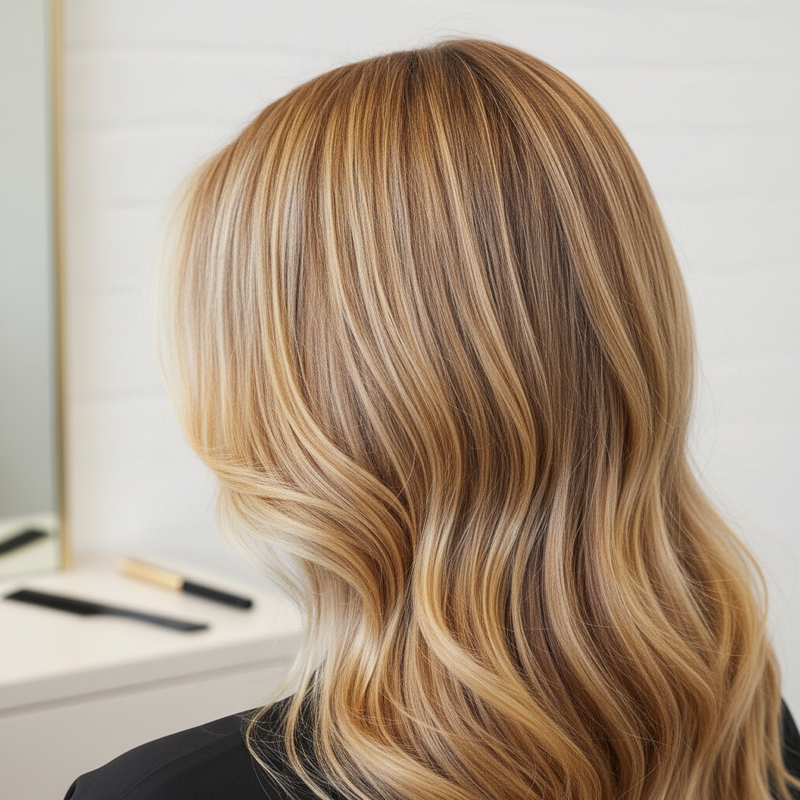
Are clients asking for a blonde that looks natural, warm and luminous, but without tipping into canary yellow?
If you’re a professional colorist, you know that request keeps coming in. And it has a name: Teddy Bear Blonde. It’s one of the warm blondes of 2026, and the difference between getting it right or wrong lies in understanding its variations and formulating with the instructions in front of you.
In this article you’ll see what exactly defines this shade, how to formulate it by starting level, and the mistakes that turn a gorgeous honey blonde into a lifeless straw blonde.
Quick summary: Teddy Bear Blonde is a warm blonde between levels 7 and 9 with gold, honey and caramel tones. It has three variations: Honey Teddy (level 7-8, gold with a touch of copper), Butter Teddy (level 8-9, gold with a touch of soft ash) and Caramel Teddy (level 7-8 pieces in copper gold over the dark natural base, for 4-5 bases). It usually needs fewer visits than a cool blonde: balayage with the natural base showing softens regrowth, and when the tone fades it drops toward the warmth the lightened hair already has.
What Is Teddy Bear Blonde and Why Is It Trending?
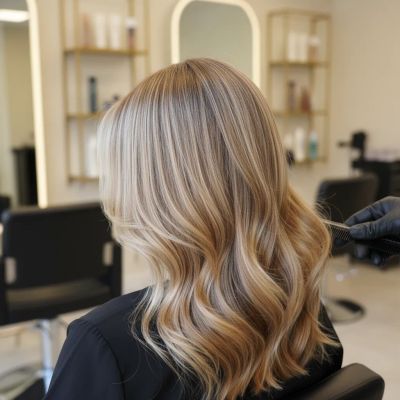
Teddy Bear Blonde is a warm blonde between levels 7 and 9 with gold, honey and caramel tones that recall a teddy bear’s fur. It has depth, movement and natural luminosity. People love it because, with balayage and the natural base showing, regrowth shows less than with a cool blonde, and it suits many skin tones.
Teddy Bear Blonde isn’t a flat or cool blonde: it has depth, movement and that natural luminosity that makes hair look sun-kissed.
It fits within the 2026 hair color trends as the natural evolution of the butter blondes and honey blondes that were already growing.
| Feature | Teddy Bear Blonde | Cool/Ash Blonde | Platinum Blonde |
|---|---|---|---|
| Tone | Honey gold | Ash | Neutral cool |
| Maintenance | Low | High | Very high |
| Target level | 7-9 | 8-10 | 9-10 |
| Skin tones | Warm and neutral | Cool and neutral | Cool |
| Lightening needed | Moderate | High | Very high |
What Are the Teddy Bear Blonde Variations?
Teddy Bear Blonde has three main variations: Honey Teddy (level 7-8, gold with a touch of copper, ideal from a natural level 5-6), Butter Teddy (level 8-9, gold with a touch of soft ash, ideal from 6-7) and Caramel Teddy (level 7-8 pieces in copper gold over the dark natural base, for 4-5 bases).
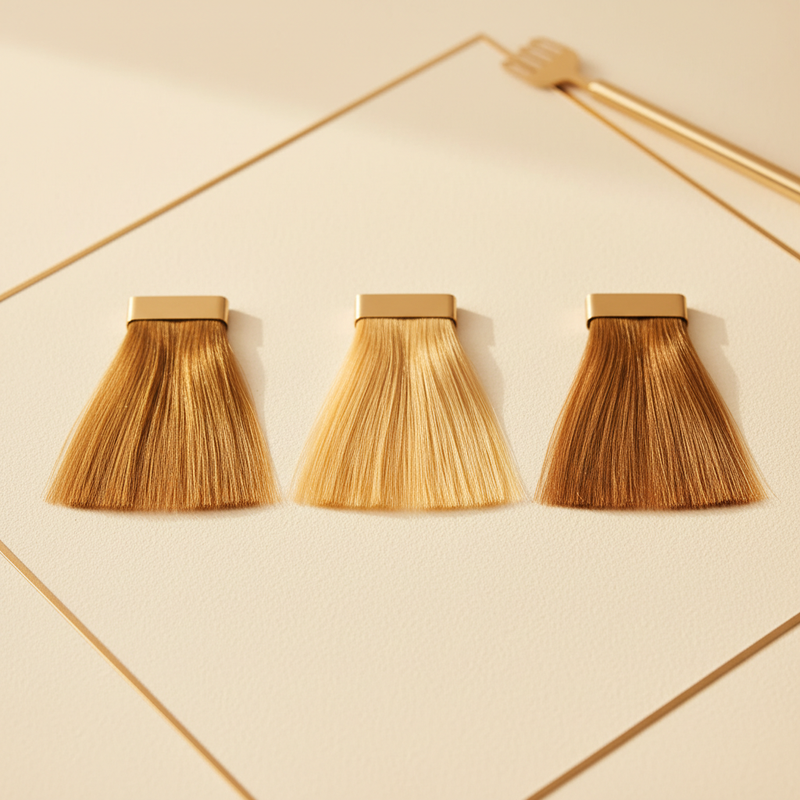
Not all warm blondes are the same. Within the Teddy Bear Blonde universe there are three main variations, and telling them apart lets you deliver exactly what’s being asked for.
Honey Teddy (Honey Blonde)
The middle one for warmth: warmer than Butter and brighter than Caramel. It sits between levels 7 and 8 with gold tones and a controlled touch of copper. Ideal for clients starting from a medium level (5-6) who don’t want aggressive lightening.
Dominant tone: gold, with a touch of copper gold
Butter Teddy (Butter Blonde)
The classic. Level 8-9 with gold tones and no copper. It’s the one most associated with the name butter blonde and the one that works best as a dimensional blonde when combined with babylights.
Dominant tone: gold, with a touch of soft gold ash
Caramel Teddy (Caramel Blonde)
The deepest. The lightened pieces stay at level 7-8 and the depth comes from the dark natural base left between them, uncolored. Designed for natural 4-5 bases that want a noticeable change with more dark base showing than Honey.
Dominant tone: copper gold, over a natural gold base
| Variation | Level | Base tone | Best for natural level |
|---|---|---|---|
| Honey Teddy | 7-8 | Gold + touch of copper | 5-6 |
| Butter Teddy | 8-9 | Gold + touch of soft ash | 6-7 |
| Caramel Teddy | 7-8 | Copper gold + natural gold | 4-5 |
Each brand numbers these tones its own way: check the code on your chart before mixing.
If the variation needs more levels than the example permanent color lifts, which is one or two (a Butter 9 from a 6, or a Honey 8 from a 5), the route is highlights or balayage, not permanent color.
What Are the Professional Formulas by Starting Level?
The formula depends on the starting level. From brown (level 4-5) you lighten with highlights or balayage to a level 8 base and tone with a warm gloss. From natural dark blonde (6-7) a warm permanent color with the developer the instructions call for to lift one or two levels is enough. From light blonde (8-9) you only need to deposit with a gloss. Each line’s instructions set the ratio, developer and timing.
This is where you see the difference between formulating well and formulating with excellence.
Pro tip: always assess porosity before formulating. Porous hair, like lightened ends, lets go of warm pigment sooner and absorbs more cool pigment: the honey fades faster, and a touch of ash can turn out darker, duller or even greener than planned. The strand test tells you before you apply to the whole head.
Before lightening or coloring: Wella’s Koleston Perfect leaflet says to “always perform an allergy test 48 hours before any color service”; do it before the gloss that follows lightening too. Also do a strand test if there’s previous color or lightening, henna, a chemical straightener or a perm, and check elasticity before lightening: a wet strand that stretches and doesn’t spring back isn’t ready for another chemical process. If the scalp is irritated or broken, postpone the appointment.
Starting From Level 4-5 (Medium to Light Brown)
You need to lighten before toning, but not the whole head: teddy bear from brown is built with highlights or balayage that leave pieces of the natural base, which give the look its depth. The target base is a level 8 in the lightened sections, because a gloss deposits color rather than lifting the base. For Caramel Teddy, the lightened pieces can stop at level 7: that base is warmer, and the variation’s copper gold works with it instead of fighting it.
Step 1, lightening (example with Blondor Multi Blonde Powder, Wella’s global and UK fact sheets and US lightening guide):
- Mix: Wella’s US lightening guide says to add developer 1:1.5 up to 1:2
- On the scalp: developer at 6% or below
- Time: Wella’s global fact sheet sets a ceiling, not a set time: do not exceed 50 minutes. Wella’s UK fact sheet and US lightening guide also say no heat, and the US guide says to check frequently until you reach the lift you want
- If it hasn’t reached the base at the ceiling: remove, rinse and plan another session; don’t extend the time or raise the developer on the fly
Step 2, warm toning:
- Service: a gold gloss with the variation’s touch (copper for Honey, soft ash for Butter, copper gold for Caramel). For Butter, test the ash on a lightened strand first: it’s porous, absorbs cool pigment more and, next to the gold, can turn greenish. If it does, drop the ash from the formula.
- Example: Shades EQ, which Redken US mixes 1:1 with its Processing Solution and processes for 20 minutes at room temperature
- Result: teddy bear at the level you lifted to. As the gloss washes out, the yellow of the lightened base shows through: that’s the cue to tone again.
Starting From Level 6-7 (Dark Blonde)
If the 6-7 base is natural, with no previous color, you can work with permanent color directly. If it’s already colored, remember that color doesn’t lift color: the colored lengths stay where they are or need lightening. Lifting one or two levels exposes this base’s warm underlying pigment: for Honey Teddy that helps, and for Butter Teddy the touch of soft ash helps hold back the orange.
Formula: a gold permanent color with the variation’s touch, at the target level. Example with Koleston Perfect (Wella’s usage guidelines): with the 1:1 mix, Welloxon Perfect 20 vol (6%) for 1 level of lift and 30 vol (9%) for 2. Time: what your line’s instructions give for lifting. Gentler alternative: if you only want to change the tone without lifting, a gold gloss (see level 8-9).
Starting From Level 8-9 (Light to Very Light Blonde)
You only need to deposit tone. The most common mistake here is overloading warm pigment.
Service: a light gold gloss. Example with Color Touch: per Wella’s US professional store, it’s mixed 1:2 with Color Touch Emulsion 1.9%, the one they recommend for color deposit and toning, and processed for 20 minutes without heat or 15 with heat.
Starting From a Previous Cool Blonde
If the client is coming from a cool or ash blonde, drop any touch of ash from the formula: the hair already brings the cool. Over blue-ash residue, gold can turn greenish. Do a strand test: if it looks dull or greenish, a touch of red or copper fixes it, not more gold. And if that previous blonde is well above the target level, darkening it may not be a simple gloss but a color fill: the strand test decides. For a more neutral creamy blonde with a full foil technique, the foiled cashmere technique is the alternative that revives the 90s style.
| Starting level | Pre-step | Teddy bear service | Example with instructions |
|---|---|---|---|
| 4-5 | Highlights or balayage to a level 8 base | Warm gloss | Blondor (Wella fact sheets), then Shades EQ 1:1 (Redken US) |
| 6-7 | Not needed on natural hair; with previous color, strand test | Warm permanent color | Koleston Perfect 1:1 with 20 vol (1 level of lift) or 30 vol (2 levels), Wella’s usage guidelines |
| 8-9 | Not needed | Light gold gloss | Color Touch 1:2 with 1.9% emulsion (Wella US) |
| Previous cool blonde | Strand test | Gloss without the ash touch | The one for your level |
What Application Technique Gives the Best Teddy Bear Blonde Results?
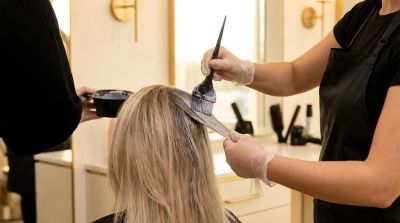
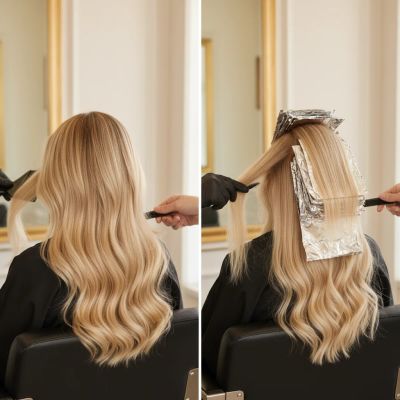
For an authentic, dimensional Teddy Bear Blonde, combine three steps: a base, slightly lighter balayage pieces around the face frame and crown, where light naturally hits, and depth at the nape by leaving the base unlightened or a level darker. What the base is depends on the starting point: from a natural 6-7 it’s the warm permanent color at the target level; from a 4-5 it’s the natural brown itself, left uncolored, and it’s what gives the depth.
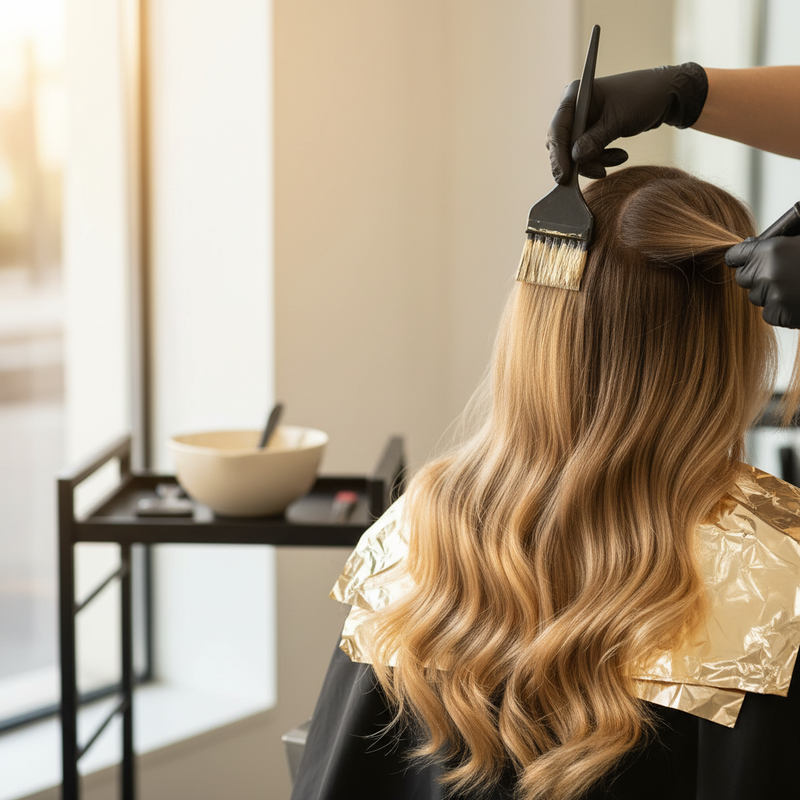
Application matters as much as formulation:
- Base: from a natural 6-7, apply the warm permanent color at the target level starting on mids and ends, because scalp heat makes the root lift faster. From a 4-5 the base isn’t colored: the example permanent lifts one or two levels, which from there don’t reach a level 8 base, and the natural base left showing is what avoids a regrowth line
- Balayage pieces: lighten slightly brighter strokes with bleach where light naturally hits (face frame, crown and ends) and tone them with the gold gloss. If the ends are already colored, color won’t lift them
- Strategic depth: at the nape and lower section, leave the base unlightened or go a level darker to create natural dimension
The first appointment is the long one, especially if there’s lightening; touch-ups, with the base done, are shorter.
What Are the Most Common Mistakes When Formulating Warm Blondes?
The three most common mistakes are: too much copper, which turns Teddy Bear Blonde carrot orange (gold leads and copper is only an accent), toning over a lightened base that stopped at orange, and depositing with a developer meant for lifting instead of the gloss line’s own.
These are the three mistakes that come up most in the salon:
-
Too much copper: using too much copper turns Teddy Bear Blonde into carrot orange. The key is gold as the base, with copper as an accent, never the lead
-
Toning over a base that stopped at orange: if the lightening stops at a strong orange and you apply a warm tone on top, the result will be a muddy blonde. A gloss deposits color and doesn’t lift that base: if the goal is lighter than that base, keep lightening in another session before toning
-
Depositing with a lifting developer: high-volume developer is for lifting, not toning. To deposit, use the developer or emulsion of the gloss line: Wella’s US professional store, for example, mixes Color Touch with a 1.9% or 4% emulsion
How Do You Maintain Teddy Bear Blonde Between Appointments?
It usually needs fewer visits than a cool blonde: balayage with the natural base showing softens regrowth, and when the tone fades it drops toward the warmth the lightened hair already has. The routine includes a shampoo for color-treated hair, a gold-pigmented mask, heat protection and a maintenance gloss when the tone dulls.
When the warm tone fades it reads less like a mistake than an ash going yellow, but it still needs protecting:
- Shampoo for color-treated hair, to keep the gold pigment
- Gold-pigmented mask (gold, not copper)
- Heat protection: heat speeds up color loss
- Maintenance gloss when the tone dulls, between full appointments
Frequently Asked Questions
Does Teddy Bear Blonde work on dark hair?
Yes, but it needs lightening first. From level 4-5, you lighten with highlights or balayage to a level 8 base and then tone. It’s worth it, but make it clear from the consultation that the first appointment is long: it’s a transformation.
What’s the difference between Teddy Bear Blonde and honey blonde?
Honey blonde is a variation within the Teddy Bear Blonde spectrum: level 7-8, with gold tones and a touch of copper. Teddy Bear Blonde as a concept also covers butter (lighter and gold) and caramel (deeper, with more dark base showing).
How long does Teddy Bear Blonde last between touch-ups?
It’s one of the most forgiving blondes to maintain. What makes regrowth show less is the technique: with balayage and the natural base showing there’s no hard root line. And when the tone fades, it drops toward the warm lightened base. What sets when to come back is the gloss: it fades with shampooing, so the tone needs refreshing before the root does.
Can you do Teddy Bear Blonde with balayage?
Yes. In fact, balayage is the technique that brings it out best, because it creates that natural dark-to-light transition that defines the look. Combine the base (the natural brown from a 4-5, or a warm permanent color from a natural 6-7) with lightened strokes on mids and ends.
Which brands work best for this shade?
Any professional line with golds and coppers works, but each brand numbers, mixes and processes its tones its own way: what matters is the gold tone and following your line’s instructions. Tools like Blendsor help you translate the formula to your salon’s brand.
In Summary
- Teddy Bear Blonde is a warm blonde with gold, honey and caramel tones
- It has three main variations: Honey (level 7-8), Butter (level 8-9) and Caramel (level 7-8)
- The key is the gold tone as the base, with copper only as an accent
- With balayage and the natural base showing, it usually needs fewer visits than a cool blonde
- From brown you lighten with highlights or balayage; from natural dark blonde a permanent color is enough; the instructions set the ratio and developer
Calculate Professional Formulas with AI
Want to check what level and tone you get when mixing two shades in your formula? Use the hair color mixing calculator before you prep the bowl.
Want personalized Teddy Bear Blonde formulas based on starting level and color history?
What's the difference between teddy bear blonde and regular honey blonde?
In the app, we ask you a question like this one, but about your own client.
Up for this week’s case? → More on blondes and lightening →Related articles
Practice with our colorimetry tools
Calculators, neutralization wheel, AI consultation...
The Blendsor newsletter
Color techniques and trends for professionals. No spam.
A client in the chair right now?
The Blendsor advisor gives you the precise formula for this technique with your salon's brands — and saves it to your client's card.
Ask about your caseWritten by the Blendsor team
Professional hair colorimetry experts with experience in AI-assisted formulation. We combine color science, salon practice and technology to help colorists formulate with precision.