Hair Elasticity Test: How to Assess Hair Before Lightening
Learn to perform the hair elasticity test step by step. Discover what it reveals about hair health and when NOT to proceed with a lightening service.
Blendsor
Blendsor Team
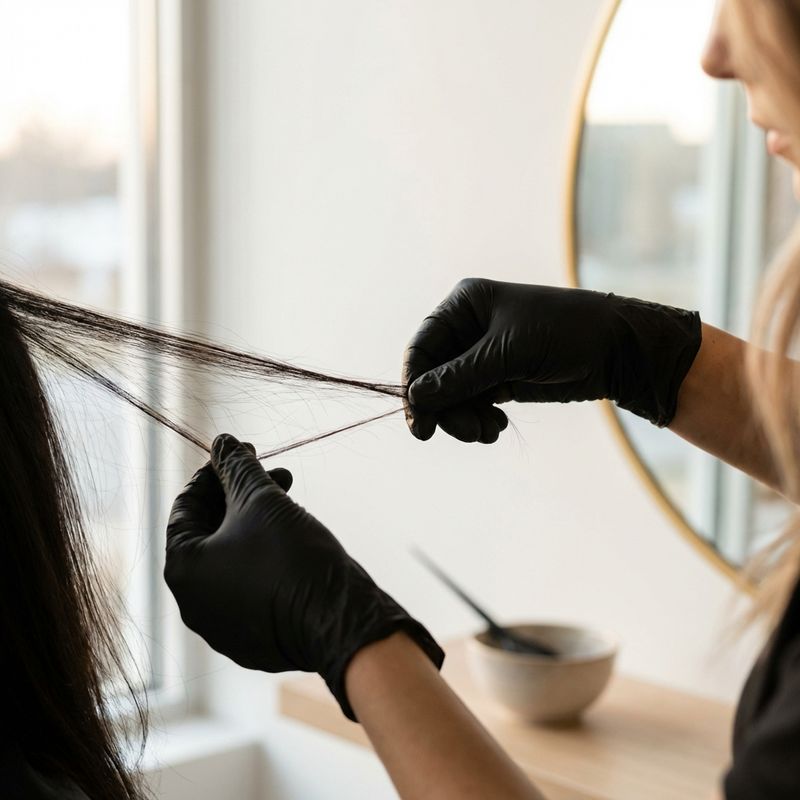
Have you ever stretched a strand between your fingers and the hair simply didn’t bounce back?
If you work with professional color, that moment tells you more than any technical data sheet. The hair elasticity test is the fastest, cheapest, and most reliable diagnostic tool available. It costs nothing, takes ten seconds, and can save you from a costly complaint.
In this article, you’ll learn exactly how to perform it, what the results mean, and when those results should make you tell your client “not today.”
What the Elasticity Test Is and Why It Matters Before Lightening
The elasticity test measures hair’s ability to stretch and return to its original shape. Healthy hair can stretch up to 30% of its length without breaking and recover its form when released. When the cuticle is damaged or the cortex has lost its disulfide bonds, that ability disappears.
Before any lightening service, this test reveals the true condition of the hair fiber — something that neither touch nor visual inspection can confirm with the same precision.
| Test Result | Meaning | Professional Decision |
|---|---|---|
| Stretches and snaps back instantly | Optimal elasticity | Proceed with lightening |
| Stretches and returns slowly | Medium elasticity | Proceed with caution (lower developer volume) |
| Stretches and doesn’t return | Compromised elasticity | Do not lighten — treat first |
| Breaks when stretched | Severe damage | Do not lighten — risk of massive breakage |
Professional insight: healthy hair stretches noticeably and springs back before it gives. Hair whose disulfide bonds are compromised surrenders under far less tension — sometimes with barely any pull at all. That gap in resistance is exactly what this test is reading with your fingers.
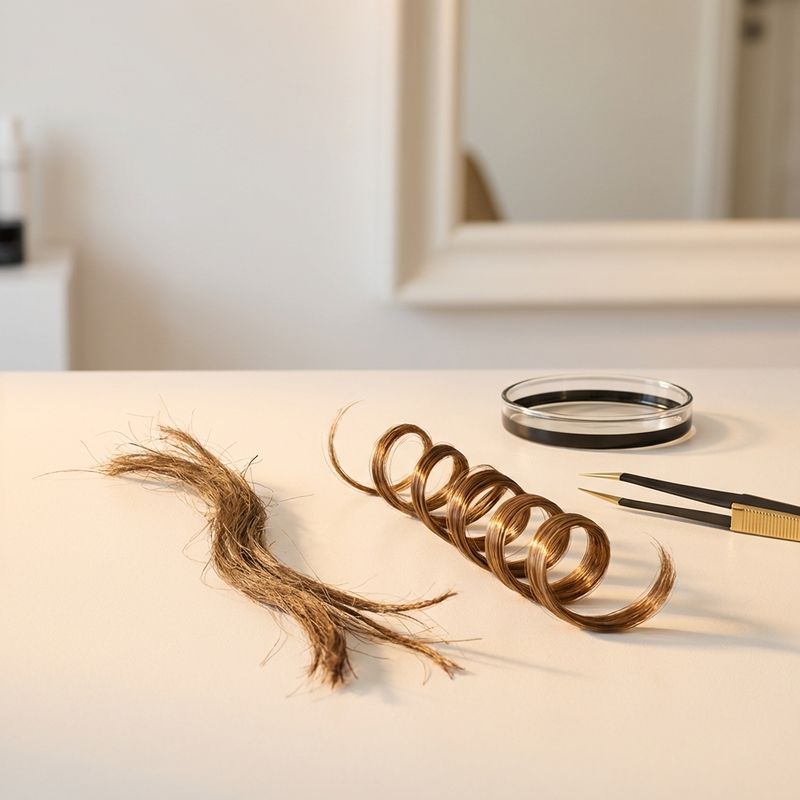
How to Perform the Elasticity Test Step by Step
You don’t need specialized equipment. Just your hands, a strand, and ten seconds of attention.
Step 1: Select the Right Strand
Choose a fine strand (5-10 hairs) from the area you plan to lighten. For a full head service, take samples from three different zones: nape, crown, and face frame. Each zone may have a different condition.
Step 2: Lightly Dampen
The test is performed on slightly damp hair — not soaked, not dry. Spritz with water and wait a few seconds. Damp hair reveals its true elasticity better because it removes the temporary rigidity of dry hair.
Step 3: Stretch Gently
Hold the strand between your thumb and index finger of each hand, about 3-4 centimeters apart. Stretch gently — don’t pull. You’re looking to feel how the fiber responds.
Step 4: Read the Response
Release one end. Observe:
- Bounces back like a rubber band: cuticle intact, disulfide bonds healthy. Green light.
- Returns slowly: partial damage, but the structure holds. Proceed with caution.
- Stays stretched: internal bonds are broken. The fiber has no memory. Red light.
- Snaps: severe damage. Any chemical process will worsen the breakage.
What to Do When the Test Says “No”
This is the hardest moment. Your client wants blonde. You know the hair isn’t ready. What do you do?
The professional answer is clear: don’t lighten. Hair without elasticity won’t survive the bleaching process without significant damage. The result will be breakage, straw-like texture, and an unhappy client.
But “no” doesn’t mean “never.” It means “not yet.”
Recovery Plan (Before Lightening)
- Protein treatment (2-4 weeks): keratin or amino acid treatments to rebuild internal bonds
- Deep hydration (weekly): masks with hyaluronic acid or penetrating oils
- Second test: after 3-4 weeks of treatment, repeat the elasticity test
- Gradual lightening: if the test improves, start with gentle lightening (20V max, controlled timing)
This plan turns a “no” into a “yes, when you’re ready” — and your client will thank you when they see you prioritize their hair’s health.
For the complete preparation protocol, check our safe lightening guide.
Other Diagnostic Tests That Complement Elasticity
The elasticity test doesn’t work alone. Combining it with other assessments gives you a complete picture of hair condition.
Porosity Test
Slide your fingers along a strand from tip to root. If you feel resistance and roughness, the cuticle is raised — high porosity. Porous hair absorbs color unevenly and loses moisture rapidly.
Chemical Treatment History
Always ask: recent relaxer? Keratin? Previous lightening services? Chemical residues from prior treatments directly affect elasticity and lightening response. Hair with a Brazilian blowout from less than 4 weeks ago should never be lightened.
Visual Analysis with Magnification
A portable hair microscope (30-80 dollars on Amazon) lets you see the cuticle at 100x. Raised scales are visible at basic magnification and confirm what the elasticity test already indicated. It’s the difference between intuition and data.
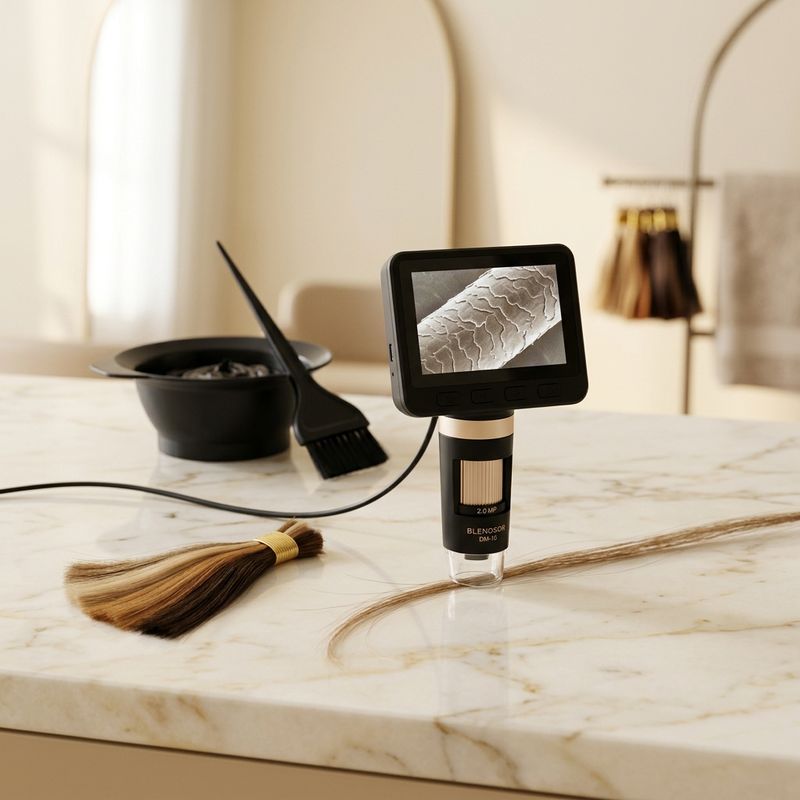
To understand how these factors affect formulation, check out the complete professional lightening guide.
Common Mistakes When Performing the Elasticity Test
Even a simple test can give inaccurate results if done incorrectly.
- Testing completely dry hair: dry hair appears more resistant than it actually is. Always dampen slightly.
- Pulling instead of stretching: brute force breaks any hair. The test requires gentle, steady tension.
- Sampling from one zone only: the nape, crown, and face frame have different conditions. Test all three.
- Ignoring the result: the most costly mistake. If the test says no, trust what your hands are telling you.
Frequently Asked Questions
How far should healthy hair stretch?
Hair with good elasticity stretches up to 30% of its length and returns to its original shape immediately. If it stretches beyond 50% without returning, the internal structure is compromised.
Does the elasticity test work on curly hair?
Yes, it works the same on all hair types. The difference is that curly hair may appear to stretch more due to its natural shape. Stretch the strand until it’s straight — that’s where the real test begins.
How often should I repeat the test?
Before every chemical service. Don’t assume that hair that was fine a month ago is still the same. Environmental factors, heat usage, and maintenance products change elasticity over time.
Can I lighten if elasticity is medium?
Yes, but with precautions: lower the developer volume (20V max), reduce exposure time, and consider a two-session approach instead of one.
Key Takeaways
- The elasticity test is mandatory before any professional lightening service
- It costs nothing and takes ten seconds — there’s no excuse to skip it
- If the strand doesn’t bounce back, don’t lighten: treat for 3-4 weeks first
- Combine it with porosity and history checks for a complete diagnosis
Calculate Professional Formulas with AI
Want to generate personalized lightening formulas based on each client’s starting level and actual hair condition?
Formulate with Blendsor — a second opinion that reads each client’s real hair condition and remembers it next time.
What happens if you lighten hair without an elasticity test first?
In the app, we ask you a question like this one, but about your own client.
Up for this week’s case? → More on blondes and lightening →Related articles
Practice with our colorimetry tools
Calculators, neutralization wheel, AI consultation...
The Blendsor newsletter
Color techniques and trends for professionals. No spam.
A client in the chair right now?
The Blendsor advisor gives you the precise formula for this technique with your salon's brands — and saves it to your client's card.
Ask about your caseWritten by the Blendsor team
Professional hair colorimetry experts with experience in AI-assisted formulation. We combine color science, salon practice and technology to help colorists formulate with precision.