Blondes and lightening Banding After a Bleach Root Touch-Up: Two Causes
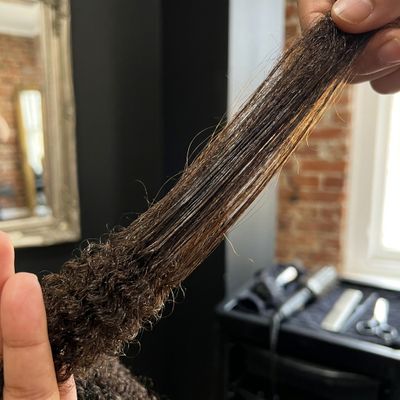
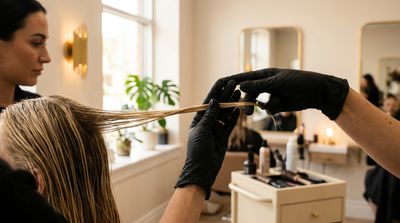
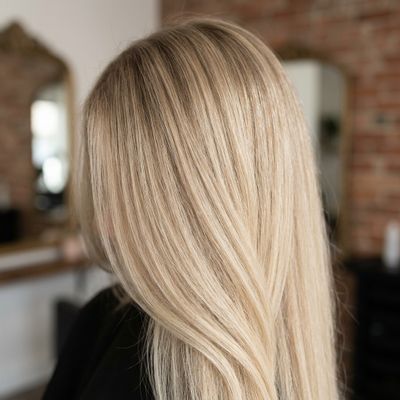
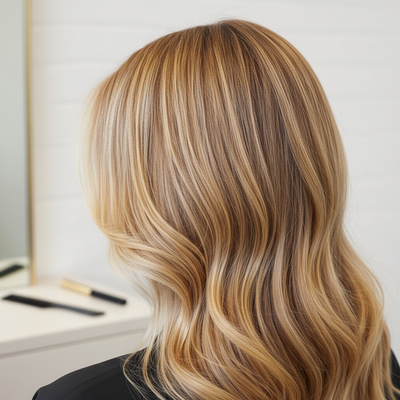
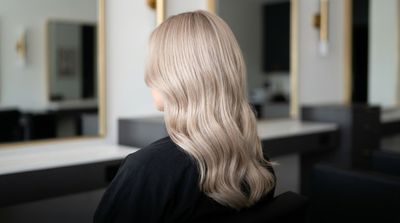
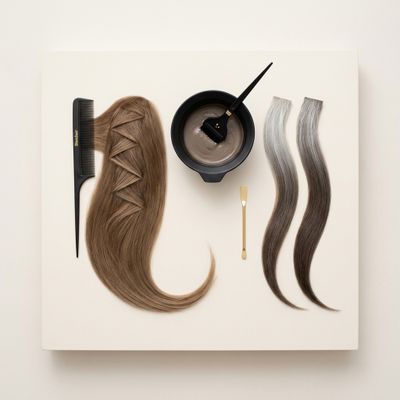
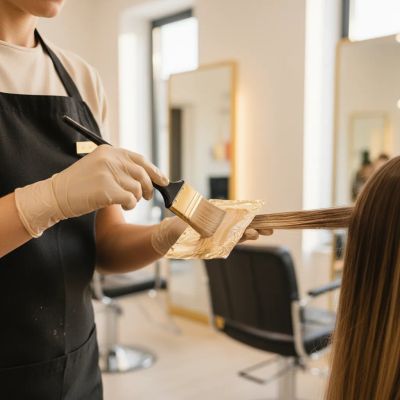
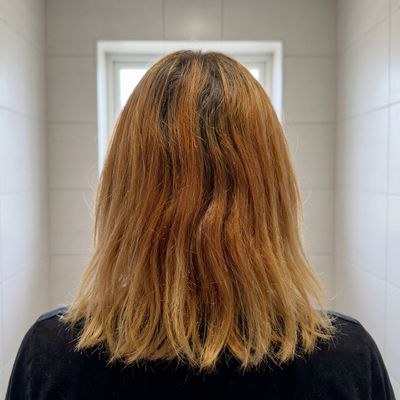
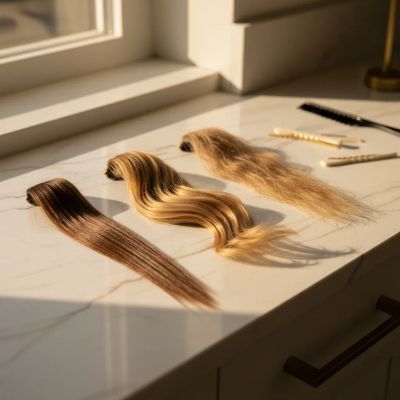
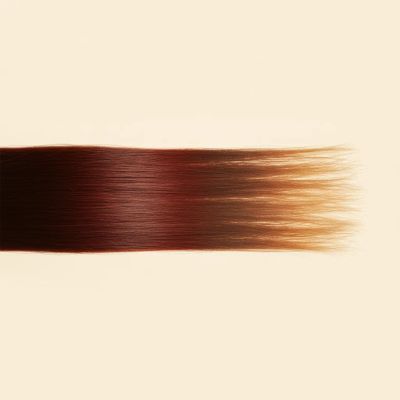
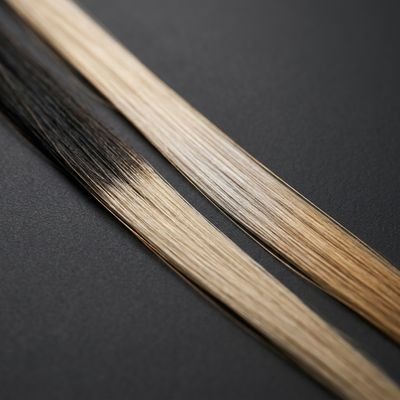
Why bands appear after a bleach root touch-up: breakage lines from overlap and color banding from hot roots. How to tell...
Hair color theory is not learned by memorizing, it is learned by formulating. Each block below groups the real work of a salon: reading the underlying pigment, covering resistant gray, toning without dulling it to ash, fixing a color that went wrong. Blendsor organizes its articles by that same logic, the one of a real client in the chair, not by blog category. Open the type of work you need today and keep reading. Start with the fundamentals.
Taking hair to blonde without breaking it, reading the underlying pigment at every level.
Tool: Bleach level predictor →
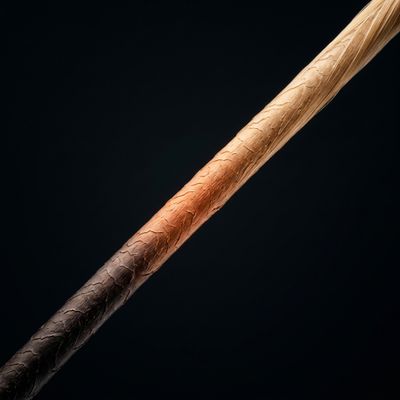
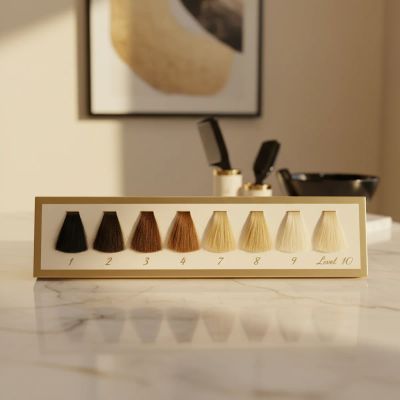
Lightening removes pigment, and pigment does not leave all at once: it is uncovered in stages. Each level the hair climbs exposes a different underlying pigment, from red to orange and from orange to yellow. That warmth drives the result, not the number on the tube. A higher developer does not guarantee more levels: if the hair cannot take it, what goes up is the damage, not the lift. Read the real base first: porosity, history, and which underlying pigment appears at the level you are after.
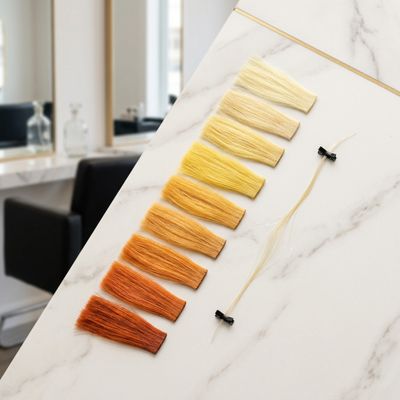
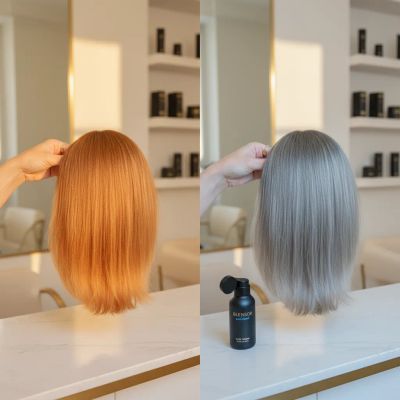
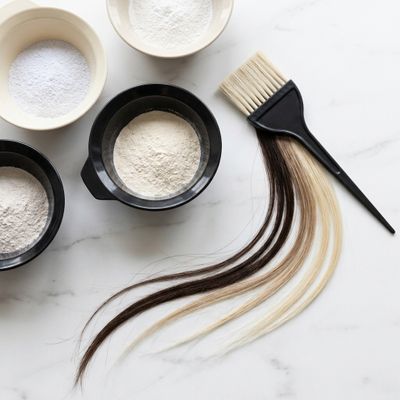
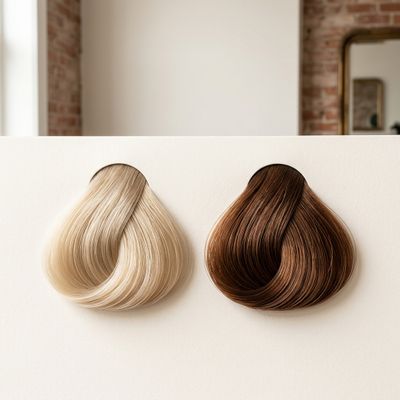
Hair does not jump from dark to blonde: it uncovers red, orange and yellow in order. Wella publishes it level by level: 5 red orange, 6 orange, 7 orange yellow, 8 yellow, 9 pale yellow, 10 very pale yellow. Knowing where you are tells you whether you can tone yet or still need to lift. →
The volume opens the door, but what lifts the hair is the mixture working for the time it needs on a fibre that can take it. On porous or previously treated hair, more volume usually means more damage and a muddier underlying pigment, not more lift. →
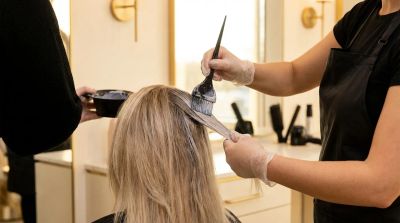
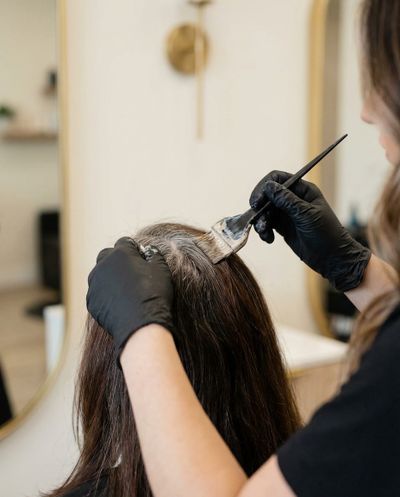
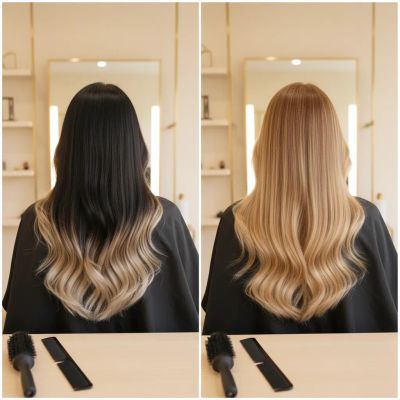
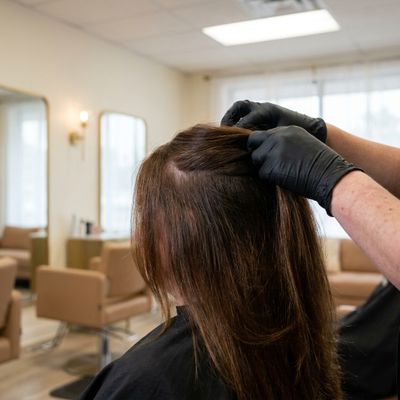
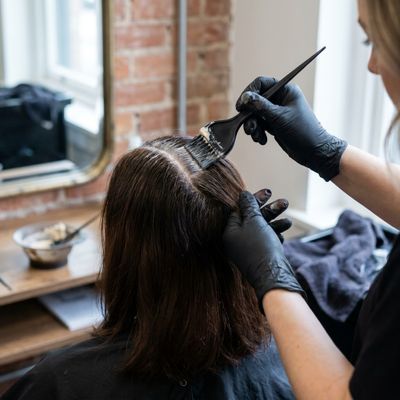
Because roots, mid-lengths and ends do not start from the same place: they carry different histories and react at different speeds. The band shows up where the product overlaps onto already lightened hair, or where scalp heat runs one section ahead of the other. →
Covering resistant gray without a visible demarcation line.
Tool: Gray coverage calculator →
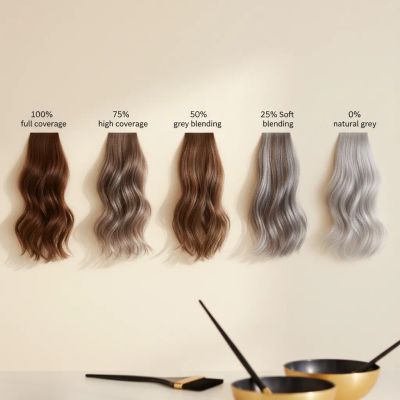
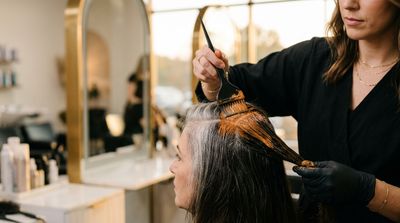
Gray hair carries no pigment, and the more resistant it is, the longer it takes to absorb the mixture. That is why it takes color differently, and why the same shade covers well on one head and slides off another. Two things govern the work: how much gray sits in each section and how resistant it is. From there come the three decisions of the service, always the same ones: whether the fibre needs preparing first, how much natural base the mixture carries, and which developer holds the coverage without marking the old regrowth.
When you are going several levels darker, or when the last coverage washed out in three weeks: without a warm base underneath, the result dulls or pulls cool. Do not confuse it with the other gray problem, the one where color never gets in: that is not fixed by laying warmth on top, but with the natural-base ratio and the full processing time your line’s fact sheet sets. →
Because the amount of gray and how it is distributed change between appointments, and a formula that worked at a lower percentage falls short once the temples gain ground. The service is recalculated on today’s head, not on a record from three months ago. →
The one your line’s fact sheet assigns to that service, and it is usually higher than people assume: Wella, for instance, assigns Koleston Perfect a 6% developer (20 volume) at a 1:1 ratio for gray coverage working on the same depth or darker. Dropping to 10 volume to be gentle leaves the gray cuticle unopened and the temples wash out again; a hot root and a marked line come from overlapping onto the lengths, not from the right volume at the root. →
Toning a blonde or a lightened base without going flat or ashy.
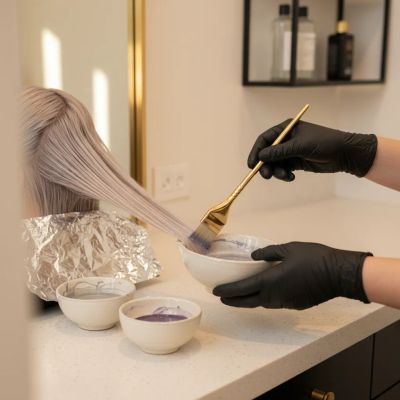
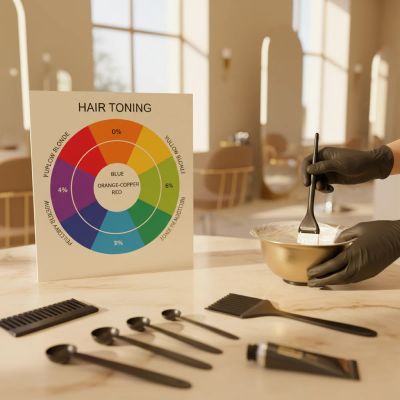
Toning is not about a new color: you deposit the opposite of the underlying pigment the lift left, to cancel it. The shade you pick works against that pigment, so the question before the formula is not which tone you want but which underlying pigment you are facing. If the hair has not lifted enough, no toner fixes it: it dulls it and muddies it. And if the fibre is porous, it grabs faster and cooler than you expect. That is why toning is decided with the underlying pigment read and the porosity measured, and controlled by watching rather than by waiting out a set time.
The one that neutralizes the underlying pigment you actually have, not the one the shade name promises. A yellow base calls for violet, an orange base calls for blue, and the higher the hair has lifted, the less load it takes to correct it. And watch the ends: porous hair grabs blue fast and slides to grey, so there you control it by looking, not by waiting. →
Almost always the fibre, not the product: porous hair takes fast and lets go just as fast, and hair that was not lifted enough never reaches an underlying pigment the toner can correct. Before switching brands, look at the real underlying pigment and the state of the cuticle. →
With blue, the opposite of orange on the wheel, at the dose the strength of the underlying pigment calls for. If the orange is heavy, lift a little further first: neutralizing an underlying pigment that sits too low only turns it dull and muddy. →
Choosing the foiling or highlighting technique each head of hair calls for.
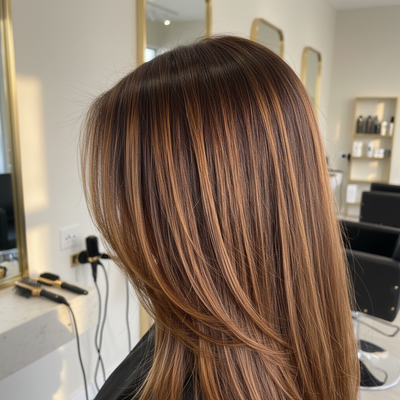
In highlighting work, placement decides the result before the formula does. Where the lift starts, how much hair goes into each section, and how it blends with what stays dark: that is what makes a head look dimensional instead of striped. Foil, open air and freehand are not different styles of the same thing but different degrees of heat control and blending. Choosing a technique means choosing how much contrast you want and how much upkeep you are asking of the person in the chair.
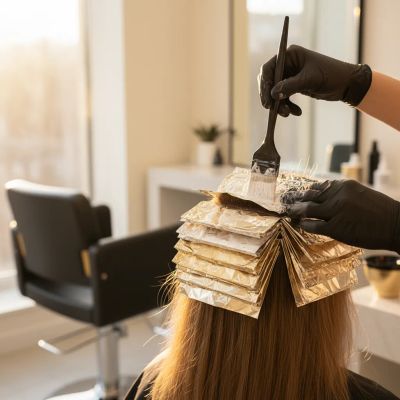
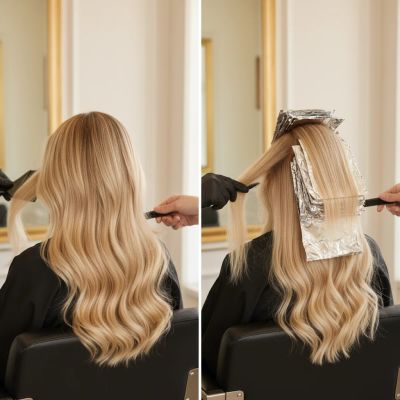
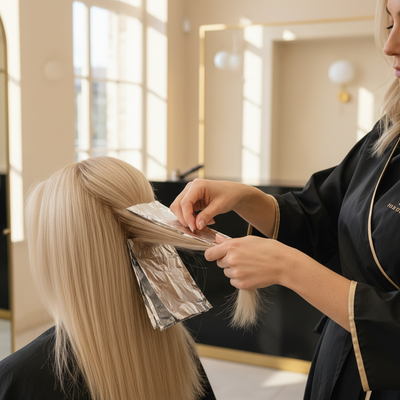
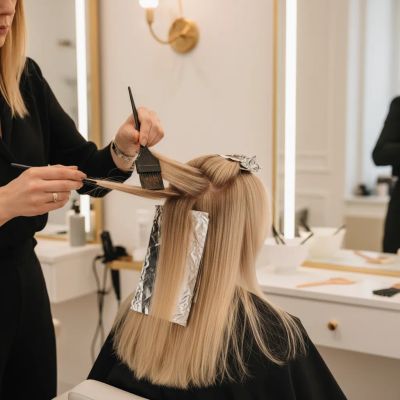
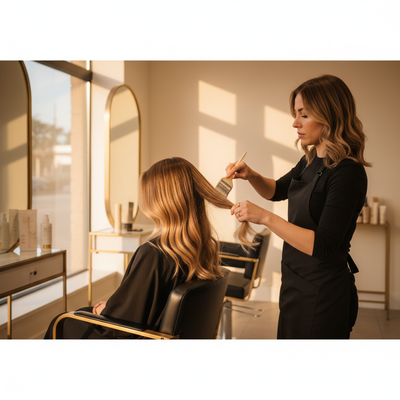
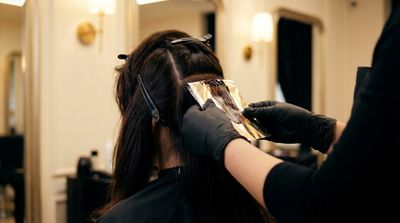
Foil isolates the section and holds in the heat of the reaction itself, and it also keeps the mixture damp: that is why it lifts higher and gives a defined starting point. Balayage is painted freehand in the open air, so it lifts less and more softly, which is why it is worked with denser textures or covered with film when you want more height. One gives contrast and control, the other transition and quiet regrowth. →
To give depth back to hair that has gone flat from too much lightening. Dropping the tone in chosen sections restores the contrast that makes the lighter pieces read as light rather than as one solid color. →
Very fine, closely placed highlights that mimic the way the sun lightens a child’s hair. Being so fine, they blend without marking and the regrowth barely shows, at the cost of slower work in the chair. →
Fixing a color that turned green, orange, or patchy.
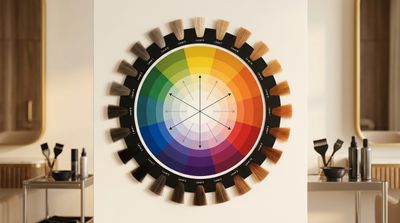
Correction starts by diagnosing what is inside the fibre, not by picking the shade that covers it. Green, orange or a patch are the symptom of something earlier: an underlying pigment read wrong, a product that overlapped, a pigment still sitting there unseen. The color wheel gives the direction, since every color is cancelled by its opposite, but the dose and the order are set by the condition of the hair. Covering without reading usually costs an extra session: the color comes back, or the result dulls within two washes.
The wheel says red, but on a level 8 to 10 blonde straight red turns pink within minutes: there you work with gold or gold-copper, which is that same red dialled down. And find out where the green came from first, because if it is metals or chlorine the fibre needs treating or the tone comes back. →
Because a reducer, the sachet kind and not a bleach bath, does not pull the pigment out: it reduces it so water can carry it away. Revlon describes it as reducing the size of the artificial pigment so it leaves the cortex; Wella, as deoxidising the dye while respecting the melanin. That is why a thorough rinse is part of the service, not the end of it: whatever does not fully leave still shows in the result. →
Treat them as a separate zone, because they are one: there is build-up from earlier services that the new product does not go through the same way. Work by zones, each with its own formula and timing, instead of applying the same thing from root to ends. →
Formulating brunettes, coppers, and reds that hold without fading.
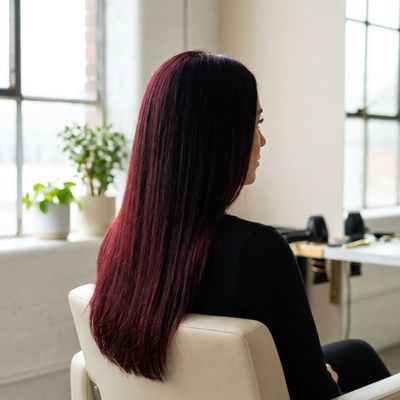
With brunettes, coppers and reds the problem is not getting the color: it is making it last. They fade sooner than the rest, and unevenly, especially if the fibre was left open. Preparation rules here: an even base, matched porosity and, when going darker from blonde, the warm underlying tone the fibre no longer has. And the tone is chosen knowing that warmth reads stronger under salon light than on the chart.
Because they hold worse inside the fibre, especially if the cuticle was left open. A red lasts as long as the preparation does: an even base, controlled porosity and a finish that leaves the hair sealed. →
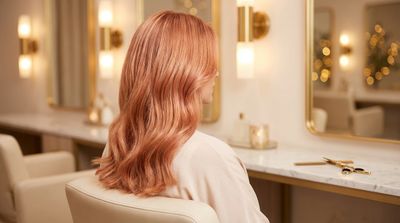
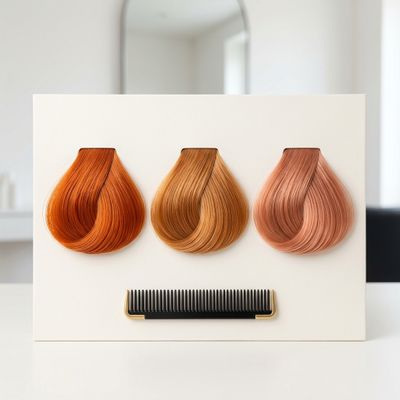
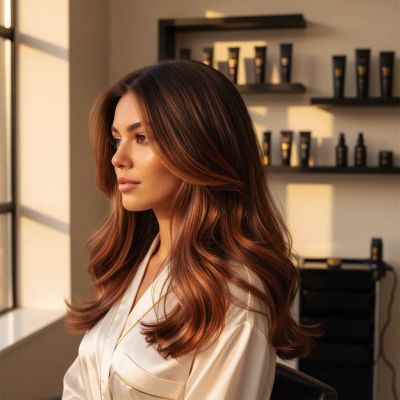
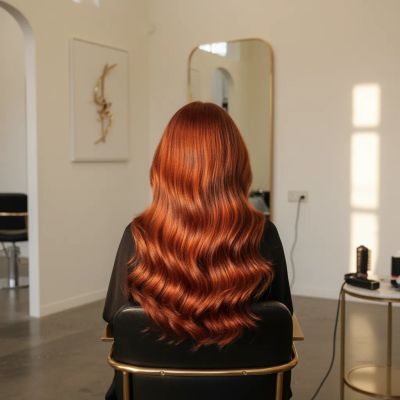
They are the same warm territory with different proportions of red and gold, at different levels. Copper is the most saturated, peach drops the red and lifts the light, and ginger brings in gold and reads softer. →
By putting back the warm underlying tone the lift removed, and applying the brown on top of it. Going straight to a cool shade over the yellow the lift left behind is what brings out green or a dull gray. →
Working out the formula questions: ratios, developers, timing, and order.
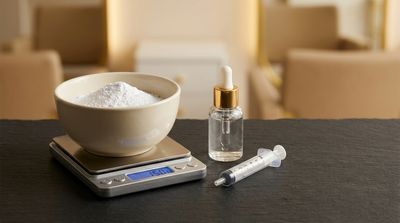
Tool: Developer mix calculator →
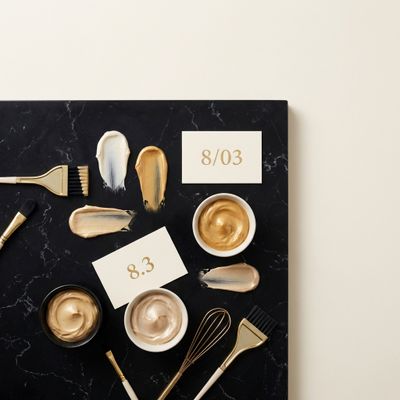
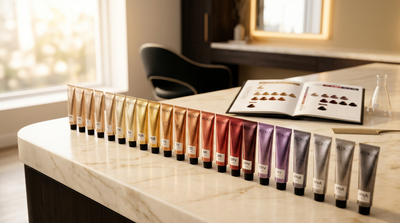
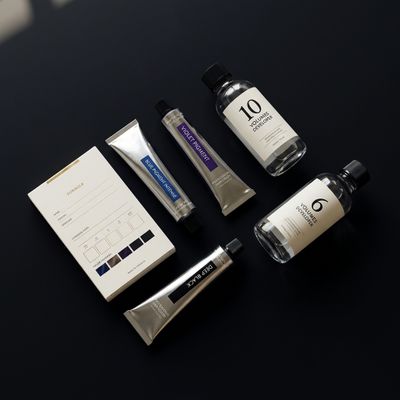
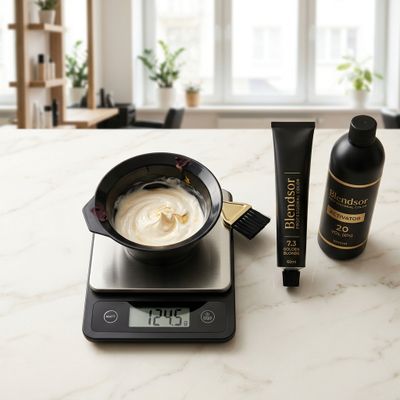
Almost every brand starts from the same two ideas: a level and one or two tones. What changes between them is the separator. L'Oréal and Alfaparf use a dot (7.1), Wella a slash (7/1), Schwarzkopf a hyphen (7-1), and Redken, Matrix or Goldwell swap the tone number for a letter (7NA, 6RV). Telling which part is level and which is tone is what lets you carry a formula from one brand to another: the notation only needs translating. On top of that sits the ratio with the developer, which decides how much the mixture opens and how far it goes. The rest of the craft is reading the base you are working on.
Three, and each answers something different: the sensitivity test, 48 hours ahead, tells you whether that person can wear that dye; the strand test tells you which color will come out; and the elasticity test tells you whether the fibre can take the lift. The sensitivity one is not optional and is not shortened: it is the one that exists so nobody ends up in A&E. →
An 8 is a light blonde. It is the level, on a scale running from 1 (black) to 10 (very light blonde), with some brands going higher in their high-lift range. It says nothing about the tone: that is what comes after, as a dot, slash, hyphen or letter depending on the brand. →
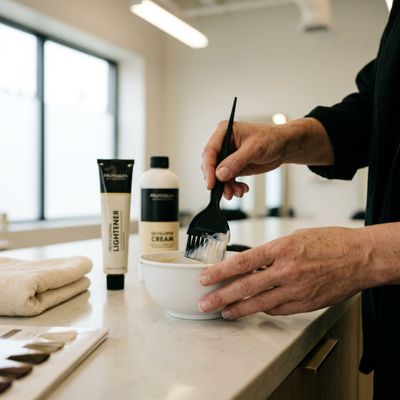
That for each part of color you add that much developer. It is not a decision about texture or about how much mixture you end up with: the ratio is set by the manufacturer per product family and per service. In Koleston Perfect, 1:1 is the gray-coverage ratio and 1:2 the Special Blonde one; in Majirel, 1+1.5 is the line standard. Changing it changes the result, and Wella advises in writing against altering it to force more coverage. →
Tone fades first and level goes second: that is why a client sees the hair dull or warmer long before seeing it lighter. Knowing this changes the maintenance appointment, because what is usually needed is tone back, not more lifting. →