Baby Copper Hair: Professional Formula for Subtle Copper
Baby copper hair by natural level (5 to 8): which reflects to blend, which developer and how long, taken from each brand's own chart. Subtle copper, done right.
Blendsor
Blendsor Team
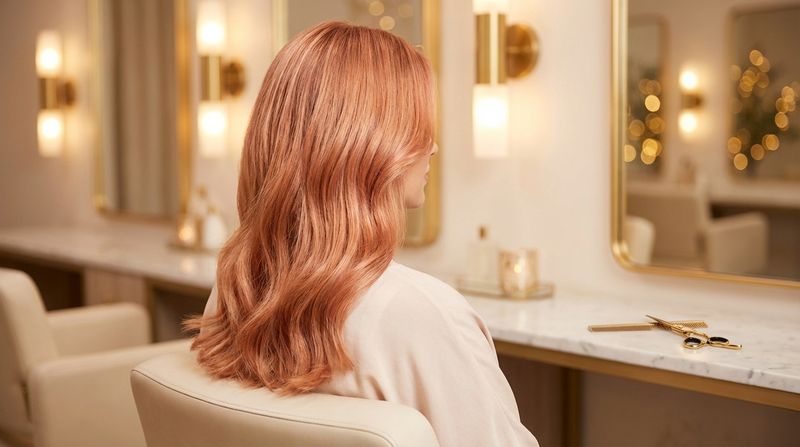
Has your client walked in with a photo of Addison Rae or Emma Stone saying “I want that copper, but not so red”?
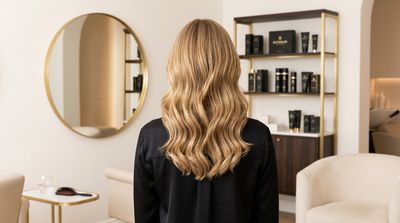
If you work with copper tones regularly, you already know this request. And there is a specific name for what they’re asking for: baby copper hair. Cosmopolitan ran a feature on it with New York colorist Rachel Bodt, who calls it a gentle color “somewhere between strawberry blonde and copper”; the piece adds that it’s more subtle than a standard copper, with more depth than a strawberry blonde. For the salon it comes with a clear advantage: it’s a level 7-8 shade, so the closer the natural base, the more of the work is reflect and the less is lift.
Quick summary: Baby copper is a subtle copper between levels 7 and 8, with a peach-rose-gold undertone. It differs from classic copper by its lower saturation, and from strawberry blonde by its stronger copper base. The formulation key: gold-copper weighs as much as the copper or more, and copper never goes in alone. On a natural 7-8 the work is almost all reflect; from a 5 or 6 with no previous color, the permanent color itself lifts the missing levels; over previous color, you need lightener.
What exactly is baby copper hair?
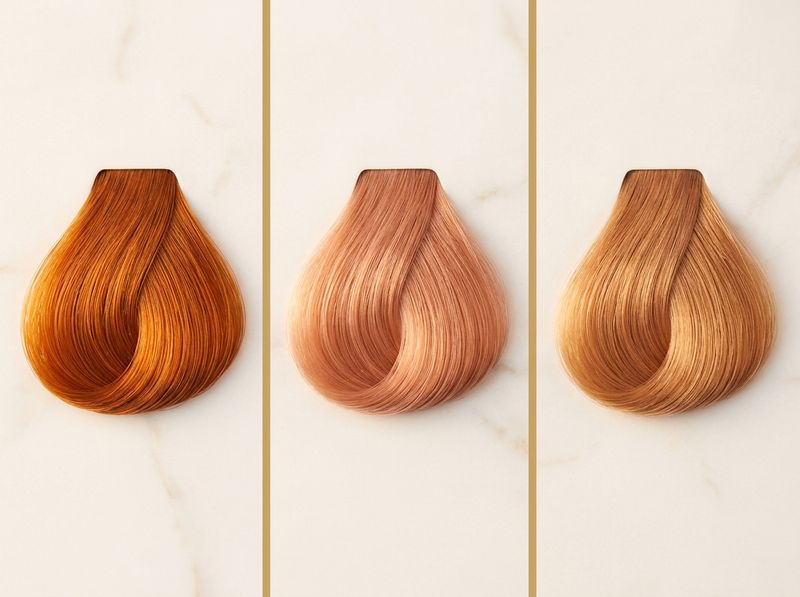
Baby copper hair is a subtle copper between levels 7 and 8 with peach-gold and warm rose undertones. It does not reach the saturation of classic copper, nor the yellow-gold warmth of strawberry blonde: it occupies the space between the two. It follows the direction Behind The Chair set when it opened its 2026 color report, which talked about soft blondes and coppers.
Baby copper is a color family with its own recipe, and the difference is which reflect leads. In classic copper, straight copper dominates; in baby copper, copper shares the lead with gold-copper, and a measured rosy note brings the peachy warmth that recalls ginger freckles on fair skin. It’s the shade that copper, peach or ginger calls peach.
The name says it all: a copper that has not fully grown up yet. Luminous, warm, but without the aggressive orange of classic copper. For anyone who always wanted copper but never dared, this is exactly the way in.
Baby copper vs classic copper vs strawberry blonde
How many times have you had to explain the difference between three tones that look the same in a photo but are completely different formulations? This table saves you that conversation.
| Feature | Baby Copper | Classic Copper | Strawberry Blonde |
|---|---|---|---|
| Target level | 7-8 | 6-8 | 8-9 |
| Dominant undertone | Peach-rose | Orange-copper | Gold-strawberry |
| Reflect that leads | Gold-copper; copper matches it at most | Copper, with a copper-gold for dimension | Gold, with a touch of gold-copper |
| Saturation | Medium-low | High | Medium |
| How it usually gets asked for | ”Copper, but not so red" | "I want a proper copper" | "Blonde, but warm with a hint of pink” |
| Typical mistake | Loading the copper: it goes orange | Leaving copper alone: flat orange | Overdoing the copper: it stops reading blonde |
Classic copper pushes toward orange. Strawberry blonde pushes toward golden-strawberry. Baby copper sits right in the middle: enough copper to be recognizable, enough rose to stay soft. This is the distinction that sends the person home with the copper they asked for instead of hearing “it came out too orange.”
Professional baby copper formulas by natural level
This is where the difference between colorists shows. The same tone can come out perfect or end up flat orange depending on how you adjust the reflects to the starting level. The formulas go by natural level and only use codes that exist in each line’s chart. How much of each shade goes in is your call, made on the strand test, because these charts don’t set it; the color-to-developer ratio, the volume and the timing come from each brand’s data sheet (how each brand divides color and developer is in hair dye mixing ratios). If you’re after saturated copper, its formulas by brand are in copper hair formulas.
Before formulating: three checks, in this order. The allergy alert test goes 48 hours before every color service, permanent or demi: Wella and L’Oréal call for it in the instructions for their lines (how to fit it into the book). Next, hair porosity: on lightened, porous lengths, Schwarzkopf’s Igora Royal technical manual for Spain warns that red-orange pigments disappear quickly, so a subtle copper can fade on the ends before the roots. And if the hair has a history (bleach, highlights, previous color or henna), try the formula on a hidden strand first (strand test).
Natural level 5 (light brown)
From a 5 you need to go up two or three levels, and the first thing is to know what’s in that hair.
If the hair has no previous color, the permanent color itself does that lift. Wella’s Koleston Perfect fact sheet keeps 9% (30 vol) for 2 levels of lift and 12% (40 vol) for 3; Igora Royal’s developer guide (US wall chart), 9% (30 vol) for 2-3 levels; and L’Oréal’s INOA technical guide for the US, up to 2 levels with 20 vol and up to 3 with 30 vol. Once you reach 7, Koleston’s lightening curve tells you which underlying pigment is exposed: orange/yellow, exactly what baby copper wants underneath.
- Wella Koleston Perfect: 7/34 as the base and 7/43 for body, without letting 7/43 take the lead. Mix 1:1 with 9% (30 vol) Welloxon Perfect, 30-40 minutes without heat.
- Schwarzkopf Igora Royal: 7-57 (medium blonde gold copper) as the base and 7-77 (copper extra) for body; the more weight you give 7-77, the closer it gets to classic copper. Mix 1:1 with 9% (30 vol) oil developer, 30-45 minutes.
- L’Oréal INOA: 7.34/7GC as the base and 7.43/7CG for body, same logic. Mix 1:1 with 20 vol INOA developer, 35 minutes.
A note on Koleston Perfect 7/43, the shade you’ll also see called copper gold. In Wella’s international legend, /4 is Red (warm) and /3 is Gold, so 7/43 is a level 7 with red leading and gold behind. Wella’s Spanish chart calls the /4 cobrizo (copper) and names the shade “Rubio Mediano Cobrizo Dorado”, medium blonde copper gold. Salon practice reads codes this way: the reflect written first sets the course and the one behind it supports. Its neighbor 7/34 flips the order, which is why it leads in a baby copper.
If the lengths carry previous color, color doesn’t lift color: the first step is lightening, which has its own ground in the professional bleaching guide. Before anything else, the strand test; and if that hair has already been bleached, stretch it wet: if it keeps stretching and doesn’t spring back, the hair elasticity test is telling you today isn’t the day for more lift.
The result from level 5 is a baby copper with more body and depth. It suits anyone who wants subtle copper with presence.
Natural level 6 (dark blonde)
A good starting point for baby copper. From a 6 with no previous color, permanent color lifts the missing level without a separate lightening step: Koleston keeps 6% (20 vol) for 1 level of lift, Igora 6% (20 vol) for 1-2 levels, and INOA gives up to 1 level with 10 vol. A demi lifts little. Wella positions Color Touch for same depth or darker, and the only lift its US professional blog gives it is a gentle one: up to two levels with the 4% emulsion, as subtle highlights on hair that has never been colored.
Direct option (permanent color):
- Wella Koleston Perfect: 7/34 with 7/4, with 7/34 equal or ahead. Mix 1:1 with 6% (20 vol), 30-40 minutes without heat.
- Schwarzkopf Igora Royal: 7-57 with 7-77 and, if the reference leans rosy, a touch of 6-68 (dark blonde chocolate red). Mix 1:1 with 6% (20 vol), 30-45 minutes.
- L’Oréal INOA: 7.34/7GC with 7.4/7C, with 7.34 equal or ahead. Mix 1:1 with 10 vol INOA developer, 35 minutes.
Gentle option (demi-permanent, no lift):
- Wella Color Touch: 7/43 with 7/3 (gold); for less saturation, more weight on 7/3. Mix 1:2 with 1.9% or 4% Color Touch Emulsion, 20 minutes (15 with Climazon). Wella positions it for same depth or darker, so on a natural 6 it gives you a subtle level-6 copper, deeper than the one in the photo.
Pro tip: If your client has never worn copper and is afraid it’ll come out “too orange,” start with the demi option. If at the next appointment they want more intensity, move to permanent. Much easier than correcting a saturated copper.
Natural level 7 (medium blonde)
Level 7 is the sweet spot for baby copper. On Koleston’s lightening curve, the underlying pigment at this depth is orange/yellow: the base already brings the warmth the shade needs, and the lift required is minimal (0-1 levels).
Main formula (classic baby copper result):
- Wella Koleston Perfect: 8/34 carrying more weight and 7/4 for the copper. Mix 1:1 with 6% (20 vol), which Wella keeps for 1 level of lift or same depth; 30-40 minutes without heat.
- Schwarzkopf Igora Royal: 8-4 (light blonde beige) carrying more weight and 7-77 (copper extra) for the copper. Mix 1:1 with 6% (20 vol), the one for tone-on-tone and 1-2 levels of lift; 30-45 minutes.
- L’Oréal INOA: 8.34/8GC carrying more weight and 7.4/7C for the copper. Mix 1:1 with 10 vol INOA developer (up to 1 level), 35 minutes.
Strawberry copper formula (rosier variant):
- Wella Koleston Perfect: 8/34 with 9/3 (gold) and a touch of 7/45 for the strawberry note (in the international legend, /4 is Red and /5 Mahogany). Mix 1:1 with 6% (20 vol) if you’re lifting one level or 9% (30 vol) for two; 30-40 minutes without heat.
- Schwarzkopf Igora Royal: 8-4 with 9-55 (extra light blonde gold extra) and a touch of 9-48 (beige red). Mix 1:1 with 6% (20 vol), 30-45 minutes.
In Igora, that rosy nuance comes from 9-48 (beige red), not from a mahogany: the brand does not number its reflects the way Wella does, so translating a code from one chart to another by the number alone ends up asking for the opposite reflect. The strawberry copper variant fits when someone asks for baby copper but the reference is rosier or more strawberry-tinted.
Natural level 8 (light blonde)
From level 8 you only need to deposit tone. No bleach, no high developers. This is baby copper’s key advantage over classic copper: with the natural level already on target, the chemical work is minimal.
Deposit-only formula (minimum chemical work):
- Wella Koleston Perfect: 8/43 with 8/3 (gold), 8/3 equal or ahead. Mix 1:1 with 6% (20 vol) for same depth, or the 4% that Wella’s fact sheet adds for same depth on natural hair with no gray to cover; 30-40 minutes without heat.
- Schwarzkopf Igora Royal: 8-4 carrying more weight and 8-77 (copper extra). Mix 1:1 with 6% (20 vol), the tone-on-tone developer; 30-45 minutes.
- L’Oréal Dia Color (which L’Oréal introduces as the new and improved Dia Richesse; it’s a demi): 8.34/8GC carrying more weight and 8.43/8CG. Mix 1 + 1.5 with 6-vol DIActivateur (1.8%), the lightest of the three L’Oréal lists by desired intensity; 20 minutes.
Maintenance gloss (between appointments):
- Wella Color Touch: 8/43 with 8/3, mixed 1:2 with 1.9% Color Touch Emulsion, 20 minutes (15 with Climazon). When and how a gloss fits in is covered in hair gloss.
- Wella Color Fresh is a different product: a ready-to-use semi-permanent, with no developer or water to mix in, that lasts up to 10 shampoos according to its fact sheet.
Pro tip: On level 8, the most common mistake is loading straight copper. Baby copper on light blonde needs to be subtle: if you see the result drifting toward orange, the formula is off balance. The gold-copper or gold (8/34 or 8/3 in Koleston) should always equal or exceed the copper.
Application technique: why less lift gives better results
This is the part most trend tutorials skip. Baby copper asks for a way of working as well as a formula.
Saturated copper sets out to load pigment on top of the base. Baby copper makes use of the warmth that’s already there: on Koleston’s lightening curve, level 7 exposes orange/yellow and level 8, yellow, a warm base where a subtle copper settles without a fight.
That’s why the tone’s subtlety needs a base with some natural pigment to modulate the saturation. Over-lightening strips that base and forces you to rebuild it with pigment; trying to mute the result afterwards with complex blends is the path to an expensive correction.
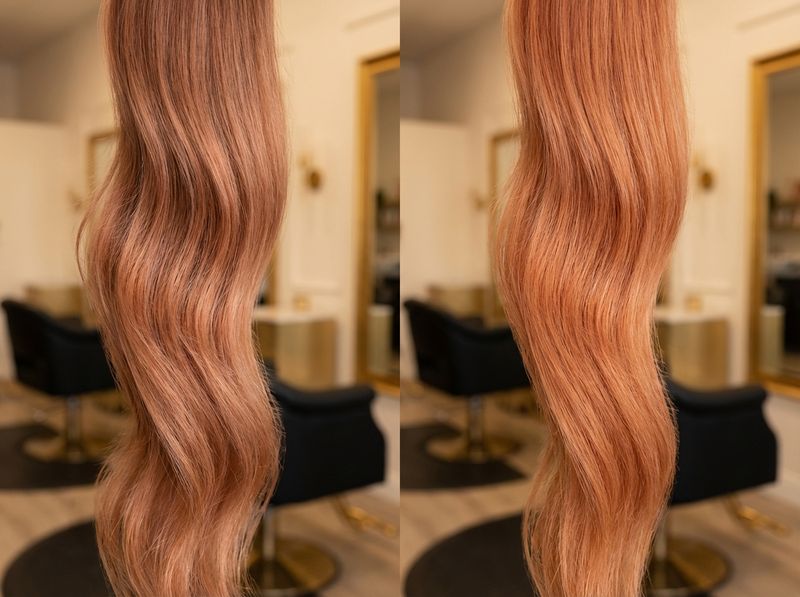
The most efficient baby copper process:
- Diagnosis: real level, color history, porosity. If there is previous color, identify any cool tones that could neutralize the copper result.
- Minimal lift, and where to start: only the levels strictly necessary to reach the target (7-8). Nothing more. On virgin hair that needs lift, Wella’s Koleston Perfect leaflet applies to lengths and ends first, about 2 cm away from the scalp, and brings the root in last, since root hair is new, not yet fully keratinized, and scalp warmth makes it develop faster; a hot root is exactly what takes the subtlety out of a baby copper. On a retouch it’s the reverse, and the root goes on first.
- Precise formula: copper always paired with a gold-copper that weighs as much or more, adjusted to the starting level (see the formulas above). Never copper alone.
- Time control: whatever your line’s data sheet sets (Koleston, 30-40 minutes without heat; Igora, 30-45; INOA, 35; Color Touch and Dia Color, 20). Keep an eye on saturation in the most porous lengths.
- If it goes too orange: more gold on top won’t fix it. The color wheel in Koleston’s booklet is the reminder: exposed orange is neutralized with its complementary, and that’s a correction job (neutralizing unwanted tones). Next appointment, more weight on the gold-copper from the start.
The result: less chemical work on the fiber and a tone you can repeat exactly at the next appointment. When it’s time to touch up doesn’t come from a fixed number but from how the reflect fades on each head of hair: we cover it in how often to retouch roots and tone.
With ten different coppers in the book, that per-client precision is what Blendsor keeps for you: the starting level, the color history and the exact proportions for each client, so the next touch-up starts with the previous formula in front of you.
Maintenance: how to extend baby copper between appointments
Every copper fades sooner or later, and with baby copper it’s worth saying so in the chair: if the person knows the tone will soften over time, they read it as part of the color, not as a failure.
That said, there are specific things that extend the result:
Wash protocol:
- Shampoo made for color-treated hair
- Lukewarm or cool water to rinse, rather than hot
- Space out washes as much as their routine allows
Toning mask:
- Once a week, a mask with copper or peach pigment (Wella’s Color Fresh Masks, for example, which the brand positions for weekly use)
- Leave it on for as long as the pack says
UV protection:
- Before prolonged sun exposure, a hair protector with a UV filter
Root touch-up:
- Roots show sooner the further the natural level sits from the 7-8 of the color: from a 5 they show earlier than from a 7
- If the natural level is already around 7-8, a demi can refresh the reflect at the root without a full appointment. If the root needs to go up a level, that’s a job for permanent color: a demi lifts little
Frequently asked questions
Does baby copper work on dark hair (level 3-4)?
Yes, but not in a single pass. From a 4 with no previous color, permanent color gets at most 3 levels lighter (Koleston’s 12%, INOA’s 30 vol; in Igora, 9% lifts 2-3 levels): right to 7, with no margin. From a 3 it doesn’t get there, and if there’s previous color, color won’t lift it: you need lightener. In those cases, plan baby copper as two sessions: first appointment to lighten and even out the base, second to tone with the baby copper formula. Attempting it in a single session from level 3-4 increases the risk of damage and uneven results. How to open a dark base without it pulling red is covered in copper hair on a dark base.
Can baby copper be done with highlights or balayage?
Yes, and it’s one of its most natural-looking versions: lightened sections take the subtle copper while untreated sections provide depth. The result is dimensional and easy to maintain. If there are already highlights or balayage, tone over the lightened sections with a low-volume deposit: Igora keeps its 3% (10 vol) for treating color deposit on pre-lightened hair, and at Wella, Color Touch fits, since it works at the same depth. First, a strand test: on lightened lengths, Igora’s manual for Spain warns that red-orange pigments leave quickly, and that’s where you see whether the copper holds. If that strand is bleached, run the hair elasticity test on it first: hair that stretches and stays stretched can wait for its color.
What is the difference between baby copper and strawberry copper?
They belong to the same family and split on which reflect leads. In baby copper, copper never outweighs the gold-copper. Strawberry copper pushes further toward gold (Koleston’s 9/3 or Igora’s 9-55 in the formula above) and adds a rosy touch that brings it closer to strawberry blonde. If the reference leans copper, go baby copper; if it leans strawberry and gold, go strawberry copper.
Which color brands work best for baby copper?
Any line works if its chart has a gold-copper and a copper at the level you need, as long as you follow its data sheet. In Wella Koleston Perfect, the international chart carries 7/34 and 8/34 (gold-red), 7/43 and 8/43 (red-gold) and 7/4 (red). In Schwarzkopf Igora Royal, copper is -7 and gold is -5 (7-57, 7-77, 8-77). In L’Oréal INOA, which L’Oréal presents as containing no ammonia, 7.34/7GC, 8.34/8GC, 7.43/7CG and 7.4/7C; note that L’Oréal’s safety instructions say not to use the color if the scalp is sensitive, irritated or damaged. To refresh between visits, a demi from the same brand (Color Touch at Wella, Dia Color at L’Oréal).
Does baby copper suit all skin tones?
Baby copper has a wide adaptability range because its peach-rose undertone complements both warm and neutral skin tones. Cool-undertone skin (pink or bluish undertones) tolerates it better than classic orange copper precisely because of that rose component. The strawberry copper variant is especially flattering on very fair skin with freckles.
In summary
- Baby copper hair is a subtle level 7-8 copper with a peach-rose undertone, halfway between classic copper and strawberry blonde
- On hair with no previous color, the permanent color itself lifts the missing levels with the developer its data sheet sets; previous color doesn’t lift with color
- Gold-copper weighs as much as the copper or more: copper alone gives flat orange
- From a natural 7-8 the work is almost all reflect, over a base that already brings warmth
- Every code goes with its brand: a Wella 7/43 and a L’Oréal 7.43 are each read on their own chart
- To place it among its neighbors: copper, peach or ginger, ginger copper and spring 2026 color trends
Calculate your baby copper formula in seconds
Your client walks in with a baby copper reference and you have 30 seconds to adjust the formula to the level in front of you.
Try Blendsor - Permanent Free plan. No commitment.
What's the difference between baby copper and regular copper?
In the app, we ask you a question like this one, but about your own client.
Up for this week’s case? → More on brunettes and coppers →Related articles

Practice with our colorimetry tools
Calculators, neutralization wheel, AI consultation...
The Blendsor newsletter
Color techniques and trends for professionals. No spam.
A client in the chair right now?
The Blendsor advisor gives you the precise formula for this technique with your salon's brands — and saves it to your client's card.
Ask about your caseWritten by the Blendsor team
Professional hair colorimetry experts with experience in AI-assisted formulation. We combine color science, salon practice and technology to help colorists formulate with precision.