Strand Test: How to Do It, How Long It Takes, How to Read It
A strand test predicts real color, timing, and reaction before the full service. How to do it step by step, how long it takes, and how to read the result.
Blendsor
Blendsor Team
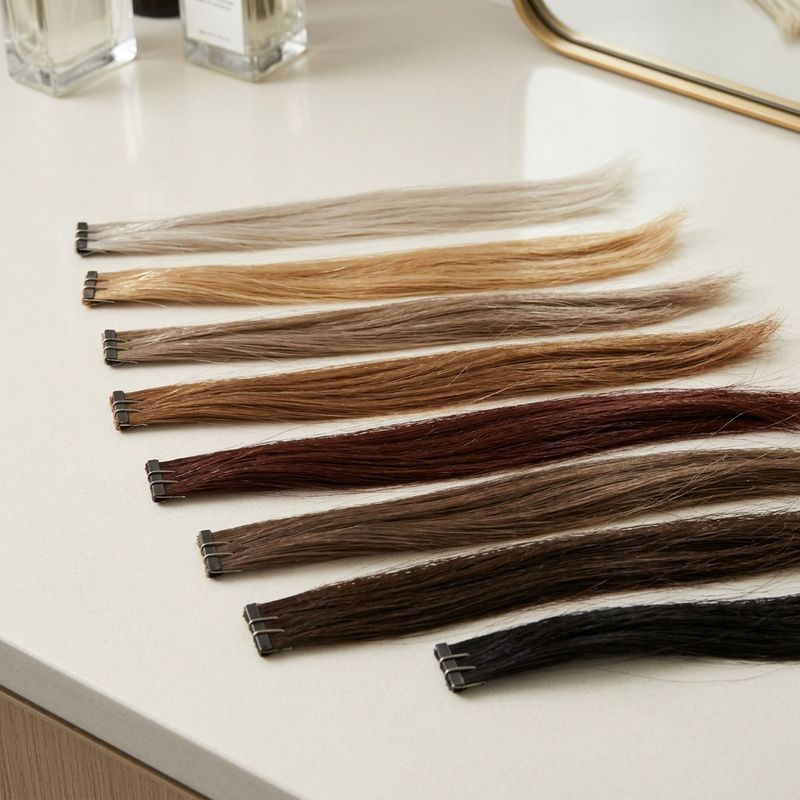
Quick summary: a strand test means applying your intended formula to a small, inconspicuous strand before the full service. It lasts the formula’s processing time (when lightening, until the strand reaches the target base without going past it), plus rinsing and drying to read it. To read it along the way, Wella’s at-home coloring guide suggests a first check after 10 minutes (Wella). It’s mandatory for new clients, corrections, bleaching over treated hair and suspected henna or metals.
How many times have you applied a formula you were sure about, only to get something else across the full head? An unexpected shift, a processing time that fell short, a new client whose hair reacted differently from what the record said.
If you formulate daily, you know hair doesn’t always respond the way theory predicts. There are invisible chemical histories, uneven porosity, greys that won’t take. And you usually find out when it’s already too late.
The strand test exists for exactly that: so you find out earlier, on a small section, not on the whole head.
What is a strand test and what does it predict?
A strand test is the application of your intended formula on a small, inconspicuous section, before the full service, to see how that client’s actual hair will react. It isn’t theory: it’s the result, delivered early.
A test strand tells you three things no technical record can:
- The real color: the tone you’ll get on that specific hair, with its history, porosity, and base, not the one on the chart.
- The real processing time: how long that fiber takes to reach the result. Porous hair may develop much faster than expected; resistant grey may take considerably longer.
- The fiber’s reaction: whether there are unexpected shifts, blotches, or signs that something in the chemical history is interfering.
It’s the gesture that separates those who formulate with data from those who formulate blind and hope.
When is a strand test mandatory?
You don’t need one for every service. A regular client whose hair you know doesn’t need a test each time. But there are situations where skipping it means gambling with the result and with your client’s trust.
| Situation | Why the test is mandatory |
|---|---|
| New client with no history | You don’t know what’s underneath: old dyes, henna, bleaching |
| Color correction | The underlying color rules; the test reveals how it reacts |
| Bleaching over treated hair | The history determines how much the fiber can take |
| Resistant grey that didn’t take before | You confirm whether your new protocol works on a small scale |
| Suspected henna or metals | A formula with developer over metallic henna can be a disaster |
In all these cases, the time a test takes saves you hours of correction and a lost client.
The chemical history you can’t see
The underlying reason is always the same: hair accumulates history. Dyes from months ago, home products, hard water with minerals, sun exposure. None of it appears on the form you fill out at consultation, but all of it affects how your formula reacts.
The strand test makes that history visible before you commit the whole head. For cases of accumulated damage, it’s worth pairing it with a hair elasticity test, which measures whether the fiber will withstand the process.
How to do a strand test step by step
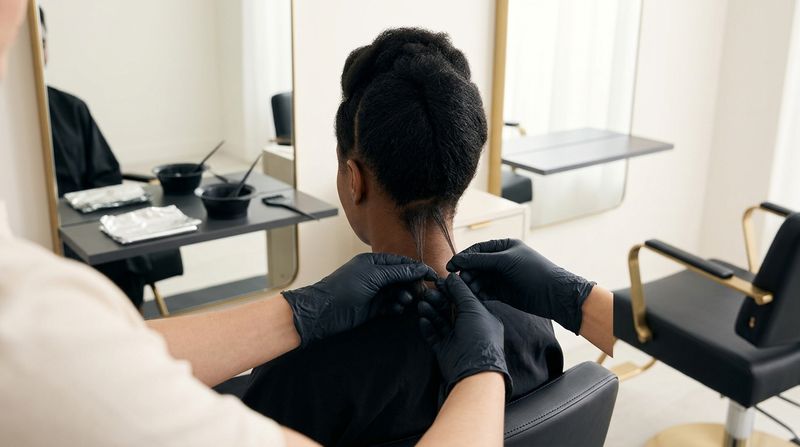
The method is simple, but rigor matters. A poorly taken test gives a false reading, and a false reading is worse than no test at all.
- Choose the strand: take a small section in an inconspicuous area, usually the nape or behind the ear. It should represent the base you’ll be treating.
- Apply the intended formula: the same mix, the same developer, the same ratio you’ll use in the service. If you change anything, the test is worthless.
- Time it: time from application. Don’t eyeball it: the goal is to measure the real processing time.
- Watch during processing: check at intervals; Wella’s at-home coloring guide suggests the first check after 10 minutes (Wella). Note when it starts to shift, when it reaches the tone, whether blotches or unexpected heat appear.
- Rinse and evaluate dry: wet color deceives. Dry the strand before reading the final result.
Pro tip: keep the test strand in an envelope with the formula and time noted. If the client returns, you have the exact record of what worked.
How to read the result
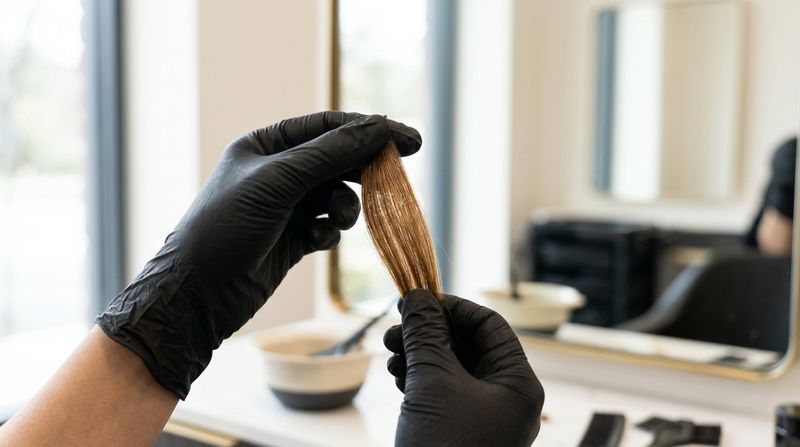
Applying the test is half the work. The other half is reading it well, and that’s where the expert hand shows.
Assess three planes:
- Color: does it match the target? Is there a warm or cool shift you didn’t expect? A strand pulling orange warns of an undertone you didn’t neutralize.
- Fiber integrity: is the hair still elastic, or does it feel gummy, brittle? If the test left the fiber damaged, the full service would break it.
- Signs of incompatibility: heat, a strange smell, a greenish color, or a violent shift are red flags. They usually point to metals or incompatible previous chemistry.
If the test reveals a suspicious reaction with metallic salts, don’t improvise on the spot: the detection and neutralization protocol is covered in our guide on metals in hair.
When the strand test is run to choose between a remover and a lightening service, there are three ways to misread it: wet, too soon, and cut from the wrong zone. All three are in when it is remover and when it is lightening.
Common strand test mistakes
- Confusing it with the patch test: they’re different tests. The strand test measures the color RESULT; the patch test measures the ALLERGIC reaction. The allergy test is done 48 hours before every application and on the skin, not the hair, as the manufacturer states (Wella); the full protocol is in the 48-hour allergy patch test. We address them separately in the professional color consultation.
- Changing the formula between test and service: if you test with one developer and apply with another, the reading is void. The test only predicts if you replicate exactly what you’re going to do.
- Reading color wet: wet hair looks darker and more saturated. The real reading is always dry.
Frequently asked questions
How long do you leave a strand test?
The processing time of your intended formula; when lightening, until the strand reaches the target base without going past it. The goal is to measure the real processing time, so you let the mix develop exactly as you would in the service and note when it reaches the result. That figure tells you how long you’ll need on the full head. Add rinsing and drying, because the reading is done dry. And if the test comes after a color remover, expect the fiber to grab color more intensely: one remover manufacturer warns that treated hair is often more porous and the next color can come out too dark, and asks for a strand test first (Color Oops).
Does the strand test replace the allergy test?
No. They are different tests with different purposes. The strand test predicts the color result; the patch test detects allergic sensitivity and must be done on the skin, 48 hours before the service. Neither replaces the other.
What if the strand test shows damage to the hair?
You don’t go ahead with the intended formula. If the strand comes out gummy when wet or snaps when stretched, the full service would do the same across the whole head. Rethink the process (no lightening that day, a different technique or postponing the bleach), note it on the client record, explain it to the client and cross-check with an elasticity test before deciding.
Do you need to test on regular clients?
Not always. If you know the history and behavior of a regular client’s hair, you can skip it on maintenance services. The test is essential when there’s a change: correction, new bleaching, unknown chemistry, or a grey that didn’t take in the previous service.
In summary
- What it predicts: the strand test previews real color, time, and reaction on your client’s specific hair, not on the chart.
- When it’s mandatory: new client, correction, bleaching over treated hair, resistant grey, and suspected henna or metals.
- How to read it: assess color dry, fiber integrity, and signs of incompatibility. One formula’s worth of time on a strand saves a disaster on the whole head.
Calculate professional formulas with AI
Want to generate personalized formulas based on each client’s starting level and chemical history, before you run the strand test?
What services do you never skip the strand test on?
What happens if you skip the strand test?
In the app, we ask you a question like this one, but about your own client.
Up for this week’s case? → More on global color →Related articles


Practice with our colorimetry tools
Calculators, neutralization wheel, AI consultation...
The Blendsor newsletter
Color techniques and trends for professionals. No spam.
A client in the chair right now?
The Blendsor advisor gives you the precise formula for this technique with your salon's brands — and saves it to your client's card.
Ask about your caseWritten by the Blendsor team
Professional hair colorimetry experts with experience in AI-assisted formulation. We combine color science, salon practice and technology to help colorists formulate with precision.