Hair Gloss: Professional Technique Guide
What hair gloss is, when to apply it and how to mix it: ratio, timing and longevity for Shades EQ, Color Touch and Igora Vibrance from the brands' own instructions.
Blendsor
Blendsor Team
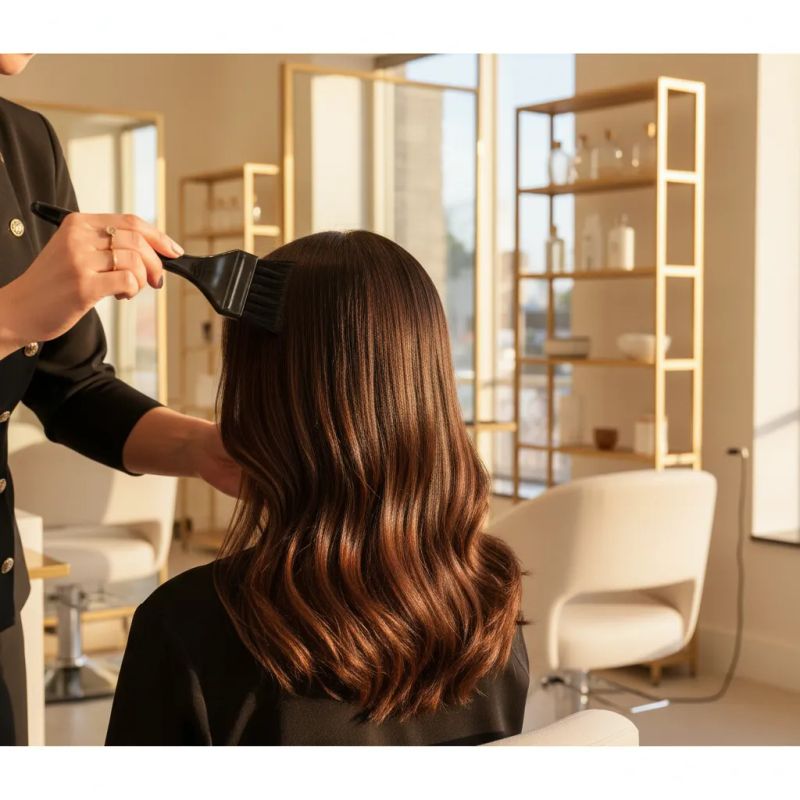
Want magazine-level shine without committing anyone to a permanent color?
Hair gloss is the service that does it: it adds shine, refreshes tone and tones down unwanted undertones without aiming to lift. If you’re looking to master more coloring techniques, check out our complete guide to professional coloring techniques.
The problem is that every brand mixes, processes and lasts differently, and salons often run on generic recipes that don’t come from any manufacturer’s instructions. Here’s what each brand says, when to choose a gloss and how to apply it step by step.
Quick summary: a gloss is a deposit-and-shine color, mixed with the developer or emulsion of its own line, that isn’t meant to lift. The brand sets the ratio and the timing. Redken US mixes Shades EQ 1:1 and processes it for 20 minutes, up to 40 on gray hair. Wella’s US professional store mixes Color Touch 1:2 with a 1.9% or 4% emulsion. Longevity depends on the line too: Redken US says Shades EQ lasts up to 28 shampoos.
What Exactly Is Hair Gloss?
Hair gloss is a deposit-and-shine color: it’s mixed with the low-volume developer or emulsion of its own line, it isn’t designed to lift, and it fades with shampooing. Brands name it differently: Redken US calls Shades EQ Gloss a “Demi-Permanent Toner”.
| Benefit | Description |
|---|---|
| Shine | Leaves a glossier, more even finish |
| No lift | Deposits color over the existing base |
| Low commitment | Fades with shampooing |
| Versatility | Tones, neutralizes and refreshes |
What a gloss does not do:
- It isn’t meant to lift natural hair: that’s not its job
- It doesn’t replace permanent color when gray needs full coverage
- It doesn’t last like permanent color: it shampoos out
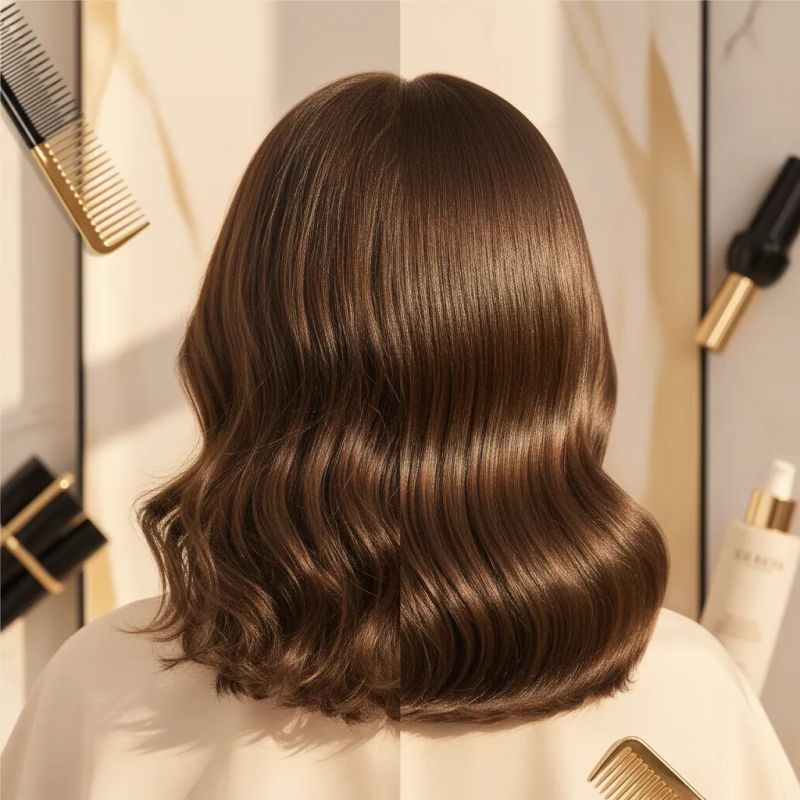
The Visual Result
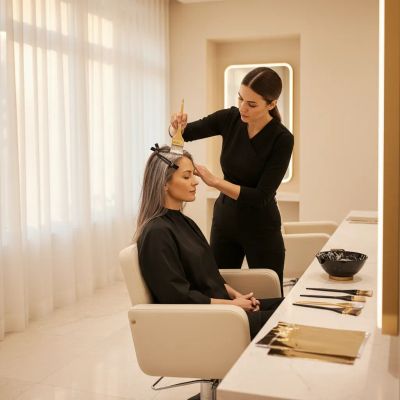
A well-applied gloss is easy to spot: shine, even color and a healthy look.
Gloss, Glaze or Permanent Color?
In the salon, “gloss”, “glaze” and “demi toner” are often used for the same kind of service: depositing color and shine without lifting. Not every “toner” is a gloss, though: some toners are permanent, so check which line you’re holding. The real difference is between gloss and permanent color.
| Feature | Gloss / demi | Permanent color |
|---|---|---|
| Mix | The line’s own, with its developer or emulsion | The line’s own, with developer chosen by lift |
| Lift | Not its job | Yes, depending on the developer |
| Gray | Blends it, depending on the line | Covers it |
| Longevity | Fades with shampooing | Permanent, grows out |
When to Use Each?
- Gloss: to deposit color, add shine or neutralize tones without lifting
- Permanent color: for level changes, full gray coverage or lightening
Pro tip: if “glaze” in your salon means a shorter service or less product, give it its own name on your price list, but always mix at the ratio your line’s instructions give.
When to Use Gloss?
Gloss works best in five situations: after highlights or balayage to unify tone, when a client wants to try a different tone or a darker shade with little commitment, to refresh color between appointments, to neutralize unwanted tones, and to add shine to natural hair without changing the color.
1. After Technical Services
After highlights, balayage or bleaching, gloss:
- Unifies the overall tone
- Adds depth to lightened areas
- Tones down leftover yellow
- Leaves a glossier finish
2. To Test a Color
Is the client unsure between staying at their level with a different tone or going a shade darker? Gloss lets them try it with little commitment, because it fades with shampooing. It only works for the same level or darker: it isn’t meant to lift. And on porous hair it can go darker than expected: do a strand test first.
3. To Refresh Color Between Appointments
Instead of pulling permanent color through the lengths again, alternate with a gloss on mids and ends. It keeps the tone vibrant with less chemistry building up.
4. To Neutralize Unwanted Tones
With the right tone, gloss can neutralize unwanted tones gently: leftover orange, brassy yellow or green casts.
5. To Add Shine to Natural Hair
A clear or same-level gloss adds shine to dull hair without changing the color.
When NOT to Use Gloss
- When gray needs full coverage: Redken US says Shades EQ “blends” gray, it doesn’t promise to cover it
- When the hair needs to be lightened
- When the client expects a dramatic change
How to Apply Hair Gloss Step by Step?
Application follows five steps: consultation (with allergy and strand tests), mixing at the ratio in the instructions, applying first where the color is needed most, processing for the line’s time, and emulsifying before rinsing.
Materials Needed
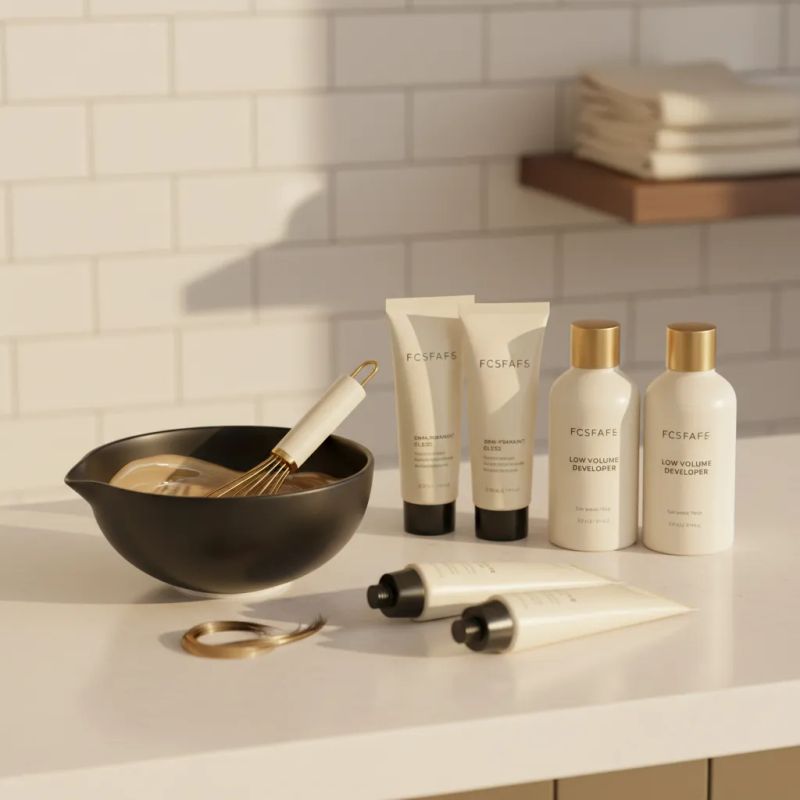
- Color from the gloss line
- Developer, emulsion or activator from that same line
- Bowl and brush, or applicator bottle
- Gloves
- Timer
- Shampoo and conditioner
Step 1: Consultation and Tests
Before formulating, assess:
- Current level and underlying pigment
- Porosity: very porous hair grabs color faster and can go darker
- History of previous services
- The client’s goal
A gloss still contains dyes. Wella’s Koleston Perfect booklet recommends a skin allergy test 48 hours before coloring: follow the test your gloss line’s own leaflet asks for. Also do a strand test on the most porous hair.
Step 2: Mix According to the Instructions
There’s no standard ratio: each line gives its own.
| Line | Mix | Processing time | Gray | Longevity |
|---|---|---|---|---|
| Redken Shades EQ (Redken US) | 1:1 with its Processing Solution | 20 min at room temperature, up to 40 on gray | Blends it | Up to 28 shampoos |
| Wella Color Touch (Wella US professional store) | 1:2 with Color Touch Emulsion 1.9% (6 vol) or 4% (13 vol) | 20 min without heat, 15 with heat | No data | No data |
| Schwarzkopf Igora Vibrance (Igora US wall chart) | 1:1 | No data | No data | No data |
“No data” means that source doesn’t give the figure: don’t fill it in with another line’s number. Each brand also has its own numbering system; to find equivalents between gloss brands, the color converter makes the comparison easier. To better understand developer volumes, check out our dedicated guide.
Pro tip: for Color Touch, Wella’s US professional store points to the 1.9% emulsion for color deposit, correction, glazes and toning.
Step 3: Application
On virgin or even hair:
- Apply from roots to ends
- Saturate each section well
- Comb through to distribute
On hair with technical services (highlights, balayage):
- Start where the color is needed most
- Leave the most porous ends for last
- Avoid piling product where the hair absorbs fastest
Redken US says Shades EQ is applied on dry hair: applying it on wet hair costs longevity.
Step 4: Processing Time
The line’s instructions set the time (table in Step 2), not the goal of the service. What does change with the hair is how closely you watch: on bleached or very porous hair, the strand test beforehand tells you whether that formula goes too dark, and during processing keep an eye on those areas. If halfway through it’s clearly going too dark, remove it and rinse: that day the hair decides, and you fix the formula for next time.
Don’t pull it early by default, though: Redken US says any variation in processing time, or applying on wet hair, costs Shades EQ color longevity and accuracy. If your strand test shows porous hair going too dark, fix it in the formula (a lighter or more clear shade from the same line), not by cutting the time. The 40 minutes on Redken US are for gray hair, not the general time.
Step 5: Emulsify and Rinse
- Add water and massage (emulsify)
- Rinse with lukewarm water until it runs clear
- Apply conditioner
- Rinse
How to Formulate Gloss by Goal?
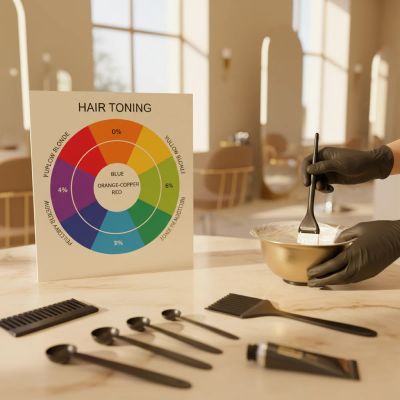
A gloss isn’t meant to lift, so you work on the base you have: choose a level that matches that base and the tone opposite to the one you want to remove.
To Neutralize Orange
- Blue or ash tone at the same level as the base
- Expect a more neutral result at that same level, not a lighter one: if the goal is a blonde lighter than the orange base, a gloss can’t get there and you need to lift first
To Neutralize Yellow
- Violet tone
- A level that matches the lightened base
To Add Warmth
- Copper or gold tone at the desired level
For Shine Without a Color Change
- The line’s clear or neutral shade
Each brand numbers its tones its own way (violet doesn’t carry the same number at Wella as at L’Oréal): check the code on your chart or in the converter before mixing.
What Are the Common Gloss Mistakes and How to Avoid Them?
The five most common mistakes are: skipping the strand test on very porous hair, not assessing the base before toning, mixing with another line’s developer or a higher volume, applying over styling product, and promising more longevity than the brand gives.
1. Not Testing on Very Porous Hair
The mistake: applying through bleached lengths without a strand test.
The result: darker color than expected, sometimes grayish.
The solution: strand test on the most porous area and follow the time in the instructions.
2. Asking a Gloss for a Level It Can’t Give
The mistake: applying an ash gloss over an orange base expecting a lighter cool blonde.
The result: a dull or muddy tone, not a cool blonde: the gloss neutralizes the orange, but it isn’t meant to lift it.
The solution: if the goal is a cool blonde, lighten to a paler base first and tone afterwards. Over the orange base, a blue or ash gloss only takes it to a more neutral shade at the same level.
3. Using a Developer From Another Line
The mistake: mixing gloss with the developer for permanent color.
The result: a color, timing and longevity the instructions no longer guarantee; and if that developer is a higher volume, it can lift when you don’t want it to.
The solution: use the developer, emulsion or activator your gloss’s instructions call for (Color Touch Emulsion for Color Touch, per Wella’s US professional store).
4. Applying Over Product
The mistake: applying gloss over hair with styling products.
The result: uneven application and patchiness.
The solution: shampoo before the service, and if the line calls for dry hair (as Redken US does for Shades EQ), dry it before you apply.
5. Promising More Longevity Than the Brand Gives
The mistake: saying “this will last three months”.
The result: disappointment when the color fades.
The solution: say what the instructions say, including the “up to”: Redken US says Shades EQ lasts up to 28 shampoos.
What Maintenance Tips Should You Give After Gloss?
To make gloss last longer, recommend fewer shampoos, a shampoo for color-treated hair, and rinsing with lukewarm or cool water. The brands we cite count longevity in shampoos, so washing less is what extends the result the most.
To know when to rebook, match the shampoos your line’s instructions give against how many times a week that person washes: the next appointment comes from their routine, not from a generic number.
Recommend:
- Spacing out shampoos
- Shampoo for color-treated hair
- Lukewarm or cool water when rinsing
- Pigmented products in the same tone between appointments
- Heat protection with flat irons and dryers
Frequently Asked Questions
Does gloss damage hair?
Less than permanent color: it isn’t meant to lift, and it’s mixed with the low-volume developer or emulsion of its own line. Wella’s US professional store, for example, mixes Color Touch with a 1.9% or 4% emulsion.
Can I give gloss to my clients for at-home maintenance?
It’s not recommended to give professional product for home use. You can recommend pigmented masks or toning shampoos to extend results between appointments.
Does gloss cover gray hair?
It depends on the line, and it usually blends gray rather than covering it. Redken US says Shades EQ “blends” gray hairs and gives it up to 40 minutes on gray. For full coverage, you need professional gray coverage with permanent color.
How much should I charge for a gloss service?
It depends on your market. Factor in the product used, the application time (shorter than permanent color) and the added value of the shine.
Can I mix different gloss shades?
Yes, within the same line, just like permanent color: that way the ratio and timing in the instructions still apply.
Recommended Gloss Products
These are the professional glosses we recommend most for their shade range and consistent results:
- Wella Color Touch: the classic, with a wide shade range. Per Wella’s US professional store, it’s mixed 1:2 with Color Touch Emulsion 1.9% or 4%.
- Redken Shades EQ: a high-end salon favorite. Redken US mixes it 1:1 with its Processing Solution.
- Schwarzkopf Igora Vibrance: the Igora US wall chart gives it a 1:1 mix.
- L’Oréal Dia Light: popular for toning blondes. We haven’t checked its US instructions: follow the ratio and developer printed on the box.
This article contains affiliate links. If you purchase through them, we receive a small commission at no additional cost to you. We only recommend products that trusted professionals endorse.
Summary
Hair gloss is a versatile tool every professional colorist should master:
- What it is: a deposit-and-shine color that isn’t meant to lift
- When to use it: after technical services, to test a color, for maintenance and to neutralize
- Technique: the ratio, developer and timing in your line’s instructions, with a strand test
- Common mistakes: skipping the test on porous hair and using another line’s developer
- Longevity: what your line’s instructions state
Gloss can be a profitable add-on service: salon shine, low commitment and a reason to see each client more often.
Want to calculate gloss formulas with precision? Formulate with Blendsor. The app suggests formulations based on each client’s goals, including neutralizations and toning.
What's the difference between a gloss and permanent color?
In the app, we ask you a question like this one, but about your own client.
Up for this week’s case? → More on toning →Related articles
Practice with our colorimetry tools
Calculators, neutralization wheel, AI consultation...
The Blendsor newsletter
Color techniques and trends for professionals. No spam.
A client in the chair right now?
The Blendsor advisor gives you the precise formula for this technique with your salon's brands — and saves it to your client's card.
Ask about your caseWritten by the Blendsor team
Professional hair colorimetry experts with experience in AI-assisted formulation. We combine color science, salon practice and technology to help colorists formulate with precision.