Boy Blonde Hair: the Trending Blonde for Spring 2026
What boy blonde hair is, how to formulate it by starting level with the Blondor, Koleston, Shades EQ and Color Touch instructions, a blonde comparison and key mistakes.
Blendsor
Blendsor Team
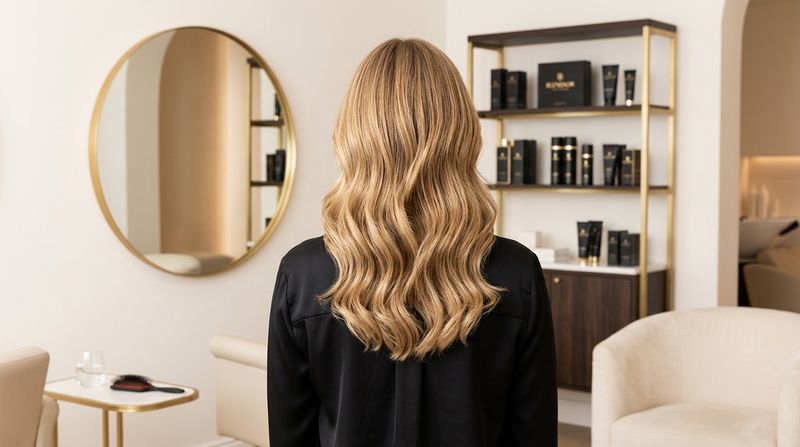
Does someone walk in with a photo of 90s Leonardo DiCaprio or a California surfer and say “I want that blonde”?
If you’re a professional colorist, that request has already reached your chair in 2026. It’s called boy blonde, one of the blondes of spring 2026, and it keeps coming in now that the season is over. It isn’t an overworked or perfect blonde: it’s the blonde of someone who woke up, went to the beach and let the sun do the work. Warm, natural, with a visible root and that effortless dimension people love because it looks like it was always there.
Quick summary: boy blonde is a warm, dimensional, natural-looking blonde with a dominant gold tone, a touch of gold ash and a visible root as part of the design. The formula depends on the starting level: from brown you lighten in sections and then tone; from natural dark blonde a gold permanent color is enough; from light blonde, a gloss. Each brand’s instructions set the ratio and the developer.
What Exactly Is Boy Blonde?
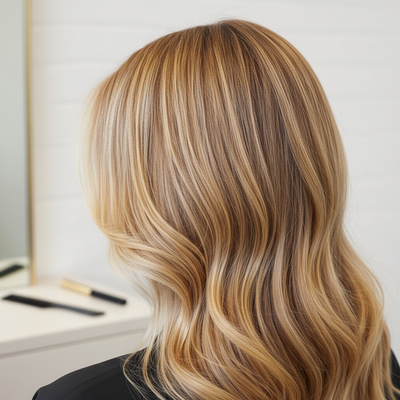
Boy blonde is a warm, casual blonde with a gold tone and an intentionally visible root, at levels 7 to 9. What sets it apart is the “it just happened” look: neither the uniformity of butter blonde nor the depth of teddy bear. It’s lighter and sunnier, and because the root is built into the design, it lasts longer between touch-ups than an even, cool blonde.
Boy blonde doesn’t aim for platinum or a flawless ash blonde: it aims to look like the color of someone who spent the summer outdoors. Levels 7 to 9, with movement, dimension and that texture that makes it look undone in the most intentional way.
Warm golds define the blondes of 2026: boy blonde shares the season with teddy bear blonde and butter blonde within this year’s hair color trends.
What separates it from its closest relatives is intention: boy blonde has that “it just happened” look, without the polish of cashmere blonde or the depth of teddy bear.
How Is Boy Blonde Different From Other Trending Blondes?
The key difference from butter blonde is dimension: butter is more even and creamy, with an almost invisible root; boy blonde has tonal variation and an intentional visible root. Compared with teddy bear, which is more honey gold, boy blonde is lighter and more powdery. Compared with honey blonde, it’s less intensely warm.
This is the question that comes up most in consultations. The client arrives with a reference and you need to understand exactly what they’re asking for before you touch a mix.
| Blonde | Tone | Target level | Root | Maintenance | Style |
|---|---|---|---|---|---|
| Boy Blonde | Gold with a touch of ash | 7-9 | Visible, part of the design | Low | Casual, sunny, effortless |
| Teddy Bear Blonde | Honey gold | 7-9 | Naturally blended | Low | Warm, cozy, luminous |
| Cashmere Blonde | Neutral creamy | 8-9 | Softly integrated | Medium | Refined, elegant, polished |
| Butter Blonde | Creamy gold | 8-9 | Almost invisible | Medium | Creamy, soft, even |
| Honey Blonde | Amber gold | 7-8 | Warm, blended | Low | Warm, intense, summery |
The key difference between boy blonde and butter blonde is dimension: butter tends to be more even and creamy; boy blonde has more tonal variation, with lighter areas and areas that keep more depth at the root. They’re very close, but butter is softer and boy blonde has more “character”.
Compared with warm honey blonde, boy blonde is lighter and less intensely warm. It doesn’t chase that vibrant amber gold of honey: it goes for something more powdery and sunny.
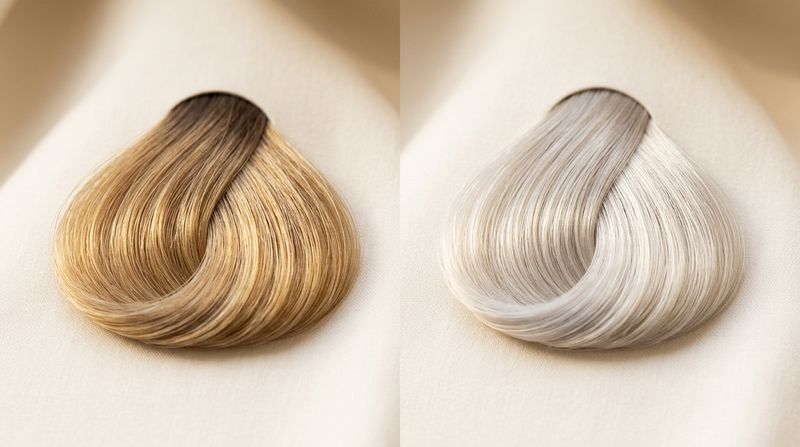
How to Formulate Boy Blonde by Starting Level?
The formula depends on the starting level. From brown (level 4-5) you lighten with highlights or balayage to a level 8 base and tone with a gold gloss. From natural dark blonde (6-7) a gold permanent color with the developer the instructions call for to lift one or two levels is enough. From light blonde (8-9) you only need to deposit with a gloss. In every case, gold dominates over the touch of ash.
The color logic doesn’t change with the level: the gold tone dominates, with a touch of gold ash to add dimension without cooling the result. That touch of ash is what gives the “natural sun” effect instead of a flat gold. Each brand numbers these tones its own way: check the code on your chart before mixing.
Pro tip: gold has to lead the mix. If the gold ash takes over, the result cools down and you lose the spirit of the look.
Before lightening or coloring: Wella recommends a skin allergy test 48 hours before coloring (Koleston Perfect global booklet); do it before the gloss that follows lightening too. Also do a strand test if there’s previous color or lightening, henna, a chemical straightener or a perm. If the scalp is irritated or broken, postpone the appointment.
Starting Level 4-5 (Medium to Light Brown)
From this base you need to lighten before toning, but not the whole head: boy blonde from brown is built with highlights or balayage that leave pieces of the natural base near the root. If you lighten the whole head, brown regrowth over blonde is exactly the harsh root this look avoids. The target base is a level 8 in the lightened sections, because a gloss deposits but doesn’t lift.
Step 1, lightening (example with Blondor, Wella’s global usage booklet and fact sheet):
- Mix: ratio 1:1, 1:1.5 or 1:2 depending on the Blondor product
- On the scalp: developer at 6% or below
- Time: development is visual and depends on the base and porosity; the global Blondor Multi Blonde fact sheet sets a ceiling: do not exceed 50 minutes
- If it hasn’t reached the base at the ceiling: remove, rinse and plan another session; don’t extend the time or raise the developer on the fly
- With previous color on mids and ends: those lengths lift differently from the natural root; the strand test tells you how
Step 2, boy blonde toning:
- Service: a gold gloss with a touch of gold ash
- Example: Shades EQ, which Redken US mixes 1:1 with its Processing Solution and processes for 20 minutes at room temperature
- Result: a level 8 boy blonde on the lightened sections, with gold dimension and the depth of the natural base. As the gloss washes out, the yellow of the lightened base shows through: that’s the cue to tone again.
Starting Level 6-7 (Dark to Medium Blonde)
If the 6-7 base is natural, with no previous color, you can work with permanent color directly. If it’s already colored, remember that color doesn’t lift color: the colored lengths stay where they are or need lightening, and a strand test tells you before the appointment. Lifting one or two levels exposes this base’s warm underlying pigment: the gold doesn’t need a boost, and the touch of gold ash helps hold back the orange.
Formula: a gold permanent color with a touch of gold ash, at the target level. Example with Koleston Perfect (global booklet): in the families mixed 1:1 (Pure Naturals, Rich Naturals, Vibrant Reds and Deep Browns), Welloxon Perfect 20 vol for one level of lift and 30 vol for two (Wella’s booklet says “1 tone lighter” and “2 tones lighter”). Time: what your line’s instructions give for lifting. Gentler alternative: if you only want to change the tone without lifting, a gold gloss (see level 8-9).
To add real boy blonde dimension, apply the lighter formula on mids and ends first, then the darker one at the root and crown: on natural hair, scalp heat makes the root lift faster. For the transition, soft balayage or a color melting technique.
Starting Level 8-9 (Light to Very Light Blonde)
From light blonde you only need to deposit pigment. Don’t force lift: boy blonde isn’t a very light blonde, it has depth.
Service: a gold gloss with a touch of gold ash. Example with Color Touch: per Wella’s US professional store, it’s mixed 1:2 with Color Touch Emulsion 1.9%, the one they recommend for color deposit and toning, and processed for 20 minutes without heat or 15 with heat.
Warning: if you start from a very cool previous blonde (ash or violet), drop the touch of gold ash from the formula: the hair already brings the cool. Over blue-ash residue, gold can turn greenish. Do a strand test: if it looks dull or greenish, a touch of red or copper fixes it, not more gold. And if that previous blonde is well above the target level, darkening it may not be a simple tone gloss but a color fill: the strand test decides, and if it’s needed you plan it as one.
| Starting level | Pre-step | Boy blonde service | Example with instructions |
|---|---|---|---|
| 4-5 | Highlights or balayage to a level 8 base | Gold gloss | Blondor (Wella global documents), then Shades EQ 1:1 (Redken US) |
| 6-7 | Not needed on natural hair; with previous color, strand test | Gold permanent color | Koleston Perfect 1:1 with 20 vol (“1 tone lighter”) or 30 vol (“2 tones lighter”), global booklet |
| 8-9 | Not needed | Gold gloss | Color Touch 1:2 with 1.9% emulsion (Wella US) |
| Previous cool blonde | Strand test | Gloss without the ash touch | The one for your level |
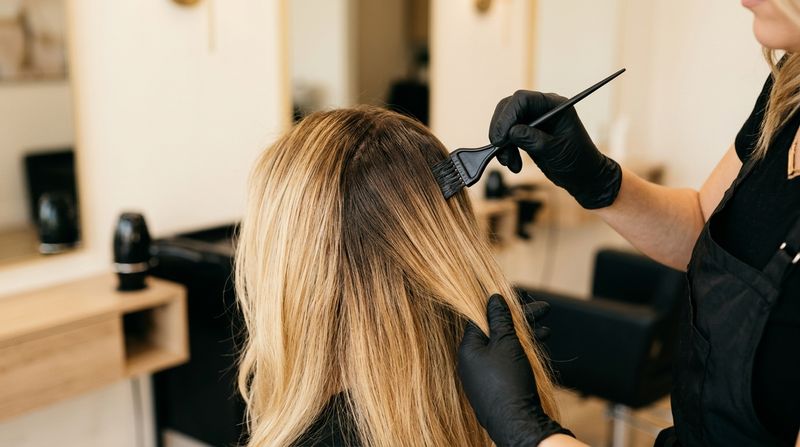
Why Is Boy Blonde Winning in Spring 2026?
Boy blonde is winning because low maintenance is a feature of the design, not a flaw: the visible root is part of the look, so touch-ups can be spaced further apart than with a cool ash blonde, where the root contrasts right away. And from dark or light blonde it doesn’t require a full transformation; from brown, the first appointment is one.
Picture two appointments this Friday. The first client wants a very cool ash blonde: they need frequent touch-ups because the root contrasts too much. The second wants boy blonde: the visible root is part of the look, so they can wait longer to come back without it showing.
That’s the main reason for boy blonde’s success: low maintenance is an advantage, not a compromise.
It also works on a wide range of skin tones: gold tones with a slight touch of ash are more versatile than purely warm or purely cool blondes. And the cultural reference matters: it’s the surfer-style blonde seen on plenty of familiar faces, with that apparent nonchalance that’s actually very calculated.
From the salon’s point of view it’s profitable too: you can offer it as an easy-maintenance balayage, because once the base is done, upkeep is simpler than with a transformation blonde.
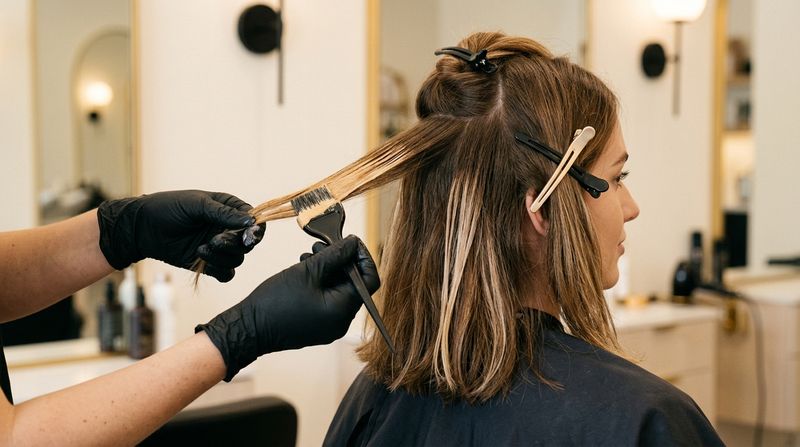
What Are the Most Common Mistakes When Formulating Boy Blonde?
The three most common mistakes are: going too light (lifting to level 10 or platinum destroys the spirit of the look, which needs depth at the root), over-cooling the result by overusing gold ash or adding a pure ash, and leaving a root with too harsh a contrast without color melting or a soft shadow root.
The mistake of going too light: if you lift to level 10 or platinum before toning, the look loses its “boy” essence. Boy blonde has depth at the root and variation: hair that’s evenly very light isn’t boy blonde, it’s a different blonde.
The mistake of over-cooling: if you overuse gold ash or mix in a pure ash, the result stops being sunny and turns dull. Remember: gold dominates over the touch of ash, not the other way around.
The mistake of a harsh root: boy blonde has a visible root, yes, but it doesn’t have to be a brutal contrast. Use a soft shadow root or color melting near the root so the transition looks natural. A long, very dark root over light blonde isn’t boy blonde: it’s genuine neglect.
Frequently Asked Questions
Is boy blonde just for men?
No. Despite the name, boy blonde is a unisex shade. “Boy” refers to that casual, effortless aesthetic, not to gender. It works on any length and hair type, although naturally wavy or voluminous textures especially suit that sunny movement.
How long does boy blonde last between touch-ups?
With a visible root built into the design, boy blonde is one of the blondes that lasts longest between appointments: regrowth doesn’t ruin the look and, in fact, a little regrowth adds authenticity. What sets when to come back is the toner: a gloss fades with shampooing, so the gold tone needs refreshing before the root does. To keep the tone, recommend a shampoo for color-treated hair and a gold-pigmented mask.
Can you do boy blonde on naturally dark hair?
Yes, but it takes a two-step process: lightening with highlights or balayage to a level 8 base and then toning. From natural brown, the first time is a long appointment, with controlled lightening and precise toning. Make it clear from the consultation that it isn’t a maintenance appointment: it’s a transformation.
What’s the difference between boy blonde and butter blonde?
They’re the two closest blondes in appearance. Butter blonde is more even, creamy and soft, with an almost invisible root. Boy blonde has more dimension, with variation between lighter areas and areas with more depth, and the visible root is part of the design. If the goal is uniformity, it’s butter blonde. If it’s casual and sunny, it’s boy blonde.
Which technique works best for boy blonde?
Freehand balayage or open foils is the most natural technique for that sunny effect. Combine it with a base applied from the root in strategic areas (face frame, crown) to create dimension. Color melting is key to making the transition from root to mids invisible.
Summary
- Boy blonde is a warm, casual, dimensional blonde with an intentional visible root and a gold tone with a touch of ash
- It differs from butter blonde in dimension and from teddy bear in being lighter and less honeyed
- The key formula: a dominant gold tone, with gold ash only as a touch
- The target level is between 7 and 9: if you reach platinum, the look loses its essence
- Each line’s instructions set the ratio, developer and time: lightener, permanent color or gloss
Calculate Boy Blonde Formulas With Precision
Want personalized boy blonde formulas based on each client’s level and color history?
Use the hair color mixing calculator to see what level and tone you get when mixing gold with gold ash.
Have you had the boy blonde request in your salon yet? How are you handling it?
What's the difference between boy blonde and other light blondes?
In the app, we ask you a question like this one, but about your own client.
Up for this week’s case? → More on blondes and lightening →Related articles
The Blendsor newsletter
Color techniques and trends for professionals. No spam.
You know the theory. What about today's case?
Send a photo to the Blendsor advisor and get an answer grounded in colour theory: toner, developer and timing, with the brands on your shelf.
Ask about your caseWritten by the Blendsor team
Professional hair colorimetry experts with experience in AI-assisted formulation. We combine color science, salon practice and technology to help colorists formulate with precision.