Cashmere Blonde: The Most Elegant Blonde Trend of 2026
What cashmere blonde is and how to formulate it: lift base, toner logic from your brand's chart, foils or balayage, pre-service tests and mistakes to avoid.
Blendsor
Blendsor Team
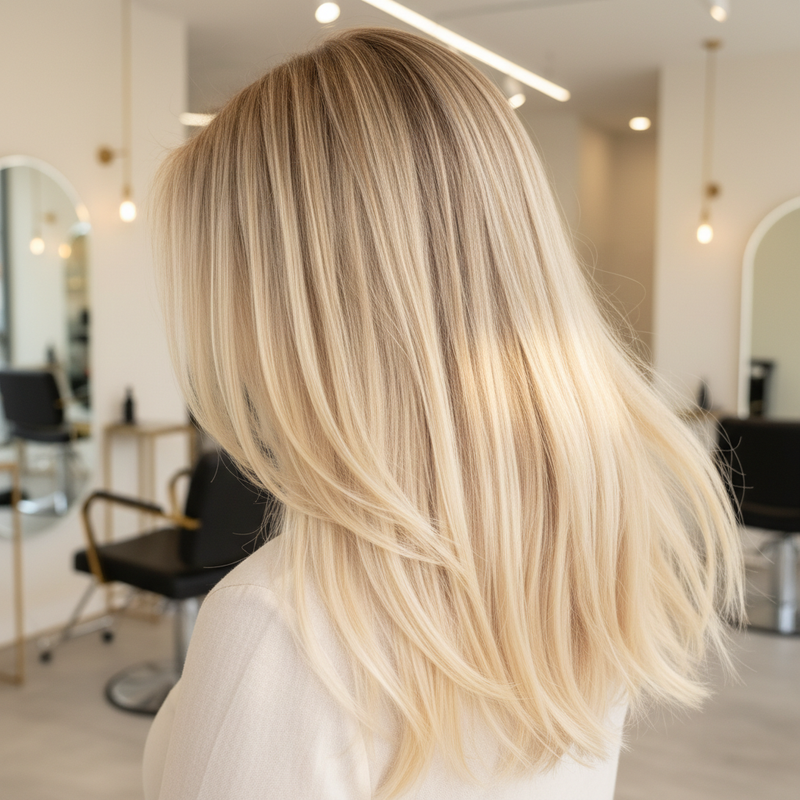
Does your client bring a photo of a blonde that looks creamy, luminous, and slightly warm — but doesn’t know how to ask for it?
If you’re a professional colorist, that blonde has a name: cashmere blonde. It’s the blonde dominating 2026 and the one causing the most confusion, because it’s neither cool nor warm — it’s neutral-creamy, like cashmere. Soft, luminous, and universally flattering.
According to Behindthechair.com, cashmere blonde is the evolution of ’90s blonding, but with today’s precision and chemistry. This article is part of our hair color trends guide.
Quick summary: Cashmere blonde is a neutral-warm creamy blonde (level 8-9) achieved by lifting to a clean base (with foils when you want uniformity, the foiled cashmere technique, or with balayage for a more organic finish), a toner of soft gold tempered with ash, and a sealing gloss. Neither cool nor warm. With foils, regrowth shows sooner and means more salon visits; with balayage, the root grows out diffused.
What is cashmere blonde and what makes it different from other blondes?
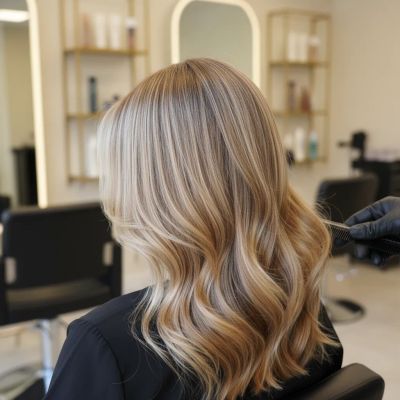
Cashmere blonde is a creamy blonde with neutral-to-slightly-warm undertones at level 8-9 that melts seamlessly from a natural darker root. Unlike platinum (which eliminates all warmth) or ash blonde (which cools the tone), cashmere embraces buttery golds and creamy sands. Its signature is that middle point: a soft gold tempered with a touch of ash.
Cashmere blonde is a creamy blonde with neutral-to-slightly-warm undertones that melts effortlessly from a natural darker root into luminous ends. The key is working with hair’s natural warm undertones rather than neutralizing them.
Unlike platinum blonde (which aims to eliminate all warmth) or ash blonde (which cools the tone), cashmere blonde embraces subtle warmth: buttery golds, creamy sands, touches of honey.
Cashmere blonde vs other blondes
| Blonde | Undertone | Target level | Maintenance | Style |
|---|---|---|---|---|
| Cashmere blonde | Neutral-warm creamy | 8-9 | Medium (periodic gloss) | Elegant, elevated natural |
| Platinum | Ultra-cool, no warmth | 9-10 | Very high | Dramatic, editorial |
| Ash | Cool | 8-9 | High | Modern, cool |
| Honey blonde | Intense warm golden | 7-8 | Low | Summery, luminous |
| Dimensional | Cool/warm mix | 6-9 | Medium | Depth, movement |
What sets it apart from other blondes is that it can be planned on natural blonde, brown and even red bases: what changes with the base is the number of sessions (see who it works for, below).
How do you formulate cashmere blonde professionally?
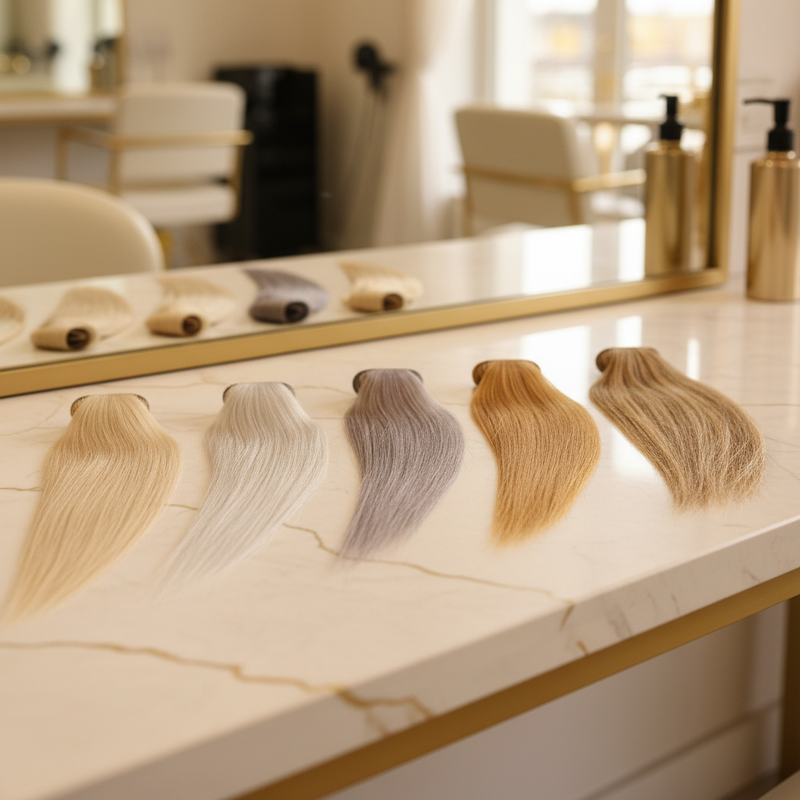
Cashmere blonde is formulated in two steps: a clean lift to a pale yellow base (level 9), then a toner that combines a natural with a touch of soft gold and a hint of ash. The ratio, developer volume and timing for each step come from the manufacturer of your lightener and your toner, not from a generic table. Our hair color mixing calculator shows where level and tone move as you change the split between two shades from your chart.
Foils or balayage?
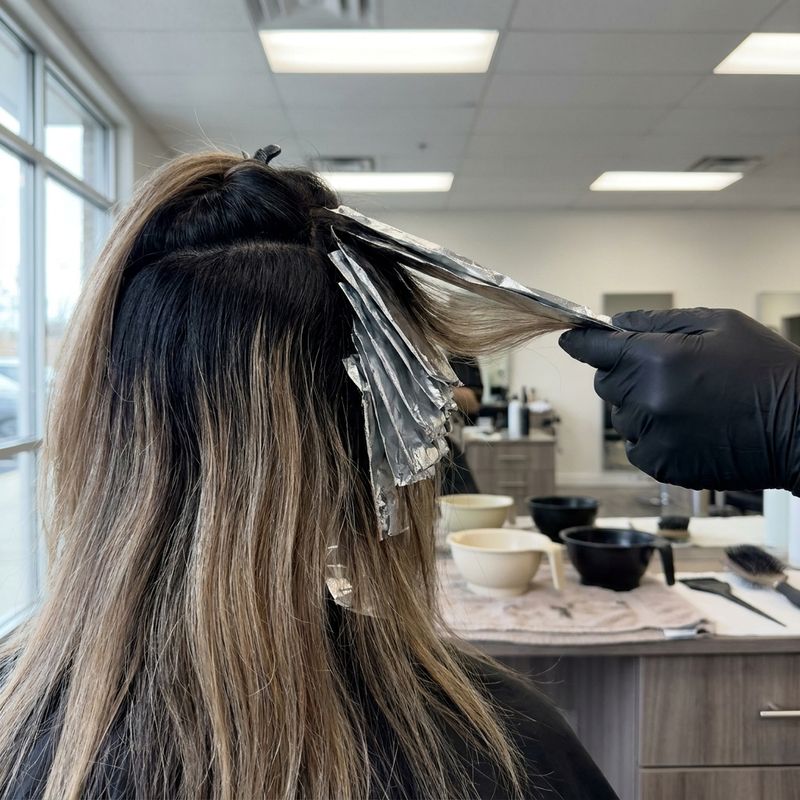
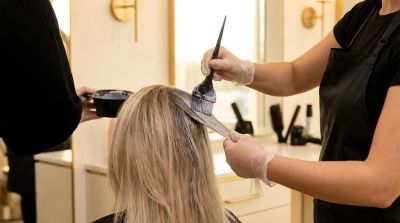
Cashmere blonde is a shade, not a technique, so there are two routes to it. Foils in fine subsections (what’s known as foiled cashmere) give an even lift from root to tip, with that polished 90s blonde finish: how the foils are placed and how the layered toning works is in our foiled cashmere guide. Balayage gives a more organic result, with variation and a root that grows out soft, and it’s the route when the reference photo shows a cashmere blonde with movement rather than a uniform blonde.
The finish your client asks for makes the call: even and polished, foils; organic with a diffused root, balayage.
Lifting: the base comes first
Before toning, cashmere needs a clean pale yellow base (level 9). If the lift falls short, the residual warm undertone takes over and the result reads golden instead of creamy. For the mix and the processing time, go by the instructions for the powder you’re using. The judgment call is yours: the lowest developer that gets you to the base and, if the base is dark or the hair can’t take it, splitting the lift over two sessions rather than going up in volume.
The logic of a cashmere toner
This is the key to cashmere blonde. The toner defines the difference between any blonde and a cashmere blonde: over that pale base you’re after a natural with a touch of soft gold and a hint of ash to temper it. All ash reads cool; all gold reads buttery. It’s the same middle point that gives the shade its name: neither cool nor warm.
Pro tip: A reflect number doesn’t always mean the same thing from one brand to another. On its US store blog, Wella calls /3 gold and /1 ash, while Schwarzkopf’s current English naming for Igora makes -3 Matte and -1 Cendré. Copying a “gold ash” by number from one chart to another can swap your gold for a matte. Find the gold and the ash by name in the chart of the brand you’re mixing, not by the digit.
Finishing gloss
The gloss is what gives cashmere blonde its visual signature: that silky “cashmere” shine. Apply a clear or slightly tonal gloss on damp hair, with the activator and timing set by that gloss’s manufacturer (if you’re unsure about volumes, review how to choose developer volume).
What is the step-by-step cashmere blonde technique?
The process runs in three phases: diagnosis with its safety tests, lightening with foils or balayage depending on the finish you’re after, and toning plus sealing gloss. A full session takes 2-3 hours for levels 6-7. For levels 4-5, the careful route is to split the lift over two sessions, with the gap between them set by how the hair responds.
Preparation
- Full diagnosis: Natural level, color history, porosity. Cashmere blonde requires a clean underlying pigment (pale yellow, level 9)
- Allergy test: on the timing the color’s manufacturer gives, and the toner is a color service too. Wella, for example, puts it plainly in its Koleston Perfect leaflet: “Always perform an allergy test 48 hours before any color service.” If your brand publishes no timing, not on the same day as the color appointment
- Strand and elasticity test: Lighten a hidden strand to see how it lifts and what base it reaches. Stretch it wet: if it stretches and doesn’t bounce back, the hair isn’t ready for bleach today
- Expectations: Show real references. Cashmere is NOT platinum or ice blonde
- Session planning: For base levels 4-5, plan two sessions and book the second once the elasticity test allows it
Lightening with foils or balayage
- Pick the technique by the finish in the photo: Even from root to tip, foils with precision placement (the technique is in foiled cashmere); organic with a diffused root, balayage
- Apply to suit the technique: Inside each foil, full saturation from root to tip; with balayage, product concentrated on mids and ends
- Process with control: Check every 10-15 minutes. Target is a uniform pale yellow base, level 9
- Stop if the hair warns you: If a check shows the strand losing elasticity, remove the lightener and leave the rest for the next session
Toning and finishing
- Rinse and wash with acid shampoo
- Apply cashmere toner: On damp hair, wide sections
- Watch the development: Porous hair grabs ash faster and can turn greenish. Rinse as soon as it reaches the shade, without going past the toner manufacturer’s timing
- Final gloss: Timing per its manufacturer, then a cold-water rinse
What are the most common cashmere blonde mistakes?
The five mistakes that ruin cashmere blonde: an all-ash toner, insufficient lift (underlying pigment below level 9), picking the technique without looking at the finish the photo asks for, skipping the final gloss, and skipping the pre-service tests. The first is the easiest to make when a formula is copied by number from one brand to another.
- Using toner that’s too ashy: If the toner is all ash, the result is a cool blonde, not cashmere. You need the touch of soft gold that tempers it, read from your brand’s chart and not from another brand’s number
- Insufficient lift: If the underlying pigment doesn’t reach level 9, the residual warm undertone dominates and the result is golden instead of creamy. A second session is better than a heavy toner
- A technique that doesn’t match the photo: If the reference is an even blonde from root to tip and you do it with balayage, it will come out with variation; if it’s a cashmere blonde with movement and a soft root, foils will leave it too polished. For the even finish, see our foiled cashmere step-by-step guide
- Skipping the gloss: Without gloss, you lose the cashmere blonde’s visual signature: that silky shine that gives it its name
- Skipping the tests: Without an allergy test on the timing the color’s manufacturer gives (if none is published, not on the same day as the appointment) and a strand test with an elasticity check, the first warning that something is off arrives with the whole head done
Pro tip: For clients who want cashmere blonde but have existing dimensional blonde, you don’t need to cover all the dimension. Tone all the hair with the cashmere toner — the previous level differences soften under the same undertone, creating a cashmere effect with residual depth.
Who does cashmere blonde work for?
Cashmere blonde works for most hair profiles. Natural blondes (level 7-9) achieve it in one session with immediate results. Light brunettes (level 5-6) need 1-2 sessions. Hair with 30-50% gray responds especially well, as the gray adds extra luminosity. Dark brunettes (level 3-4) require 2-3 sessions, or the cashmere bronde version just below.
| Client profile | Viability | Notes |
|---|---|---|
| Natural blonde (level 7-9) | Excellent | 1 session, immediate result |
| Light brown (level 5-6) | Good | 1-2 sessions depending on history |
| Dark brown (level 3-4) | Possible | 2-3 sessions, high commitment |
| Natural redhead | Good | Lighten while maintaining natural warmth |
| Gray hair (30-50%) | Excellent | Gray adds extra luminosity |
Cashmere bronde: the version for darker bases
When the base is brown and the client doesn’t want several sessions to reach a light blonde, the reference that fits is cashmere bronde (brown + blonde): a brightened brunette with the same creamy finish. The base stays close to its natural depth and the lift is spread through fine highlights or balayage, without taking the whole head to a pale yellow base.
Because the highlights lift less, their underlying pigment stays warmer than in a light blonde. The toner aims for the same middle point, but the balance shifts: the base already brings the warmth, which leans more orange the less the highlights lift, so the toner carries little or no gold and more natural and ash, to temper that warmth without cancelling it. The result reads as a luminous brunette, not a blonde. In return, less lightening on the hair and a root that grows out with less contrast.
Frequently asked questions
How much does cashmere blonde cost at a salon?
It depends on length, starting level, number of sessions and where you work, so we won’t give you a range we can’t back up. To price it with your own numbers (chair time, product and margin), see our guide to hair coloring service pricing.
Can I do cashmere blonde at home?
Not recommended. Cashmere blonde requires precise lightening control and toning with specific reflects (a soft gold tempered with ash) that are difficult to achieve without professional training. A toning mistake can result in a greenish or overly golden result.
What’s the difference between cashmere blonde and butter blonde?
Butter blonde is warmer and more saturated, with intense golden undertones. Cashmere blonde is more neutral and creamy, with contained warmth. Think butter vs cashmere: both soft, but cashmere is more refined.
How often does cashmere blonde need maintenance?
Salon Culture Dallas, a salon that does this shade, suggests a gloss every 6-8 weeks to refresh the creamy tone. Take it as a guide, since washing, sun and porosity set the real pace for each client. With balayage, the natural root grows in without a harsh line because the transition is gradual; with foils, regrowth shows sooner.
How do you care for cashmere blonde in summer?
Sun, chlorine, and salt water tend to wear down the toner and push cashmere toward stronger golds. During high-exposure months, shorten the interval between maintenance glosses and recommend hair-specific UV protection to the client, plus a fresh-water rinse after every swim. That keeps the creamy neutral undertone from shifting.
Key takeaways
- Cashmere blonde = neutral creamy, neither cool nor warm: The key is a toner of soft gold tempered with ash, read from your brand’s chart
- Foils or balayage, depending on the photo: Foils give the even cashmere (foiled cashmere); balayage, a more organic one
- The gloss defines the result: Without gloss, it’s just another blonde. With gloss, it’s cashmere
- Tests before the lightener: Allergy test on the timing the color’s manufacturer gives (with no published timing, not on the same day as the color appointment), strand and elasticity
Calculate professional formulas with AI
Want to generate custom cashmere blonde formulas based on each client’s starting level and desired undertone?
Try Blendsor - Permanent Free plan. No commitment.
Have you tried cashmere blonde in your salon? Which variant do your clients request most?
Manufacturer sources
Manufacturer documents consulted for this article. A copy of each one is kept, and the passages noted from it are checked against that copy.
Note each one's country: the same line's instructions can differ from one market to another, so follow the directions for the product you use.
What's the difference between cashmere blonde and a regular ash blonde?
In the app, we ask you a question like this one, but about your own client.
Up for this week’s case? → More on blondes and lightening →Related articles
Practice with our colorimetry tools
Calculators, neutralization wheel, AI consultation...
The Blendsor newsletter
Color techniques and trends for professionals. No spam.
A client in the chair right now?
The Blendsor advisor gives you the precise formula for this technique with your salon's brands — and saves it to your client's card.
Ask about your caseWritten by the Blendsor team
Professional hair colorimetry experts with experience in AI-assisted formulation. We combine color science, salon practice and technology to help colorists formulate with precision.