How Often to Retouch Roots and Tone: Two Clocks
Roots and tone don't fade on the same schedule. Learn what actually sets each clock, how to turn shampoo counts into a real rebooking date, and how to land both on the same visit.
Blendsor
Blendsor Team
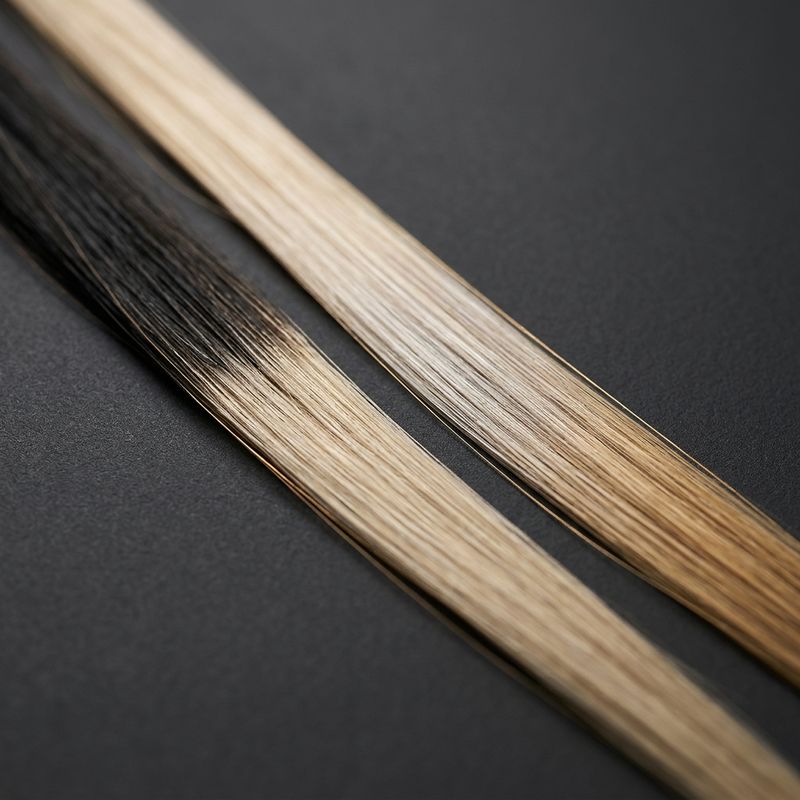
A client sits down and swears the color faded fast. You check the root — barely grown in. You check the mid-lengths — the tone is gone.
If you’ve spent any real time behind the chair, you know that’s not a contradiction. It’s just what happens. And you also know how awkward it is to explain without sounding like you’re making excuses.
Roots and tone don’t expire on the same day. They only get booked together because the person comes in once, not because the hair asked for it. Here’s what actually sets each of those two clocks, how to turn the tone clock into a real date on your book, and, the part that actually changes your Monday, how to pick a color whose fade won’t catch you out on the day of the next appointment.
Quick take: roots and tone run on separate clocks. The root clock isn’t set by length (scalp hair grows on average about 1 cm a month). It’s set by the contrast between the regrowth and the colored hair, and with gray, by where the gray comes in. The tone clock doesn’t count weeks, it counts shampoos. Demi-permanent fact sheets give a ceiling (“up to 24 shampoos” for Wella Color Touch, “up to 28” for Redken Shades EQ), and that ceiling is the best case, not the rebooking date. Book off what the client sees in the mirror, not the ceiling.
Why don’t roots and tone fade at the same rate?
Because two different engines drive them. The root is pushed out by the follicle from underneath: that’s biology, and nothing you do in the bowl touches it. Tone leaves from the outside in: that’s chemistry, and it depends on what you put down, on which fiber, and how many times it gets washed.
One is a constant push. The other is a progressive loss. There’s no reason for them to line up.
What you can control is the fiber. Per NIH’s StatPearls, scalp hair grows about 0.35 mm a day, roughly 1 cm a month. You don’t get to change that rate. What you do control in the chair is how much of that growth breaks off along the way and, more importantly, how much of it actually reads as regrowth. That’s the real lever.
How often should you retouch roots?
The root interval isn’t set by length. It’s set by the contrast between natural base and target shade. Even if two heads grow at the same rate, a centimeter of dark regrowth under a very light blonde shows right away, while that same centimeter under a shade close to natural can go unnoticed for much longer.
Same physics, opposite outcomes. Wella takes it to the other extreme with a deliberately dark-rooted blonde: if the blonde was placed over the natural base, only the mid-lengths and ends need maintaining, and the brand suggests clients come back every six to eight weeks for a toning appointment, not a root retouch (Wella). That interval belongs to that specific service, not to roots in general; if that route suits the client, see our shadow root technique. Same growth rate, completely different clock.
That’s why length is a red herring. Ask “how much has it grown?” and you’re measuring the variable that doesn’t matter. The question that actually matters is: how much distance is there between what’s coming out of the scalp and what’s sitting a centimeter down?
If what you’re being asked is how long to leave a root retouch on, that’s processing time, and each color’s instructions set it: it’s covered in hair color processing time.
And if the question is how often you can retouch, the answer is more about safety than the calendar. Product goes on the regrowth only. Wella spells it out for blondes: focus the lightener on the root area only, so you’re not lifting fragile ends at every visit (Wella’s blonde root touch-up guide), and the guide for its Blondor powders says not to overlap previously lightened hair with product (Wella PDF). Going past the line is where banding on a bleach retouch comes from, along with a good share of uneven root touch-ups.
Wella’s Koleston Perfect leaflet also says to “always perform an allergy test 48 hours before any color service,” however often the client comes in; for the toner that follows, go by the timing on its instructions and, if they give none, not on the same day as the color appointment (how to fit it into your book). And if the same visit touches lengths with history (bleach, highlights, previous color, henna), run a strand test first; if those lengths are lightened, use that strand to check elasticity as well.
Gray hair moves the clock sooner than you’d think
With gray, “how often should I retouch my roots?” has two answers that add up. The first is the same contrast as before: white regrowth under a dark brown shows much sooner than under a light blonde, because there’s more distance between what grows and what’s colored. The second is where it comes in. At a similar percentage, the clock runs shorter when the gray gathers along the part and the hairline, which is what the client looks at head-on every morning, than when it’s spread through the nape.
Wella builds that into its blonde root touch-up guide: start applying where there’s the most gray or where the hair is most resistant, which is typically the back of the head, though it notes that placement of grays and stubborn patches is unique to every client (Wella). So percentage alone won’t tell you when to rebook: note on the client card where the gray actually is.
To build the retouch itself, see our gray coverage guide, developer for a gray root touch-up and the gray coverage levels. And if you want the regrowth line to show less between visits, look at bottom-up gray blending.
Not every color service runs a root clock
A root retouch exists because there’s a hard demarcation line to defend. When that line isn’t hard, the clock loosens up:
- Balayage and root smudge: no crisp line. Regrowth reads as dimension, not a band, and visits can be spaced out a lot further (our profitable balayage piece covers how to agree that interval).
- Babylights: this is the highlight, not the base. Since it sits closer to the root, it does run a clock, just a softer one than a full gray blend.
- Global gray coverage: hard line, hard clock. This is where contrast really calls the shots.
No technique eliminates the root. The good ones just soften how it reads. And that’s a booking decision made well in advance, at the consultation.
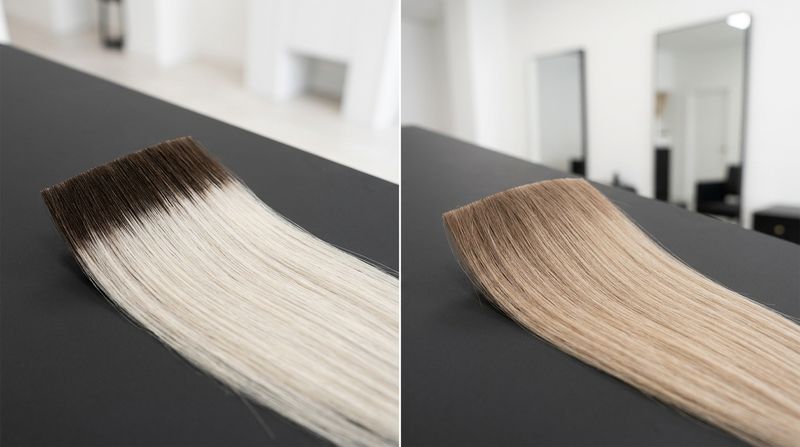
Same regrowth, different clock: contrast between base and target decides when the root starts to show.
How often should you tone or gloss?
Tone doesn’t count weeks, it counts shampoos. But inside that clock there are actually two, and mixing them up is exactly what sends someone back in the door annoyed:
- The tone (the cool cast, the pearl, the ash). It’s what the client looks at in the mirror, and what they miss once it dulls.
- The deposit (the underlying color you laid down). It’s the depth that’s still there even when the tone no longer reads the same.
The manufacturer gives you one shampoo ceiling for the product, without separating the two. The Wella Color Touch fact sheet says “Lasts up to 24 shampoos”; Redken says Shades EQ lasts “up to 28 shampoos”; and a semi-permanent with no developer, such as Wella’s Color Fresh, says “Lasts up to 10 shampoos”.
Read those numbers for what they are: a best-case ceiling, not an average. On that same page Redken warns that underprocessing or applying on wet hair greatly impacts color longevity. And the tone the client asked for can stop reading well before the product hits its ceiling. How long each type of color lasts is covered in detail in how long hair color lasts; here the point is your book.
The working rule: book off what you can see, not the ceiling. If you rebook counting on the full 24 shampoos, you risk getting there too late.
Porosity doesn’t divide, it scatters
This is where a lot of pros make a well-intentioned mistake, which is the worst kind. The temptation is to treat porosity like a multiplier: “it’s porous, so it’ll fade in half the time.”
That’s not how it works. A porous fiber has gaps where color goes in and out less predictably. And it doesn’t happen evenly across the head. It happens in patches.
Picture a real head: mid-lengths that have seen two lightening sessions, damaged ends, virgin regrowth that just came in. That’s three different fiber ages living on one head. A clean divisor predicts a head that’s evenly half-faded. That head doesn’t exist.
What porosity actually does is turn one interval into three different intervals on the same head. That’s why you don’t calculate it, you even it out beforehand. If your line has a porosity equalizer, use it as its instructions say, then plan application order and timing by zone, leaving the most absorbent zone for last. (Pre-pigmentation is a different tool for a different service: going darker. That’s where it belongs.)
The moment you think you’ve modeled porosity with a simple division, you stop evening it out. And that’s the step that actually protects the result.
How do you turn shampoo counts into a real rebooking date?
With a question that takes three seconds at the consultation: “How many times a week do you wash your hair?”
That’s the missing translation, but handle it with care. Split the fact sheet’s ceiling across the week’s washes and what you get is the latest possible date in the best case: with Color Touch and three washes a week, “up to 24” lands around week eight. That’s the outer limit, not the appointment. Book earlier, and earlier still the more porous or uneven the fiber and the more often the client washes. At the next visit, look at what’s left of the tone and adjust the date to what you see, not to the math.
Pro tip: log wash frequency on the client card, right next to level and porosity. It moves the real interval, and it’s easy to forget.
If you want to fine-tune it with more variables, our hair color longevity calculator crosses color type, porosity, wash frequency, water, heat and sun. Use it with the client in the chair: it turns an argument into shared data.
And an honest note that’ll save you a lot of grief: if the interval wasn’t agreed on before the bowl came out, a fast fade is yours to explain. Sun and water count, but before you blame them, check what was down to the service: the porosity nobody read, a shortened processing time, and the product you chose.
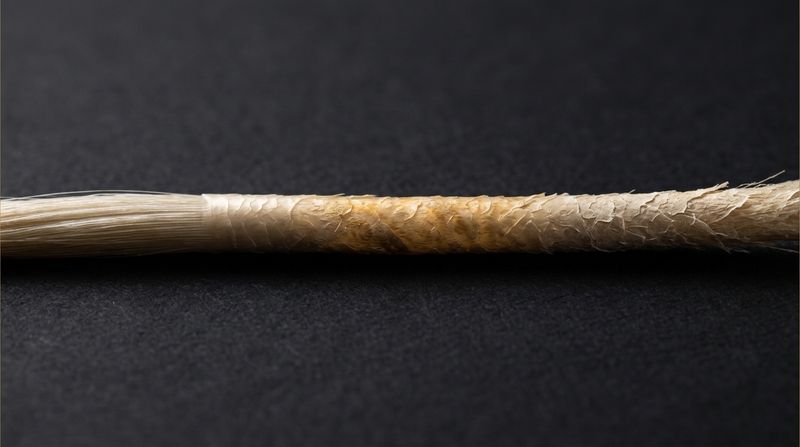
Porosity does not halve the interval: it splits it into three different intervals on the same head.
How do you get both clocks to land on the same day?
This is the part that actually changes your Monday. You can’t speed up the follicle. But you can pick a product and a tone that won’t leave you exposed if the next appointment slips.
The key is understanding that a tone has two independent traits, and almost everyone collapses them into one:
- Speed: how fast it fades. The fact sheet only gives you a ceiling; each head of hair decides the rest.
- Landing spot: where it leaves you once it’s gone. This one you can predict before you open the bowl.
The tone doesn’t choose when it leaves. It chooses where it leaves you. And what’s left once it goes is largely the background it was covering: the Koleston Perfect usage guidelines chart a lightening curve, with the underlying pigments exposed during the coloring process (reddish, orange and yellow), next to a color wheel where “opposite colors neutralise one another” (Wella PDF). If your tone is neutralizing that background, the background shows through again as it fades.
| If the tone… | What shows through as it fades | What to agree on for rebooking |
|---|---|---|
| Works with the background (golds, coppers over a warm base) | A color from the same family, less intense | A shine refresh when the client starts missing the intensity |
| Neutralizes the background (ashes, cool tones over lightened blonde) | The yellow or orange it was covering | The appointment before the background shows; if they can’t come back soon, a target that depends less on the tone |
| Is a fashion shade (blues, violets, bright pinks) | Depends on the background, and the change is obvious | Maintenance agreed on from the first visit |
| Stays close to natural (deep browns) | A similar color with less shine | An interval driven more by the root than the tone |
Look at copper, the most misread case. Over a warm base, what’s left as it loses strength still belongs to its family, and that still reads as “my color”. It loses intensity without changing direction. The conversation is about shine, not rescue. How long a given copper lasts depends on its fact sheet and on that person’s hair; if you’re choosing between coppers, see copper, peach or ginger.
Ash is the opposite case. When it goes, it unmasks the underlying pigment. There’s no gentle fade there, just a yellow nobody asked for. Copper costs you a shine refresh; ash can cost you a full re-tone, and deciding that calmly is exactly what root touch-up or gloss at the second visit is about.
On a deep brown close to natural, what sits underneath resembles what you put down: as the tone fades it uncovers nothing hostile, it just loses shine.
That distinction, speed versus landing spot, is what lets you design the fade instead of apologizing for it. A soft landing makes the fix cheap; it never makes it later. If you know a client won’t be able to get back in for a long while, don’t hand them an ash tone and hope for the best.
The three mistakes that throw off your book
- Measuring length instead of contrast: even if every head grew at the same rate, length wouldn’t tell you when it shows. Measure the distance between base and target and, with gray, where it comes in.
- Booking off the manufacturer’s ceiling: the “up to 24” or “up to 28” on the fact sheets is the best case, and the tone the client sees in the mirror can dull before that.
- Treating porosity as a divisor: it doesn’t cut the interval in half, it splits it into three different intervals on one head. Don’t calculate it. Even it out before the bowl.
FAQ
How often should roots actually be retouched?
There’s no single number that works for every head. Scalp hair grows on average about 1 cm a month, and what decides the appointment is how noticeable that centimeter is: the contrast between regrowth and colored hair and, with gray, where it comes in. The only published interval we’ve found is Wella’s, for one specific service, the deliberately dark-rooted blonde: come back every six to eight weeks for toning. And how often you can retouch comes down to doing it right: product on the regrowth only, no overlap onto previously lightened hair (colored lengths get only what your color’s instructions allow), and an allergy test on the timing your color’s instructions give (48 hours before any color service for Wella’s Koleston Perfect; with no timing given, not on the same day as the color appointment).
How many washes does toner actually last?
The ceiling depends on the product, and its fact sheet publishes it: “up to 24 shampoos” for Wella Color Touch, “up to 28” for Redken Shades EQ and “up to 10” for Wella’s semi-permanent Color Fresh. That’s the best case, not an average, and the tone the client sees can dull sooner. Book off what you see at each visit; the detail by color type is in how long hair color lasts.
Can you sync both clocks into one appointment?
Not always, and forcing it usually backfires. When they don’t line up, you’ve got three options: a quick root- or hairline-only visit between full services, switching to a technique with no hard line (balayage, root smudge), or choosing a tone whose landing spot holds until the actual date of the next appointment.
A client says their color fades way too fast. Is that on them?
Before you look at their routine, or blame sun and water, check the service: misread porosity, a shortened processing time, applying on wet hair (Redken warns that those last two greatly impact Shades EQ longevity), or a product that wasn’t the right fit. And if the interval wasn’t agreed on before the bowl came out, that conversation always arrives too late.
In short
- They’re two separate clocks: the follicle pushes the root, chemistry fades the tone. There’s no reason for them to match up.
- The root clock is set by contrast, not length. With gray, where it comes in counts too. And retouching means regrowth only, no overlap, with an allergy test before every service, on the timing its instructions give (with none given, not on the same day as the color appointment).
- The tone clock is counted in shampoos, and the fact sheet only gives the best-case ceiling: a max, not a promise.
- Porosity doesn’t divide, it scatters: it turns one interval into three. Even it out beforehand, don’t calculate it after the fact.
- The tone doesn’t choose when it leaves, it chooses where it leaves you. A soft landing spot cheapens the fix, it never buys you more time. Choose the tone thinking about what will show through if the appointment slips.
Formulate professional colors with AI
Want to calculate the real interval for each client (contrast, porosity, and wash frequency) and pick the tone whose fade lands right on their next appointment?
Why don't root and toner need retouching on the same clock?
In the app, we ask you a question like this one, but about your own client.
Up for this week’s case? → More on global color →Related articles

Practice with our colorimetry tools
Calculators, neutralization wheel, AI consultation...
The Blendsor newsletter
Color techniques and trends for professionals. No spam.
A client in the chair right now?
The Blendsor advisor gives you the precise formula for this technique with your salon's brands — and saves it to your client's card.
Ask about your caseWritten by the Blendsor team
Professional hair colorimetry experts with experience in AI-assisted formulation. We combine color science, salon practice and technology to help colorists formulate with precision.