Cream vs Liquid Developer: How Texture Changes Your Color Result
Same volume, same ratio, different developer: why the texture of your developer affects root coverage. Professional cream vs liquid guide.
Blendsor
Blendsor Team
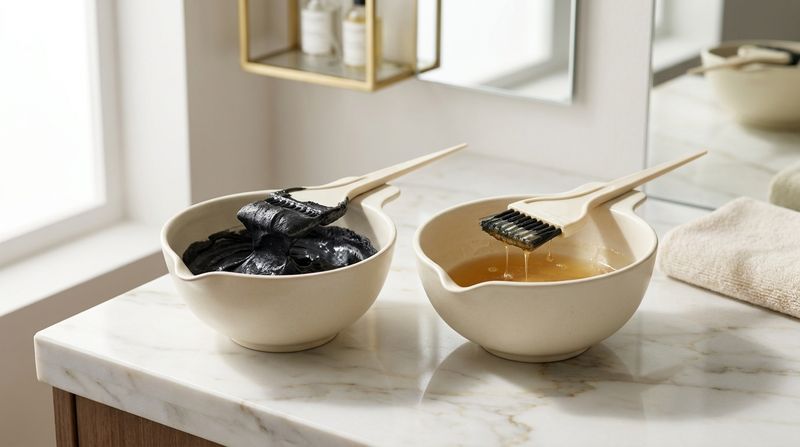
You picked the right volume. You measured the ratio carefully. And still, the root didn’t turn out like last time. Sound familiar?
If you formulate daily, you know that two services identical on paper can give different results in the mirror. The variable almost nobody checks when this happens isn’t the tint or the volume: it’s the texture of the developer. Cream or liquid. The same formula behaves differently with one or the other, especially at the root.
In this article you’ll see exactly what changes between a cream developer and a liquid one, when each suits you, and how to read the root before deciding.
What changes between a cream and a liquid developer
The difference isn’t in what the volume measures. A developer, cream or liquid, is hydrogen peroxide made to be mixed with hair color, and the volume number means the same in both forms. Wella, for example, labels its 20 Vol Welloxon Perfect as 6%, and Schwarzkopf’s US IGORA wall chart pairs 6% with 20 Vol. in its Oil Developer usage guide. What changes is the consistency of the final mix and, with it, how it behaves on the hair.
What is cream developer? It’s that hydrogen peroxide in a creamy base, with thickeners and emulsifiers that give it body. You mix it in the bowl with oxidative color, and it’s what lets the color develop. Liquid developer doesn’t have that body: it’s more fluid, closer to water. When you mix the same tint at the same ratio, the cream version comes out dense and the liquid one comes out light.
Is cream peroxide the same as developer? Yes: “cream peroxide”, “cream developer” and “crème developer” are names for the same kind of product, a peroxide developer with a creamy texture. In the US, Zotos, for example, pairs AGEbeautiful with its Gentle Crème Developer and recommends 20 Volume for optimum gray coverage. Drugstore hydrogen peroxide is a different product: same active ingredient, but it isn’t made to be mixed with hair color, and each color line’s sheet names its own developer (Welloxon Perfect for Koleston Perfect, the IGORA ROYAL Oil Developer for IGORA ROYAL, Shades EQ Processing Solution for Shades EQ). Mix color with the developer on the sheet, not the drugstore bottle. For choosing the volume, see the guide on developer volumes.
Oil developer vs cream developer. “Oil developer” is the name some brands give the developer made for one specific line. Schwarzkopf’s US wall chart mixes IGORA ROYAL 1:1 with the IGORA ROYAL Oil Developer, and L’Oréal’s US iNOA guide mixes iNOA 1:1 with the dedicated iNOA Oil Developer. Whatever the label says (crème, clear, oil), the sheet of your color line is what tells you which developer to use.
If you were searching for cream vs liquid hair color, that’s a different question: the color itself, not the developer. The rule doesn’t change, though: use the developer your color line names. For one line mixed with its own processing solution, see our Shades EQ color chart.
The density of the mix shows at the chair in two ways:
| Factor | Cream developer | Liquid developer |
|---|---|---|
| Mix consistency | Dense, creamy | Fluid, light |
| What you see on a vertical root | Stays where you put it | Can run: keep an eye on it |
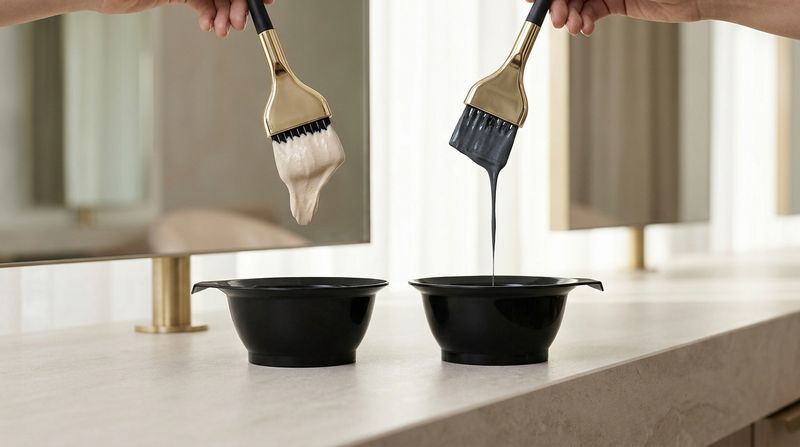
In practice: the processing time on the sheet assumes the mix stays where you put it. If it runs, that zone ends up with less product than you thought, and you see it at the end, in the mirror, not in the bowl. This is where texture stops being a cosmetic detail and becomes technical.
Why texture matters for root coverage
The root is the most demanding point of any coverage service. It’s where resistant gray sits, where hair grows vertical against gravity when the client is seated, and where a failure shows most.
A dense mix (cream) tends to stay gripped to the base. A fluid mix (liquid) can start running before the processing time is up, right in that vertical zone. If it does, that root ends up with less product than your formula calls for, at the very point where you need it most.
Pro tip: if you work gray coverage with the client seated upright, a dense mix works in your favor. Gravity is your silent enemy at the root.
Now, an important caveat: consistency is one variable, not the only one. Resistant gray coverage also depends on developer volume, processing time, and how resistant that specific gray is. Texture adds; it doesn’t replace good diagnosis. To go deeper into how time affects the result, see the guide on hair color processing time, and for choosing the volume on a gray root touch-up, the one on developer for root touch-up and gray coverage.
When to use each one
There’s no “better” developer. Your color line’s instructions come first; within what they allow, you pick the texture by looking at the service.
A dense mix works in your favor when:
- You work gray coverage, especially resistant gray
- You apply at the root with the client seated (gravity working against you)
- You need the mix to stay put without drifting to zones you don’t want to touch
- You want maximum precision in application
A more fluid mix makes sense when:
- You work tone-on-tone or glosses and the mix has to spread easily through all the hair
- It’s the developer your color line calls for
If the hair is porous, see the guide on developer volume for porous hair.
The practical rule: your line’s sheet first; then a dense mix where it has to stay, and a more fluid one where it has to spread.
The mistake of mixing without checking the brand sheet
Every color line is formulated around its own developer. Redken US, for example, mixes Shades EQ 1:1 with Shades EQ Processing Solution, in either a bottle-applicator or a bowl, and Schwarzkopf’s US wall chart mixes IGORA ROYAL 1:1 with the IGORA ROYAL Oil Developer. Can you mix a color with another line’s developer, cream or liquid? What the sheet doesn’t cover hasn’t been tested: it can change the expected consistency and give a result you can’t control. Before improvising, check your brand’s technical sheet: the ratio it recommends assumes its own developer. If you still switch developers, do a test strand first and check the result before applying it to the whole head.
The diagnosis that comes before choosing the developer
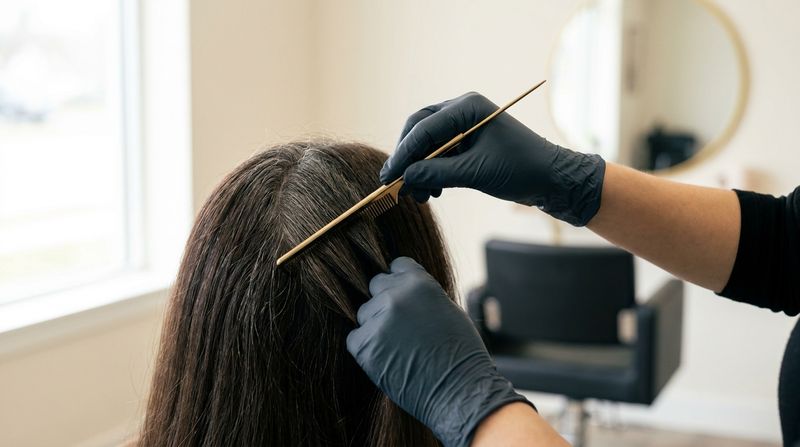
The developer decision doesn’t start in the bowl. It starts by reading the root. Three questions before opening anything:
- Is the gray resistant or soft? Resistant gray needs a mix that stays gripped for the full processing time. Here cream helps.
- In what position are you applying? Vertical root with the client seated = gravity works against you. Density matters.
- How much real processing time do you need? If the service calls for a long process, a mix that runs steals product without you seeing it.
Answering those three before touching the tube changes the decision. The ratio sets the chemistry of the mix; the form of the developer decides whether that mix stays where you need it.
And before any oxidative color, the allergy test: at the very least, not on the same day as the color appointment. Wella’s global Koleston Perfect leaflet says to always perform an allergy test 48 hours before any color service. If the test shows redness, burning or itching, the color isn’t applied and the client should seek medical advice before coloring again; if they have ever had an allergic reaction to hair color, don’t color.
Common mistakes
- Choosing the developer out of habit: using the same form by default, without considering the service. It works until the root that doesn’t forgive walks in.
- Ignoring application position: a fluid mix on a vertical root can run. The same mix horizontal (foil highlights) behaves differently.
- Assuming same ratio = same result: the ratio isn’t everything. The texture of the mix counts too.
- Not reading the brand sheet: each line names its developer. Swapping it takes you outside what the sheet tells you to do, and the consistency and the result can change.
Frequently asked questions
Do cream and liquid developer have the same strength at the same volume?
Yes. The volume means the same in cream and in liquid: Wella, for example, labels its 20 Vol Welloxon Perfect as 6% hydrogen peroxide. What changes is the consistency of the mix, not what the volume tells you. To better understand how to choose the volume, see the guide on developer volumes.
Can I use liquid developer to cover gray?
You can, if it’s the developer your color line’s sheet calls for. On resistant gray with a vertical root, watch that the mix doesn’t run and check the root during processing: if it runs, that zone gets less product right where coverage is hardest. For resistant gray, a dense mix usually gives more margin.
Why is my mix too liquid if I followed the right ratio?
First, check that you measured color and developer rather than eyeballing them: a little extra developer leaves the mix runnier even when the ratio on paper is right. If you measured, it’s often the developer form, not the ratio. If you used a liquid developer with a tint formulated for cream, the mix comes out more fluid than expected. Check your brand’s technical sheet: the recommended ratio assumes a specific developer type. More on this in the guide on mixing ratios.
In summary
- Same volume, different texture: at the same volume, cream and liquid tell you the same thing but have different consistency.
- Density decides adherence: cream tends to stay at the root; liquid can run, especially vertical.
- Sheet first, texture second: each line names its developer; within that, a dense mix where it has to stay and a more fluid one where it has to spread.
- Diagnose before choosing: read the gray, the position and the processing time before deciding the developer.
Calculate professional formulas with AI
Want to generate personalized formulas for gray coverage with the developer and ratio based on each client’s starting level and chemical history?
What's the difference between a cream and a liquid developer?
In the app, we ask you a question like this one, but about your own client.
Up for this week’s case? → More on global color →Related articles

Practice with our colorimetry tools
Calculators, neutralization wheel, AI consultation...
The Blendsor newsletter
Color techniques and trends for professionals. No spam.
You know the theory. What about today's case?
Send a photo to the Blendsor advisor and get an answer grounded in colour theory: toner, developer and timing, with the brands on your shelf.
Ask about your caseWritten by the Blendsor team
Professional hair colorimetry experts with experience in AI-assisted formulation. We combine color science, salon practice and technology to help colorists formulate with precision.