What to Record After a Color Correction
What to note in the client card after a color correction so you don't re-diagnose from scratch six weeks later: the underlying pigment by zone and the stop point.
Blendsor
Blendsor Team

You open the card of the client whose color you corrected six weeks ago. She’s back tomorrow. And the only thing you wrote down was the toner formula.
That’s where the problem starts. Not in today’s correction, which turned out well. In the one six weeks from now, the one you’ll diagnose half-blind because the data you needed never made it to the card.
Today’s color sets up the color six weeks from now. And there’s one field almost nobody writes down, even though they hold it crystal clear in their head while they work.
Quick summary: After a color correction, what decides your next appointment isn’t the toner formula but two data points: the underlying pigment by zone left exposed and the exact level where you stopped lifting, with the reason. That post-correction record is the starting point for the next diagnosis, never a formula to repeat as-is: six weeks out there’s virgin regrowth and built-up porosity, and repeating without re-reading causes banding and overlap.
Why does the post-correction card decide your next appointment, not just today’s?
Because a correction doesn’t close out a service: it opens a history. The client leaves with the color sorted, but her hair sits in a specific state by zone that only you saw, and six weeks from now that state becomes the starting point for the next decision.
The before-and-after feed erases exactly that. It shows the result and hides the decision, the formula, and the continuity. But your job isn’t the photo: it’s making sure the client walks out right the next time too.
This is where the post-correction record changes function. It isn’t an administrative note of what you charged. It’s the note you write to your future self, the one whoever diagnoses six weeks from now will read, even if that’s you and you don’t remember the detail.
If diagnosing well before you touch the hair is half the correction, here’s the first half: how to read the underlying pigment before formulating. This article is the other half: what you leave written down after, so that diagnosis doesn’t start from zero next time.
What’s the data you already track in your head but never write down?
The underlying pigment left exposed by zone and the exact point where you stopped lifting. You know it as you work: you see the root lifted faster, the ends settled on a warmer shade, you stopped the mid-lengths early for integrity’s sake. That knowledge evaporates the moment you close the card if all you note is the formula.
We’re not talking about “write down the formula” or filling in more boxes. We’re talking about a field most cards don’t even have: the real state of the fiber, zone by zone, when you finished.
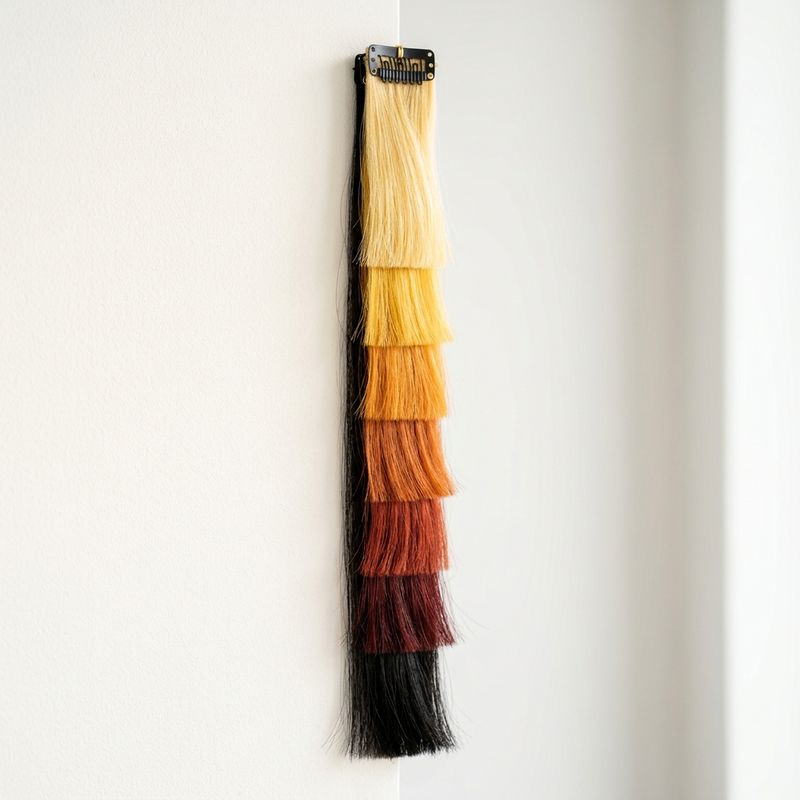
When you lift or bleach, the underlying pigment appears: the warmth that becomes visible under the natural color. And that shade is almost never uniform across the whole head. The most common pattern when lifting a uniform virgin base is that the root lifts faster and lands lighter and more yellow, thanks to scalp heat and newer hair, while mid-lengths and ends stay warmer, in the oranges, from porosity and built-up color.
But that pattern isn’t a law. On a head with a mixed history it can invert: if the mid-lengths came pre-lightened from a previous color and the root is virgin, the root throws orange and the mid-lengths yellow. The shade per zone is set by each section’s starting level and history, not by its anatomical position.
That’s why underlying pigment by zone gets recorded, not assumed. And that’s why the same field you already read by eye has to be written down: because six weeks from now not even you will remember whether those ends landed on orange or on yellow.
Which underlying pigment scale should you use as reference?
To keep the note legible to anyone (including you, six weeks out), it helps to anchor the shade to a level. This is the standard correspondence between level and exposed underlying pigment:
| Level | Exposed underlying pigment |
|---|---|
| 1-4 | Red to red-orange |
| 5-6 | Orange |
| 7-8 | Yellow-orange to yellow |
| 9-10 | Pale yellow |
This progression is widely shared across brands, though the exact boundary between bands shifts by about a level depending on the source; that’s why it’s worth anchoring each zone to a specific level and assessing under neutral light instead of memorizing the table. The exact shade is also modulated by the natural starting base and the lightener you use. If you want the level-by-level detail and how to assess it, it’s covered in the hair color levels guide, which lists the same level-to-underlying-pigment correspondence. Here, what matters is using the level as a shared language: don’t write “came out orange-ish,” write “mid-lengths on orange, level 6.”
How do you record underlying pigment by zone without writing a novel?
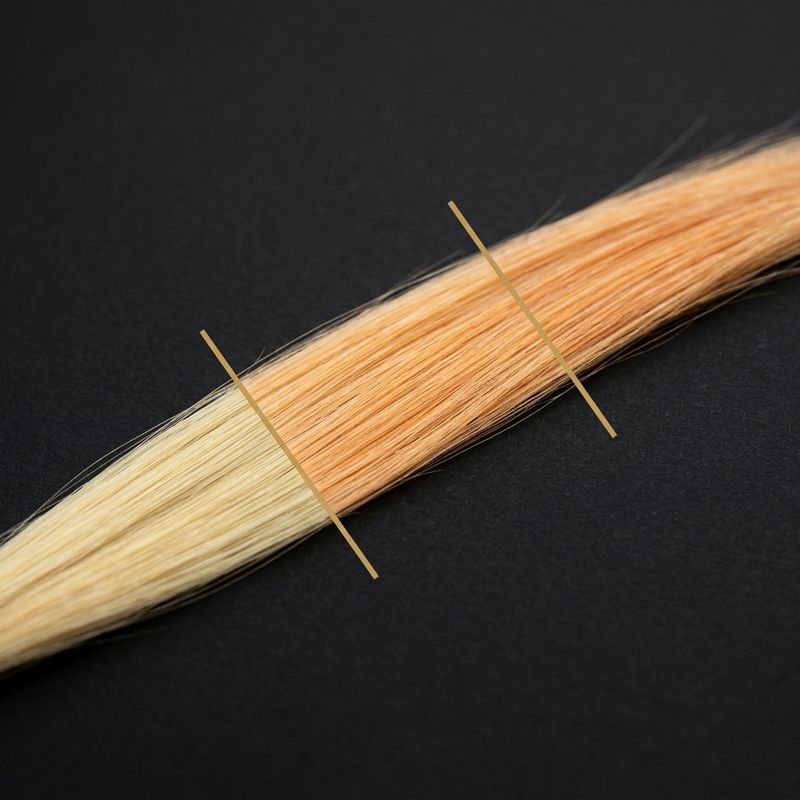
Split the head into three zones and note, for each, the observed shade with its level and the reason you stopped. Three lines. You don’t need more to reconstruct the real state six weeks from now.
The actionable record isn’t the toner formula you applied; it’s where you stopped and why. Compare these two notes from the same service:
- Poor card: “Toner 9/16 + 0/11, 6 vol dev, 10 min.”
- Useful card: “Root: pale yellow, level 9. Mid-lengths: orange, level 6, stopped — elasticity. Ends: orange, level 6, stopped — integrity. Toner 9/16 + 0/11, 6 vol dev, 10 min. Checked: station + daylight, dry.”
The second tells you what the first hides: that mid-lengths and ends never reached light blonde, that they stayed warm underneath, and that you didn’t keep lifting because the fiber had nothing left to give. That “why you stopped” is what keeps the next appointment from repeating the same tug-of-war.
Notice the example records the underlying pigment because there was a window to see it: the service lifted, and the pigment was exposed before toning. That’s the criterion, not “whether it lifted or not.” If it was tone-on-tone or a toning service where the underlying pigment never showed, don’t write it down as observed: predicting it from the starting level is useful for formulating, but on the card that zone’s data is the level and tone it ended on (“mid-lengths level 7, golden tone”). An underlying pigment that was never seen but gets written down anyway travels to the next appointment as if it had been.
Pro tip: note the reason you stopped on the same line as the level. “Level 6, stopped — elasticity” is worth ten times “level 6” on its own. The level tells you where it landed; the reason tells you whether you can push further next time or not.
A three-zone format also protects you from a classic reading error: assuming the whole length is on the same shade because “it looks even” after toning. Toner evens out what you see on the surface; it doesn’t change the underlying pigment beneath. That pigment is what reappears the moment the deposit washes down.
If you want to understand why processed fiber behaves differently zone to zone, the mechanism is in porosity and coloring.
Under what light, and with the hair in what state, did you sign off on the color?
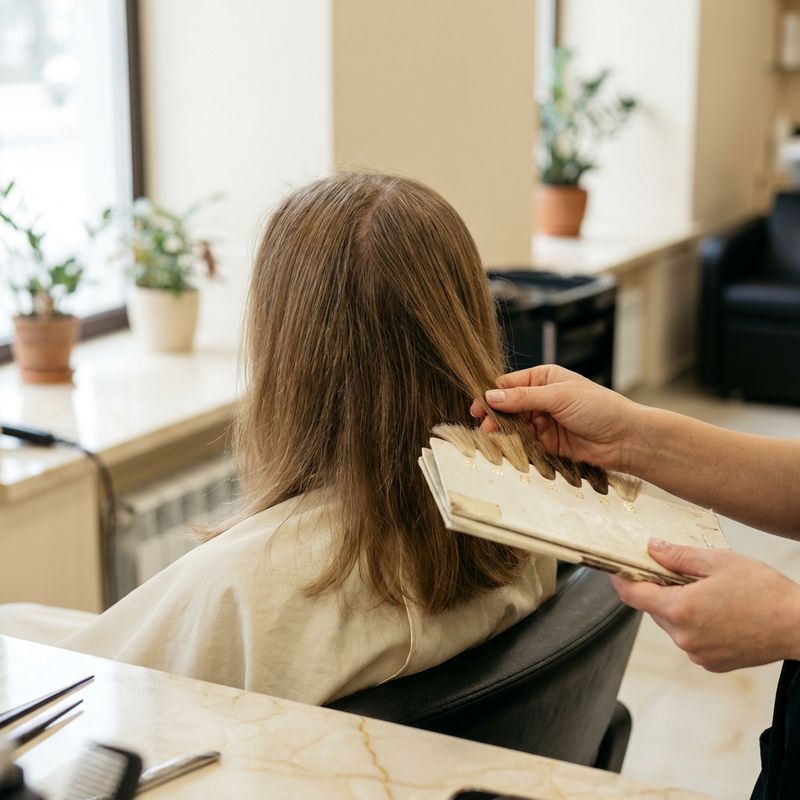
With the hair dry and without finishing product, and noting whether you checked it only under your station lighting or also in indirect daylight, out of direct sun. It’s a three-word tag at the end of the line: “station + daylight, dry” or “station only, dry”.
The state matters as much as the light. Wet, or with product just applied, hair reads darker and hides the real tone. That’s why the check that counts is on dry hair: the same condition that works for showing a color in a photo. And station lighting can push a tone in a direction daylight doesn’t confirm: the why, and what to ask of your lamps, is in what lighting a salon needs to see true color.
The tag goes at the end of the same line on the card, after the formula, as in the example above. If there’s no daylight within reach of your station, “station only, dry” is a valid record, not a failure: what counts is that it’s written down. And if that person leaves without being dried, the tag isn’t “dry”: write “check pending”. The day someone comes back with “it looks different at home”, the card already says under what conditions you signed off on the color.
Why is that record NOT a formula to repeat?
Because six weeks out the hair is no longer the one you corrected. The card gives you the starting point for the diagnosis, not the diagnosis itself. Repeating the same formula without re-reading the fiber is the shortcut that causes banding.
Think about what changed. The typical six-week window (adjust it to each client’s real growth, on average 0.4 to 0.6 inches a month, with plenty of spread, worth recording too) leaves two different realities on the same head:
- Virgin regrowth: untouched natural color that needs to lift and build from scratch.
- Mid-lengths and ends: the previously processed zone, now with porosity built up from the earlier process.
Applying last time’s exact formula over that processed zone causes overlap: product lands on hair that was already corrected. The result is banding, over-deposit, or damage from overexposure. That’s why you re-diagnose and protect the processed zone, with a softer formula or a delayed application through mid-lengths and ends, instead of repeating the whole service.
And there’s a directional detail worth keeping in mind: porous hair over-absorbs pigment, ash and violet deposits especially. That porous zone drifts toward a cooler or duller tone than virgin regrowth under the same formula. Facing a porous zone at six weeks, the lever isn’t to repeat: it’s to adjust the developer volume, dilute the tone, or fill and pre-pigment if the porosity would swallow the tone.
That’s where the post-correction record pays off: it tells you which zone came out porous and on which shade, so you reach the next appointment already knowing where you can’t go with the previous formula. The full step-by-step of a correction is in professional color correction; this record is what connects it to the next one.
Common mistakes when documenting a correction
- Noting only the toner formula: that’s the “what I applied,” not the “what state the fiber ended in.” The formula without the underlying pigment by zone doesn’t let you diagnose next time.
- Recording a single shade for the whole head: the underlying pigment changes by zone. “Orange-ish” overall is useless; “root level 9, mid-lengths and ends level 6” works.
- Treating the card as a formula to repeat: copying the service from six weeks ago without re-reading the fiber is the direct cause of banding and overlap. The card is the starting point for the diagnosis, not a substitute for it.
Frequently asked questions
What is the single most important thing to note after a color correction?
The underlying pigment left exposed by zone and the exact level where you stopped lifting, with the reason you stopped. Those two data points drive your next appointment’s diagnosis better than the toner formula, which only describes what you applied, not the state the fiber was left in.
Can I repeat the same correction formula at the next appointment?
Not without re-diagnosing. Six weeks out you have virgin regrowth and a previously processed zone with built-up porosity. Repeating the exact formula risks overlap, banding, and over-deposit through mid-lengths and ends. The card tells you where you’re starting from; that day’s diagnosis decides the formula.
Why record underlying pigment by zone instead of one general level?
Because the underlying pigment is set by each zone’s starting level and history, not by its position. Roots, mid-lengths, and ends can land on different shades, and can even invert on a mixed history. A per-zone record rebuilds that map; a single level erases it.
How often should the card be updated with the state of the fiber?
At every service involving chemistry: correction, root retouch, toning. The fiber changes with each process, so the state from six weeks ago no longer describes today’s. Recording the underlying pigment by zone at the end of each appointment keeps the continuity alive.
In summary
- The post-correction card looks to the next appointment: it isn’t the record of what you charged, it’s the note whoever diagnoses six weeks from now will read.
- The field almost nobody writes down: the exposed underlying pigment by zone and the stop level, with its reason. You read it by eye as you work; leave it in writing.
- The underlying pigment gets recorded, not assumed: it’s set by each zone’s starting level and history, not by position; on a mixed history the pattern inverts.
- It’s not a formula to repeat: at six weeks, virgin regrowth plus built-up porosity force you to re-diagnose and protect the processed zone, not copy the service.
- The sign-off gets recorded too: on dry hair without finishing product, and whether it was under station lighting only or also in daylight. Three words that answer “it looks different at home”.
Calculate color corrections with AI
Want to record each client’s state and calculate color corrections based on her starting level and chemical history zone by zone?
What happens if you don't log what you applied after a color fix?
In the app, we ask you a question like this one, but about your own client.
Up for this week’s case? → More on color correction →Related articles



Practice with our colorimetry tools
Calculators, neutralization wheel, AI consultation...
The Blendsor newsletter
Color techniques and trends for professionals. No spam.
A client in the chair right now?
The Blendsor advisor gives you the precise formula for this technique with your salon's brands — and saves it to your client's card.
Ask about your caseWritten by the Blendsor team
Professional hair colorimetry experts with experience in AI-assisted formulation. We combine color science, salon practice and technology to help colorists formulate with precision.