Base breaking without underlying diagnosis: why the line comes back
You apply base breaking and the demarcation line softens. A month later it's back. The problem isn't the product: you need to read the real underlying tone first.
Blendsor
Blendsor Team
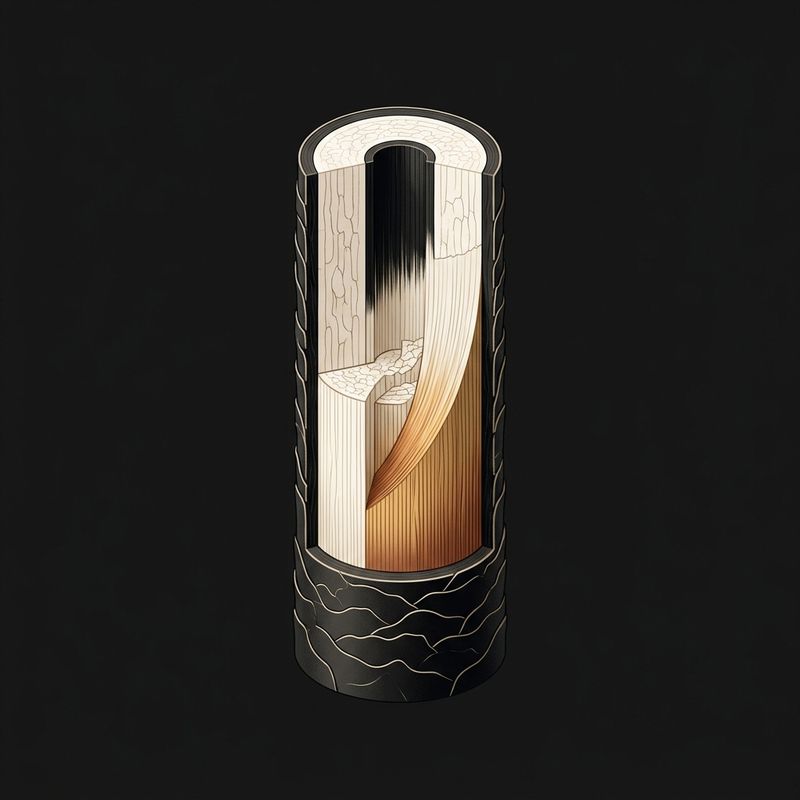
You soften the line with base breaking. A month later it’s back. The step before was missing.
That step isn’t in the product protocol. It’s in reading the hair in front of you before opening any tube.
Base breaking without an underlying pigment diagnosis is one of the most repeated — and least named — formulation errors. Not because it’s hard to avoid, but because the technique works on day one. And that convinces you the service was done right.
Quick summary: Base breaking deposits tonal pigment at the demarcation zone to soften the line between new root and processed length. If the result doesn’t last beyond 4-6 weeks, the problem is almost always that the formula wasn’t calculated against the real underlying tone of that zone — not what the client says she has, but what she actually has at that first centimeter of new root. Three variables determine that underlying tone: the lifting history of the past 12 months, the zonal warmth in mid-lengths and ends, and the mechanical friction on that first centimeter of root daily.
What base breaking is and why it seems to work when it doesn’t
Base breaking is a softening technique that deposits tonal pigment — without lifting — over the demarcation zone between new root growth and the processed color. The goal is to blur the visible transition between the two tones without lifting the new root.
It’s typically formulated with one of these three vehicles:
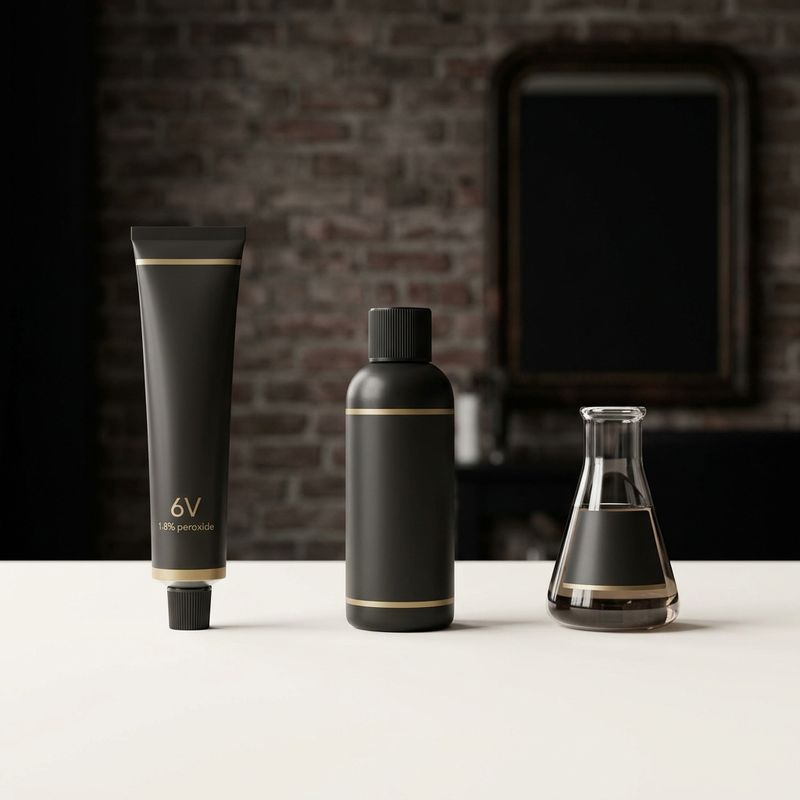
- Permanent at 6V (1.8%): the lowest oxidant that activates oxidation without real lift. Works on the superficial cortex.
- Demi-permanent: Wella Color Touch, L’Oréal DiaLight, or Schwarzkopf IGORA Vibrance. No ammonia, pure deposit, gradual fade.
- Acid tonal gloss: low-pH toner with direct or semi-direct pigment, without real oxidation.
All three soften the line when applied. The immediate result is good in virtually every case. That’s the problem: the immediate result doesn’t tell you whether the formula was correct or not. The diagnosis reveals itself at 4-6 weeks, when the pigment starts losing density and the line comes back.
According to the technical documentation from L’Oréal Professionnel Education, the durability of a tonal deposit at the demarcation zone depends directly on the compatibility between the applied tone and the real underlying base of that zone. If there’s incompatibility — even slight — the deposited pigment doesn’t anchor as strongly and fades earlier.
The line returns because the deposited pigment didn’t compensate for the real warmth of the underlying tone. Not because the product is bad.
The missing step: reading the real underlying tone, not what the client says
Before mixing any base breaking formula, there is one step that defines the result at six weeks: reading the underlying tone of the root zone in natural light.
Color professionals tend to ask clients about their history. Necessary, but not sufficient. The declared history has gaps: the client doesn’t remember well what was done 8 months ago, confuses a balayage with highlights, or doesn’t know the color on her ends is different from her mid-lengths.
Direct visual reading is the only reliable source.
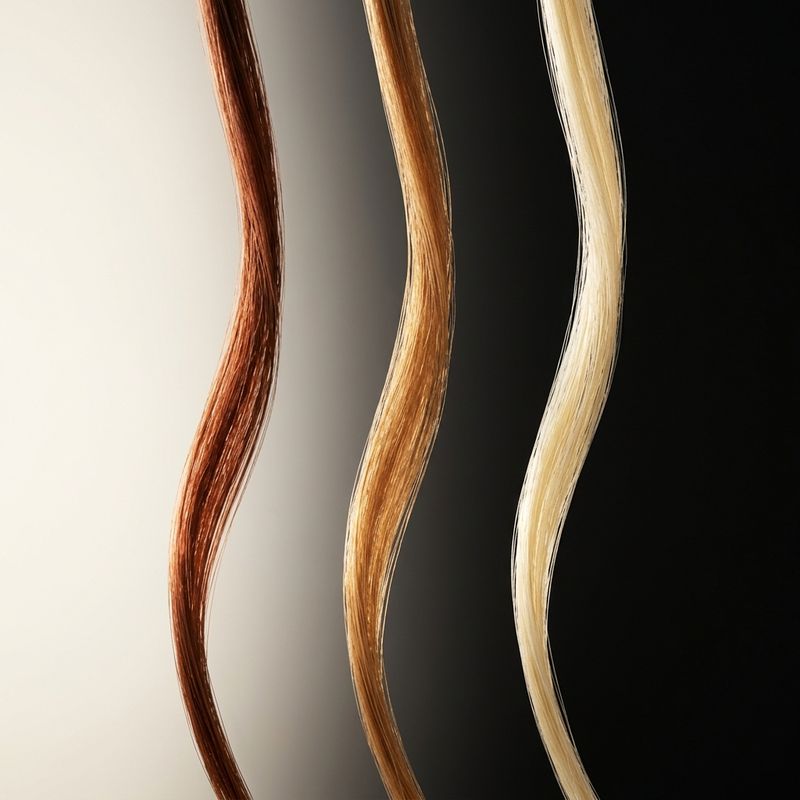
Reading protocol in consultation:
- Separate a section at the area of greatest demarcation (usually crown or temples)
- Bring it to direct natural light — never under salon fluorescent lighting
- Observe the first centimeter of new root growth: is there visible warmth? Gold, copper, orange?
- Compare with the mid-length zone: is the underlying tone the same, or is there a temperature shift?
That two-zone reading — new root and adjacent processed zone — is the data point you need to calculate the formula.
The 3 variables that determine the real underlying tone
The underlying tone of the demarcation zone is not a fixed value. It’s determined by three variables that may align or contradict each other, and each combination calls for a different formula.
Variable 1: Lifting history of the past 12 months
Lifting — whether balayage, highlights, or full bleach — modifies the cortex structure and leaves a warmth signature that persists beyond what’s visible.
If there was any lifting in the past 12 months, even if it’s fully grown out, the mid-lengths and ends carry active zonal warmth. That warmth conditions how the demarcation reads: the new root contrasts not just in level but also in temperature. Base breaking that ignores that temperature turns the demarcation zone into a cool-warm threshold that reappears as the deposit fades.
What to ask specifically: not “have you had highlights?” but “when was the last service using any lightener, even if it’s completely grown out?”
Variable 2: Zonal warmth in mid-lengths and ends
This is the variable that gets evaluated least and affects base breaking results the most.
The zonal warmth in mid-lengths and ends — what Wella Education technical diagnosis calls the “underlying warm tone” of the length — acts as a constant visual reference. If the base breaking deposits a tone that doesn’t communicate with that warmth, the softened transition visible in week one becomes discordant by week four, when the new pigment has faded and the warmth of the length is again the dominant color.
For a detailed look at how to map this undertone by lift level, the guide on neutralizing unwanted tones has the complementary color system by warmth zone.
How to read it: with the section in natural light, compare the center of the strand in the mid-length zone with the tone of the new root. If there’s a visible temperature difference — one more golden, one more neutral — that difference enters the formula.
Variable 3: Mechanical friction on the first centimeter of root
This variable is systematically ignored in base breaking formulation and explains many cases where the deposit disappears faster than expected.
The first centimeter of new root growth — the exact zone where base breaking is applied — is the hair segment with the highest daily mechanical friction. Styling, brushing, heat from blow-drying over that specific zone, and friction from the scalp against pillows concentrate the greatest wear on the first centimeters of the shaft.
A tonal deposit that lasts 6-8 weeks in a mid-length zone can last 3-4 weeks in the root zone because of the mechanical factor. If the formula doesn’t compensate with a slightly denser pigment or a more durable vehicle (permanent at 6V versus gloss), the line comes back sooner.
How to compensate: in high-friction zones — clients who wear a daily ponytail, frequent pulling, aggressive brushing — prioritize the demi-permanent or permanent at 6V over the tonal gloss. Gloss is appropriate for light maintenance; at the demarcation zone with friction, it doesn’t have enough anchor.
Decision table: underlying tone read → base breaking vehicle
Once the three variables are read, the vehicle choice depends on the combination of underlying tone and fiber condition.
| Underlying tone read | Mid/ends warmth | Mechanical friction | Recommended vehicle | Expected durability |
|---|---|---|---|---|
| Neutral-cool (level 8-9, no history) | Low/neutral | Low | Acid tonal gloss | 6-8 weeks |
| Neutral-cool | Low/neutral | High (ponytail, brushing) | Demi-permanent | 7-9 weeks |
| Warm golden (level 7-8, balayage history >6 months) | Medium-warm | Low | Demi-permanent + .1 compensator | 6-8 weeks |
| Warm golden | Medium-warm | High | Permanent 6V with compensator | 8-10 weeks |
| Warm copper (level 5-7, lifting history <6 months) | High-warm | Any | Permanent 6V with .2 blue | 8-10 weeks |
| No clear reading (virgin hair level 6-7) | Neutral | Any | Neutral or soft warm demi-permanent | 7-9 weeks |
Note on the compensator: the “compensator” column refers to the tone added to the formula to offset the warmth read — the same logic as in diagnosing accumulated warm pigment in previously lifted hair — but applied to the base breaking vehicle, not a full-coverage tint.
When NOT to do base breaking
Base breaking has a specific use case and there are situations where it isn’t the right technique. Recognizing them is part of professional judgment.
Do not do base breaking if:
- The demarcation is more than 3-4 centimeters of new root. The zone to treat is too extensive for a lift-free deposit: the result stays visible and the client notices the real issue wasn’t solved.
- The underlying tone of the new root is lighter than the processed color. Base breaking only works by adding warmth to the root to bring it closer to the tone of the length. If the root is lighter than the length, the right technique is a conventional root retouch or full reformulation.
- The client carries accumulated dark artificial color in the length (levels 3-5 with dense permanent pigment). In that case, the problem isn’t the demarcation line — it’s the opacity of the length — and no root deposit is going to fix it.
- The fiber condition shows severe high porosity at the demarcation zone. A gloss or demi-permanent on very porous fiber can deposit too much pigment unevenly and create a visible band instead of blurring it.
In these cases, the conversation with the client about the right technique — conventional retouch, length correction, or reformulation — is part of the service. It’s not a problem: it’s expertise.
The premium service contract: documenting the diagnosis
Base breaking done right — with a real underlying tone diagnosis — is a high-value technical service. And like any high-value technical service, it requires documentation.
Recording in the client’s file the three variables read in consultation — root underlying tone, mid/ends zonal warmth, and mechanical friction assessment — has two practical effects:
- Result predictability: on the next visit, you start from objective data, not memory. The formula that worked 8 weeks gets replicated. The one that lasted less gets adjusted.
- Value argument: showing the client file and explaining the three parameters that determined her formula turns a “root touch-up” into a professional diagnosis. Same time, perceived completely differently.
Documenting isn’t bureaucracy. It’s the difference between a salon that repeats services and one that improves them.
Frequently asked questions about base breaking and underlying diagnosis
How long does a well-formulated base breaking effect last?
With the formula calibrated to the real underlying tone and the vehicle matched to mechanical friction, the base breaking effect lasts between 6 and 10 weeks in most cases. A tonal gloss in a low-friction zone can hold up to 8 weeks; permanent at 6V in high-friction zones can exceed 10.
Does base breaking damage the hair?
Base breaking with demi-permanent or tonal gloss uses no lifting agents and has minimal impact on hair structure. Permanent at 6V involves minimal oxidation and is considered safe for frequent application at the root zone. The most relevant damage factor in this technique isn’t the product but the accumulation of services without recovery time.
Can base breaking be done in the same session as a root retouch?
Yes, and it’s common practice. The most frequent protocol is to apply the oxidative retouch at the root first and, in the last 15-20 minutes of processing, apply the base breaking at the demarcation zone between new root and length. The sequence allows working on the underlying tone in the most precise conditions.
What’s the difference between base breaking and French blending?
French blending — a grey-blending technique developed and popularized by L’Oréal Professionnel educators — is a variation of base breaking that works with multiple tones in gradient rather than a single deposit. The underlying diagnosis logic applies equally: without reading the real zonal warmth, the gradient won’t last either.
Why is the demarcation line more visible on some clients than others?
The contrast of the line depends on three factors: the level difference between new root and processed color, the temperature difference between the two zones, and growth speed. Clients with fast growth and high temperature difference benefit most from regular base breaking. On hair where the root level is close to the processed color with no notable warmth difference, the demarcation barely exists and base breaking adds no value.
In summary
- Base breaking is a demarcation-softening technique that deposits pigment without lifting. It works on day one in almost every case; the real diagnosis shows up at 4-6 weeks.
- The most frequent cause of recurrence is formulating without reading the real underlying tone of the root zone: its warmth, its temperature relationship with the length, and the mechanical friction on that zone.
- Three variables determine the underlying tone: lifting history in the past 12 months, zonal warmth in mid-lengths and ends, mechanical friction on the first centimeter of root.
- The vehicle choice — gloss, demi-permanent, or permanent at 6V — depends on the underlying tone read and the friction, not on personal preference or a generic brand protocol.
- There are situations where base breaking is not the right technique: root growth over 4cm, root lighter than length, accumulated dark artificial color, severe porosity.
- Documenting the three variables in the client file is what makes the service predictable and replicable.
Formulate based on what the hair actually has, not what it appears to have. And if you need to cross-reference level, porosity, zonal warmth, and lifting history into one formula, Blendsor makes that calculation before you open the tube.
Why does the demarcation line come back after base breaking?
In the app, we ask you a question like this one, but about your own client.
Up for this week’s case? → More on global color →Related articles
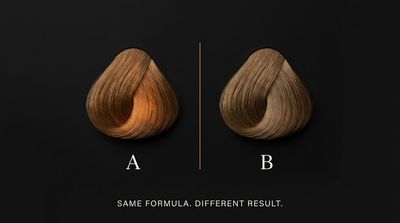
Practice with our colorimetry tools
Calculators, neutralization wheel, AI consultation...
The Blendsor newsletter
Color techniques and trends for professionals. No spam.
You know the theory. What about today's case?
Send a photo to the Blendsor advisor and get an answer grounded in colour theory: toner, developer and timing, with the brands on your shelf.
Ask about your caseWritten by the Blendsor team
Professional hair colorimetry experts with experience in AI-assisted formulation. We combine color science, salon practice and technology to help colorists formulate with precision.