Root Touch-Up or Gloss: What Decides the Second Visit
The tone has faded and the root has barely moved. Professional criteria for choosing between a root touch-up, a full gloss and targeted correction.
Blendsor
Blendsor Team
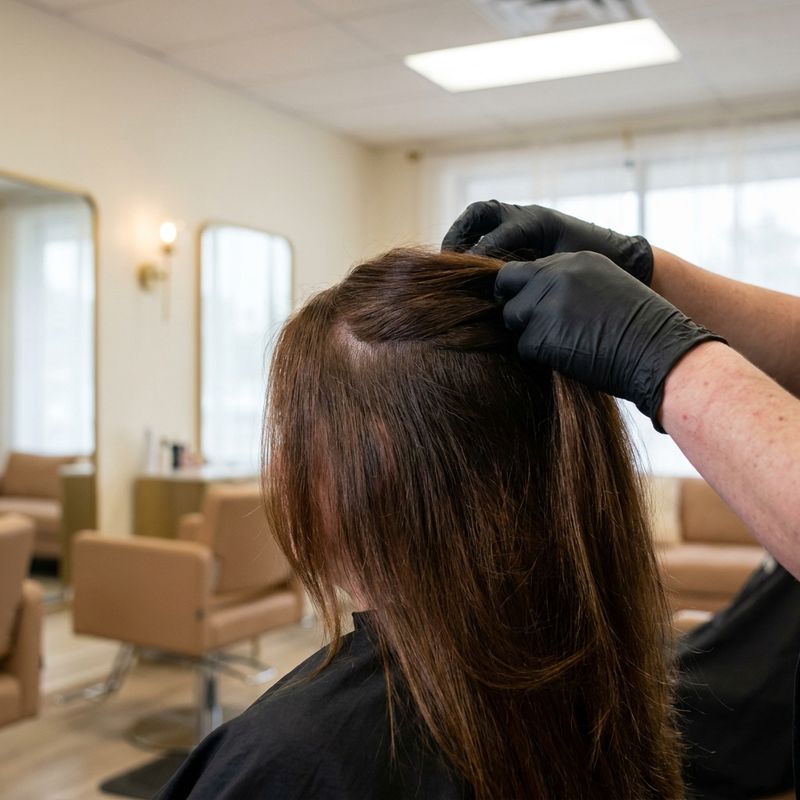
Your client sits down for the second appointment. The root barely shows — it’s been six weeks, not eight — but the tone up front reads differently than the rest of the hair. You check the card: the formula was right last time. And you still have thirty seconds to decide what today’s service actually is.
The question isn’t chemistry, it’s service scope: is this a root touch-up, a gloss, or both? And if it’s a gloss, is it the whole head or just that front section that’s gone flat?
Here’s the call to make before you crack the bowl, not while you’re mixing it.
Quick summary: touch-up and gloss are two independent decisions, and you evaluate them separately. The touch-up is decided by visible root growth — is there a demarcation line or isn’t there? The gloss is decided by how the tone faded: evenly across the head, it’s a full refresh; faded in one zone only — typically wherever the fiber is more porous — it’s a targeted correction. Cross the two answers and you get today’s service.
Root touch-up or gloss? What the second appointment actually decides
It’s not an either/or — it’s two separate questions worth splitting before you glance at the last formula: has enough root grown in to leave a demarcation line? and, separately, has the tone faded evenly across the head, or more in one zone than another? The first question is answered by follicle growth. The second is answered by tone chemistry, which — as you already know if you’ve read the two clocks — runs on its own schedule and doesn’t always fade evenly.
The common mistake is treating the second visit as one service with one answer. In practice, you cross both axes, and the result changes with the combination: sometimes it’s gloss only, sometimes it’s root only, sometimes both — but in different zones.
When the tone has faded evenly across the head: full gloss
If your client washes with the same frequency across the whole head and there’s no porosity gap between zones — a freshly covered virgin base, for example — the fade is usually even. The cool tone fades before the underlying deposit does, and it does so at roughly the same rate everywhere, so what you need today is a full refresh.
The service itself is simple: a global gloss or color bath over the whole length, using the technique and timing you already know from the gloss application guide. No boundary to manage, no zone to isolate. This is the easy case.
The tell that you’re looking at this scenario: comb it forward and back, and the tone reads consistent — faded, but consistent — everywhere. No single zone stands out.
When it’s faded up front: why that section calls for a different decision
It’s a different situation when the tone has faded in one zone only, and the most common one is the hairline and the first inch or two in front. That section takes more direct sun, more product contact, and — if your client just came back from vacation — more cumulative exposure than the rest of the head. The underlying mechanism — why more exposed fiber absorbs and releases toner differently than the rest — is already covered in why root touch-ups come out uneven; we’re not repeating it here, we’re taking it as known and going straight to the call you have to make in the chair.
With that read done, the decision is easy to name and easy to get wrong: correct only the zone that faded, not the whole head. Running a full gloss over fiber that still holds tone everywhere else is over-depositing where it isn’t needed — the same accumulated over-deposit mechanism you saw in root touch-up overlap, applied here to a gloss service. “Refreshing everything just in case” doesn’t produce a more even tone — it produces hair that ages faster than it needed to in the zones that never asked for it.
The tell that you’re looking at this scenario: comb it forward, and there’s a visible intensity gap between that section and the rest — not subtle, visible under salon light with the naked eye.
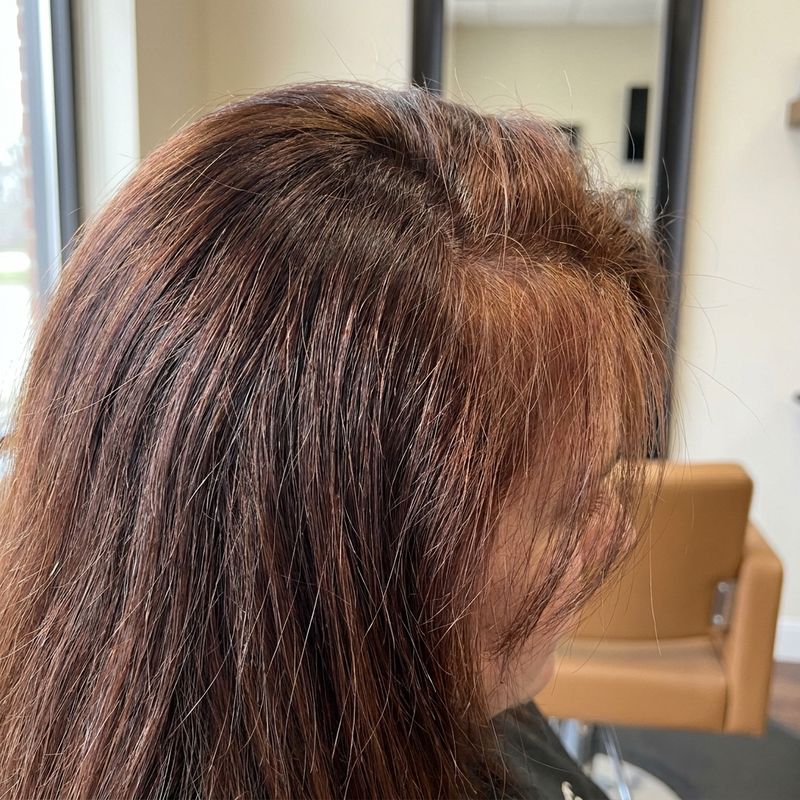
Same head, two clocks: the virgin root and the section that’s already lived through six weeks of exposure.
The three questions to answer in the chair
Before you touch the bowl, settle this in thirty seconds:
- Is there a visible demarcation line at the root? If yes, it’s a root touch-up. If not, skip that service entirely — there’s nothing to correct there.
- Has the tone faded evenly or in one specific zone? Even → full gloss. Localized → correction in that zone only.
- What does the last service card say? Exact date, the wash frequency the client reported, product used. Without that reference, you’re deciding by eye what you should be deciding with data.
What to do for each combination
| Root | Tone | Today’s service |
|---|---|---|
| Demarcation line present | Even across the head | Root touch-up + full connecting gloss |
| Demarcation line present | Faded in one zone only | Root touch-up + targeted correction on that zone (never the same pass) |
| No demarcation line | Even across the head | Gloss/refresh only |
| No demarcation line | Faded in one zone only | Targeted correction only, the rest stays untouched |
The row that gets skipped most often in practice is the last one: if the root doesn’t call for it, there’s no reason to touch root product, and if the tone only faded in one section, working the rest of the head is time — and product cost — your client didn’t need.
Pro tip: when the affected zone is small (hairline, temples), apply the corrective gloss with a fine section and check early — at 5-8 minutes — so you don’t overshoot intensity on fiber that already started out more porous than the rest.
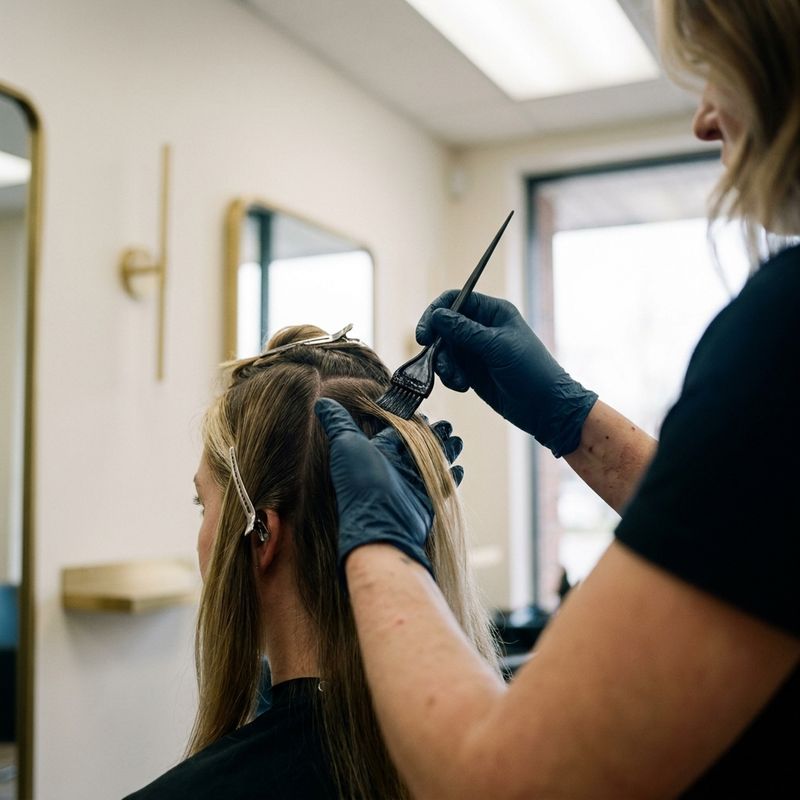
Correction only where it’s needed: the rest of the hair stays out of the mix.
What to log today so the third visit doesn’t repeat the surprise
Today’s service ends, but the decision you made shouldn’t die with it. If you corrected only one zone, log which one, with what product, and for how long — so at the next visit you know whether that section fades early again or whether today’s fix already brought it in line with the rest of the head. That’s the difference between re-diagnosing the same thing every six weeks and actually seeing a trend.
Exactly what to record — and why the underlying tone by zone matters more than the overall formula — is covered in what to record after a color correction. Today’s card is what turns the second visit into a service with memory, instead of a diagnosis that starts from zero every time your client sits down.
Frequently asked questions
How do I tell if the tone faded evenly or in zones?
Comb the hair forward and back under salon light and compare tone intensity at three points at least: hairline, mid-lengths, and ends, and front versus back. If the tone reads uniform, it’s an even fade. If one zone reads clearly flatter or warmer than the rest, it’s localized.
Does a targeted correction leave a visible line against the rest of the hair?
Not if you apply it with a fine section and control the processing time. The line risk shows up when the boundary between the corrected zone and the healthy zone gets overlapped with more time or more intensity than it needed — the same boundary logic as a root touch-up.
Can I do the root touch-up and the gloss the same day?
Yes, and it’s the common case when both axes call for it. Sequence matters: root touch-up first on the virgin growth, then the gloss — global or localized depending on the case — without letting the root mix overlap onto length that’s already colored.
How often does this decision cycle repeat?
It depends on each client’s actual rhythm, not a fixed number of weeks. That’s why the starting point is always the previous service’s card: reported wash frequency, product used, and which zone — if any — got corrected last time.
In summary
- Touch-up and gloss are two independent axes: root growth decides one, tone fade decides the other.
- Even fade across the head → full gloss, no boundary to manage.
- Fade in one zone only (typically up front) → targeted correction; refreshing everything over-deposits where it isn’t needed.
- Three questions in thirty seconds: demarcation line, fade uniformity, last service card.
- Today’s card decides the third visit: log which zone you corrected and with what, not just the overall formula.
Calculate the exact service for every second visit
Want to decide between touch-up, full gloss, and targeted correction based on each client’s actual history — not by eye, visit after visit?
Which of the two axes gives you more trouble in the chair: knowing when it’s touch-up or when it’s a targeted gloss?
What's the difference between a root retouch and a second gloss visit?
In the app, we ask you a question like this one, but about your own client.
Up for this week’s case? → More on global color →Related articles

Practice with our colorimetry tools
Calculators, neutralization wheel, AI consultation...
The Blendsor newsletter
Color techniques and trends for professionals. No spam.
A client in the chair right now?
The Blendsor advisor gives you the precise formula for this technique with your salon's brands — and saves it to your client's card.
Ask about your caseWritten by the Blendsor team
Professional hair colorimetry experts with experience in AI-assisted formulation. We combine color science, salon practice and technology to help colorists formulate with precision.