Why Your Root Touch-Up Color Comes Out Uneven
A root touch-up can fail even with the right formula. Overlap, hot roots and mismatched porosity between zones — what causes each one and how to avoid it.
Blendsor
Blendsor Team
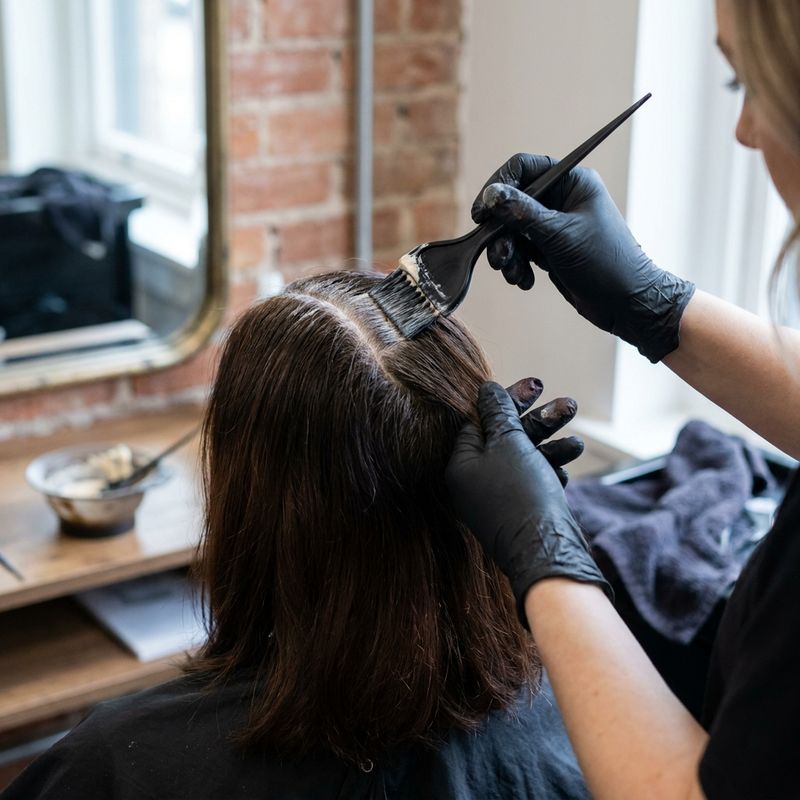
Same formula as last time. Same processing time, same check-ins. And once you rinse it out, the root doesn’t match the rest — warmer, darker, or just off from where the rest of the hair landed the visit before.
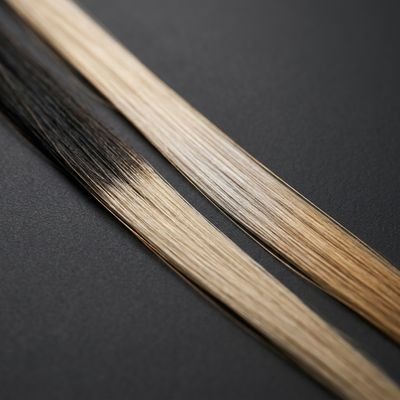
The card said that formula was right. It was. The problem isn’t in what you mixed — it’s that a touch-up never processes on one fiber. It processes on two zones that stopped being identical a while ago, even if they look the same under salon light.
Here’s what actually causes that mismatch — three mechanisms specific to oxidative permanent color, not lightener — and the application fix for each.
Quick summary: an uneven root touch-up usually comes from three things happening at once: overlap (new color landing on already-colored length, which in permanent color reads as buildup, not breakage the way it does in bleach), hot roots (scalp heat speeds up oxidation in that first inch), and mismatched porosity between the virgin root and length carrying chemical history or seasonal wear. All three get fixed with sequencing and sectioning — not more product.
Why does a root touch-up come out uneven with the exact same formula?
Because a touch-up joins two fibers that no longer respond the same way to the same product: virgin growth, which absorbs color from zero, and previously colored length, which arrives with history — leftover pigment, its own porosity, and, depending on the season, extra wear. Given that mismatch, three mechanisms shift the result: overlap at the border, heat in the first inch, and uneven porosity across the rest of the growth. All three are application management, not a formula problem.
If you retouch lightener, two of these names will sound familiar: our guide to banding on bleach touch-ups already covers overlap and hot roots for lightener. Here we’re carrying the same mechanisms over to regular oxidative color — and what they leave behind is different, not a copy-paste. Worth saying plainly so the two services don’t get mixed up.
Overlap in oxidative color: it doesn’t break the fiber the way bleach does, but it still adds up
In lightening, overlapping bleach onto already-lightened length is structural damage — each additional pass degrades the fiber further, up to the point of a snap line. In regular oxidative color the starting mechanism is the same — new product meets hair that already processed peroxide before — but what it leaves behind is different: not breakage, but buildup. The overlapped zone takes a second load of pigment on top of the first, and the result reads darker, flatter or more saturated than the rest — a section that “eats” light against the shine of the rest of the head.
That doesn’t mean oxidative color is harmless to the fiber. According to a review published in PMC on the impact of dyeing and perming on hair, the oxidative process reduces the tensile strength of colored hair and damages cuticle layers, exposing part of the cortex underneath. That’s real damage — just cumulative and quiet, not the visible breakage of bleach overlap. Length that’s taken several touch-ups with repeated overlap won’t snap overnight, but it does arrive more porous and duller than its underlying color should show.
How to prevent it
- Apply only to new growth. The brush stops before it touches already-colored length — the same rule as in lightener, though here the safety margin can run a little wider, because the risk isn’t an instant breakage line, it’s buildup that accumulates over months.
- Fine sectioning at the touch-up line. With 0.2-0.4 in sections you can see exactly where growth ends and processed length begins. With thick sections, you’re guessing.
- If the rest of the head needs a tone refresh, treat it as its own service — a gloss or diluted gloss on mid-lengths and ends, not the same ammonia-and-developer mix built for the root.
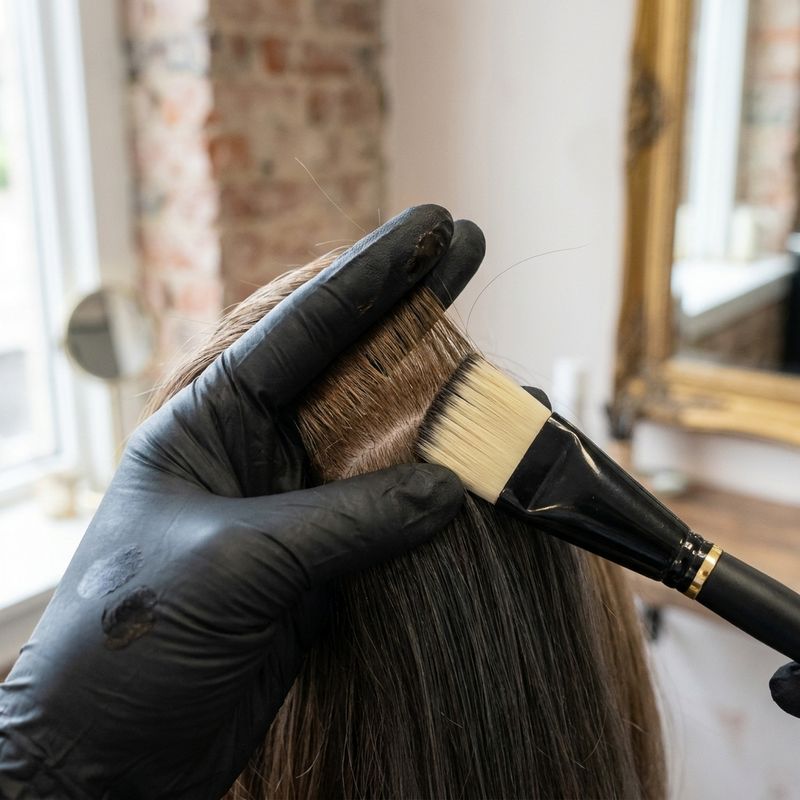
The border that decides whether there’s overlap: the brush stops before it touches what’s already colored.
Hot roots in regular color: same engine, quieter, but real
Scalp heat speeds up whatever oxidation reaction sits on top of it — not just lightening. In bleach, that shows up as an inch that lifts higher than the rest of the growth. In deposit or gray-coverage color, the same physics plays out differently: the inch closest to the scalp oxidizes and saturates faster, so it can read slightly warmer, more intense, or darker than the rest of the growth under the exact same timing.
It shows up more the cooler or more muted the target shade is — an ash blonde or a matte brunette has less room before that extra half-degree of heat tips back toward the warmth you were trying to neutralize. On a dense, dark gray-coverage service the same effect can go almost unnoticed, precisely because there’s more pigment absorbing the excess.
How to prevent it
- Reverse the sequence within the growth itself: start with the section farthest from the scalp, save the inch closest to the skin for last.
- Check early, especially with ash or matte tones: a look at 10-15 minutes catches the shift before it’s visible once you comb it out.
- Don’t compensate by raising developer volume to “even it out” — the problem is sequencing, not strength. More volume makes hot roots worse, not better.
The third factor: the porosity nobody wrote down
There’s a third variable that has nothing to do with today’s technique — it’s about what the fiber already came in wearing. The root is always the newest part of the growth: it carries almost no history. The rest of the length does — and that history isn’t the same in every client, or in every season.
If the touch-up lands right after summer, this has a recent chapter: as we covered in what summer does to hair color, root, mid-lengths and ends don’t come back from vacation carrying the same wear — the root has barely seen sun, while mid-lengths and ends carry months of sun, salt and chlorine. That more porous fiber absorbs the same tint differently: faster, and sometimes toward a different shade than what the virgin root shows under the identical processing time.
The same effect shows up without summer in the picture, just from chemical history built up over previous touch-ups — which is exactly the territory covered in what to record after a color correction: what the card doesn’t capture about each zone’s porosity, the next touch-up pays for without knowing why.
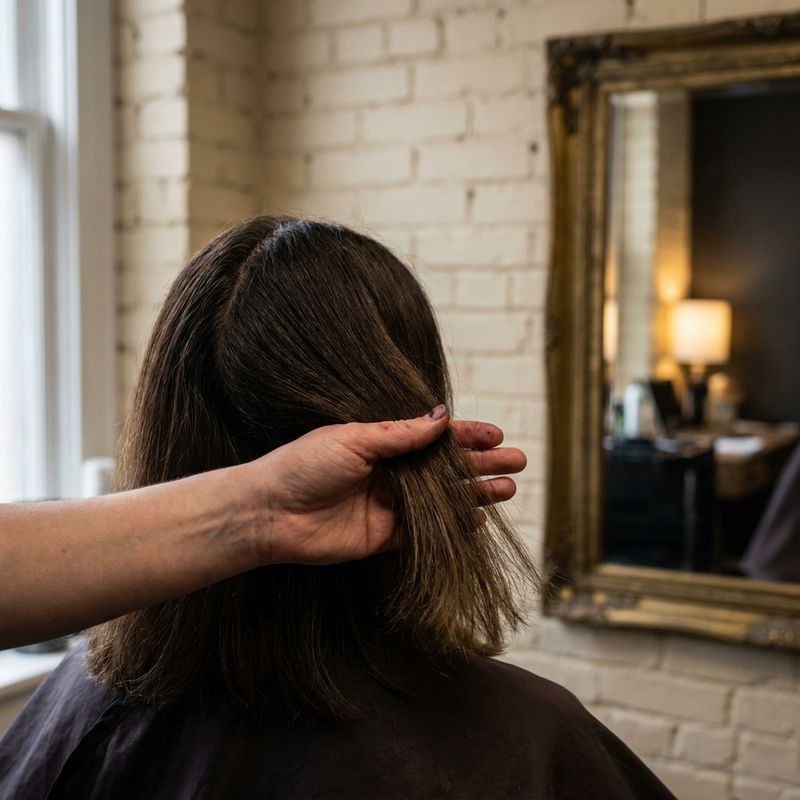
Same mix, two fibers: the root and the length don’t start from the same place.
Overlap, hot roots or porosity: what to check before you mix
| Overlap | Hot roots | Mismatched porosity | |
|---|---|---|---|
| Where it shows up | At the growth/processed-length border | In the first inch against the scalp | Across mid-lengths and ends, no sharp line |
| What it produces in regular color | Buildup: a darker or flatter section | A warmer, more intense or darker section than the rest | Uneven uptake from the same processing time |
| Fixed with | Application technique (fine sections, growth only) | Sequencing (far section first, root last) | Equalizing before applying, not averaging |
| Tell that you’re looking at it | A dull zone that lines up with past touch-ups | A band concentrated only in the first inch | Patchy difference, not a straight line |
Common mistakes when diagnosing an uneven touch-up
- Blaming the formula. If the mix is correct and the result is uneven, the problem is almost always where and when it was applied — not the proportions.
- Treating hot roots as a timing error. It’s not that you “left it on longer” in that zone — the same exposure produces more reaction because of body heat. You adjust sequence, not the clock.
- Assuming the whole head starts from the same place. Without reading the history or recent wear of each zone, even the most exact formula is applied on an assumption that isn’t always true.
Frequently asked questions
Does overlap in regular color also break the fiber like it does in bleach?
Not the same way. Repeated bleach overlap on the same zone builds up visible structural damage — a snap line, breakage. Regular oxidative color does damage the cuticle and reduce fiber strength with each application, but cumulatively and quietly: what shows up first isn’t breakage, it’s buildup — a section that reads darker or duller than the rest.
Why does my touch-up come out warmer right at the root?
Scalp heat, which speeds up oxidation in the inch closest to the skin. It shows up more in cool or matte tones, which have less room before that extra heat tips toward warmth. The fix isn’t shortening the time on the whole zone — it’s applying the section farthest from the scalp first and saving the root for last.
Can I fix an uneven touch-up with more processing time?
Almost never. More time makes overlap worse (more buildup) and makes hot roots worse (more oxidation difference). The fix that works is sequencing and sectioning, not the clock.
Does post-summer porosity go away on its own?
Not overnight. It fades as new hair grows in and the most worn ends get cut, but in the meantime it’s still there — and a touch-up applied without accounting for it absorbs differently zone by zone.
In summary
- An uneven touch-up is almost never a formula problem: it’s three application mechanisms — overlap, hot roots and mismatched porosity — acting on two fibers that stopped being identical.
- Overlap in regular color doesn’t break like it does in bleach: it builds up as a darker or duller section, not a snap line.
- Hot roots run on the same physics as in lightener, but read differently: more warmth or saturation in the first inch, more visible the cooler the target shade.
- Porosity isn’t something you eyeball: equalize it before applying, especially right after summer or on top of previous touch-up history.
- All three get fixed with sequencing and sectioning, not more product or more processing time.
Formulate touch-ups from each zone’s real history
Want to formulate the next touch-up from what each zone actually carries — porosity, chemical history, time since the last service — instead of repeating the last formula blind?
Which one gives you the most trouble in the chair: overlap, hot roots, or the porosity nobody wrote down?
Why does a root retouch come out uneven?
In the app, we ask you a question like this one, but about your own client.
Up for this week’s case? → More on global color →Related articles

Practice with our colorimetry tools
Calculators, neutralization wheel, AI consultation...
The Blendsor newsletter
Color techniques and trends for professionals. No spam.
A client in the chair right now?
The Blendsor advisor gives you the precise formula for this technique with your salon's brands — and saves it to your client's card.
Ask about your caseWritten by the Blendsor team
Professional hair colorimetry experts with experience in AI-assisted formulation. We combine color science, salon practice and technology to help colorists formulate with precision.