Profitable balayage: the interval decides the price, not the mix
A balayage that lasts 8 weeks is worth more than one that lasts 5, regardless of what the price says. Learn to diagnose the base before mixing to keep the interval.
Blendsor
Blendsor Team
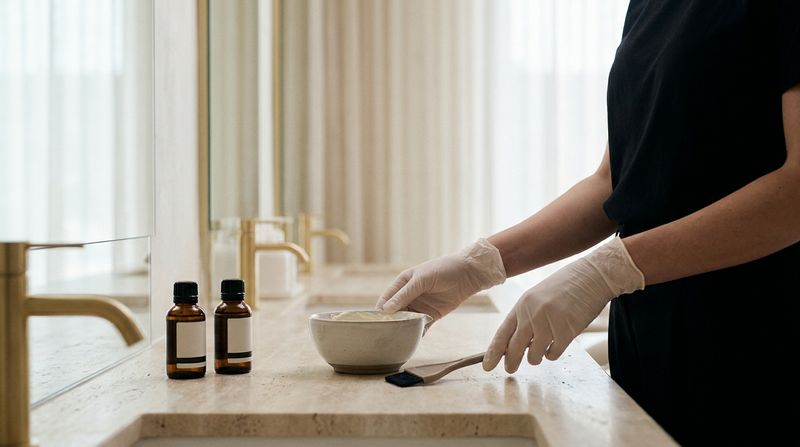
Have you ever done a balayage that looked incredible on the day and by the fifth week the client was already asking for a touch-up?
If you have been working a colour chair for any length of time, you know that balayage was not profitable, even if you charged a fair price for it. Premium service is not measured in the chair — it is measured in how many weeks pass before the next call. And there, the price you set stops mattering.
In this article we are going to look at why profitable balayage depends on a diagnosis most professionals skip, and how your economics change when you build it in before opening the tube.
The most expensive balayage is the one the client does not come back for
Before looking at techniques or products, look at your agenda.
A balayage at €220 every 14 weeks earns less per session than one at €150 every 6, but the first leaves more margin across the year, takes less chair time and saves you the awkward conversation of “it faded too quickly”. The interval between visits is the real indicator of whether you formulated well.
If the client returns earlier than expected, it is not loyalty — it is an alert. Something in the previous service aged before it should have. The cause is almost never in the hand: it is in what you decided before mixing.
Pro tip: if the next balayage appointment goes on the agenda before the 8-week mark, write down what happened in the previous one. That piece of information is worth more than the tip.
Why the base decides the interval
Balayage acts from mid-length to ends, but the visual result depends on something you do not lift: the root, its natural tone and its porosity. If that area does not behave as expected, the entire chromatic balance breaks.
Three readings that change the interval:
- Real level under the apparent root — a level 5 with prior oxidation history is not a virgin level 5. The transition from that root into the lift is going to show earlier.
- Mid-length porosity — if it is high, the toner is going to fade in a few weeks and the balayage will look old even if the base is intact.
- Natural underlying warmth — a brunette base with warm underlying pigment will shift toward orange the moment the cool toner washes out. It happens between weeks four and six.
Without these three readings, the lift can be technically correct and the result lasts half as long. To go deeper into how porosity specifically affects lifting, read the most common balayage mistakes — porosity is the first one.
The numbers that change the price conversation at the chair
The weakest argument for defending price is application time. The strongest: the weeks the result is going to hold.
| Variable | Short balayage (5-6 weeks) | Profitable balayage (8-14 weeks) |
|---|---|---|
| Pre-diagnosis | Quick visual | Porosity + real level + underlying |
| Starting point | Standard for everyone | Adjusted to the specific base |
| Developer volume | 30 vol by default | 20 or 30 depending on porosity |
| Toner | Chart tone, uncalibrated | Calibrated to the real undertone left |
| Conversation with the client | ”I’ll text you when it grows out" | "See you in 10-12 weeks” |
| Annual margin per client | Low | High, same chair work |
The difference between the two columns is not the product. It is the time spent reading before mixing.
How to argue the price without justifying it
Whoever formulates with judgment does not need to justify the price — the result argues for itself. But the prior conversation also counts.
There is a sentence that changes the consultation tone: “What we charge is so you come back in three months, not in one”. With that on the table, the price stops being a number and becomes an interval. And the interval is easy to grasp.
Three practices that back up that sentence:
- Before mixing, briefly explain what you are reading. One minute spent on “I’m going to check the mid-length porosity” changes how the service is perceived.
- After the lift, mention the real lifted background, not the expected one. Show that the toner was not generic.
- At goodbye, propose a specific date, not a range. “In September” leaves the ball in their court. “12 October” puts it back in yours.
To go deeper on how to pick the right toner based on the lifted background, read the guide on toning mistakes in lightened hair.
Mistakes that shorten the interval without you noticing
The interval breaks in moments that go unnoticed:
- Skipping the elasticity test — hair with low elasticity absorbs toner and loses it within weeks. The balayage looks old even though the lift is still there. Make the hair elasticity test part of your routine if it is not yet.
- Lifting without compensating for porosity — if the ends absorb faster, the result goes past the target before you finish and the client washes it at home with violet shampoo a week later, making it worse.
- Toning by eye on hair with history — residual warm underlying pigment reappears between weeks four and six. Without truly neutralising it, it does not go away.
- Not documenting the formula — the next session is not a new service, it is a continuation of the previous one. If you reformulate from scratch every time, you repeat variables you already know.
- Not checking salon water — the hardness and pH of the water where the hair gets washed after the service changes how the colour ages. For cases where water drags the tone out, read about the effect of salon water pH on hair colour.
Each of these points subtracts weeks from the interval. Combined, they turn a balayage that should last 12 weeks into one calling for a touch-up at 6.
Frequently asked questions
How long should a well-formulated balayage last?
It depends on the base, porosity and home care. On healthy hair with medium base (level 5-7) and proper home care, a balayage formulated with prior diagnosis holds between 8 and 12 weeks with a professional look. On darker bases or hair with high porosity the interval drops to 6-8 weeks, but that interval stays predictable — it does not shorten without cause.
How do I justify the price of balayage against a tint?
The useful conversation does not compare prices between services, it compares intervals. A tint is touched up every 4-5 weeks; a diagnosed balayage, every 8-12. Per week of result, balayage usually ends up cheaper for the client, not more expensive. Framing it that way changes perception.
Is balayage worth doing on very light bases?
Yes, but the diagnosis changes. On level 8-9 bases the risk is not the lift, it is the lack of contrast. Balayage on those bases lives off the play of toners, not lift. Profitability is decided by the quality of the final tone, not the levels lifted.
How many variables should I measure before each balayage?
Three are non-negotiable: porosity of mid-lengths and ends, real level under the apparent root, and natural underlying warmth. Beyond that, everything is fine adjustment. The three can be read in under five minutes with practice.
How do I stop the client from washing the toner out too quickly at home?
Recommend a neutral or slightly acidic shampoo the first two weeks, no violet shampoo unless you see a real shift to yellow. Violet shampoo used without need dries the hair out and alters the tone. If the client insists on a home product, suggest a gentle one for biweekly use, not weekly.
In short
- Profitable balayage is not the most expensive — it is the one that spaces out further between visits.
- Three readings before mixing: real level under root, mid-length porosity, natural underlying warmth.
- The price argument changes when you talk about weeks of duration, not hours of application.
- The interval breaks in small details: elasticity, porosity, uncalibrated toner, lack of record, salon water.
- Profitability is built before the chair, not after.
Calculate professional formulas with AI
Want to generate personalised balayage formulas based on real level, porosity and chemical history for each head of hair so the interval holds?
How many weeks do the balayages leaving your chair tend to last?
Why does the interval decide a balayage's price, not the mix?
In the app, we ask you a question like this one, but about your own client.
Up for this week’s case? → More on highlights and techniques →Related articles
Practice with our colorimetry tools
Calculators, neutralization wheel, AI consultation...
The Blendsor newsletter
Color techniques and trends for professionals. No spam.
A client in the chair right now?
The Blendsor advisor gives you the precise formula for this technique with your salon's brands — and saves it to your client's card.
Ask about your caseWritten by the Blendsor team
Professional hair colorimetry experts with experience in AI-assisted formulation. We combine color science, salon practice and technology to help colorists formulate with precision.