Banding After a Bleach Root Touch-Up: Two Causes
Why bands appear after a bleach root touch-up: breakage lines from overlap and color banding from hot roots. How to tell them apart and prevent each one.
Blendsor
Blendsor Team

The blonde came out flawless in the first session. The problem shows up weeks later, at the touch-up: a band cutting across the lengths exactly where nothing should be.
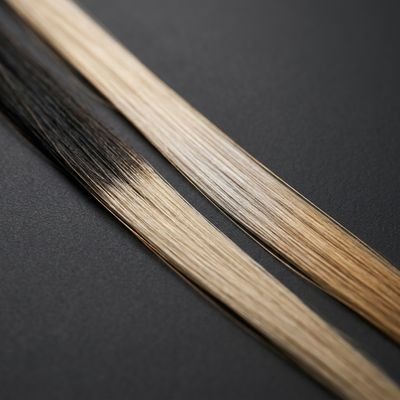
What is banding in hair? In hair color, banding is a horizontal stripe that breaks the smooth run from root to ends: a section lighter, darker or more damaged than the hair above and below it. On bleached blondes it usually starts at the root touch-up, at the border between new growth and previously lightened hair, or inside the regrowth itself.
If you formulate lightener behind the chair, you know the scene. The retouch looks like the easy service (“it’s just the regrowth”) and yet it’s where a lot of the damage gets manufactured. Here’s why: the word “banding” hides two different phenomena, with different causes and different fixes. Treat them as one, and every touch-up stays a coin toss.
This article pulls them apart: what each one is, how to tell them apart once they’ve shown up, and the specific move that prevents each one at the next appointment.
Quick summary: Bands after a bleach root touch-up come from two separate mistakes. Overlap (dragging lightener onto previously lightened hair) isn’t a color problem but a structural one: process on top of process, ending in a breakage line. Hot roots are a genuine color problem: scalp heat can make the stretch closest to the skin process faster, lift past the rest of the regrowth and leave a lighter band. Overlap is prevented with fine sections and product on the regrowth only; hot roots, with application sequence and frequent checks. And because a touch-up sits on the scalp, the lightener’s instructions cap the developer: Blondor allows no more than 6% (20 vol) there.
Why does banding happen after a bleach touch-up?
Because a retouch forces two zones that shouldn’t share chemistry to meet: virgin regrowth, which needs the lightener, and previously lightened lengths, which can’t take it again. When the application ignores that border, you get overlap: structural damage wherever product lands on hair that was already lifted. And within the regrowth itself, scalp heat can speed up the stretch closest to the skin: that’s the hot root, which over-lifts and leaves a band.
Two phenomena, two culprits. One breaks; the other stains. Let’s take them one at a time.
Mistake 1. Overlap: the band that isn’t color, it’s structure
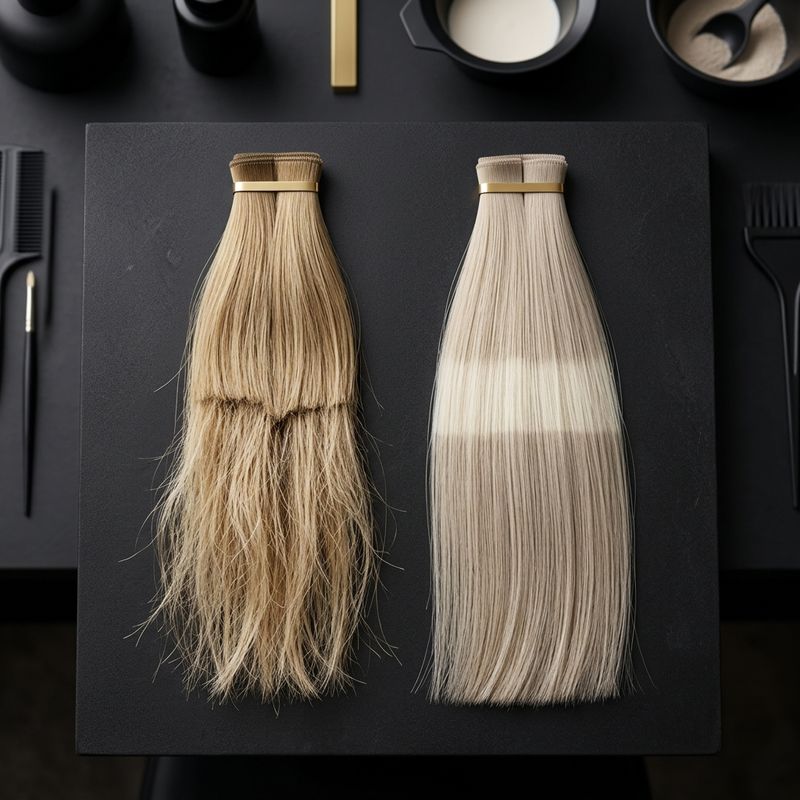
Overlap happens when touch-up lightener creeps onto hair lightened in previous sessions. The overlapped zone gets one more oxidation with every imprecise retouch, and over the months they add up.
The melanin bleach removes doesn’t come back, and the overlapped stretch adds one more process to the ones it already had. A study that bleached hair several times in a row found cuticle damage and changes inside the fiber (study on PMC). Here’s the trap: overlapped hair doesn’t look worse the same day. It looks the same, sometimes even “cleaner.” The invoice arrives later: a breakage line at the height where each overlap ended, split ends concentrated in that section and, in the worst case, outright breakage: lengths snapping off right where the chemistry piled up.
How to prevent overlap
The rule comes from the manufacturer. For a root touch-up, Wella’s guide to hot roots says to “precisely target the roots only, and avoid any overlapping into previously lightened areas”. The professional bleaching guide puts it the same way: touch-ups go on the regrowth only, without going over previously lightened hair. Making that real takes three moves:
- Fine subsections, thin enough to show the border between regrowth and lightened hair on every pass. With thick sections the border disappears and the brush decides for you.
- Stop the brush before the line. Cream lightener can spread a little as it settles; if you paint right up to the lightened hair, you’ve already overlapped it. Leave a minimal margin: the mix will cover it as it settles.
- Bond builder in the bowl. It doesn’t replace technique, but in a service that keeps repeating it’s a safety net. Each brand sets the dose for its own bond builder; Olaplex’s, by grams of lightener and type of application, is in the bond builder dosage guide.
Pro tip: at the touch-up, lighting matters as much as the brush. The border between regrowth and lightened hair reads better under front lighting than under overhead light. If you can’t see the line clearly, reposition the section: don’t guess.
Mistake 2. Hot roots: the band that really is color
The second phenomenon breaks nothing: it stains. Hot roots have two causes Wella explains in that same guide to hot roots: the roots “benefit from the warmth of your client’s scalp”, which can make the formula process faster, and new growth hasn’t fully keratinized yet. That’s why the bleaching guide puts the root on last when you lighten root to tip.
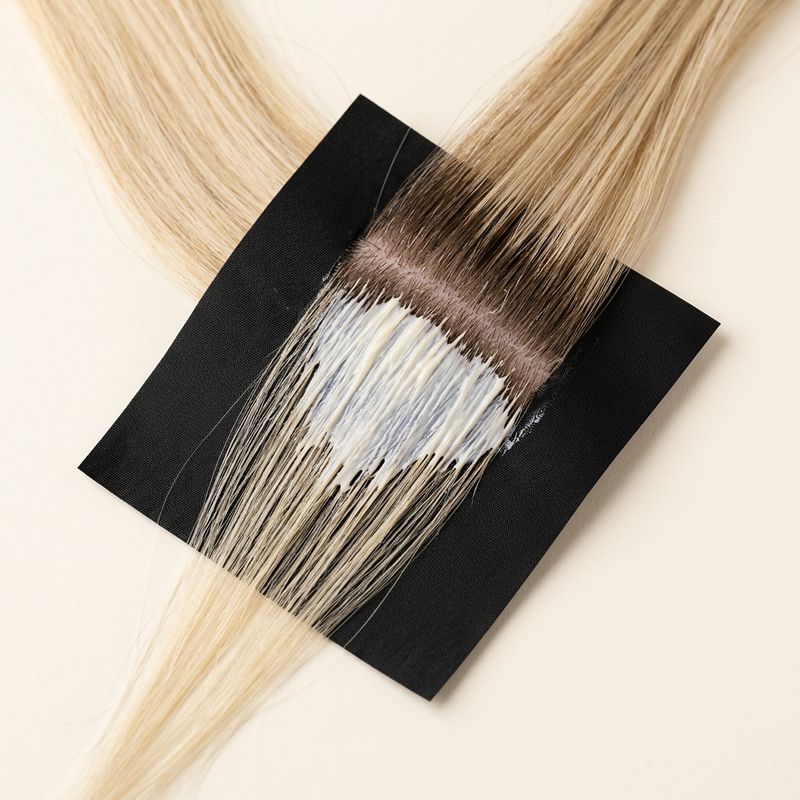
In a retouch, the regrowth isn’t uniform either: the stretch against the skin works with that warmth and the rest sits farther from it. Treat it all the same (same mix, same moment, same timing) and the zone against the scalp can over-lift while the middle of the regrowth lags behind. The result: a lighter band right at the root or, seen the other way, a darker band floating between two lighter zones. Wella adds another cause in the same guide: a developer that’s too strong can make the roots lift too light or too warm compared to the rest.
Uneven saturation compounds it: wherever the product load is thin, the lift falls short. Generous product at the scalp and a skimpy coat through the mid-regrowth builds the same band by the opposite route.
What length of growout causes banding?
In the manufacturer guides we cite, we haven’t found a growth length at which banding starts. What growth changes is the size of the risk. The longer the new growth, the more distance between the part touching the skin and the part far from it, and the bigger the difference in warmth between the two. The application also takes longer from start to finish, so it’s harder for both parts to reach the same level at the same time. The border you have to respect to avoid overlap gets longer too. When to book the touch-up (contrast between the growth and the lightened hair decides it, not the centimeter) is covered in how often to retouch roots and tone.
How to prevent hot roots
The lever is application sequence: the same principle that saves the root for last in a full-head lightening (“applying hair lightener to the root area last”, in Wella’s guide), translated to touch-up territory:
- Start with the part of the regrowth farthest from the skin, the stretch that gets the least scalp warmth.
- Leave the stretch against the scalp for last. Body heat will give it the push that levels the difference.
- Saturate evenly. Product load should be uniform across the regrowth: lightener should sit visibly on the hair, not vanish into it.
- Check often. Wella asks for it on a touch-up: as the lightener develops, “check your client’s hair frequently”. In a stretch this short, the window between “even” and “banded” closes fast, so watch the strand, not the clock.
Warning: a bleach root touch-up sits on the scalp, and there the lightener’s instructions rule. Wella’s Blondor fact sheet says for Multi Blonde: “For on-scalp application, use a 6 % or below.” Wella’s US lightening guide words it as developer “not exceeding 6%/20 Vol.” And the Blondor Multi Blonde page on Wella’s Spanish pro store says not to use it on a sensitive, irritated or damaged scalp (in Spanish: “No utilice el producto si el cuero cabelludo está sensible, irritado o dañado”). That’s Blondor’s rule; with another lightener, follow its instructions. Maximum time works the same way: for Blondor Multi Blonde, that fact sheet says “Do not exceed 50 mins”. That’s a ceiling, not the service time: you rinse when the strand reaches the target base.
Overlap or hot roots: which one is in your chair?
Once the damage is done, telling them apart decides the fix. The table sums up the signals:
| Breakage line (overlap) | Banding (hot roots) | |
|---|---|---|
| What it is | Accumulated structural damage | A difference in lift level |
| Where it shows | At the height where retouches hit the lengths | Within the regrowth, near the root |
| How it feels | Rough, gummy, or snapping section | Normal texture |
| How it looks | Split ends, uneven breaks through the lengths | Lighter or darker band, healthy fiber |
| What fixes it | Treatment and scissors: color can’t repair fiber | Color work on the affected stretch only: lighter root, a darker toner; warm root or dark mid band, lift and then tone |
The distinction matters because each one’s fix makes the other worse. A breakage line with more chemistry on top just snaps sooner: if the band feels rough or gummy to the touch, today’s service isn’t a color service, and that conversation belongs before anything gets mixed.
A color band on healthy fiber does have a color fix, and Wella’s hot-roots guide gives one for each case. Did the root come out lighter and brighter than the rest? A darker toner on the root area only blends it into the lengths. Did it stay warm because the lightener wasn’t on it long enough? You lift it to the correct underlying level first and then tone (how to choose between lifting again and neutralizing the base: relift or neutralize the bleach base). What if the stretch that fell behind is the middle of the regrowth, the darker band floating between two lighter zones? Wella’s guide doesn’t cover that case, but it’s the same under-lightening at a different height: you lift that band only, taking care not to touch the hair above or below it, and tone afterwards.
Each of those passes goes only on the stretch that fell short, without touching what’s already lightened, and under the scalp rules above: if the scalp is sensitive or irritated, Blondor isn’t used and the pass waits for another day. Before lifting any stretch again, do a strand test and, since that hair is already lightened, an elasticity test: if the strand stretches and doesn’t spring back, or snaps, that stretch can’t take another pass.
If the fix, or the toner you finish the touch-up with, is oxidative (a demi-permanent mixed with developer, or a permanent color), it needs an allergy test, and that test isn’t done on the same day as the color appointment. In its Koleston Perfect usage guidelines, Wella’s wording is: “Always perform an allergy test 48 hours before any color service.” The same leaflet sets the stop rule: with redness, burning or itching from the test, the color must not be applied and the client should seek medical advice before coloring again. A past allergic reaction to hair color also rules out coloring. To plan the appointment around it: scheduling the 48-hour allergy test.
The third, silent mistake: retouching with no memory of the last retouch
One pattern manufactures bands even with clean technique: every touch-up starting from zero. Nobody wrote down where the last application stopped, what mix was used, or how much the hair has grown since. Without that, today’s brush has no idea where the previous one ended, and hitting the same stretch twice gets much easier.
The interval plays in too: retouching a short regrowth is not the same job as a long one, and the rhythm of root and toner touch-ups sets how much working zone you’ll have and how much margin for error. Recording each service (where the application stopped, what mix, which zones came out sensitized) turns the next retouch into a continuation instead of a bet. That’s where a well-kept client record beats any application trick: today’s touch-up sets up the next one.
FAQ
Will toner remove the band?
Only if it’s a color band on healthy fiber. Toner evens out tone, not widely separated levels. If the root came out lighter, Wella’s hot-roots guide suggests a darker toner on the root area only; if it stayed warm from under-lightening, you lift that root to the correct underlying level first. And if the band is a breakage line from overlap, toner does nothing: the problem is structural, and the path runs through treatment and, often, scissors.
How much margin should I leave to avoid overlapping?
Just enough not to touch the previously lightened hair: a minimal margin is enough. Cream lightener can spread a little as it settles and covers that margin. Better to stop a touch short: a bit of unlightened root gets picked up at the next retouch; an overlapped stretch can’t be un-overlapped.
Why did my touch-up come out lighter right at the root?
Most likely scalp heat. The stretch against the skin gets that warmth and can process faster, and fresh growth isn’t fully keratinized yet (both reasons come from Wella’s guide above). If you applied the whole regrowth at once with a single timing, that zone may have over-lifted; a developer too strong for the root can do the same. Next retouch, flip the sequence (farthest stretch first, the stretch against the scalp last) and check the volume: on the scalp, Blondor allows no more than 6% (20 vol).
Does bond builder prevent overlap?
No. Bond builder works in the bowl it’s mixed into, but it can’t stop you from applying where you shouldn’t. Overlap is prevented by technique: fine sections and a respected border. The bond builder is the net, not the tightrope walker.
Key takeaways
- “Banding” is two different phenomena: the breakage line from overlap is structural damage; hot-root banding is a lift-level difference. Each has its own prevention.
- Overlap is prevented at the border: sections fine enough to show the line, a brush that stops before it, and product on the regrowth only.
- Hot roots are prevented with sequence: farthest stretch first, the stretch against the scalp last, even saturation, frequent checks.
- On the scalp, the instructions rule: with Blondor, 20 vol (6%) at most, and not on a sensitive, irritated or damaged scalp.
- Touch decides the fix: rough or gummy band = treatment and scissors; healthy-fiber band = color work on the affected stretch only, with an allergy test first if the toner is oxidative.
- Today’s touch-up sets up the next one: recording where the application stopped and with what mix is the difference between continuing a job and repeating a bet.
Calculate professional formulas with AI
Want to formulate bleach touch-ups from each client’s real history: what was used, where the application stopped, and how much regrowth there is now?
Which of the two bands has given you more trouble behind the chair: the overlap or the hot root?
Manufacturer sources
Manufacturer documents consulted for this article. A copy of each one is kept, and the passages noted from it are checked against that copy.
Note each one's country: the same line's instructions can differ from one market to another, so follow the directions for the product you use.
Why do bands appear when you retouch a bleach service?
In the app, we ask you a question like this one, but about your own client.
Up for this week’s case? → More on blondes and lightening →Related articles
Practice with our colorimetry tools
Calculators, neutralization wheel, AI consultation...
The Blendsor newsletter
Color techniques and trends for professionals. No spam.
A client in the chair right now?
The Blendsor advisor gives you the precise formula for this technique with your salon's brands — and saves it to your client's card.
Ask about your caseWritten by the Blendsor team
Professional hair colorimetry experts with experience in AI-assisted formulation. We combine color science, salon practice and technology to help colorists formulate with precision.