Relift or Neutralize: When to Bleach Again vs Tone the Base
Your lift stalled at orange. Another round of bleach or tone it where it sits? The decision tree that crosses target, elasticity, and porosity by section.
Blendsor
Blendsor Team
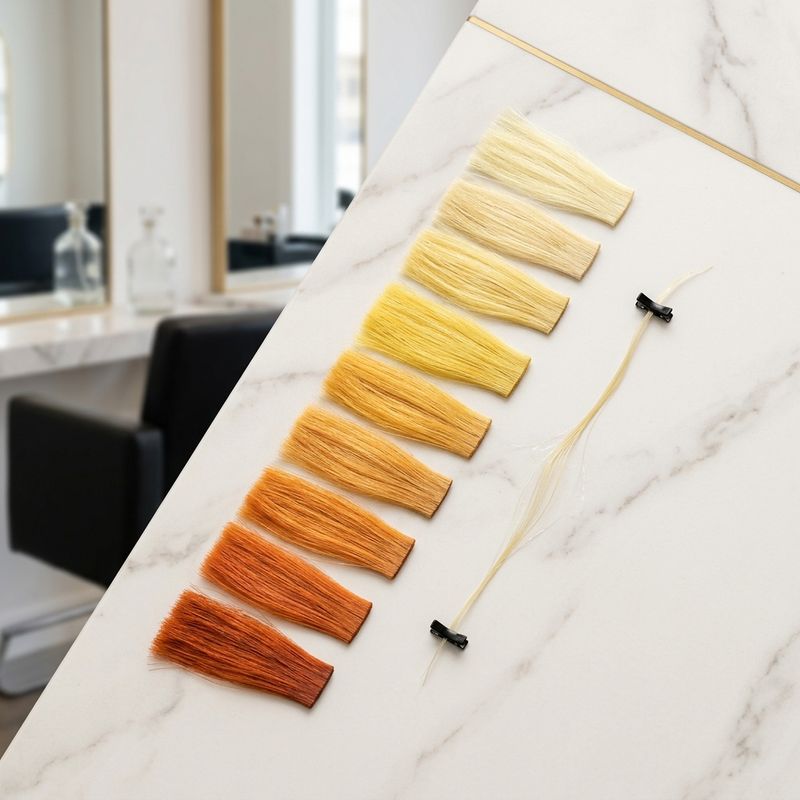
Bleach is on, you’re watching the strand, and the lift stops moving. There it is: level 6, orange, dead still. Your client is picturing a clean blonde and you have to call it right there, clock running.
Do you give it another pass or tone the orange where it sits?
That call doesn’t come from looking at the base alone. It’s the question that wrecks more blonde services than any other, because there’s a catch: the right answer depends on three things that shift at the same time, and none of them is “the orange looks ugly.”
Today you get the full decision tree. Not which toner to reach for (you already know that), but when to stop lifting and when to correct where you are.
Quick answer: Before you choose between another bleach session and toning the base, rule out a chemical residue stalling the lift, then weigh three things. Elasticity rules: if the fiber won’t rebound, you don’t lift again no matter what the base wants. The gap: if the target doesn’t need a cleaner base than this level holds, it isn’t stalled, it’s finished. Porosity by section: on porous mids and ends you tone where it sits, never lift more just chasing a cleaner base.
Relift or Tone? First You Have to Order the Question
Choosing between lifting again and neutralizing the base comes down to weighing the target, the fiber’s integrity, and porosity by section, in that order. The level of the base on its own decides nothing: an orange level 6 might call for more lift or be perfectly fine, depending on what the client wants and what the fiber can take.
First, pin down what the base actually is: the natural underlying pigment that gets exposed as you lift. Wella draws it as a lightening curve in the Koleston Perfect usage guidelines (“Exposure of underlying pigments during the coloring process”): level 4 exposes reddish brown, 5 reddish orange, 6 orange, 7 orange/yellow, 8 yellow, 9 pale yellow and 10 very pale yellow. The stages each starting level runs through are in the professional bleaching guide, and why that base always leans warm is covered in residual pigment in bleached hair.
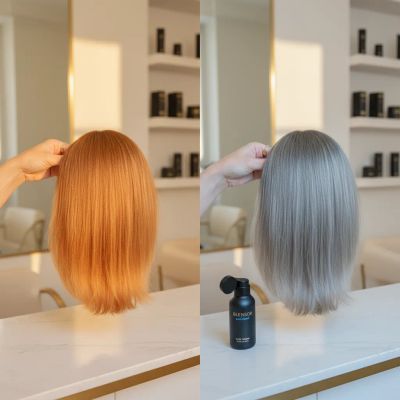
The core mistake is treating this like a one-data-point call. “The base is orange, so keep bleaching.” No. An orange base at level 6 knocks down right where it is with a blue-based toner (an intense ash or a blue direct dye), no level change, if the goal is a cool dark blonde. That same orange at level 6 does need another session if the client asked for a level 9 ash blonde.
The base hasn’t changed. The target has. And that’s the variable most people leave out of the reasoning.
This tree assumes two things you already do on autopilot: that you lift first and tone after (each in its own step), and that you don’t leave bleach sitting there waiting for a miracle. If those two habits aren’t locked in, the tree won’t help. We pick them back up at the end. For the full lightening flow this decision lives inside, see the professional coloring techniques guide.
And there’s one check that comes before the whole tree: chemical history. If the lift stalls abruptly in one zone, get suspicious before you decide anything. Henna, metallic salts, an old box color, or metals built up from the water change how the hair responds to bleach and make any extra pass unpredictable. A base that won’t rise because of residue like that doesn’t get fixed with more bleach: you take the product off, rinse, and run the incompatibility test on a cut strand. If it comes back positive for metallic salts, the chemical service is off; if the source is the water, it’s a chelating treatment and a repeat test until it comes back clean. The full picture is in metals in hair and bleaching, and how to tell the person when the test closes the service is in incompatibility test came back positive. That comes before target, elasticity, and porosity.
Start With the Target, Not the Base
The first question isn’t about the hair. It’s about what the client asked for: does the target demand a cleaner base than this lift level can honestly hold? If the current base already holds the target, it isn’t stalled, it’s in place, and the answer is to tone. Only when there’s a real gap between the base you have and the one the target needs does relifting enter the picture.
Here’s the trap that drives bad calls: looking at the orange and thinking “cleaner is always better.” It isn’t. An orange-red base at level 5 is the perfect canvas for a warm copper or a red-brown at that same level. There’s nothing to correct. You formulate on top and you’re done.
The base is only stalled when it sits below what the requested result needs. A level 9 ash blonde needs the base the Koleston curve puts at that level: pale yellow. If your lift stopped at orange level 6, now there’s a three-level gap: that base won’t hold the target, and neutralizing it gives a muddy, flat blonde, not a clean ash.
Pro tip: Before you decide anything, say the target base out loud. “I need to reach pale yellow, level 9.” Then look at what you’ve got. The distance between those two sentences is your answer, not the shade of orange itself.
This gap logic is the same one that separates a predictable blonde from one that ran on luck. If the real base doesn’t reach the level the result demands, the fix is never the toner. That’s the first toning mistake: toning to the level you want instead of the one you have.
What the Base Level Actually Tells You
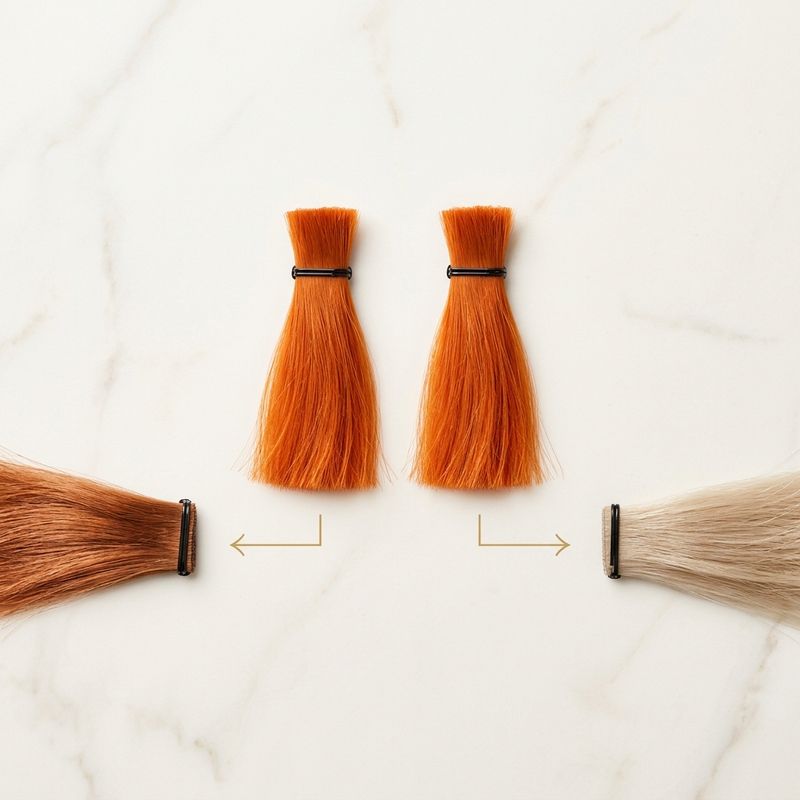
With the gap confirmed, the level of the base tells you whether that distance closes by toning or only by lifting more. What sorts it out is simple: toner adjusts the tone, but it won’t hand you the levels you’re missing. A reddish base sitting below the level a cool target needs doesn’t get fixed by covering it; that level is earned by lifting. What you can neutralize where it sits is the tone, with its complement, which is exactly what Wella prints under its curve: “To neutralize exposed underlying pigments, red/orange or yellow, choose the complimentary color that is opposite on the color wheel.”
Two things worth separating, because they get confused constantly:
- That toner won’t raise the base: true. If the target is a cool blonde several levels above the reddish base you’ve got, covering it won’t get you there; you need to lift.
- That you have to lift more: only if the target calls for it. A reddish orange base at level 5 needs no correction if the destination is a copper or a warm brown at that level. If what you’re after is a neutral at that same level, it takes green against the red and blue against the orange together; how to split the two families is in neutralize a red undercoat without bleaching.
How to formulate the toner for each orange base is already covered in the blue toner for orange hair guide. Here only the decision threshold matters, not the formula. The bases follow the Koleston curve, and the reflect numbers are from the Wella chart, as assigned in its guide to fixing hot roots (US professional store):
| Base after lift | Level | Does toning close the gap? |
|---|---|---|
| Reddish brown | 4 | Not toward a blonde: the missing levels have to be lifted. For a brown at that level, the base is finished |
| Reddish orange | 5 | If the target is warm, there’s nothing to neutralize: tone warm. Toward neutral, green and blue together (in Wella, /28) |
| Orange | 6 | Knocks down with blue (in Wella, /8), but drops brightness: good for a cool dark blonde, not a light ash |
| Orange/yellow | 7 | Blue and violet together, where it is (in Wella, /86) |
| Yellow / pale yellow | 8 / 9 | Violet territory (in Wella, /6). Only needs more lift if the target sits a level lighter |
The correct read: the base calls for another bleach session only when the target demands a lighter base than what you have, and that base is still too warm to neutralize where it sits. Wella puts it in writing for its Blondor toners: “Pre-lighten hair to approximately half a shade lighter than your desired result,” says its lightening product guide (US edition). The base has to bring the level; the toner fine-tunes the tone on top. There’s no magic level below which “you have to lift, period.” A level 4 is a finished base for a dark chocolate; that same level 4 has an enormous gap if the target is platinum.
Elasticity Overrides Everything
This one doesn’t negotiate with the other two: if the elasticity test fails, you don’t relift even if the target wants it and the base is low. You neutralize where it sits, accept a warmer base than ideal, and protect what fiber is left. Integrity outranks level.
The reasoning is simple. Damage doesn’t reverse; tone can be adjusted later. Between a blonde one shade warmer than requested and a client with broken ends in the sink, there’s no decision to make.
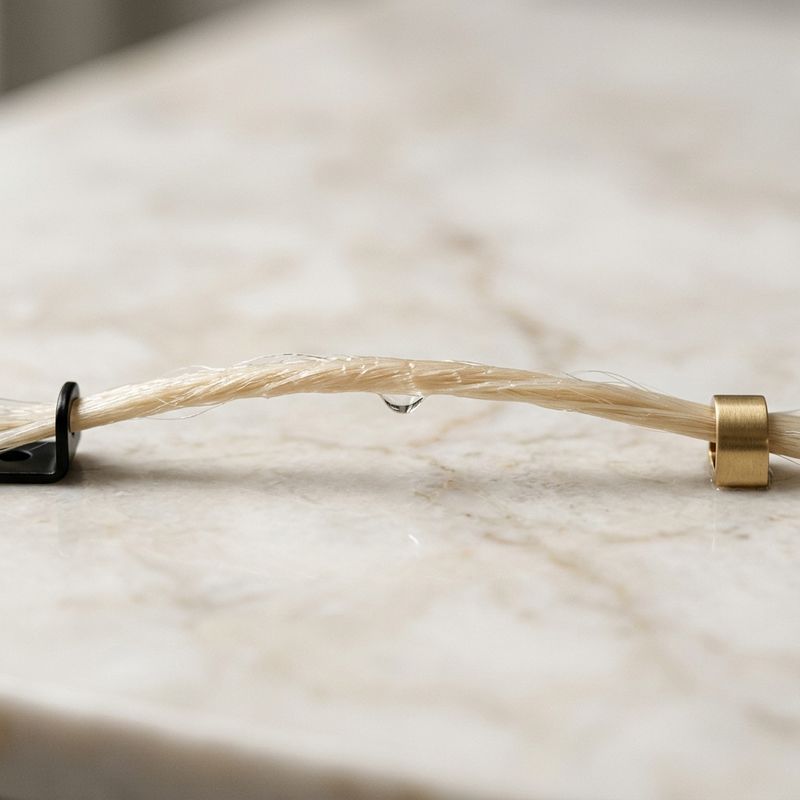
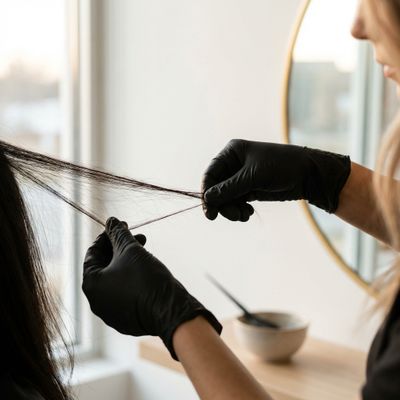
The test: take a strand, wet it, stretch it gently. If it rebounds and springs back, the fiber holds. If it stretches without recovering, or worse, feels soft and gummy when wet (the sign of over-processed keratin), lifting is over. It doesn’t matter that the base sits at orange level 6 with a 9 as the target: you’re not getting there, and forcing it is promising a blonde that comes with breakage. You’ve got the full protocol in the hair elasticity test.
That same strand does a second job. The hair has already been bleached, so before the second pass or the toner you try the mix on it and read how this particular fiber responds, which is what a strand test is for. If the strand can’t take the product, neither can the head.
Pro tip: Elasticity gets checked before you decide the tree, not after you’ve started the second pass. Do it at the end and you’ve already put product on a fiber that couldn’t take it. It comes first, before anything else.
When elasticity fails, the tree gets short fast: you neutralize where you are, with the formula for whatever level you’ve got, and you explain to the client that the base needs a recovery window before you lift again. It’s the hard conversation that saves both the hair and the relationship.
Read Porosity by Section, Not One Whole Head
This one breaks the “one decision for all the hair” idea. Porosity isn’t uniform, so the lift-or-tone answer can differ at the root versus the ends. The root, with scalp heat, processes faster. The mids and ends, more porous from history, already carry more chemistry: that’s where you don’t lift again just chasing a cleaner base.
Root heat isn’t theory. Wella explains it in its guide to hot roots: the root benefits from the warmth of the scalp, and new growth isn’t fully keratinized yet, so it processes faster than the lengths. Its advice when you lighten root to ends is to apply the root last, so the product spends less time there. That’s why the root usually goes on its own staggered timing, not in the same uniform pass; the full application order is in the professional bleaching guide.
At the ends the logic flips. A porous section already took on more chemistry, more heat, more washes. Lifting it again just because the base “isn’t as clean as I’d like” trades a slightly cleaner base for a fiber that can no longer take it. It doesn’t pay off. There you tone where it sits and accept that the base on the ends ends up a touch warmer than at the root.
This is porosity applied to the lifting decision, not just the toning one. If you want the groundwork on how porosity conditions every color service, it’s in hair porosity and coloring.
| Section | Behavior | Default decision |
|---|---|---|
| Root | Scalp heat speeds up processing | Can take the extra pass if elasticity passes; goes on last, on its own timing |
| Mids | Medium porosity, variable history | Assess strand by strand, don’t assume |
| Porous ends | Already sensitized by history | Tone where they sit, don’t lift again for base |
The Full Decision Tree
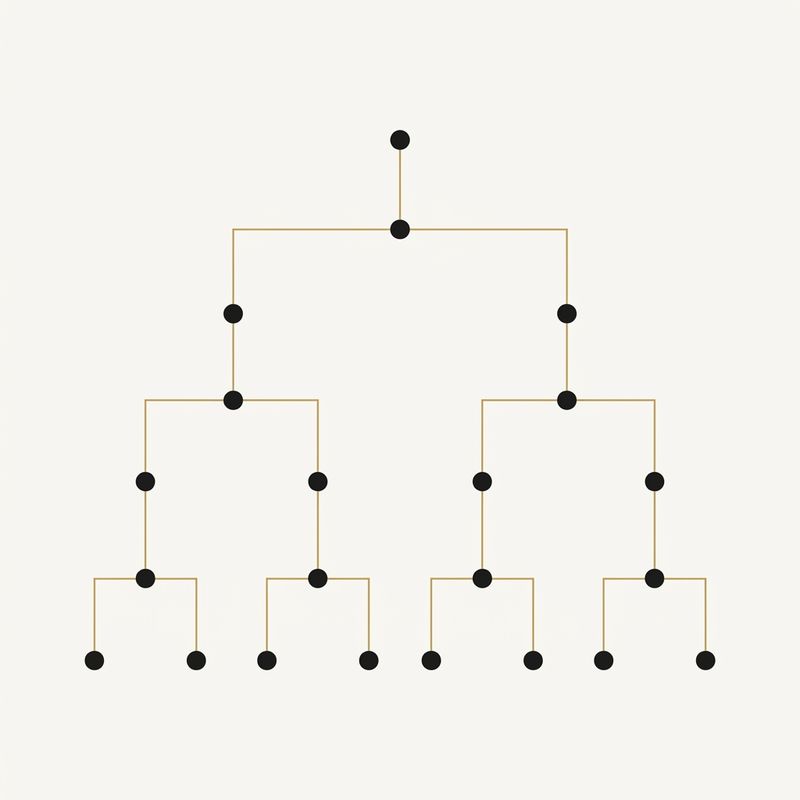
Put them together and this is what resolves the moment with bleach in hand. Elasticity goes first because it’s the one veto that doesn’t negotiate:
- Does elasticity hold? Wet strand stretched, does it rebound? If not → neutralize where you are, warmer base, and recovery before you lift again. Done, whatever else is true.
- Is there a gap? Does the target need a cleaner base than you have? If not → tone where you are. Done.
- Is the base neutralizable toward the target? Orange/yellow toward cool at the same level → tone. A base, reddish or orange, sitting below the level the cool target demands → another bleach pass.
- Which section? Healthy root with elasticity → takes the extra staggered pass. Porous ends → tone where they sit even if the base runs a bit warmer.
| Situation | Target | Elasticity | Decision |
|---|---|---|---|
| Orange level 6 | Cool blonde level 6 | Passes | Tone (blue, right there) |
| Orange level 6 | Ash blonde level 9 | Passes | Another session (3-level gap) |
| Orange level 6 | Ash blonde level 9 | Fails | Neutralize, warm base, stop |
| Reddish orange level 5 | Warm copper level 5 | Passes | Tone (no gap) |
| Yellow level 8, ends | Cool blonde level 9 | Root passes, ends doubtful | Root: extra pass. Ends: neutralize |
Save this table. It doesn’t hand you the formula (that depends on your brand and the exact base), it hands you which action to take before you touch the bowl.
The table takes one thing for granted in every branch that ends in a toner or an oxidative color: the allergy test has already been done, as that product’s instructions require. The Koleston Perfect leaflet, for instance, puts it this way: “Always perform an allergy test 48 hours before any color service.” To fit it into your schedule without losing the appointment, see the patch test scheduling guide.
Common Mistakes When Making the Call
- Deciding by the base color, not the gap: seeing orange and lifting on without asking whether the target even called for it. A warm base can easily be the destination, not a problem.
- Skipping elasticity because “it looks fine”: dry appearance lies. A fiber can look decent and snap when wet. You check it before the second pass, always.
- Treating the head as one section: applying the same decision to root and ends. The root takes what porous ends won’t. One decision per zone.
- Leaving bleach on waiting for it to rise: the maximum time is set by each lightener’s instructions, and the end point is judged by looking at the strand, not the clock. For its Blondor Multi Blonde Powder, Wella’s lightening product guide (US edition) says “Do not exceed 50 mins” and to check frequently until the desired lightening is achieved. Development time, it adds, depends on the condition of the hair, its porosity, and the result you want. If the base hasn’t moved by the time you hit that ceiling, the instructions don’t allow for more time: the next step comes from the tree, either a fresh session on rested fiber or toning where you are.
Frequently Asked Questions
How do I know if the base is stalled or just finished?
Compare the base you have with the one your target demands. If the requested result needs a cleaner or lighter base than what’s there, it’s stalled. If the current base already holds the target color (say, an orange-red level 5 for a copper at that level), it’s finished: you formulate on top, you don’t correct it.
Can I do the second bleach session the same day?
That depends on elasticity, not the clock. The Blondor instructions quoted above don’t set a waiting period between sessions, neither for the same day nor for the next, so the fiber makes the call. If the strand rebounds well after the first pass, the scalp is calm and there’s a real gap toward the target, you can continue with fresh product and controlled timing. With the scalp irritated or tender after the first pass, the second one waits for another day, however well the fiber holds up. If elasticity is borderline, better to stop, neutralize where you are, and book another session with rested fiber.
At what base level do you have to lift again, no exceptions?
There’s no fixed level. Lifting again is decided by the gap between target and base, not an absolute number. A level 4 base is finished for a dark brown and badly stalled for a platinum. The trigger is always “the clean base the target needs minus the base I have,” crossed with elasticity.
What if the root wants another pass but the ends don’t?
It happens a lot, especially on a retouch: new growth comes in virgin and has further to travel than lengths that were already lightened. You work by zones: the extra pass only on the root (and on any healthy mids that fell behind, as long as they weren’t lightened in an earlier service), on their own timing, and you neutralize the porous ends where they sit. The Wella lightening product guide with the 50-minute ceiling is explicit about it: “Do not overlap previously lightened hair with product.” And for on-scalp lightening it asks for developer “not exceeding 6%/20 Vol.” Applying the same decision to the whole head is exactly what produces broken ends and a warm root at the same time.
Does neutralizing on a base that’s too low ruin the result?
Yes, if the gap is wide. Neutralizing an orange level 6 when the target was an ash level 9 gives a muddy, flat blonde, not a clean cool. That’s why order matters: first you confirm the base holds the target, and only then you tone. If it doesn’t hold and the fiber can take it, the answer is to lift, not to cover.
The Bottom Line
- The target decides, not the base: the same orange calls for toning or for another session depending on what the client wants. Ask the target base before you look at the orange.
- Elasticity has absolute priority: if the fiber won’t rebound, you don’t lift again no matter what the base wants. A warmer base beats broken ends.
- Porosity reads by section: the root takes what porous ends won’t. One decision per zone, not one for the whole head.
- Lift first, tone after: the tree assumes that order. Neutralizing during the lift masks the base you need to read.
Calculate the Target Base and Formula with Blendsor
You read the fiber at the basin: the elasticity, the porosity, the residue. Once you’ve decided, Blendsor crosses each client’s starting level and chemical history, reasons the target base section by section, and suggests the exact toning formula or lift plan.
Manufacturer sources
Manufacturer documents consulted for this article. A copy of each one is kept, and the passages noted from it are checked against that copy.
What's the difference between another bleach session and toning the base?
In the app, we ask you a question like this one, but about your own client.
Up for this week’s case? → More on blondes and lightening →Related articles

Practice with our colorimetry tools
Calculators, neutralization wheel, AI consultation...
The Blendsor newsletter
Color techniques and trends for professionals. No spam.
A client in the chair right now?
The Blendsor advisor gives you the precise formula for this technique with your salon's brands — and saves it to your client's card.
Ask about your caseWritten by the Blendsor team
Professional hair colorimetry experts with experience in AI-assisted formulation. We combine color science, salon practice and technology to help colorists formulate with precision.