Redken to Schwarzkopf Conversion Chart 2026: Shade by Shade
Redken Shades EQ to Igora Vibrance chart: common shades mapped by level and reflect, the numbering traps that ruin formulas and a free converter tool. For pros.
Blendsor
Blendsor Team
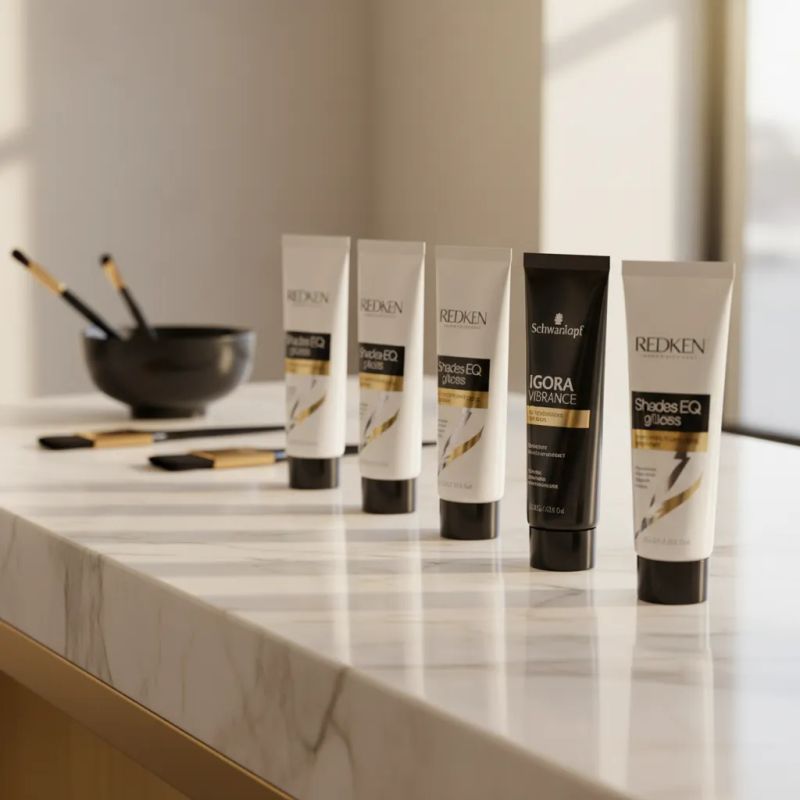
Are you considering switching from Redken Shades EQ to Schwarzkopf Igora Vibrance? Before you swap tube for tube, here’s what changes between the two systems.
Shades EQ to Igora Vibrance conversion requires understanding both shade equivalences and fundamental technical differences. Natural tones share level and reflect across the two charts (07N = 7-0), and Redken’s NB shades are Neutral Brown, not beige, so their nearest Igora match is the natural (09NB ≈ 9-0). The trap is the numbering: in Igora, -4 is beige, -5 is gold and -7 is copper, and the same digit means something else in other brands. Red-brown tones (RB series) do have Vibrance equivalents, but Vibrance is a demi-permanent, so they fade sooner than a permanent. Processing times also differ between systems.
But here’s the reality: making the switch isn’t as simple as replacing tube for tube. Schwarzkopf uses a completely different numbering system, and some of your go-to Shades EQ formulas don’t have exact Igora Vibrance equivalents.
In this guide, you’ll get the complete conversion chart, understand the critical technical differences that affect your results, and learn exactly when you can switch directly and when you need to reformulate. This is based on our colorimetry fundamentals guide. If what you need is a brand’s full chart rather than the conversion, use the complete Igora Vibrance chart or the complete Shades EQ color chart.
Quick summary: natural tones share level and reflect on both charts (07N = 7-0); Redken’s NB shades are Neutral Brown, not beige, and sit nearest Igora’s natural (07NB ≈ 7-0); Titanium sits nearest Igora’s Cendré (09T ≈ 9-1). Critical trap: Igora’s -4 is beige, -5 is gold and -7 is copper, and there is no shared numbering across brands. Red-brown tones (RB series) DO have Vibrance equivalents: 5-88, 6-68, 6-78 and 7-88. It’s an approximation by level and reflect: strand test before you change a regular client’s formula. Use the hair color converter for instant lookups.
Why Are Colorists Switching to Schwarzkopf?
We haven’t found a published count of how many colorists have moved from Shades EQ to Igora Vibrance, or why, so we won’t give you one. The reasons tend to be practical: what your distributor stocks, price, or a client who arrives with a Vibrance formula from another salon.
Whatever the reason, the risk at the bowl is the same: the right level with the wrong reflect. The rest of this guide is about avoiding that.
What are the critical technical differences between Shades EQ and Igora Vibrance?
The difference you’ll feel at the chair is timing, and each brand publishes its own numbers. Both mix 1:1 according to their US charts: Shades EQ with its Processing Solution, Igora Vibrance with its own activator. Redken US processes Shades EQ for 20 minutes at room temperature, up to 40 minutes on gray hair, and says it lasts up to 28 shampoos. Schwarzkopf US gives Igora Vibrance up to 20 minutes: 10-20 for a global or regrowth application, 5-20 for a gloss service. For both lines side by side with the other toners, see toner processing time by brand.
Before you start converting formulas, understand that these are different products.
Product Type and Developer
Shades EQ: Redken US calls it a demi-permanent toner, applied on dry hair and mixed 1:1 with Shades EQ Processing Solution. Redken US also says underprocessing or applying it on wet hair greatly impacts how long the color lasts.
Igora Vibrance: Schwarzkopf US presents it as demi-permanent hair color. The Igora Vibrance technical manual (UK edition) mixes it 1:1 for all shades, with two activator strengths: 1.9% (6 vol) and 4% (13 vol).
What changes your result at the chair is the product type, the developer and each line’s timing.
The 3 Conversion Traps That Ruin Formulas
Most conversion mistakes happen in three predictable places. Knowing them upfront saves you the “why did this go brassy?” moment.
Trap 1: the reflect digits don’t travel between brands. In Igora, -4 is beige, -5 is gold and -7 is copper, and the same digit can mean something else in another line. When you see “5-5” on an Igora Vibrance tube, you’re looking at a level 5 gold (Light Brown Gold on the chart). Copy a digit from another brand without checking its name, and you can end up with the wrong warmth. One more heads-up for English charts: Igora’s -1 is called Cendré and its -2 is called Ash.
Trap 2: level 8 has no gold at all. The entire level 8 range in Igora Vibrance is 8-0, 8-00, 8-11, 8-19 and 8-46. There is no golden 8. Colorists converting 08WG reach for a tube that doesn’t exist, then improvise with whatever is on the shelf. The closest match is 8-46 (Light Blonde Beige Chocolate), which is not the same thing: if you need a true level 8 gold, change line instead of forcing the conversion.
Trap 3: same shade, different processing time. Even when shades share level and reflect (07N → 7-0), the timing doesn’t carry over: each line has its own. Redken US processes Shades EQ for 20 minutes at room temperature; Schwarzkopf US gives Igora Vibrance up to 20 minutes, 5-20 for a gloss service. On the first conversion, check at the bowl, not the clock.
Quick reference: in Igora,
-4 = beige,-5 = gold,-7 = copper. Check the reflect name on the chart before mixing.
Nomenclature Comparison
| Aspect | Redken Shades EQ | Schwarzkopf Igora Vibrance |
|---|---|---|
| Format | 2-digit level + letter (07N) | 1-digit level + hyphen + digit (7-0) |
| Natural | N | 0 |
| Titanium | T | 1 (Cendré on the English chart), the nearest cool reflect |
| Violet | V | 9 (Igora’s 2 is Ash on the English chart) |
| Neutral Brown/Blonde | NB | 0 (natural) as the nearest: Igora has no digit for it |
| Beige | GB (Gold Beige: 07GB Butterscotch) | 4 (its own beige family), as the nearest |
| Gold | G | 5 |
| Copper | C | 7 |
| Red-Brown | RB | 8 (red) and 68 (chocolate red) |
| Pearl | P | No digit of its own: 9-1 plus the 9.5-9 violet toner |
Vibrance does carry reds (5-88, 6-68, 6-78, 7-88, 4-68). What changes against Igora Royal is staying power: Vibrance is a demi-permanent and Royal is a permanent color, so a deeply saturated red that has to last months is still Royal territory.
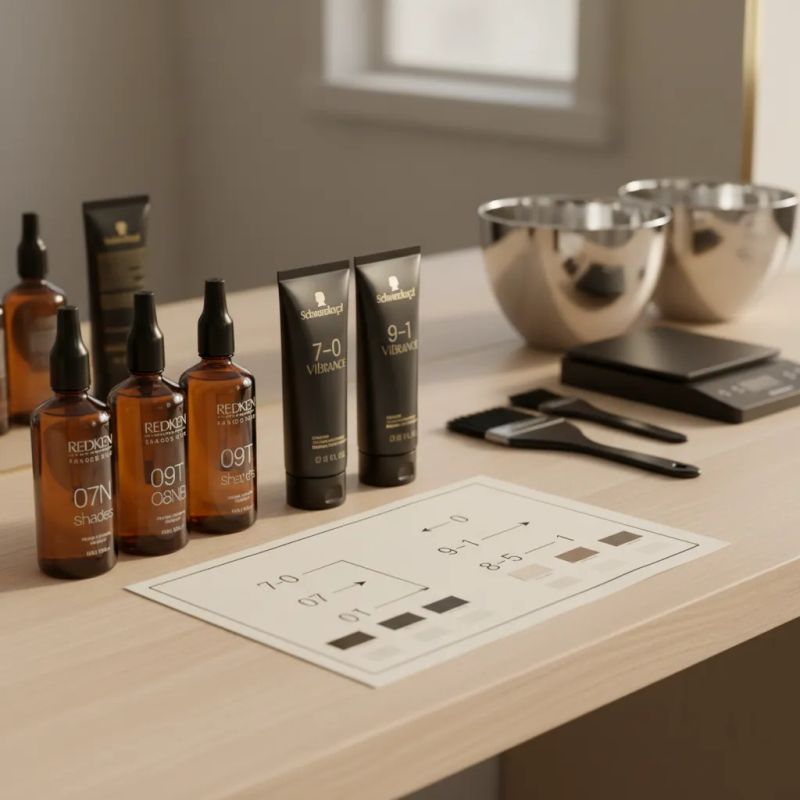
What is the complete Shades EQ to Igora Vibrance conversion chart?
Natural tones share level and reflect (06N = 6-0, 08N = 8-0). Redken’s NB series is Neutral Brown, not beige: its nearest Igora shade is the natural -0 (09NB ≈ 9-0). Titanium (T series) sits nearest -1 (Cendré on the English chart). Red-brown tones (RB series) do have Vibrance matches: 5-88 for 05RB, and 6-68 or 6-78 for 06RB. One frequently searched code deserves a straight answer: Igora 8-60 is not on the Vibrance chart. It is on the Igora Royal Absolutes chart (Light Blonde Chocolate Natural), which is a permanent line, not a demi. If what you need is a level 8 copper, Vibrance has none at level 8; Igora Royal has 8-77 (Light Blonde Copper Extra), a permanent that sits nearest Shades EQ 08C by level and reflect.
This chart covers common Shades EQ shades, each with its nearest Igora Vibrance shade. Every code is on its brand’s chart (Shades EQ: Redken’s US chart; Vibrance: Schwarzkopf’s European chart). A match is an approximation by level and reflect, not proof the result will be the same.
| Shades EQ | Level | Reflect | Igora Vibrance | Match | Notes |
|---|---|---|---|---|---|
| 03N | 3 | Natural | 3-0 | Same level and reflect | Natural on both charts |
| 04N | 4 | Natural | 4-0 | Same level and reflect | Natural on both charts |
| 05N | 5 | Natural | 5-0 | Same level and reflect | Natural on both charts |
| 06N | 6 | Natural | 6-0 | Same level and reflect | Natural on both charts |
| 07N | 7 | Natural | 7-0 | Same level and reflect | Natural on both charts |
| 08N | 8 | Natural | 8-0 | Same level and reflect | Natural on both charts |
| 09N | 9 | Natural | 9-0 | Same level and reflect | Natural on both charts |
| 09T | 9 | Titanium | 9-1 | Similar reflect | Nearest cool reflect at the same level (Cendré on the chart) |
| 09V | 9 | Violet | 9.5-9 (violet toner) | Approximate | No violet at level 9; 9.5-9 works on pre-lightened bases |
| 09G | 9 | Gold | 9-55 | Similar reflect | Remember: -5 = gold in Igora |
| 06NB | 6 | Neutral Brown | 6-0 | Similar reflect | NB is Neutral Brown, not beige: nearest is the natural |
| 07NB | 7 | Neutral Brown | 7-0 | Similar reflect | NB is Neutral Brown, not beige: nearest is the natural |
| 09NB | 9 | Neutral Brown | 9-0 | Similar reflect | NB is Neutral Brown, not beige: nearest is the natural |
| 05C | 5 | Copper | 5-7 | Same level and reflect | Copper family at the same level |
| 07C | 7 | Copper | 7-77 | Similar reflect | Straight copper, no mixing needed |
| 05RB | 5 | Red-Brown | 5-88 | Similar reflect | Demi red: fades sooner than a permanent |
| 06RB | 6 | Red-Brown | 6-68 or 6-78 | Approximate | Chocolate red or copper red: pick from the strand |
| 08WG | 8 | Warm gold | 8-46 (closest) | Approximate | Level 8 has no gold at all: see Trap 2 |
| 09P | 9 | Pearl | 9-1 + 9.5-9 | Approximate | Cendré plus violet toner |
Match levels explained:
- Same level and reflect: both charts give the same level and reflect family; they are still different products, so results can vary
- Similar reflect: same level, very similar undertone
- Approximate: the reflect doesn’t exist as such in Vibrance; expect to adjust, mix or change line
Using the Interactive Conversion Tools
For real-time conversions and reverse lookups (Schwarzkopf to Redken), use our interactive tools:
- Shades EQ to Igora Vibrance Converter
- Igora Vibrance to Shades EQ Converter
- Complete Igora Vibrance Chart
- All Brand Conversions
- Color charts by brand: all 17 professional charts in one place
These tools include formulation calculators that account for mixing ratios and developer volumes based on your starting hair level. If you need the full Shades EQ reference before converting, check the complete Shades EQ color chart with all tones by level.
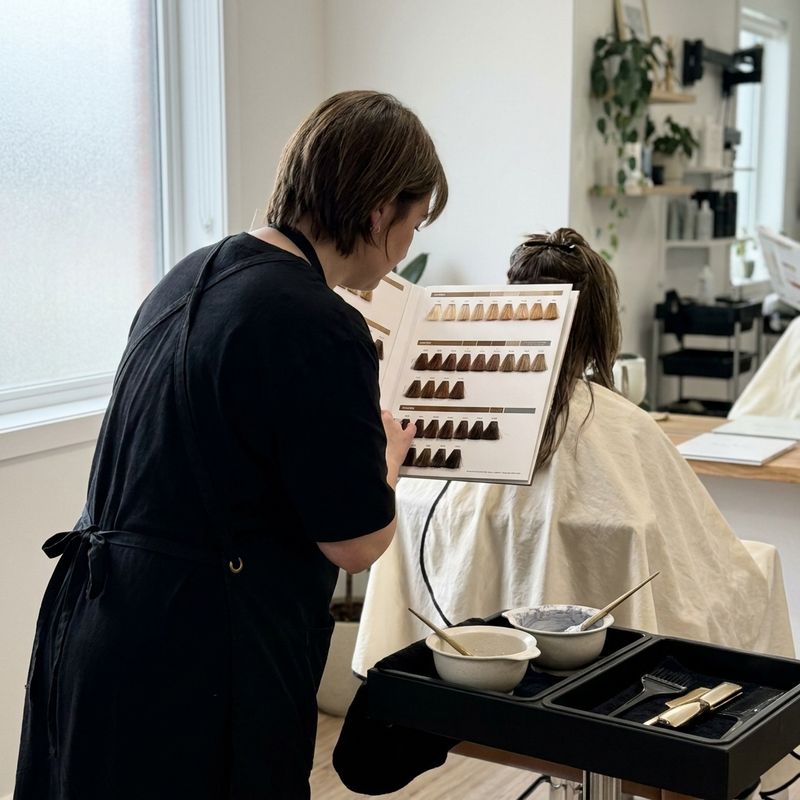
What do real converted formulas from Shades EQ to Igora Vibrance look like?
Three example conversions: luminous natural blonde (09NB → Igora 9-0), gray blending at level 6 (06N + 06NB → 6-0), and post-bleach ash toner (09T → 9-1). Both systems mix 1:1, so the ratio does not change: what changes is the shade, the Activator and each line’s timing.
These are example conversions, not tested recipes: each brand mixed 1:1 with its own developer (for example, 60 g of color + 60 ml of developer). Adjust the shade from the strand test.
Before you apply: the Igora Vibrance technical manual (UK edition) says that if an Allergy Alert Test is required after the Professional Safety Evaluation, it should be done 48 hours before the color service. If you’re coming from Shades EQ, do it with the product you’re about to apply: a test done with Shades EQ doesn’t tell you how the skin reacts to Vibrance, which is a different formula. Wella’s Koleston Perfect leaflet says to always perform an allergy test 48 hours before any color service. If the test shows redness, burning or itching, the same leaflet says the color must not be applied and the client should seek medical advice before coloring again; and if someone has ever had an allergic reaction to hair color, don’t color.
Formula 1: Luminous Natural Blonde
Original Shades EQ formula:
- Shades EQ 09NB + Shades EQ Processing Solution, 1:1
Converted Igora Vibrance formula:
- Igora Vibrance 9-0 + Igora Vibrance Activator, 1:1 (1.9% or 4%, per the technical manual)
Technical notes:
- Both systems mix 1:1: no ratio change
- Processing time: Redken US gives Shades EQ 20 minutes at room temperature; Schwarzkopf US gives Igora Vibrance 5-20 minutes for a gloss service
- 09NB (Irish Crème) is Redken’s Neutral Brown family, not a beige: the nearest Vibrance shade is the natural 9-0 (Extra Light Blonde Natural), which is what our converter suggests. If you miss some warmth, check it on the strand before you touch the formula
- On pre-lightened level 9 hair, check the strand before the full head
Formula 2: Gray Blending at Level 6
Original Shades EQ formula:
- Shades EQ 06N + 06NB in equal parts, mixed 1:1 with Processing Solution
Converted Igora Vibrance formula:
- Igora Vibrance 6-0, mixed 1:1 with Activator (1.9% or 4%: pick it from the activator table in the technical manual before you mix)
Technical notes:
- 06N and 06NB both sit nearest the natural 6-0 (Dark Blonde Natural), which is where our converter puts them too; 6-46 is a beige chocolate and would move the tone elsewhere
- Processing time: Redken US gives Shades EQ up to 40 minutes on gray hair; Schwarzkopf US gives Igora Vibrance 10-20 minutes for a global application
- The Vibrance system has two Activator strengths: 1.9% and 4%
- Redken US says Shades EQ blends gray hair: it doesn’t promise coverage
- Schwarzkopf’s Spanish site says Vibrance tones up to 50% gray in Natural and Fashion shades, up to 70% in Intense Naturals: toning is not covering
Formula 3: Post-Bleach Ash Toner
Original Shades EQ formula:
- Shades EQ 09T + Processing Solution, 1:1
- 20 minutes at room temperature (Redken US)
Converted Igora Vibrance formula:
- Igora Vibrance 9-1 + Activator, 1:1 (1.9% or 4%, per the technical manual)
- Processing time: 5-20 minutes for a gloss service (Schwarzkopf US)
Technical notes:
- 9-1 (Extra Light Blonde Cendré) is Vibrance’s level 9 Cendré (on the English chart, the reflect called Ash is Igora’s -2)
- On a very light, bleached base, also check elasticity on a strand: if it stays stretched or snaps, the hair is damaged. Any toner can grab more than planned, so decide whether that hair is up for more chemistry today (step by step in the hair elasticity test)
- If the base reads pale yellow, the chart’s violet toner, 9.5-9, works on pre-lightened bases: decide from the strand, not from a recipe
When should you NOT switch directly from Shades EQ to Igora Vibrance?
Direct conversion fails in four situations: reds that must stay saturated for months (Vibrance has reds, but it’s a demi-permanent), hair that must not get any lighter (strand test instead of assuming), timing-sensitive bookings (the two lines don’t share one timing), and any formula mixing Shades EQ with other Redken lines. Strand test on established clients before switching.
Understanding the limitations of conversion is as important as knowing the matches. For a broader look at what to consider before committing to a new product line, see our guide to switching professional hair color brands.
Long-Lasting Reds
The Shades EQ RB series does convert: 05RB → 5-88, 06RB → 6-68 or 6-78 (approximate). What Vibrance cannot do is hold a saturated red for months, because it is a demi-permanent. If long-wear reds are core to your business:
- Use Vibrance reds (5-88, 6-68, 6-78, 7-88) for softer results that fade with shampooing
- Move to Schwarzkopf Igora Royal permanent (-88 range) for vivid, long-lasting reds
- Expect a shorter fade cycle with Vibrance and price the refresh appointment accordingly
Hair That Must Not Get Lighter
Both lines are sold as demi-permanents (Redken US calls Shades EQ a demi-permanent toner; Schwarzkopf US calls Vibrance demi-permanent hair color), not as lighteners. Still, don’t assume the two behave the same on previously colored or porous hair. Strand test first when:
- Matching previously colored hair exactly
- Working on clients who can’t go any lighter
- Maintaining dimensional color where any shift would create banding
Processing Time Sensitive Services
Redken US processes Shades EQ for 20 minutes at room temperature, up to 40 minutes on gray hair. Schwarzkopf US gives Igora Vibrance up to 20 minutes (10-20 for a global or regrowth application, 5-20 for a gloss service), so don’t book both gloss services into the same slot by habit: plan each one by the line you’re using.
Calculate the operational impact before switching your entire menu.
Frequently Asked Questions
Can I use Redken’s developer with Igora Vibrance?
No. Redken US mixes Shades EQ 1:1 with Shades EQ Processing Solution (or Shades EQ Gloss to gel Processing Solution). The Igora Vibrance technical manual (UK edition) mixes Vibrance 1:1 with its own Activator, 1.9% (6 vol) or 4% (13 vol). Each brand’s instructions are written for its own developer, so with a swap you’re outside what either one tells you to do.
Use Igora Vibrance Activator with Vibrance color.
Do Shades EQ red tones have Igora Vibrance equivalents?
Yes. The Vibrance chart carries 5-88 (red extra), 6-68 and 4-68 (chocolate red), 6-78 (copper red) and 7-88. 05RB maps closest to 5-88, and 06RB to 6-68 or 6-78 (an approximation: pick from the strand).
What differs is staying power: Vibrance is a demi-permanent, so the red fades sooner than in a permanent. For a vivid red that has to last, use Schwarzkopf Igora Royal permanent in the -88 range.
How does Igora Vibrance processing time compare to Shades EQ?
They don’t share one processing time. Redken US gives Shades EQ 20 minutes at room temperature, up to 40 minutes on gray hair. Schwarzkopf US gives Igora Vibrance up to 20 minutes: 10-20 for a global or regrowth application, 5-20 for a gloss service.
On porous or pre-lightened hair, check the shade from the first minute and stay within the chart’s maximum.
Will the result be exactly the same when switching brands?
Not necessarily. Natural tones (N to 0) share level and reflect, but these are two different products:
- Neutral Brown shades (NB to the natural -0) are an approximation: check the strand
- Shine and gloss levels are comparable but not identical
- They don’t publish the same durability: Redken US says Shades EQ lasts up to 28 shampoos
- Schwarzkopf’s Spanish site gives Vibrance up to 25 washes in Natural, Intense Natural and Fashion shades
Strand test when converting formulas for established clients. What works on new clients may show noticeable differences on someone who’s been getting the same Shades EQ formula for two years.
Summary: Making the Switch Successfully
Switching from Redken Shades EQ to Schwarzkopf Igora Vibrance is viable for most salon color services, but it requires understanding these critical points:
- Natural tones share level and reflect: 06N = 6-0, 08N = 8-0; it’s still an approximation
- NB is not beige: Redken’s NB is Neutral Brown, and its nearest Igora match is the natural (-0)
- Reds do exist: 05RB → 5-88, 06RB → 6-68 or 6-78, but a demi fades sooner than a permanent like Royal
- Level 8 has no gold: 8-0, 8-00, 8-11, 8-19 and 8-46 are the whole range
- Numbering doesn’t travel: -4 = beige, -5 = gold, -7 = copper in Igora; other brands use the digits differently
- Processing time is not the same: Redken US gives Shades EQ 20 minutes at room temperature (up to 40 on gray hair); Schwarzkopf US gives Igora Vibrance up to 20 minutes
- Mixing ratio is the same: 1:1 in both systems; Vibrance’s Activator comes in 1.9% or 4%
- Strand test first: Especially for established client formulas
Switching works when you treat every conversion as an approximation and let the strand decide.
Ready to make the switch? Start with your most common natural tone services (07N, 08N, 09N), validate the conversions, then gradually expand to Neutral Brown (NB) and copper formulas. Strand test the red conversions (5-88, 6-68, 6-78) before moving a long-standing client off Shades EQ.
For more guidance on switching professional color brands without disrupting your existing client base, read our complete guide on switching professional hair color brands.
What’s been your experience switching from Redken to Schwarzkopf? Have you found formulas that convert perfectly, or shades that require significant adjustment?
Manufacturer sources
Manufacturer documents consulted for this article. A copy of each one is kept, and the passages noted from it are checked against that copy.
Note each one's country: the same line's instructions can differ from one market to another, so follow the directions for the product you use.
What's the difference between a Redken code and a Schwarzkopf one?
In the app, we ask you a question like this one, but about your own client.
Up for this week’s case? → More on global color →Related articles
Practice with our colorimetry tools
Calculators, neutralization wheel, AI consultation...
The Blendsor newsletter
Color techniques and trends for professionals. No spam.
You know the theory. What about today's case?
Send a photo to the Blendsor advisor and get an answer grounded in colour theory: toner, developer and timing, with the brands on your shelf.
Ask about your caseWritten by the Blendsor team
Professional hair colorimetry experts with experience in AI-assisted formulation. We combine color science, salon practice and technology to help colorists formulate with precision.