How to Fix Green Tones in Bleached Blonde: The Real Diagnosis
Green in bleached blonde isn't fixed with blue toner. Diagnose the real source (copper from plumbing, pool, old bleach) and neutralize with chelator and red.
Blendsor
Blendsor Team
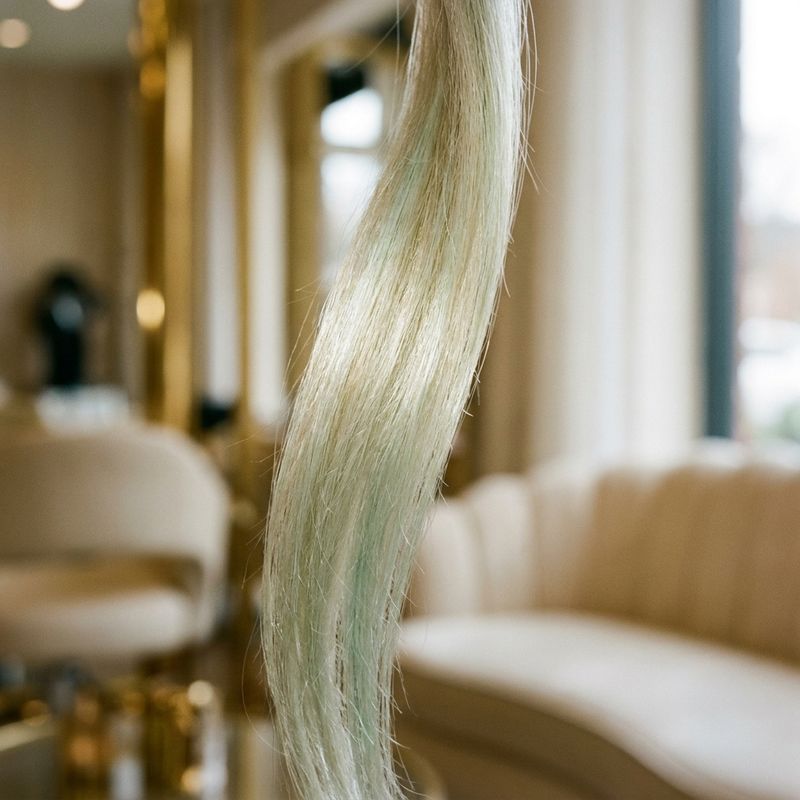
There’s a ghost that shows up after bleaching, and few trainings explain it well: green. It appears in platinum blondes, in cool blondes, in highlights worked patiently. And almost nobody diagnoses where it comes from before reaching for the toner.
If you work in color, you know exactly what I mean. The client leaves the chair happy, comes back a week later with a greenish tone under daylight, and the cycle of blue toner that neutralizes nothing begins. You and I know what others don’t see: when that green shows up days later, it isn’t a toner failure. The toner arrives late to a story that started earlier.
In this article you’ll see how to diagnose the real source of green before lifting pigment, and why correction goes through a chelator with a red neutralizer, not through a blue that doesn’t touch that part of the color wheel.
Where green comes from in bleached blonde hair
First clarification: green doesn’t appear because the bleach “went wrong.” It appears because bleach opens the cuticle and lets in what was already waiting.
In the first 60 seconds after lifting to maximum level, hair is left with a porous cuticle and receptive cortex. The open cuticle is the way in; any mineral residue with affinity for keratin ends up lodged in the cortex. That’s why a normal wash doesn’t lift it out, however many times you repeat it. Copper, iron and manganese are the main suspects. Oxidized copper turns green as soon as it meets an alkaline, and bleached blondes are exactly the stage where it shows most.
The three real sources of copper
This is where diagnosis breaks in many salons. “Hard water” is assumed as the automatic answer and the case closes. But there’s a nuance that matters here: water hardness (calcium and magnesium) dulls color, but it doesn’t turn it green. What turns it green is copper — and that copper doesn’t come from hardness itself, it comes from the plumbing (pipes leach it as water passes through) and from the pool. There are three possible sources, and excluding any one leads to a failed diagnosis:
| Source | Frequency | Clinical clue |
|---|---|---|
| Copper leached from plumbing (salon or home pipes, no filter) | Most common | Green appears across neighborhood clientele, not just one person |
| Pool with copper sulfate | Seasonal, high in summer | Client swims often, clean roots and green mids |
| Old bleach products with residual metallic salts | Less common but real | Only one specific client affected, others with same water clean |
If you filter the salon water and still see green in a specific client, don’t dismiss the diagnosis: investigate the other two sources. Most cases trace to the first, but the rest escape you if you don’t ask about the pool or which previous bleach products were used.
First things first: is it mineral, or did you make it?
The three sources above share the same treatment: separating them doesn’t change the protocol, but it does change prevention (filter, cap, history). What does change the entire service is an earlier fork: there’s a green that isn’t mineral at all. Excess blue pigment over a base with residual yellow gives you green by plain mixing —blue + yellow— and it’s the most frequent mistake when over-toning with ash at levels 8-9.
The two greens look almost identical on the head: clean roots, green mids and ends, because both settle where porosity is highest. Distribution won’t separate them. What gets you closest is when it appears — with one important caveat: if your salon’s plumbing leaches copper, mineral green can already be there at the rinse. Timing points, it doesn’t rule.
| When it appears | What it points to | What to do |
|---|---|---|
| Already there when you rinse the toner — filtered water, no pool or metals in the history | Over-toning with ash | Cosmetic pigment: rebalance with a touch of gold or copper in the next session |
| Already there at the rinse — with old plumbing, frequent pool or an unclear history | Timing doesn’t decide it: copper already deposited also shifts with the service’s alkaline | Chelator first (it cleans the substrate), then reassess before choosing a route |
| 24-48 h after a swim, or days into washing at home with pipes that leach metal | Mineral contamination (copper) | The protocol in this article |
This is why consultation rules: asking whether they swim often and when they first saw the green is what separates a diagnosis from a bet. And if the answer isn’t clear, run the strand test below before deciding.
Why blue toner isn’t the answer
There’s a widespread misunderstanding worth dismantling respectfully. Blue toner isn’t the villain. Blue toner does exactly what it should: neutralize orange and yellow. That is, it works in the warm zone of the color wheel.
Green sits at a different point on the wheel. Its complementary opposite isn’t blue: it’s red. Apply blue over green and you don’t neutralize — you darken or shift the tone toward a muddy blue-green. The error isn’t “using blue,” the error is using blue for a correction that calls for red.
Pro tip: Before toning, do a strand test with a diluted red neutralizer (a .4 or .5 from any professional brand on a level 10 base) for 5-10 minutes. If green yields on the first pass, you confirm the residual mineral diagnosis.
To understand exactly why color opposites work this way, check our complete color theory basics guide, where we break down Newton’s wheel applied to hair.
The pre-treatment protocol that actually works
When diagnosis points to residual mineral, the order of operations changes. It’s not “bleach first and tone after.” It’s remove the mineral first before bleaching seals it deeper.
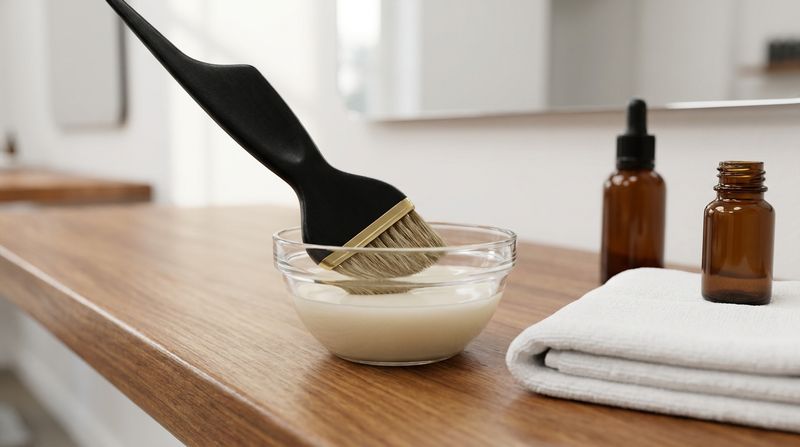
Step 1: Professional chelator
The chelator is the ingredient that captures metallic ions and pulls them out of the cortex. The canonical actives are EDTA, sodium phytate, and citric acid in professional concentrations. Products on the market that comply:
- Wella Color Charm Metallic Salt Remover: specific for metallic salts, 10-15 min before service
- L’Oréal Metal Detox (Pre-treatment Concentrate): glycine and derivatives, basin application
- Olaplex N°4C Bond Maintenance: deep cleansing shampoo with integrated chelators, softer option
Exposure time depends on the product. As reference, professional chelators work between 5 and 15 minutes with mild heat. Always follow the manufacturer’s instructions: longer doesn’t mean better and may irritate the scalp.
Step 2: Red neutralizer (not blue)
Once the mineral is removed, classic color theory enters. Residual green that may remain in the cortex is neutralized with its complementary opposite: red. In practice this translates into a toner with a .4 (copper/red) dominant applied in very low proportion over the target blonde.
| Base level | Suggested toner | Toner ratio | Time |
|---|---|---|---|
| 10 (platinum blonde) | 10.4 or .04 + 10.0 | 1:4 or 1:5 | 5-10 min |
| 9 (very light blonde) | 9.4 + 9.0 | 1:5 | 5-10 min |
| 8 (light blonde) | 8.4 mix | 1:6 with neutral base | 10 min |
Times are orientative. Each brand has its own chart — always consult the manufacturer’s technical manual for the exact ratio of your line.
Step 3: Close with acidic hydration treatment
After a chelator and a toner, hair needs to return pH to the acidic zone (3.5-5.5) to seal cuticle. Acidifying mask 5-10 minutes at the end of the service. Without this step, color fades faster and the cuticle stays vulnerable to fresh mineral contamination.
Common errors in green correction
If you’ve spent time in the chair you’ve probably seen several of these. The most frequent and why they happen:
- Insisting with blue toner: we’ve seen this. Blue neutralizes warm tones (yellow/orange), not green. If you’ve applied blue three times and it doesn’t yield, stop insisting and reconsider the diagnosis.
- Skipping chelator because “I already washed twice”: normal washing doesn’t chelate. It only removes surface residue. Mineral inside the cortex needs a specific chelating active.
- Applying chelator after toner: order matters. Chelator first (cleans the substrate), toner after (neutralizes what remains). Reversed, the toner is applied on mineral that’s still present and the result lasts days.
- Not asking about the pool: in summer, clients who swim frequently are recurrent green candidates. If you don’t ask during consultation, you don’t diagnose.
- Filtering salon water and forgetting the rest: a KDF-55 filter on the basin shower is standard in premium salons in Europe and solves the most common source. But if a specific client still sees green, it’s not the filter that fails — it’s the other two sources.
Frequently asked questions
How long does green take to appear after bleaching?
It can appear within hours if the salon’s plumbing leaches a lot of metal, or at 7-14 days after several home washes with pipes that shed copper. In clients who swim, it’s usually seen 24-48 hours after the first post-service swim.
Does purple shampoo correct green?
No. Purple shampoo neutralizes yellow, not green. Applying purple over green can darken the tone and create a flat, muddy mass, but it doesn’t neutralize the underlying green pigment. For green you need a cosmetic with a red dominant or a specific chelator.
Can green be prevented before bleaching?
Yes, and it’s the difference between a reactive service and a professional one. Apply a chelating shampoo during consultation when you detect a client with frequent pool exposure or known old plumbing (copper builds up wash after wash). And run a strand test if the hair history includes previous bleaching with an unknown product.
In short
- Rule out over-toning first: if the green was already there at the rinse, with filtered water and no pool or metals in the history, it’s cosmetic pigment and the route is rebalancing with gold or copper. With old plumbing, pool exposure or an unclear history, timing doesn’t decide it — copper already deposited also shifts with the service’s alkaline: chelator first, then reassess. Mineral green from outside the salon usually shows up later — oxidized copper entering through the open cuticle and lodging in the cortex. Three possible sources of copper — and note: water hardness (calcium and magnesium) dulls the tone, but it’s copper that turns it green.
- Green’s complementary opposite is red, not blue: using blue on green doesn’t neutralize, it darkens. Toner with a .4 dominant in low proportion.
- Chelator first, toner after: the order of operations decides whether correction lasts weeks or days.
- Diagnose before applying: ask about the pool, check salon water, consider previous bleaching. Without diagnosis, the toner arrives late.
Calculate professional formulas with AI
Want to generate custom formulas for green neutralization based on starting level and each case’s chemical history?
Have you faced cases where green didn’t respond to the classic protocol? Share the scenario and we’ll review the diagnosis.
Why does bleached blonde hair turn green?
In the app, we ask you a question like this one, but about your own client.
Up for this week’s case? → More on color correction →Related articles
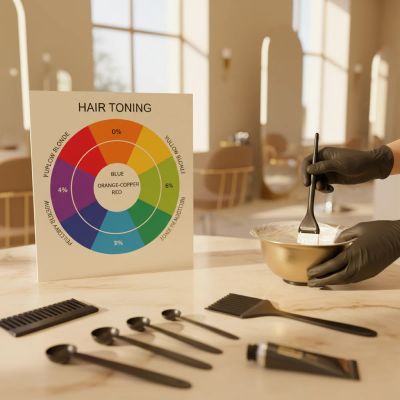


Practice with our colorimetry tools
Calculators, neutralization wheel, AI consultation...
The Blendsor newsletter
Color techniques and trends for professionals. No spam.
You know the theory. What about today's case?
Send a photo to the Blendsor advisor and get an answer grounded in colour theory: toner, developer and timing, with the brands on your shelf.
Ask about your caseWritten by the Blendsor team
Professional hair colorimetry experts with experience in AI-assisted formulation. We combine color science, salon practice and technology to help colorists formulate with precision.