Velvet Blonde: How to Formulate the Low-Saturation Satin Blonde
How to formulate velvet blonde without it falling flat: lift level, underlying pigment and toning the champagne-pearl satin finish, step by step for colorists.
Blendsor
Blendsor Team
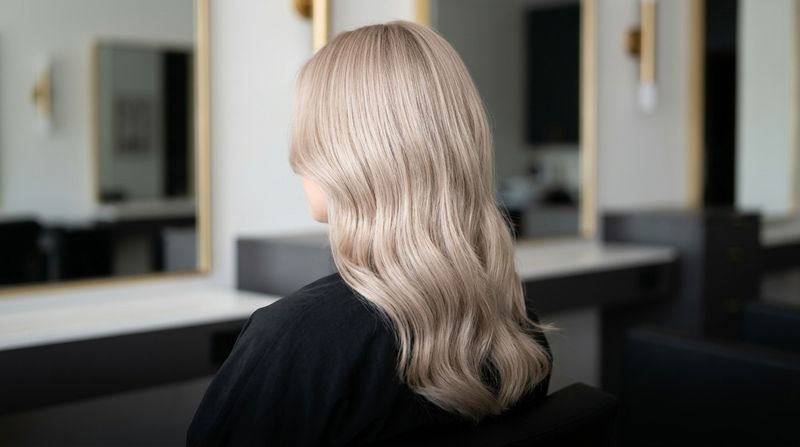
Your client walks in with a photo saved on her phone and a name: velvet blonde. She saw it on TikTok, she loves it, she wants it. And you nod, because you know exactly which blonde she means —that satin tone between champagne and pearl, matte yet luminous— but you also know that name doesn’t come with a formula. It comes with an expectation.
If you formulate color every day, you know the trap: velvet blonde falls flat with alarming ease. Not from lack of skill. From skipping the diagnosis that decides the result before you weigh a single gram.
In this article we break down how a velvet blonde that truly looks velvety is built: the lift level it needs, the underlying pigment you have to reach, and the toning that delivers the satin finish without sliding into dull grey. All of it from chemistry, not from the trend.
What velvet blonde actually is
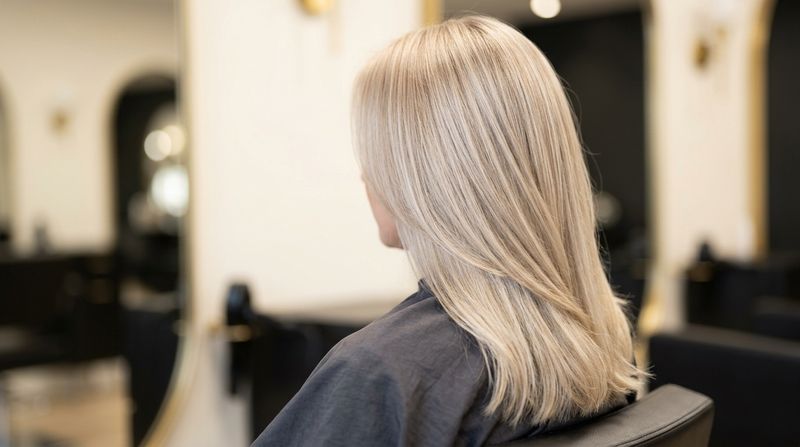
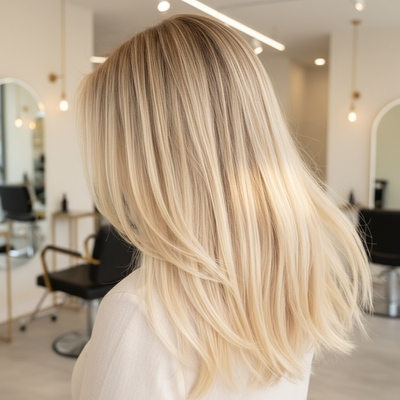
Velvet blonde is a low-saturation blonde with a satin finish. The key is in those two words: low saturation. It is not an icy platinum nor a warm beige. It is a desaturated, almost milky tone with a satin (not flat-matte) finish that recalls velvet because it diffuses light softly instead of reflecting it hard.
Visually it sits between champagne and pearl, in levels 8 to 9, with a neutral or slightly cool reflect that never reaches strong violet. If it reminds you of champagne blonde, you are on the right track: they are close cousins. The difference is that velvet dials the saturation down even further to achieve that matte premium effect.
Pro tip: velvet blonde isn’t recognized by its tone, it’s recognized by its finish. If the blonde shines like a mirror, it isn’t velvet. If it diffuses the light, it is.
The mistake of reading it as “just another cool blonde” is precisely what flattens it. A poorly diagnosed velvet blonde turns into a muddy blonde or a lifeless platinum, and neither is what the client pointed at in the photo.
The lift level decides the satin
The velvety finish isn’t achieved in the toning. It is achieved before, in the underlying pigment you lift to.
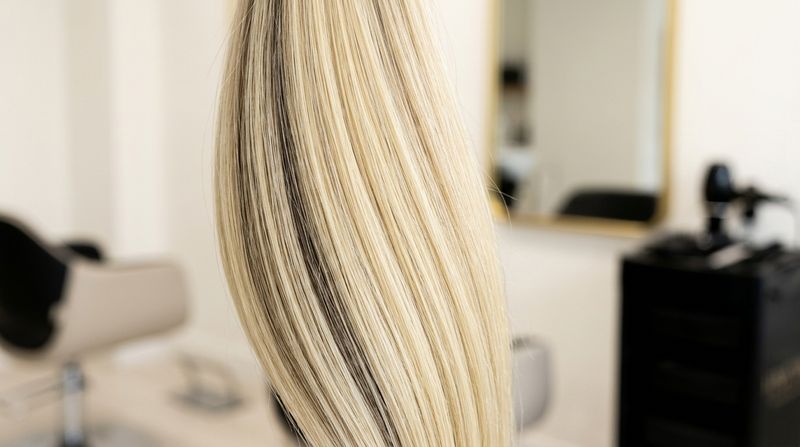
For velvet blonde you need to reach a clean lift, with no dominant residual warmth. In practice that usually means reaching a pale yellow (level 9) or very light yellow (level 9-10) underlying pigment, never stopping at the yellow-orange of level 8. If you under-lift, the warm base seeps under the toner and kills the low saturation: the result reads golden or muddy, never satin.
The practical rule is easy to state and hard to meet: velvet blonde is only as good as your lift. An uneven base —roots at one level, mid-lengths at another— produces a patchy velvet that no toner rescues uniformly.
| Underlying pigment reached | Result after velvet toning |
|---|---|
| Yellow-orange (level 7-8) | Muddy blonde, satin impossible |
| Medium yellow (level 8) | Dull velvet, leans golden |
| Pale yellow (level 9) | Clean satin velvet |
| Very light yellow (level 9-10) | Pearl velvet, maximum satin |
On lightener and developer: there is no universal number that works across every brand. Developer volume and mixing ratio depend on the lightening line you use —Wella, L’Oréal, Schwarzkopf and Revlon publish different ratios in their technical manuals—. Always check your product’s manufacturer sheet instead of applying a ratio “from memory”. Lift chemistry changes between formulas, and a volume chosen wrong by copying another brand’s is one of the most frequent causes of a velvet without body.
The toning that creates the velvet effect
Once you have a clean base, toning signs off the finish. And here the guiding principle is low saturation: velvet blonde is toned with diluted, low-saturation toners, not with intense ones.
A violet or blue that is too loaded over a pale base creates a slate grey or a visible lilac, the exact opposite of velvet. The satin comes from a subtle deposit that neutralizes just enough residual yellow and leaves a luminous neutral base.
To neutralize yellow without overdoing it, work with high-level toners (9-10) in neutral or pearl reflects, diluted as your line indicates. The color wheel rules: violet neutralizes yellow, but in velvet blonde you use it in a minimal dose. Better to repeat a short toning than to overshoot and have to correct a shifted base.
Pro tip: test the toner on a control strand before applying on the head. In low saturation, two extra minutes turn a luminous velvet into a dull one.
Common mistakes when formulating velvet blonde
- Under-lifting: stopping at a medium yellow or orange base leaves residual warmth that kills the satin. Velvet demands a pale, clean base.
- Over-toning: loading the toner “to be safe” produces dull grey or visible lilac. Low saturation is built with subtle deposit, not intense pigment.
- Ignoring an uneven base: toning an uneven lift without evening it first creates a patchy velvet. Lift uniformity is non-negotiable.
- Copying ratios across brands: applying one line’s developer volume with another’s lightener alters the expected lift. Each technical manual is its own law.
Frequently asked questions
What level does velvet blonde need?
Velvet blonde lives in levels 8 to 9 with low saturation. What matters isn’t just the final level, but reaching a pale yellow (level 9) underlying pigment or lighter before toning, so the satin isn’t contaminated by residual warmth.
Why does my velvet blonde come out flat or dull?
Almost always for one of two reasons: you under-lifted and the warm base kills the low saturation, or you over-toned and the excess pigment created grey. Velvet is built with a clean base and a diluted toning, not a loaded toner.
What developer do I use for velvet blonde?
There is no single volume: it depends on your lightening line. Wella, L’Oréal, Schwarzkopf and Revlon publish different ratios and volumes in their manuals. Check your product’s technical sheet and respect its ratio instead of reusing another brand’s.
How is it different from champagne blonde?
They are neighboring tones, but champagne keeps a little more elegant golden warmth, while velvet dials saturation down further for that matte velvety finish. Champagne shines; velvet diffuses.
In summary
- The satin is decided in the lift: you need a pale yellow (level 9) underlying pigment or lighter, clean and even, before you even think about toning.
- Toning is low saturation: diluted, lightly loaded toners create the velvet; intense toners destroy it.
- Ratios are brand-specific: developer and mix are dictated by your line’s manual, never by a ratio copied from another.
Calculate professional formulas with AI
Want to generate personalized velvet blonde formulas based on the starting level, the expected underlying pigment and each client’s chemical history?
Which of the three mistakes has come through your chair most this season?
What's the difference between velvet blonde and a regular satin blonde?
In the app, we ask you a question like this one, but about your own client.
Up for this week’s case? → More on blondes and lightening →Related articles
Practice with our colorimetry tools
Calculators, neutralization wheel, AI consultation...
The Blendsor newsletter
Color techniques and trends for professionals. No spam.
You know the theory. What about today's case?
Send a photo to the Blendsor advisor and get an answer grounded in colour theory: toner, developer and timing, with the brands on your shelf.
Ask about your caseWritten by the Blendsor team
Professional hair colorimetry experts with experience in AI-assisted formulation. We combine color science, salon practice and technology to help colorists formulate with precision.