What Is French Blending? Grey Coverage With No Demarcation
The French Blending technique step by step. Real formulas to blend grey into warm tones with a virtually invisible demarcation. For professionals.
Blendsor
Blendsor Team
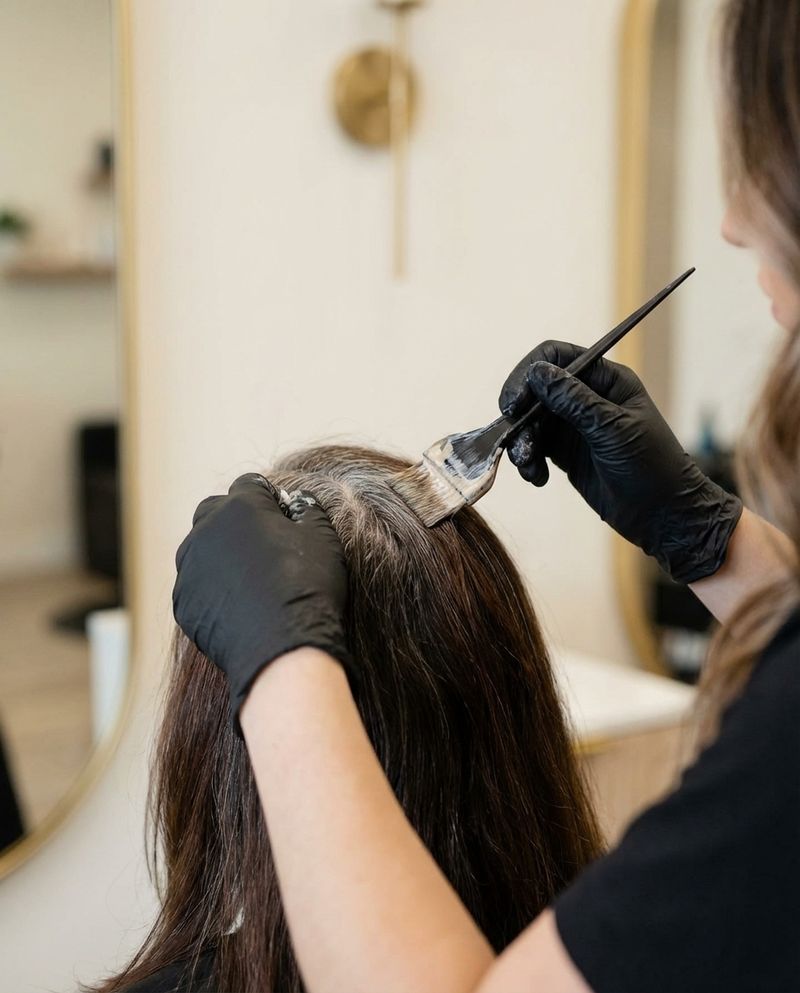
Do you have clients who refuse to color their hair because they hate seeing that white line growing at the root only a few weeks after their appointment?
French Blending is a technical answer to that problem: instead of hiding the grey, it blends it into the rest of the color so the root grows out without a hard line.
Quick summary: French Blending hair color is a grey-blending service, its name a trademark of L’Oréal Professionnel, that works grey into the rest of the hair instead of hiding it: lighter strands, darker strands and a custom color at the root. In the version this article covers, that color leans toward golden and warm brown reflexes. The result: grey that looks like part of the design, not a color mistake, and a root that grows out without a line.
What is French Blending?
French Blending is a coloring service that integrates grey rather than hiding it. The name is a L’Oréal Professionnel trademark (French Blending™), and the brand sums it up in one line: “Don’t cover greys, blend them.” According to its service page, it pairs custom color recipes with its own application gesture, “Vertical Weaving,” and comes in three versions, from first greys to the full head (you’ll find them in the grey percentage section).
In practice, the blend comes from three pieces: lighter strands, fine, in the style of babylights; darker strands (lowlights) that bring back depth; and a custom color at the root. This article works the warm version: golds, golden browns and tobacco that blend with the hair’s natural silver to create a multidimensional effect.
French blending vs balayage: they’re not the same thing. Balayage is a freehand way of placing lightener, and here it’s one more piece (L’Oréal pairs it with color in its full-head version). For the application differences, see balayage vs highlights.
The philosophy is simple: if grey hair is cool silver, adding warmth creates an illusion of blending. White and gold together read as natural blonde. The grey stops being “the problem” and becomes “the effect.”
Who is it for? L’Oréal aims it at anyone seeking “a natural, modern, low-maintenance approach to greys”: not hiding the grey, but wearing it better.
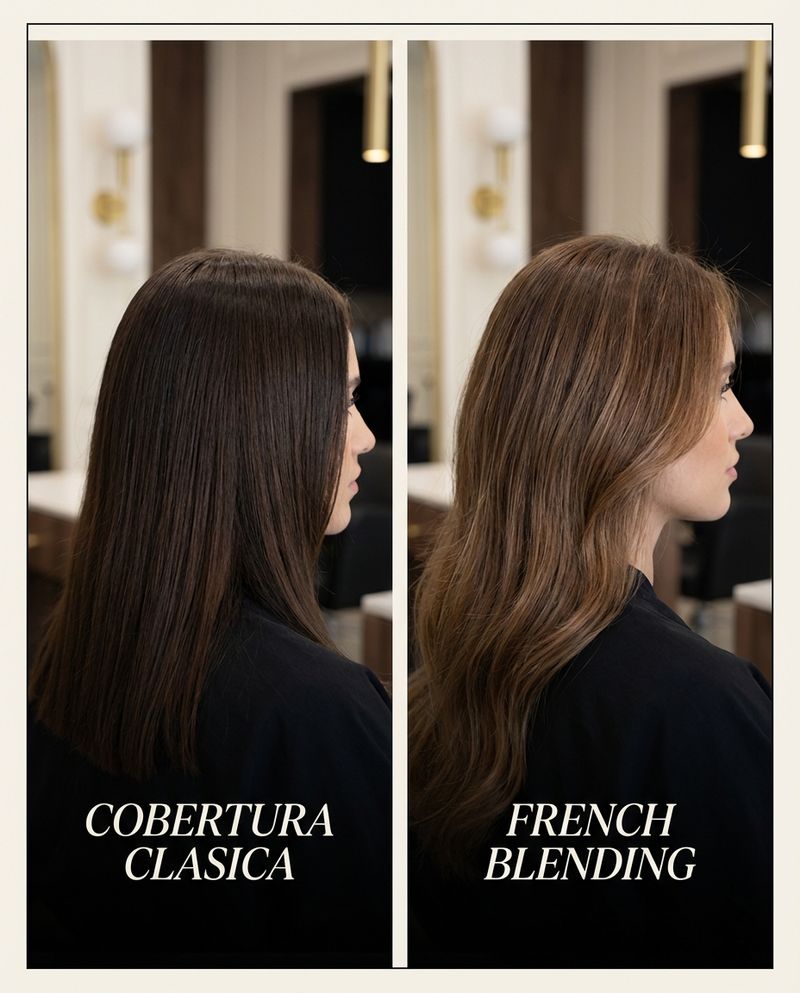
How is it different from traditional grey coverage?
This is the first question that comes up when people hear the term. The difference isn’t just aesthetic: it’s technical. Covering grey means hiding all of it under a color that matches the rest. French Blending leaves it visible, but surrounded by lighter and darker strands and a custom color, so the root grows out without a hard line.
| Traditional coverage | French Blending | |
|---|---|---|
| Goal | Hide all the grey | Integrate grey into the tone |
| Developer | Whatever the chart lists for grey coverage | Whatever the chart lists for each step: the root mix and, if there are lighter strands, their lightener |
| Retouch frequency | As soon as the root shows a line | Further apart: regrowth shows less |
| Demarcation line | Shows as soon as the root grows | Blurs between lighter and darker strands |
| Visual result | Uniform and flat | Multidimensional with movement |
| Client profile | Wants no grey to show | Wants the grey to show, but blended |
The big selling argument for the person in your chair: fewer salon visits, a more natural result and a root that grows out without a line. On its page, L’Oréal frames it from the root: “Soften the harsh regrowth line for a graceful grow out.” That translates to long-term retention.
If what you want is to erase the line within full coverage, the bottom-up gray blending technique covers it step by step.
If you want to understand the technical basis of why grey hair behaves differently from pigmented hair, read our complete professional grey coverage guide.
What grey percentage needs French Blending (and when NOT to use it)?
L’Oréal, which owns the name, doesn’t organize its service by grey percentage but by stage. What decides the version is how much grey there is, where it sits and what the client wants:
- First greys (“First Blending”): soft contrast and lowlights to add depth, blending grey clusters naturally.
- Keeping the blend (“Retouch Blending”): softens the grey bar at the root and adds lighter, dimensional tones.
- Full head (“Total Blending”): balayage and color for a naturally diffused finish.
When not to use it: if the client wants no grey showing at all, what they’re asking for is full coverage. To decide how much to cover, see the grey coverage levels.
With a lot of grey, before adding steps, check your chart’s grey rule: in Koleston Perfect, Wella adds 1/2 of a Pure Naturals shade on 50-100% grey, more natural than the 1/3 it uses on 30-50%. If resistant grey still doesn’t grab, the grey hair pre-pigmentation protocol explains when it makes sense.
On dark hair (natural brown base or darker), grey contrasts more than on blonde. The lighter strands have to lift more levels, and lifting a brown exposes warm underlying pigment (red or orange) that then needs toning; lowlights matter less, because the base already gives depth. This is where the strand test, to see how far it lifts and what it leaves behind, and the elasticity test count most.
Professional tip: If the grey is very resistant (coarse, glassy), check what your chart says for that case before adding time or volume on your own.
French Blending formula step by step (an example with Koleston Perfect)
Let’s get to the practical work. L’Oréal builds its service with its own recipes. To show how a blending mixture is put together with numbers a brand actually publishes, here’s an example with Wella’s Koleston Perfect, following the grey rule in its usage leaflet.
Before you mix: Wella’s leaflet says to always perform an allergy test 48 hours before any color service. If there’s redness, burning or itching, that color isn’t applied, and if the client has ever had an allergic reaction to a hair colorant, you don’t color. With another brand, follow its instructions; if it doesn’t publish a timing, do the test anyway, and not on the day of the color appointment. If the service includes lightened strands, also do a strand test and an elasticity test before deciding how far to lift. To fit the allergy test into your schedule, see the patch test guide.
Reference profile: natural base 6 (dark blonde), with 40% grey spread across root and temples, coming in for a root retouch with color already on the lengths. If it’s a first time on virgin hair, this mix on the root alone leaves the root a different color from the lengths and draws exactly the line the service is meant to avoid: either the blend is built with strands only, or it becomes a full-head color following the order your line’s chart gives for a first application.
Main blending mixture
45g Koleston Perfect 7/73 (Medium Blonde Brown Golden)
15g Koleston Perfect 7/0 (Medium Blonde, Pure Naturals)
60g Welloxon Perfect 6% (20 Vol)
Time: 30-40 min, or 15-25 min with Climazon
This is the split Wella prints in its example for 30-50% grey (15g 7/0 + 45g 7/75 + 60g 6%): one part natural to three parts shade. Here the 7/75 (Medium Blonde Brown Mahogany) is swapped for the 7/73 to go toward the golden tobacco that blends with the silver; the gram math stays the same. The 7/73 brings the warm reflex and the 7/0 gives the grey the coverage it needs wherever you apply it. The shade sits one level above natural base 6, and that’s what Wella assigns 6% to: 1 level of lift and coverage of grey hair. On 50-100% grey, the same leaflet goes half and half (30g natural + 30g shade).
The mix does cover the grey where it’s applied; the blend depends on the layout: which strands get color, which get lightened and which are left as they are.
Variations by base level
Same logic in Koleston Perfect: the brown-gold shade one level above the base, with the natural of that same level in the grey-rule proportion (1/3 on 30-50%, 1/2 on 50-100%).
| Base level | Koleston Perfect mix | Developer | Time |
|---|---|---|---|
| Level 4 (medium brown) | 5/73 with 5/0 | 6% (20 Vol) | 30-40 min (15-25 min with Climazon) |
| Level 5 (light brown) | 6/73 with 6/0 | 6% (20 Vol) | 30-40 min (15-25 min with Climazon) |
| Level 6 (dark blonde) | 7/73 with 7/0 | 6% (20 Vol) | 30-40 min (15-25 min with Climazon) |
| Level 7 (medium blonde) | 8/73 with 8/0 | 6% (20 Vol) | 30-40 min (15-25 min with Climazon) |
Important: these codes are from Wella’s Koleston Perfect (7/73 is “Medium Blonde Brown Golden” and 7/0 is “Medium Blonde”). In another line the same number can be a different reflex, so with another brand look for the direction in words, brown gold, in its chart, and follow its own grey rule.
Application technique: the details that make the difference
This is where French Blending separates itself from standard coverage. The application is not the same.
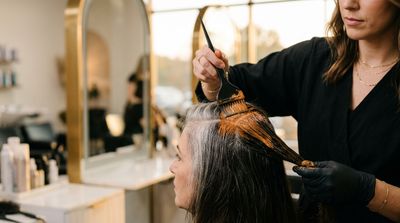
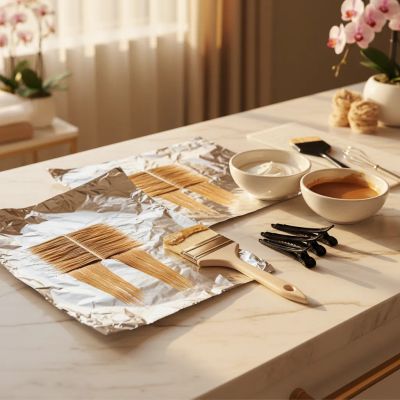
Tool: fine-tipped flat brush
Forget the sponge applicator or the bottle for this technique. You need a flat brush that lets you control product quantity per strand. The goal is to choose which strands take the mix.
The short sweeping stroke
Apply with short strokes, from root outward, with just enough on the brush not to bleed into the next section. The white fibers left showing come from the weave, not from skimping on product: a strand with too little mix ends up half covered and the root turns out patchy. What takes the mix gets fully covered; what doesn’t stays out of the section.
Fine sections in the highest concentration zones
At the temples and crown, where grey tends to be heaviest, work with finer sections; in areas with less grey, you can widen them. This keeps the result even without the application looking patchy. L’Oréal pairs its recipes with its own application gesture, “Vertical Weaving.”
Don’t apply from mid-lengths to ends (unless needed)
The blending mixture works at the root. Mid-lengths and ends don’t get it: if the lengths look faded, they’re refreshed separately with whatever your chart gives for evening out lengths, and lighter strands, if any, are done with their own lightener. On bleached lengths, a mix built to cover grey can grab darker than expected.
To compare with other techniques that also work root gradients, explore our guide on shadow root technique.
Most common mistakes (and how to avoid them)
Working with grey has its traps. These are the errors that come up most often:
Mistake 1: Raising the developer for “more coverage” Grey coverage doesn’t improve with higher volume: it improves with better formulation and technique. The chart sets the volume for what you’re doing. In Koleston Perfect, Wella lists coverage of grey hair under 6% (20 Vol), together with 1 level of lift and same depth or darker; it keeps the higher volumes for more levels of lift. If grey doesn’t grab with the chart’s developer, check the natural portion of the mix before the volume.
Mistake 2: Not adapting the formula to skin tone Golden browns are warm and flattering, but on very cool or pink skin tones they can read as too orange. For cool or pink undertones, soften the reflex with a portion of an ash shade from the same line.
Mistake 3: Applying the same way across the entire head Grey at the part doesn’t behave like grey at the temples or nape. In its Koleston Perfect usage leaflet, Wella says to apply first at the areas with the most grey. Monitor the process zone by zone.
Mistake 4: Not tracking color history If the client has had full coverage for years, their grey may carry artificial pigment residue. That changes how it absorbs French Blending and how lightener lifts over it. Do a history diagnosis before formulating and, if you’re going to lighten, the strand test tells you how far it goes.
To avoid formulation errors in general, check our article on common hair color formulation mistakes.
How to pitch this service to a client who’s had full coverage for years?
This is the conversation that feels hardest. The client has been coming back for years as soon as the root shows and is used to seeing “no grey” results. Switching systems is a leap of faith.
Here are the arguments that work:
- “You’ll come in less often for retouches”: if they come back as soon as the line shows, with the grey blended the regrowth shows less and visits can be spaced out.
- “The root won’t show a line between visits”: the demarcation line blurs. That takes the pressure off the last days before the appointment.
- “It’s a way to wear grey, not hide it”: L’Oréal presents it as a natural, modern, low-maintenance approach. If silver blending or grombre ring a bell, it goes in the same direction.
- “We do a partial trial first”: propose starting with the temples only. If they like the effect, we move forward. If not, next appointment we go back to full coverage.
Client retention: French Blending as a business strategy
Beyond technique, French Blending has a real impact on salon profitability. Fewer visits doesn’t mean less revenue: it means restructuring the service.
When you space out retouches, time per visit increases (lightening, color and toning in the same appointment), and the service price can rise with it. And the client, seeing the root grow out without a line and the color looking better, values the service more.
This connects with something we cover in detail in our professional coloring techniques guide: spacing out retouches without it showing is a way to build loyalty.
French Blending golden rule: if the client comes back because they want to, and not because the root forces them to hide something, the service is doing its job.
Frequently asked questions about French Blending
Does French Blending work for every grey type? It works best with grey distributed in a dispersed pattern or as natural streaks. Highly concentrated grey in a solid band (crown-only pattern) may need a combined technique with integration highlights to achieve the same blending effect.
What if the client wants to go back to full coverage afterward? They can. The new root is covered like any coverage; what changes are the strands that were lightened, which have a different underlying pigment and porosity and are formulated separately, sometimes filled first (see pre-pigmentation when going darker).
Can French Blending be done on black-dyed hair? Yes, but the hard part is the lengths, not the root: the grey growing in is virgin hair and takes the mix like any other root. Black on the lengths won’t lift with another tint, so lighter strands first need that color taken out (a color remover or a controlled pre-lightening), and it usually lifts to warm underlying tones that then need toning. Before that, a strand test (to see how that black lifts and whether the hair holds up) and an elasticity test; if the hair can’t take it, lighten in stages rather than forcing it in one appointment.
How long does the full service take? It depends on the version. If it’s only the root mix, add diagnosis, application, rinse and your chart’s development time (in Koleston Perfect, 30-40 min, or 15-25 min with Climazon). If it includes lightened strands, add the lightening, which you check by watching the strand, and the toning.
Are French Blending and Silver Blending the same thing? Not exactly. Silver Blending aims to enhance the natural grey with cool or neutral tones (step by step in the Quiet Silver formula). French Blending, in this article’s warm version, works with golds and warm browns to fuse grey into the existing pigmented hair. They’re different philosophies: one celebrates the grey, the other integrates it.
In summary
- French Blending is a service, its name a L’Oréal Professionnel trademark, that blends grey instead of covering it: lighter strands, darker strands and a custom color
- The blending mixture pairs a warm-reflex shade with a natural in the proportion your chart’s grey rule sets (in Koleston Perfect, 1/3 natural on 30-50% grey and 1/2 on 50-100%)
- The chart sets the developer for each step: higher volume doesn’t give more coverage
- Flat brush application with short sweeping strokes, plus the strand layout, is what creates the visual blending effect
- With tint, an allergy test; with lightening, a strand test and an elasticity test too
- The root grows out without a line and visits can be spaced out: the key argument for clients who’ve had full coverage for years
Want to calculate French Blending formulas for each client based on their base level and grey percentage? Try Blendsor →
What’s the biggest obstacle you run into when proposing the switch to clients who’ve had full coverage for years?
Manufacturer sources
Manufacturer documents consulted for this article. A copy of each one is kept, and the passages noted from it are checked against that copy.
What's the difference between French blending and regular gray coverage?
In the app, we ask you a question like this one, but about your own client.
Up for this week’s case? → More on gray coverage →Related articles
Practice with our colorimetry tools
Calculators, neutralization wheel, AI consultation...
The Blendsor newsletter
Color techniques and trends for professionals. No spam.
A client in the chair right now?
The Blendsor advisor gives you the precise formula for this technique with your salon's brands — and saves it to your client's card.
Ask about your caseWritten by the Blendsor team
Professional hair colorimetry experts with experience in AI-assisted formulation. We combine color science, salon practice and technology to help colorists formulate with precision.