Why 30V Delivers Fewer Levels: 4 Variables That Depress Lift
The chart promises 2-3 levels with 30V, but the mirror doesn't always confirm it. Four real execution variables that depress actual lift.
Blendsor
Blendsor Team
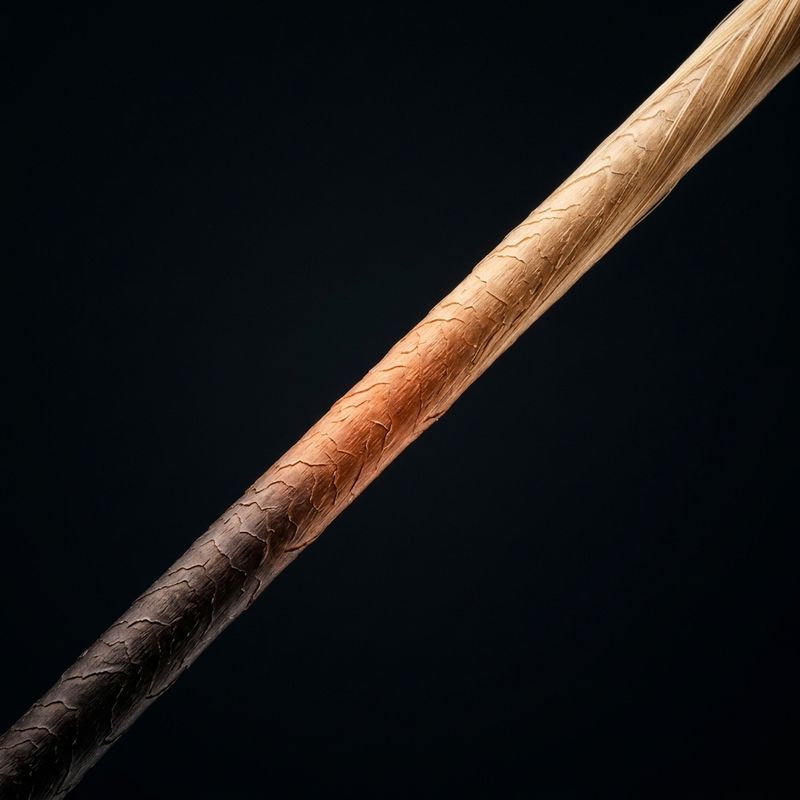
The chart promises 2-3 levels with 30 volume. The mirror, sometimes, promises less.
Any colorist working chair-side knows the pattern. The tech sheet says one thing, the hair returns another, and the comb confirms that real lift is not the one the chart announced. The developer volume hasn’t changed. The problem is rarely in the number printed on the bottle.
This article assumes a prior decision already made: 30V correctly chosen for a 2-3 level lift goal. The choice of developer volume is a diagnostic decision, not an execution variable. What follows are the four variables that, with volume well chosen, still depress real lift relative to theoretical lift.
The four, ordered from chemistry to practice.
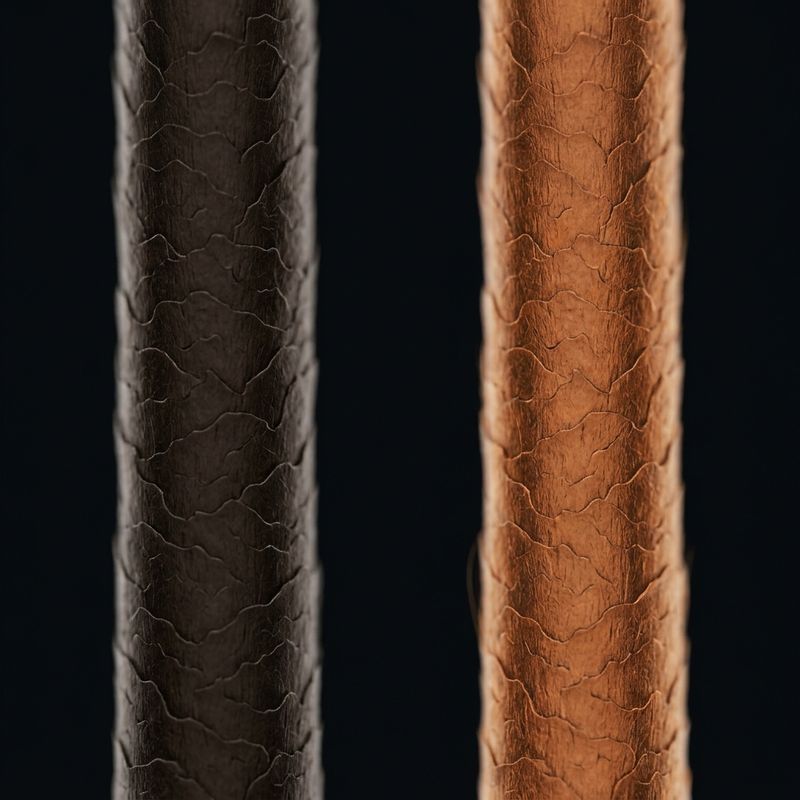
Warm Residual Pigment Doesn’t Appear, It Gets Revealed
Human hair stores two types of melanin: eumelanin (dark pigment, brown-black) and pheomelanin (warm pigment, red-yellow). Both coexist in varying proportion depending on the starting color.
When a 9% developer acts on a dark base, it does not attack both pigments equally. OpenTextBC Trichology describes differential behavior: eumelanin oxidizes and lightens before pheomelanin. The consequence of that differential is familiar in any salon, but the reason is chemical, not practical.
What the client reads as “it turned orange” is, in reality, pheomelanin becoming exposed as eumelanin disappears. It is not new pigment: it is the warm residual pigment that was always there, now without the eumelanin covering it.
Implications for formulation:
- “Level lifted” has two readings: chromatic lift (how much lighter it looks) and perceived lift (how neutral it looks). A 2-level lift can be technically correct and visually unsatisfactory if residual pheomelanin dominates.
- Neutralizing the residual warm tone is not optional on dark bases. The target-tone decision must account for it from the formulation stage, not as an after-the-fact correction.
- Porosity and color history modulate the magnitude of the visible warm residual. A virgin dark base expresses pheomelanin cleanly; a previously colored or high-porosity base expresses it mixed with residual artificial pigment. The principle stays; magnitude varies per head.
Porosity Does Not Multiply Theoretical Lift: It Redefines Time and Retention
The habitual professional reflex is to associate porous hair with faster or more intense lightening. Real behavior is more nuanced.
An open cuticle accelerates developer absorption and, simultaneously, accelerates the leak of artificial pigments deposited in subsequent processes. OpenTextBC Trichology describes the cuticle as a variable barrier: its state determines exchange speed, not the final amount of pigment removed by oxidation.
Translated to what you see in the mirror:
- Porous hair lightened with 30V can reach theoretical lift and still lose neutralizing tone over the following days, because the background pigment deposited to tone the hair leaks faster than in compact hair.
- The immediate read at the rinse may look “correct” and drift warm in 3-4 washes without the level having changed. What changed was the hair’s capacity to retain the cool artificial pigment.
- Very compact hair, conversely, can return a sensation of “it didn’t reach level” when in fact oxidation was slower and the theoretical processing time fell short.
At equal clock time, compact hair can under-process and porous hair can hit target sooner. At complete effective time (the tech sheet’s window), both reach theoretical lift; what diverges is downstream retention, not the magnitude of oxidation.
Effective Processing Time Is Not Clock Time
A lightening cut at 25 minutes is not a 25-minute lightening. It is a lightening that completed the fraction of oxidation possible in 25 minutes under the real conditions of that hair.
The Wella Koleston Perfect usage guidelines specify two time windows for the root area in normal coloring: 15-25 minutes with heat and 30-40 minutes without heat. They are not interchangeable or orientative ranges; they are the windows in which the reaction completes its curve.
The error pattern that depresses lift:
- Lightening without a heat source and cutting oxidation at the upper bound of the with-heat range. A 25-minute lightening without a climazon sits at 83% of the minimum no-heat time (25 of 30 minutes). Oxidation has literally not finished.
- Assuming the whole strand enters the reaction at the same time. Real contact with the mix begins at application and ends when product is removed; the first section applied processes more minutes than the last by elementary arithmetic. If full application takes several minutes, that gap carries into each section’s effective time, and the timer must start at the first pass, not at the last.
- Treating temperature as an independent factor. It is not. Temperature acts by modifying effective oxidation time: with heat, the reaction reaches the same point in roughly half the time. The real factor is effective time, not temperature per se.
The lift the chart promises corresponds to complete effective time, not clock time. Every minute shaved off the theoretical window translates into levels lost.
The Wrong Mixing Ratio Loses Levels Before You Start
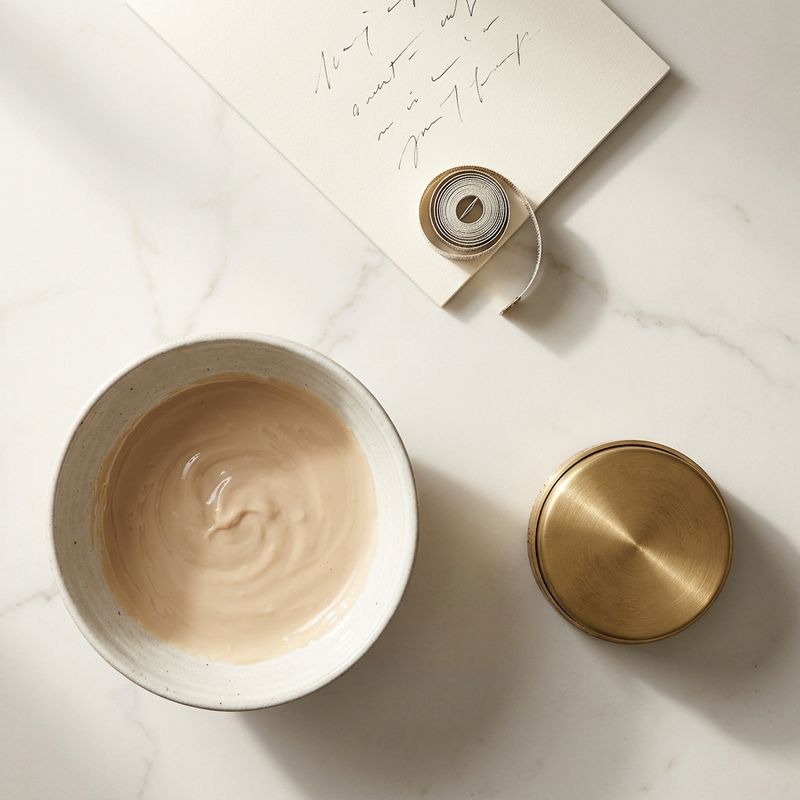
The Wella Koleston Perfect usage guidelines are explicit on two points that should be on every ratio chart printed in the formulation area:
- Standard Koleston Perfect shades with Welloxon Perfect: 1:1 ratio (60g shade + 60g Welloxon Perfect).
- Special Blonde (series 12): 1:2 ratio (60g Koleston Perfect Special Blonde + 120g Welloxon Perfect). The guidelines give it 3 levels of lift with 9% and 4-5 with 12%.
They are not equivalent ratios with aesthetic preference. They are chemically distinct formulations:
- Standard 1:1 delivers an oxidant reserve dimensioned for moderate oxidation with high pigment deposit.
- Special Blonde 1:2 doubles the oxidant reserve available per unit of tint. That extra reserve is what sustains the extended lightening that series 12 needs to reach high-lift blonde levels.
Mixing 1:1 when the product requires 1:2 does not produce a “more concentrated” tint. It produces incomplete lightening from insufficient oxidant reserve. Lift falls below theoretical, the cool-pigment deposit contained in series 12 sits with excess pigment relative to the lift achieved, and the result reads warm and under-elevated.
Other high-lift lines (L’Oréal Blond Studio Platinium, Schwarzkopf Igora Royal High Lifts) specify their own ratios in their manuals, distinct from their brand’s standard. The operational rule is one: consult the high-lift line’s manual before assuming the brand’s standard ratio.
Frequently Asked Questions
Does going up to 40V compensate for lift lost to these variables?
No. Moving from 30V to 40V adds oxidative aggressiveness on the cuticle; it does not correct the variables that depress real lift. If the loss comes from insufficient effective time, wrong ratio, or expectation about residual pheomelanin, 40V amplifies the damage without closing the chromatic gap. The correct decision is to diagnose which of the four variables is depressing lift and correct that one.
Can effective time be extended indefinitely to compensate for lack of heat?
No. Wella’s Koleston Perfect usage guidelines give a window, not an open-ended time: 30-40 minutes without heat in normal coloring, and they don’t say that stretching it gives more lift. Going past the data sheet adds risk to cuticle integrity with no documented counterpart. The window exists because of chemistry, not convenience.
How do you diagnose whether porosity is depressing retained tone?
The usual clinical indicator is the discrepancy between post-lightening read and 3-4 wash read. If neutralizing tone holds at the immediate rinse and drifts warm in the short term, the dominant variable is not lift: it is retention. In that case, the technical decision is not to increase developer or time, but to review the deposit strategy and the toning sequence.
Bottom Line
- Residual pigment: pheomelanin reads warm because eumelanin lightens first, not because new pigment appears. Neutralize from the formulation, not as a correction.
- Porosity: does not multiply or divide lift; it redefines the relationship between time, deposit, and retention. Porous hair does not lift more, it lifts differently.
- Effective time: clock time isn’t oxidation time. Without heat, 30-40 minutes on the root area. With heat, 15-25. Cutting mid-window cuts levels.
- Mixing ratio: standard Koleston 1:1 and Special Blonde 12/ 1:2 are chemically distinct formulations, not aesthetic preferences. Ignoring the distinction leaves lift below theoretical.
Generate Professional Formulas With AI
Want to generate personalized formulas for 2-3 level lift according to starting level, porosity, and color history for each case?
Try Blendsor - Permanent Free plan. No commitment.
Blendsor applies oxidation chemistry to individual hair diagnosis in seconds.
Manufacturer sources
Manufacturer documents consulted for this article. A copy of each one is kept, and the passages noted from it are checked against that copy.
Note each one's country: the same line's instructions can differ from one market to another, so follow the directions for the product you use.
Why does a 30 volume developer lift fewer levels than it promises?
In the app, we ask you a question like this one, but about your own client.
Up for this week’s case? → More on blondes and lightening →Related articles
Practice with our colorimetry tools
Calculators, neutralization wheel, AI consultation...
The Blendsor newsletter
Color techniques and trends for professionals. No spam.
You know the theory. What about today's case?
Send a photo to the Blendsor advisor and get an answer grounded in colour theory: toner, developer and timing, with the brands on your shelf.
Ask about your caseWritten by the Blendsor team
Professional hair colorimetry experts with experience in AI-assisted formulation. We combine color science, salon practice and technology to help colorists formulate with precision.