Why Color Comes Back After Color Remover (and How to Stop It)
The color you removed can reappear through re-oxidation. Learn the three closing failures and how to seal the extraction so the result lasts.
Blendsor
Blendsor Team
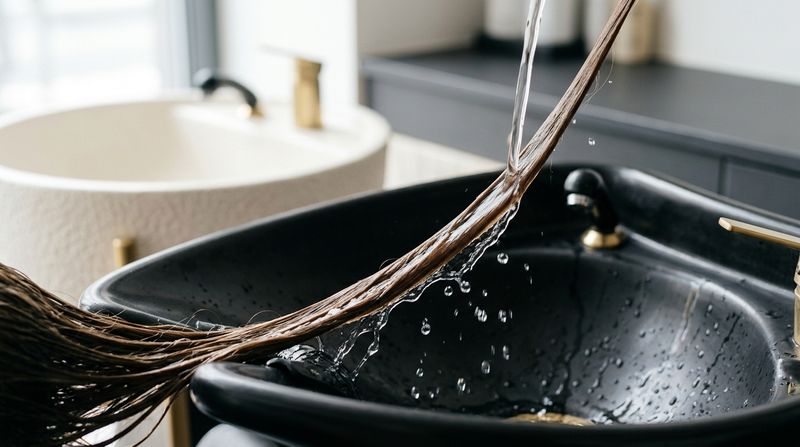
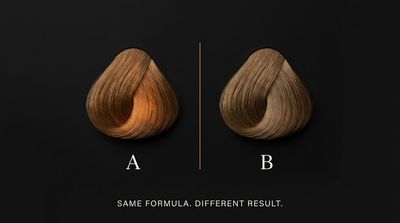
You remove buildup from a dark brown, you rinse, you see the level you wanted. Once it dries, or the next day, the color is back. Duller, yes, but there it is again.
If you formulate every day, you’ve seen it. And you usually take the blame: “I overdid it,” “the remover was weak.” But the remover did its job. What failed was the closing.
Here’s what actually happens when color reappears after removal, and how to stop it from happening to you again.
Why does color reappear after an extraction?
Color comes back because a reductive remover doesn’t destroy artificial pigment: it shrinks it. That’s how one remover manufacturer describes it: it shrinks the dye molecules so they simply wash away (Color Oops). An oxidative color remover works by reduction, breaking the bonds that make the already-oxidized color molecule large and visible. That reduced molecule is smaller, lighter and, this is the key, it can swell back up.
While the molecule is reduced, it’s still inside the fiber. If you don’t remove it from the hair completely, oxygen from the air re-oxidizes it (Scott Cornwall): it returns to its original size, regains color, and the tone you thought you’d lifted reappears. It’s not that the remover failed. It’s that the pigment was still inside, waiting to oxidize again.
That’s the rule of the trade: removal doesn’t end when you see the result at the basin. It ends when the reduced pigment is out of the fiber.
The three closing failures that bring color back
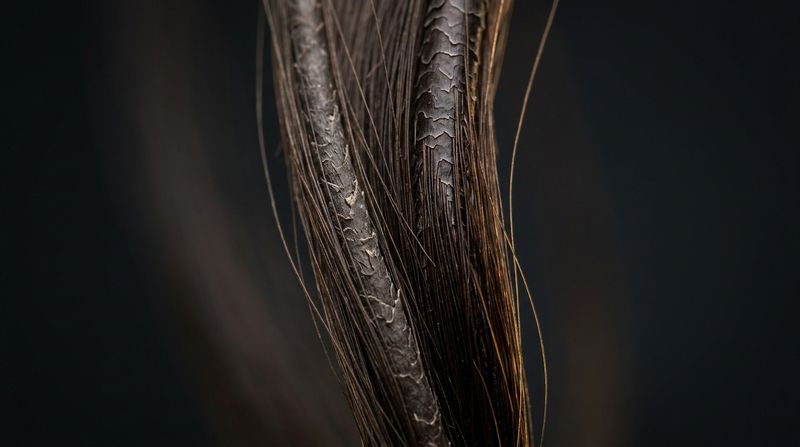
Re-oxidation almost always comes from one of these three points. Check them before you call the extraction done.
| Failure | What happens | How to avoid it |
|---|---|---|
| Short rinse | Reduced pigment stays inside and re-oxidizes with air | Long rinse with warm water, several minutes, until water runs clear |
| Clarifying shampoo skipped | Traces of reduced molecule remain that water alone won’t lift | Clarifying shampoo wash after the rinse, one or two passes |
| Re-pigmenting too soon | You apply color over fiber still loaded with reduced pigment | Wait, dry, and re-read the base before formulating again |
The most common is the first. A normal salon rinse isn’t enough for a reductive remover: the molecule stays there, invisible, until the air wakes it up.
Pro tip: if the tone settles darker dry than it looked wet, re-oxidation is starting. It’s not your imagination. Go back to the basin before you continue.
How to seal the extraction so the result holds
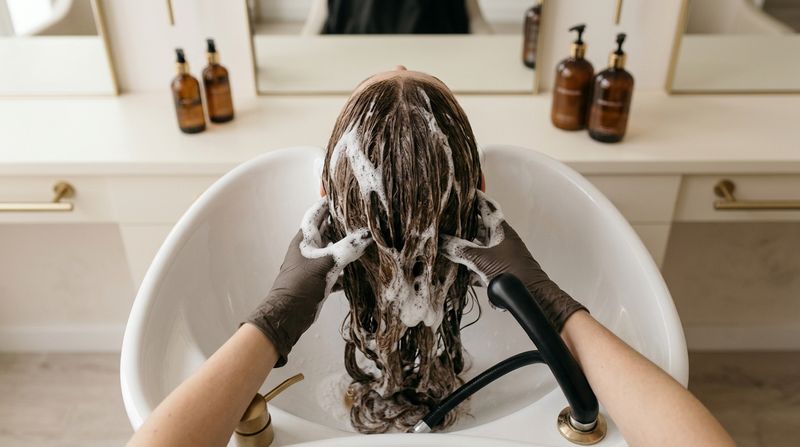
A proper close has an order, and skipping a step is what opens the door for color to return.
First, rinse more than you think you need to. One remover manufacturer asks for it this way: shampoo in warm water and rinse for 20 minutes, shampoo again and rinse at least 5 more. And it warns: if the product isn’t fully rinsed out, dye may settle back into the hair (Color Oops). Keep going until the water runs clear.
Then, clarifying shampoo. It’s not optional in an extraction: it’s the step that removes what water alone leaves inside. One or two passes depending on the color load. That manufacturer doesn’t specify a clarifying shampoo, but it does ask for two shampoo washes within the rinse. And if your remover gives different times, follow its own.
Then, dry and wait. This is the discipline that separates a removal that holds from one that comes back. On dry hair, the true base shows without the deception of water. If you’re going to re-pigment, do it on that real reading, not on the wet result. And run a strand test first: the manufacturer warns that treated hair is often more porous and the next color can come out too dark; to avoid it, it asks for a 20-minute protein mask beforehand, and a strand and patch test before coloring (Color Oops). If that re-pigmentation uses oxidative color, the 48-hour allergy test has to be done beforehand, at an earlier visit (Wella).
If you need to check the state of the fiber before continuing, a strand test tells you how it will react before you commit the whole head. And if the extraction is part of a zonal buildup correction, the technique detail is in correcting dark mid-lengths and ends from buildup.
And before the close comes the decision that shapes it: whether that service called for a remover or for lightening. How the strand decides, in when it is remover and when it is lightening.
Common mistakes that trigger re-oxidation
- Treating the remover like a tint: you apply it, wait, rinse quickly, and move on. The remover needs a close that a tint doesn’t.
- Confusing a reductive remover with a chelator: they’re different things. A chelator removes metals from water or previous products; a reductive remover shrinks artificial pigment. They don’t do the same job or close the same way.
- Re-pigmenting over the wet result: wet hair deceives. You formulate over a base that isn’t the real one, and when it dries and re-oxidizes, the final tone isn’t what you calculated.
- Assuming “more product” closes better: closing isn’t about strength, it’s about getting the pigment out. More remover without more rinsing only leaves more reduced molecule inside.
Frequently asked questions
How long does it take for color to reappear after removal?
There’s no fixed timeframe: it depends on how much reduced pigment stayed inside. That’s why the reading is done on dry hair, not at the basin. If the rinse and clarifying step were done right, it shouldn’t reappear. If it comes back, the pigment didn’t leave the fiber.
Does re-oxidation mean the remover failed?
No. The remover reduced the pigment as it should. Re-oxidation happens in the closing, not the extraction: the reduced pigment was still inside and oxygen returned it to its visible form.
Can I re-pigment the same day as the extraction?
Yes, and the remover’s manufacturer confirms it: you can recolor the same day (Color Oops). But only after a long rinse, a clarifying shampoo, drying, and reading the real base on dry hair, and, if you’ll re-pigment with oxidative color, with the 48-hour allergy test already done at an earlier visit. Re-pigmenting over fiber still loaded with reduced pigment is what throws off the final tone.
In summary
- The remover shrinks, it doesn’t destroy: reduced pigment stays inside and re-oxidizes if you don’t get it out.
- Color comes back from the closing, not the extraction: short rinse, skipped clarifier, or re-pigmenting too soon are the three failures.
- Seal in order: long rinse, clarifying shampoo, dry, and read the real base before re-pigmenting.
Calculate color corrections with AI
Want to formulate precise re-pigmentations after an extraction, reading the real base by starting level and each client’s chemical history?
Which of the three closing failures has caught you the most?
Why does color come back after color stripping?
In the app, we ask you a question like this one, but about your own client.
Up for this week’s case? → More on color correction →Related articles
Practice with our colorimetry tools
Calculators, neutralization wheel, AI consultation...
The Blendsor newsletter
Color techniques and trends for professionals. No spam.
A client in the chair right now?
The Blendsor advisor gives you the precise formula for this technique with your salon's brands — and saves it to your client's card.
Ask about your caseWritten by the Blendsor team
Professional hair colorimetry experts with experience in AI-assisted formulation. We combine color science, salon practice and technology to help colorists formulate with precision.