Igora Royal 12-: Why the High-Lift Series Isn't Mixed 1:1
Igora Royal's 12- series mixes at 1:2, not 1:1. The exact ratio, starting level, and peroxide so you don't come up short on lift.
Blendsor
Blendsor Team
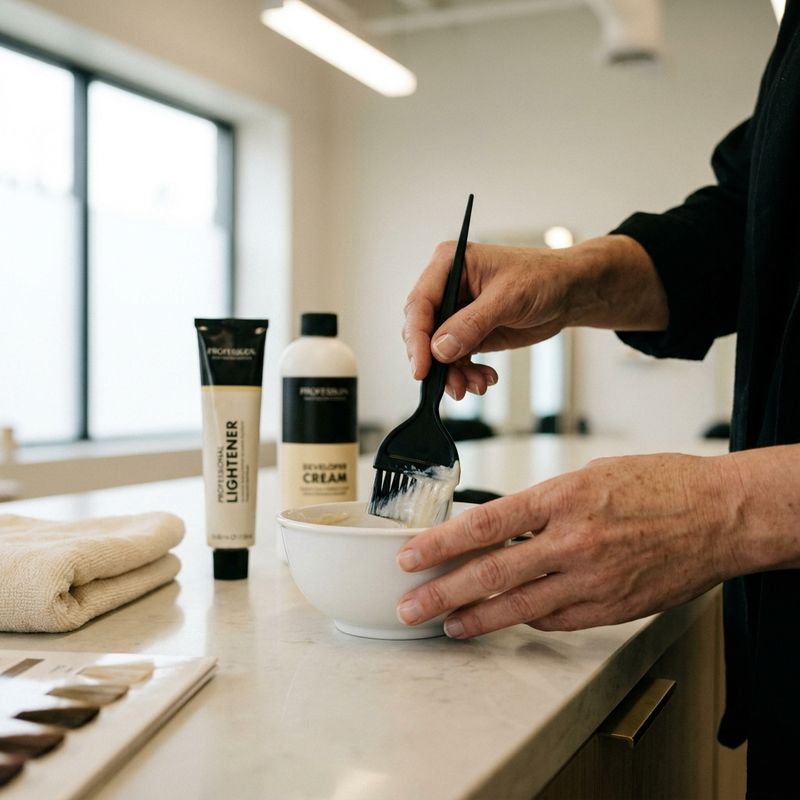
Ever grabbed the high-lift tube from your brand’s line and mixed it 1:1 out of habit, the same way you mix everything else, only to end up with less lift than you expected?
If you work with Igora Royal, that’s not bad luck. The 12- series (Special Blonde) doesn’t follow the line’s standard ratio. And if you mix the 10- (Ultra Blonde) the same way because they’re both Highlifts, you’ll miss again: each series has its own ratio.
Here’s the exact ratio the manufacturer publishes for Igora Royal’s two Highlifts series, the starting level each one is built for, how much lift you get per developer strength, and how the processing time is actually split.
What ratio does Igora Royal’s high-lift series use?
Igora Royal mixes at the standard 1:1 ratio (color:developer), with 30 to 45 minutes of development time. Within its Highlifts, the 12- series (Special Blonde) mixes at 1:2. The 10- series (Ultra Blonde), despite belonging to the same Highlifts family, stays at the standard 1:1 ratio.
The manufacturer publishes it this way on its mixing and timing chart: “IGORA ROYAL · 1:1 · Development time 30-45 minutes”, and in the line’s technical manual, for the 12- series within Highlifts: “Mixing ratio: 1:2,” against “Mixing ratio: 1:1” for the 10- series (Schwarzkopf Igora Royal technical manual).
That’s not a small detail. Mix the 12- at 1:1 instead of 1:2 and, for every part of cream, you add one part of developer instead of two: half the developer its technical sheet calls for. The lift levels the manual publishes for that series go with its own ratio. At 1:1 you’re out of those conditions, and the lift can fall short even though the tube carries the same family name as the rest of the line. For a refresher on reading ratios, see mixing ratios for hair dyes.
What starting level is each series built for?
Neither high-lift series is meant to be used on any starting level. The manufacturer specifies a natural base range for each one, and that range changes between the 12- and the 10-.
| Series | Ratio | Natural base | Maximum lift |
|---|---|---|---|
| 12- | 1:2 | 6 to 8 | up to 5 levels |
| 10- | 1:1 | 7 to 8 | up to 4 levels |
Source: Schwarzkopf Igora Royal technical manual.
The 12- series can start on a slightly darker base (from level 6) and is mixed with twice as much developer as cream (1:2). Its sheet gives it up to 5 levels of lift with 12% developer. The 10- series is mixed at the standard 1:1 and, with the same developer, its sheet gives it less lift than the 12-. They’re two different creams, each with its own ratio.
How is the processing time actually split when lifting?
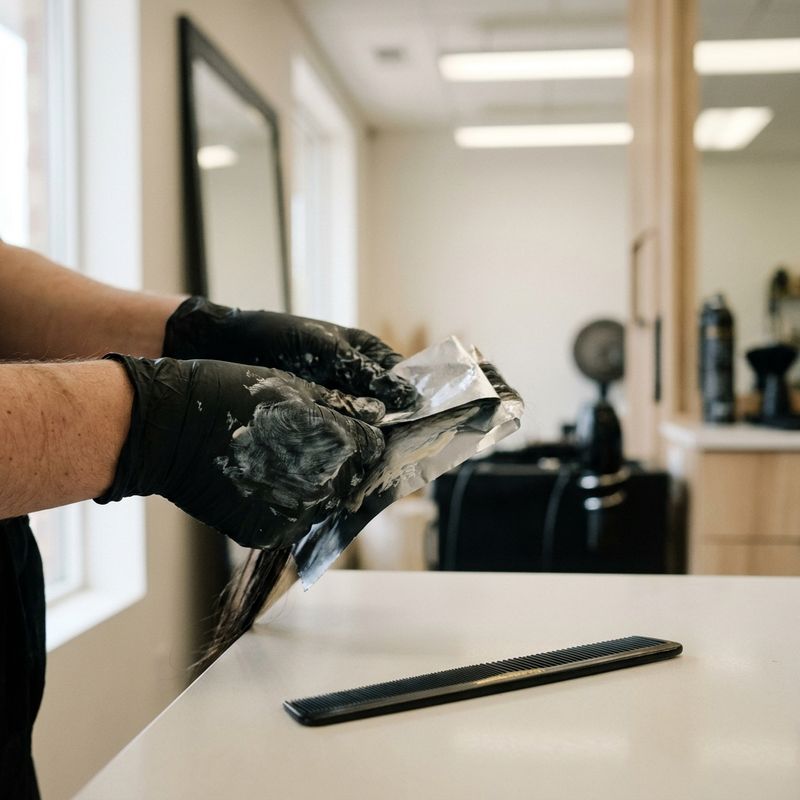
30 to 45 minutes is the general development time across the Igora Royal line, but when you’re lifting with the 12- series (Special Blonde), the manual doesn’t treat it as one clock running start to finish. It’s split into two stages: development on everything except the root area for up to 15 minutes first, then the root application goes on and another 30 minutes is timed from there.
The manual describes it this way in its expert tips on lifting for the 12- series: “Leave to develop on the rest of the head for up to 15 minutes, then continue with the application to the root area then develop for another 30 minutes” (Schwarzkopf Igora Royal technical manual).
Applying everything at once and timing a single clock from the start isn’t the protocol the brand actually publishes for this kind of work, and it explains why two services with the same mix can come out at different lift levels depending on when each section went on.
The mistake of mixing it out of habit
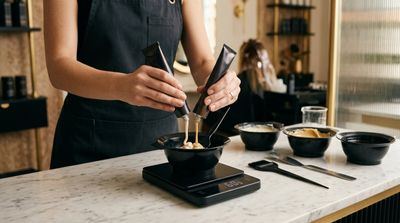
Anyone who’s spent years working this brand at 1:1 has that ratio on autopilot. Reach for the 12- high-lift, and the hand repeats the same motion without thinking: same bowl, same scale, same amount of developer as any other shade in the line.
You see it in the bowl straight away: the mix comes out thicker and, since it carries half the developer, there’s also less of it to spread through the lengths. And the lift loses its reference on the sheet, which publishes the 12- series’ levels for its 1:2 mix. You’ve stepped off the sheet exactly in the service where the most lift was expected.
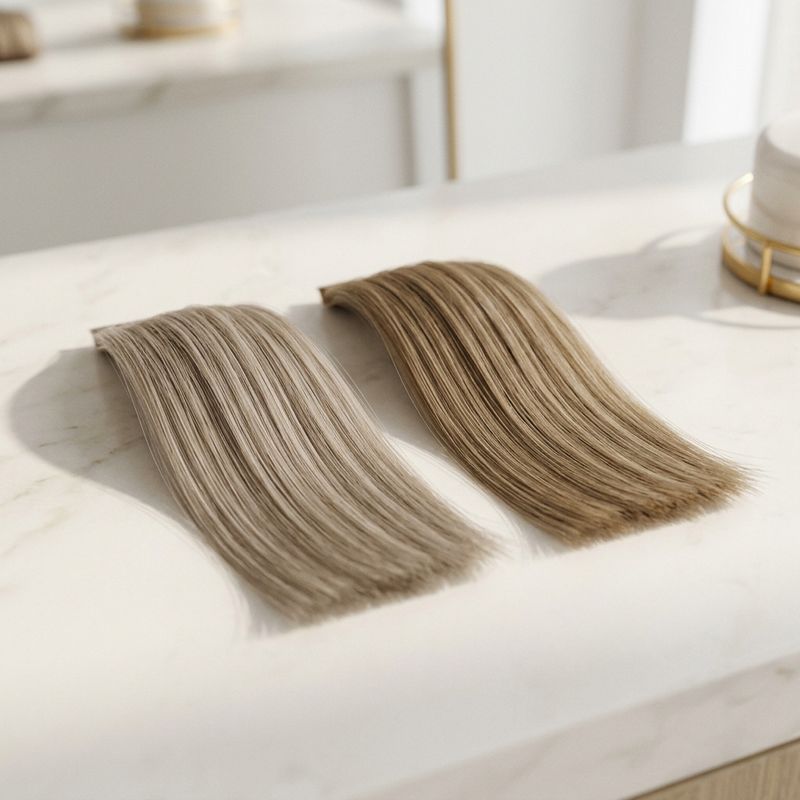
Illustrative image, not a real result. The lift the 12- series sheet publishes goes with its starting base, its ratio, its developer and its development time: change any one of them and you’re no longer in what the sheet describes. To know how far you’ll actually get, that’s what the strand test is for.
What if your brand isn’t Igora Royal?
There’s no single ratio for every high-lift: Wella’s usage guidelines also mix Koleston Perfect Special Blonde at 1:2, while Igora’s 10- stays at 1:1. Developer pairing is covered more generally in developer volumes for professionals. What also changes from brand to brand, and sometimes from one line to another within the same house (as it does here between Igora Royal’s 12- and 10-), is the starting level each one is rated for and the exact lift each developer strength promises.
Before applying this article’s ratio to another brand, confirm your own line’s technical sheet. If you work across several brands, the color chart converter helps you avoid mixing one house’s rules with another’s numbers.
Whatever the brand, three checks still come before lifting with permanent color: an allergy patch test, as far ahead as your brand’s protocol requires, not on the day of the color appointment, with the test area watched for that whole window; a strand test, which on this service tells you whether that base really reaches the level you’re after; and an elasticity check if the hair has a chemical history.
Frequently asked questions
Does the 1:2 ratio apply to every high-lift on the market?
No, it isn’t universal — it’s the ratio Schwarzkopf publishes for Igora Royal’s 12- Highlifts series. Other brands and other high-lift lines can call for different ratios. Check your own product’s technical sheet before applying this one to it.
Can I use the 12- series on a base darker than level 6?
The manufacturer specifies natural bases 6 to 8. Outside that range, the published lift figure — up to 5 levels — stops being the expected outcome, because the technical sheet doesn’t cover that starting point.
What happens if I mix the 10- series the same way as the 12-, at 1:2?
You end up with a mix more diluted than the 10- needs. This series doesn’t share its neighbor’s ratio: it stays at Igora Royal’s standard 1:1.
Why does the 12- series lift more than the 10- with the same developer?
Because they’re two different creams, each formulated for its own ratio: the 12- is mixed with twice as much developer as cream (1:2) and the 10- in equal parts (1:1). Schwarzkopf publishes each series’ lift at its own ratio and, with the same developer, gives the 12- more lift than the 10-. For any other ratio, the sheet gives no figure. And note: the 12- taking twice the developer per part of cream doesn’t mean the mix has twice the peroxide concentration.
Key takeaways
- Igora Royal mixes at 1:1 in general. The 12- series (Special Blonde) mixes at 1:2. The 10- series (Ultra Blonde) stays at 1:1.
- Starting level: bases 6 to 8 for the 12-, 7 to 8 for the 10-.
- Lift: the 12- reaches up to 4 levels at 9% and up to 5 at 12%; the 10- reaches up to 3 at 9% and up to 4 at 12%.
- When lifting with the 12- series, development time is split in two stages: up to 15 minutes on the rest of the head, then the root with another 30 minutes.
- Mix the 12- series at 1:1 out of habit and you give it half the developer its sheet calls for, which takes you off the sheet: the lift can fall short of what the manual publishes for its 1:2 mix.
Calculate professional formulas with AI
Want to generate personalized high-lift formulas based on each client’s starting level and color history, without having to remember by heart which series changes ratio?
Why doesn't an Igora Royal high-lift mix go 1:1?
In the app, we ask you a question like this one, but about your own client.
Up for this week’s case? → More on blondes and lightening →Related articles
Practice with our colorimetry tools
Calculators, neutralization wheel, AI consultation...
The Blendsor newsletter
Color techniques and trends for professionals. No spam.
You know the theory. What about today's case?
Send a photo to the Blendsor advisor and get an answer grounded in colour theory: toner, developer and timing, with the brands on your shelf.
Ask about your caseWritten by the Blendsor team
Professional hair colorimetry experts with experience in AI-assisted formulation. We combine color science, salon practice and technology to help colorists formulate with precision.