What Lighting Should a Salon Use to See True Color?
A bulb's CRI doesn't measure saturated red. What to check on a lamp's spec sheet before buying, and how to test your station with what you already have.
Blendsor
Blendsor Team
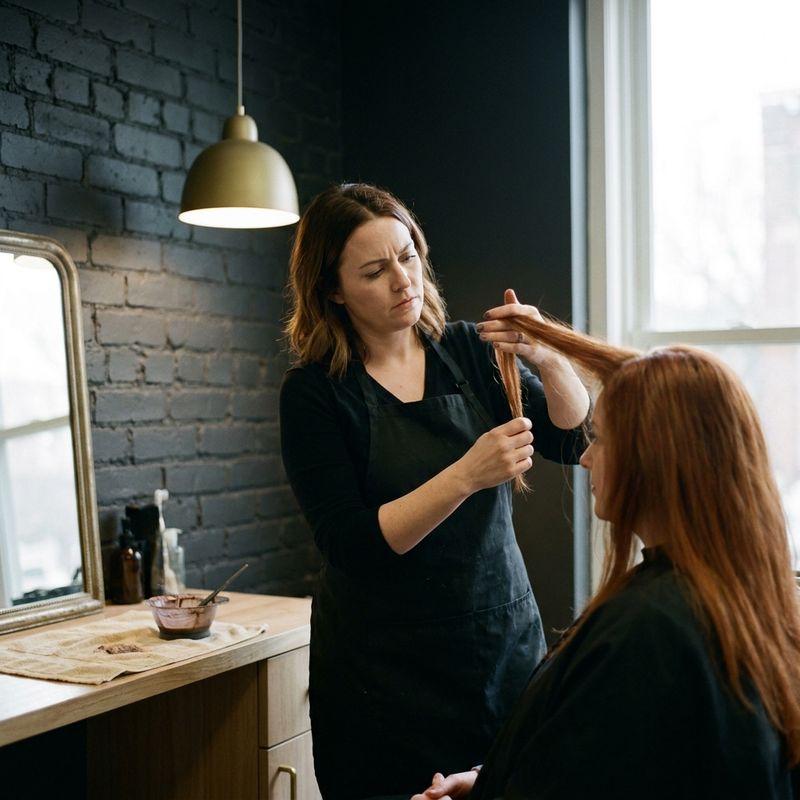
You weigh the formula precisely, time it exactly, and the copper reflect looks perfect in the salon mirror. That same afternoon, your client texts a photo from home and says it doesn’t look like the same color.
Nothing went wrong in the bowl. What changed in between is the light, and the phone camera. And the number you’ve been checking on bulb boxes for years tells you less than you think.
Here’s what that number actually measures, what it misses, and how to test your own station with what you already have.
Short answer: we haven’t found a published lighting standard specific to hair salons. For interior applications in general, a 2016 U.S. Department of Energy fact sheet notes that a CRI in the 80s has been considered good and in the 90s excellent, but adds that looking only at that average “provides little benefit for selecting the best source for an application.” CRI (shown as Ra on some spec sheets) averages eight test colors of low to moderate saturation. The strong red sample is scored separately, as R9, and isn’t part of that average. So a high CRI doesn’t guarantee that intense reds are rendered faithfully. Ask for R9 as well, and check your intense tones against a fixed reference under your station lighting and under daylight.
What does a lamp’s CRI number actually measure?
The color rendering index, shown as CRI (or Ra) on a bulb’s spec sheet, is the average of how eight moderately saturated colors look under that light, compared with a reference light. It typically runs from 0 to 100. None of those eight samples is a saturated red.
According to NIST, the general color rendering index is the average of the first eight color samples, each of low to moderate chromatic saturation. The CIE, the body that published the method in 1965 and revised it in 1974 (the corrected edition is CIE 13.3 from 1995), describes those eight samples as colors spread around the hue circle, moderate in saturation and approximately equal in lightness.
In practice: CRI is an average of eight colors of low to moderate saturation, and a high average can hide one or two poorly rendered colors.
Why this matters when you formulate
A strong red is exactly the kind of color the method leaves out of that average: the CIE lists it among six additional samples, not among the eight. So a high average tells you little about how an intense red or copper will look.
Why can red and copper reflects look different than they are, even with a high CRI?
There’s an additional index, called R9, calculated on a saturated red sample. According to the U.S. Department of Energy’s LED color characteristics fact sheet, the special indices R9 through R14 aren’t used to calculate CRI, and the document itself notes that R9 is especially relevant because rendering saturated red matters a lot for the appearance of skin tones, among other materials.
The same fact sheet puts it plainly: sources can be optimized to render the eight samples used for CRI with high fidelity, but that doesn’t necessarily translate to a broader range of colors. The possible result at the station: intense reds that don’t look like themselves, even when the headline number looks good.
It also gives a useful limit, not a promise: an R9 score greater than 0 is generally considered acceptable, because the color space used in the CIE method often exaggerates color shifts in the red region. It’s a pass for general lighting, not a guarantee for judging a reflect.
Worth asking: if a spec sheet lists CRI and says nothing about R9, ask the vendor for it. We haven’t found a salon standard that says what R9 is good enough for judging hair color. But R9 is a fidelity score for that strong red sample, so it lets you compare lamps: between two options at the same color temperature, the one with the higher R9 renders that red sample more faithfully. It measures one test red, not your shades, so still check intense tones against your fixed reference.
Does the color temperature of the light change how color looks?
CRI isn’t the only number that matters. Color temperature, measured in kelvin, describes whether a light is warm or cool, and it’s another variable behind the gap between “it looked right in the salon” and “at home it doesn’t look like the same color.”
Warm bulbs typically sit around 2,700 K, a yellowish light, according to the U.S. Department of Energy; average daylight, which the CIE defines as illuminant D65, sits around 6,500 K, a bluer light. The light you work under changes the color information reaching your eye. Your eye compensates for the light’s color, within limits: the same U.S. Department of Energy fact sheet calls this chromatic adaptation, our ability to discount the illuminant when judging the color of objects. And two lamps with the same kelvin rating can still send a different signal to the eye from the same red sample. That’s why it’s worth checking intense reds and coppers under a second light too.
Ra and temperature are two separate questions. Ra tells you how faithfully a lamp reproduces those eight samples. Temperature describes the color of the light coming out of the lamp, not the color of what it illuminates. That’s why Ra tells you nothing about whether a light is warm or cool: it’s calculated against a reference light of the same temperature.
What to check on a spec sheet before buying new station lighting
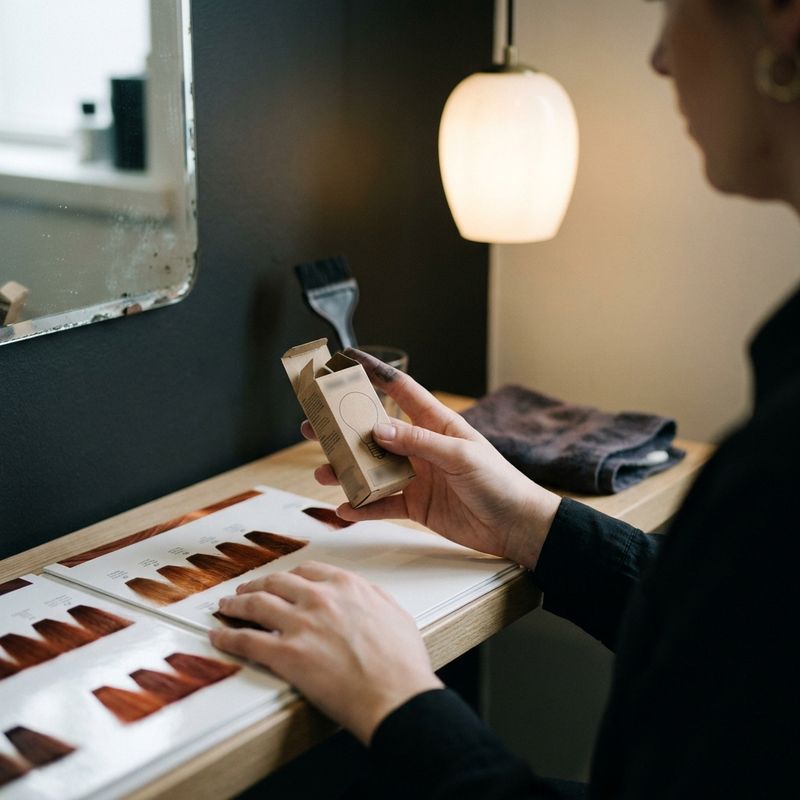
Before buying, a manufacturer’s spec sheet should give you three numbers, not one: general Ra, temperature in kelvin, and, if published, R9 or the TM-30 method’s values (from the IES, 2015): Rf measures average fidelity and Rg measures gamut, essentially whether colors read more or less saturated on average. No Ra number on its own tells you how red will look: for that you need R9 or the per-hue TM-30 values. If the spec sheet doesn’t have them, ask for them.
Three things you can control without relying on a single number:
- Keep the lights you control at your station the same model and the same color temperature. Mixing a warm bulb with a cool one at the same work point creates a light no spec sheet describes, because the spec sheet gives each lamp’s CRI separately, not the CRI of the mix landing on the hair. If the ceiling lights aren’t yours to change and don’t match, that’s one more reason to check intense tones in daylight.
- Light the hair from the front or the side, not only from above. An overhead-only source can cast shadow over the section you’re evaluating.
- Make sure a spec sheet exists. If the vendor can’t give you CRI or color temperature, you have no published data on how it renders color before you buy it.
How to test the light you already have at your station, without buying anything
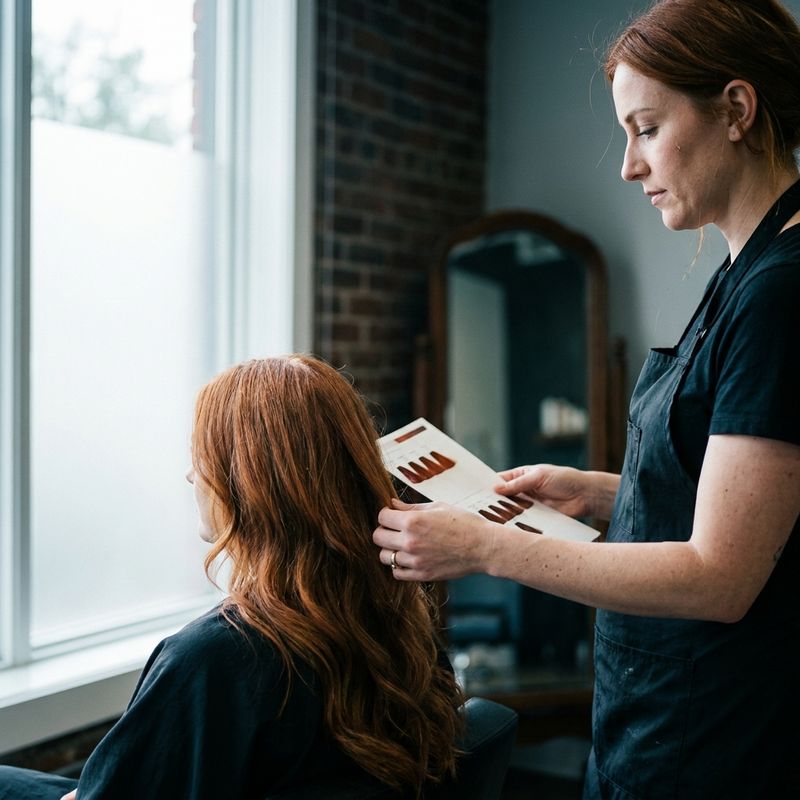
You need a fixed reference: a hair swatch you’ve already colored and kept, or a swatch from your brand’s swatch book. Hold the reference next to the hair and compare them under your station lighting, then next to a window, in indirect daylight with no direct sun.
If they match under both lights, that’s a good sign for that particular shade, though they could still mismatch under a third light. If they match under one and not the other, that points to metamerism, two colors that match under one light and stop matching under another: before the client leaves your chair, bring them to the window and check the intense tones there. No window at your station, or an evening appointment? Use the nearest indirect daylight you can reach. If there’s no daylight at all, you can’t run the second half of this check, so note that in the client record too: “checked under station lighting only.” And if the hair still doesn’t look the way you wanted next to the window either, review the result before blaming the lamp. This doesn’t replace Ra or R9: it’s the practical check you can run today, with no spec sheet involved.
If a client’s photo from home is what started the conversation, how to photograph your hair color is a guide written for clients, and one you can send them so their next photo is easier to compare.
What to do if your lamps are already installed and you’re not replacing them
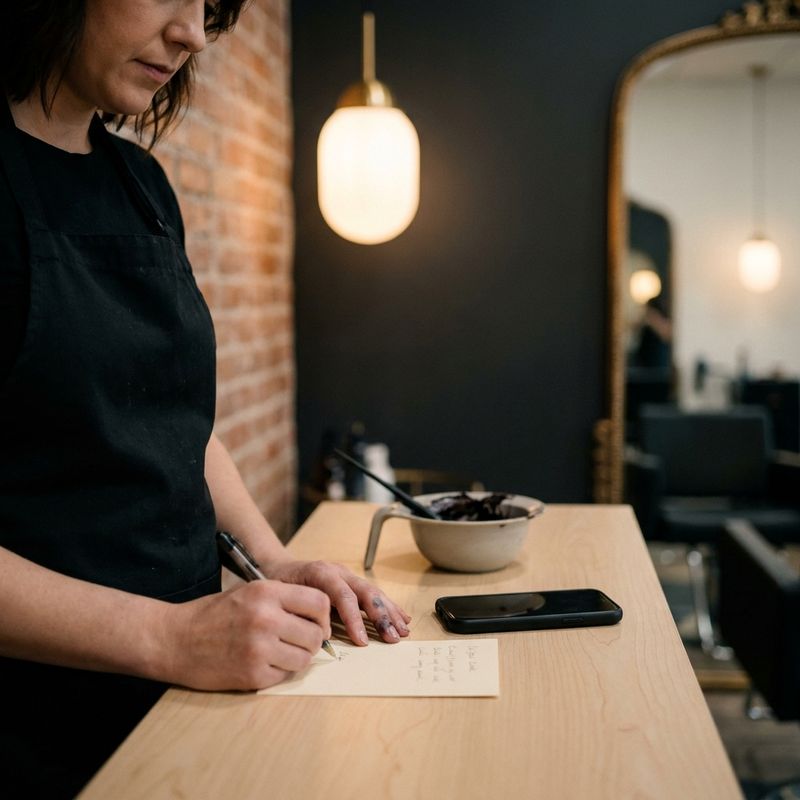
You don’t need to renovate the salon to work with this. If you already know your station slightly distorts intense reflects, the fixed-reference check becomes your second control for those specific services, not for everything.
Add one line to the client record: what you formulated and which light you checked it under before they left (station lighting only, or station lighting plus daylight). If they come back unhappy with the tone at home, and your record shows you already checked it in daylight, you have a real answer to give them, not a guess. And when it’s time to update your station lighting, you already know which three numbers to ask the manufacturer for.
For reading the underlying pigment and choosing the right toner family, the full walkthrough is in toning mistakes that ruin good blondes.
Frequently asked questions
What is a bulb’s Ra or CRI?
It’s the general color rendering index: the average of how eight moderately saturated colors look under that light, on a scale that typically runs from 0 to 100. It doesn’t include a saturated red sample.
Does a high Ra guarantee red reflects look right?
Not necessarily. Saturated red is measured with a separate index, R9, which isn’t part of the general Ra calculation. A lamp can have a high Ra and still perform poorly on R9.
What color temperature works best for checking reflects at the station?
We haven’t found a standard specific to salons. As a reference point, ASTM D1729, a practice for visually appraising the color of opaque materials, notes that the CIE recommends simulated average daylight, D65, and that D50 is recommended for color photography and color printing. According to the CIE, D65 sits around 6,500 K and D50 around 5,000 K. What does help is keeping the light consistent across the whole station and not mixing bulbs of different temperatures.
Why does a color match the swatch book in the salon but not outside?
Because two colors can look identical under one light and stop matching when the light changes, a phenomenon known as metamerism. That’s why checking under two different lights gives you more information than looking once.
Can I trust a photo or an app to check the reflect?
Not as a substitute for looking at the hair in person: a photo adds the camera and its automatic settings on top of the light. How to photograph your hair color covers which photo actually works for comparison, and which doesn’t.
In summary
- Ra or CRI is the average of eight moderate samples: saturated red, R9, is calculated separately and isn’t included.
- A high CRI doesn’t tell you how saturated red will look: that’s R9. TM-30 also gives hue-by-hue fidelity and saturation values; ask for them if the spec sheet doesn’t have them.
- Color temperature, in kelvin, is another variable: it helps explain the gap between how a color looks in the salon and how it looks at home.
- Before buying a lamp, ask for Ra, temperature and, if it exists, R9 or TM-30.
- Check it with a fixed reference under two lights: it’s the test you can run today, without changing anything.
Calculate professional formulas with AI
Want a second opinion on your formula before you mix? Upload photos in natural light, no flash, and Blendsor proposes a starting formula. You confirm the reflect yourself, by looking at the hair in person.
What happens if you judge color under the wrong salon light?
In the app, we ask you a question like this one, but about your own client.
More on global color →Related articles
Practice with our colorimetry tools
Calculators, neutralization wheel, AI consultation...
The Blendsor newsletter
Color techniques and trends for professionals. No spam.
You know the theory. What about today's case?
Send a photo to the Blendsor advisor and get an answer grounded in colour theory: toner, developer and timing, with the brands on your shelf.
Ask about your caseWritten by the Blendsor team
Professional hair colorimetry experts with experience in AI-assisted formulation. We combine color science, salon practice and technology to help colorists formulate with precision.