Why Hair Loses Tone, Not Lift
Lift holds where it landed — it doesn't reverse on its own. Tone fades on top of it. Why that split exists, and what it means at the second visit.
Blendsor
Blendsor Team
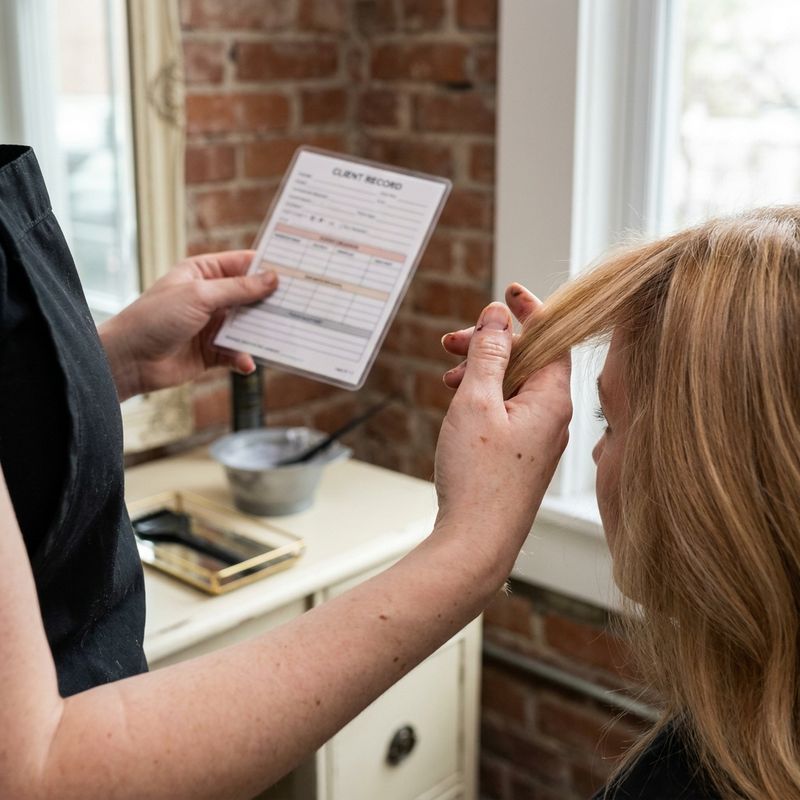
You re-lift the root with the same developer, the same volume, the same processing time you used six weeks ago. It lifts to the same level. But the ends, which have been sitting under that same six weeks, no longer have the tone they left the chair with. Same hair, same client, two completely different behaviors.
It’s not that lift is more reliable than tone. It’s that they’re two different reactions, and only one of them is built to last.
Quick summary: lifting oxidizes melanin inside the cortex — a structural change that doesn’t reverse on its own; only new growth brings virgin melanin back. Tone sits on top of that as a deposit, and a deposit sheds — with every wash and with light exposure. That’s why, six weeks in, lift is usually still where it landed and tone isn’t.
Why does lift hold and tone doesn’t?
Because they’re not the same chemical reaction. Lifting degrades the natural melanin inside the fiber — a structural change that stays put once it’s done — while tone is a pigment that deposits on top of that already-opened fiber, and a deposit can come loose: through washing, through light, through friction. Lift has no exit mechanism like that. Tone does.
It’s the same logic covered in how long hair color actually lasts: oxidative permanent color penetrates the cortex and alters melanin, while color that only deposits stays closer to the surface. That article maps what accelerates tone loss from the outside — porosity, washing, water, heat, sun. Here we go one step earlier: why that asymmetry between what lifts and what deposits exists in the first place, so the next time a client asks “wasn’t this the same formula as always?” you’ve got the mechanism answer, not just the maintenance one.
What actually happens to lift during lightening
Lightening uses an oxidizer that opens the cuticle and attacks the melanin already sitting inside the cortex, breaking it down into smaller, colorless fragments. It doesn’t dissolve it out — it degrades it in place. A study using transmission electron microscopy and redox proteomics on bleached human hair, published in the International Journal of Cosmetic Science, documents measurable chemical and structural alterations in the fiber’s proteins from that process — not a surface effect that washes out, but a change to the fiber’s own architecture.
That’s the root reason lift doesn’t reverse on its own: there’s no biological mechanism to rebuild melanin that’s already been degraded inside a fiber that has no metabolism of its own once it’s left the follicle. The only thing that brings virgin melanin back is new hair growing from the scalp, and that runs on the follicle’s clock, not the appointment book’s.
Pro tip: when a client compares today’s level to the one from six weeks ago and it “looks the same,” that’s not luck or a good batch. You’re repeating a reaction that already finished its job the first time, and it has nothing left to undo on its own in between.
What actually happens to the tone deposited on top
Tone — the shade you apply over the already-lifted base, whether it’s a direct dye, a demi, or the deposit component of a permanent — doesn’t attack anything: it settles into the fiber the lightening process already opened, closer to the surface. And what settles there can leave two ways at once: washing pulls it out mechanically and chemically, and light breaks it down through photodegradation.
That second mechanism — light degrading artificial hair color — is well documented. A study published in the Journal of Cosmetic Science (Locke & Jachowicz, 2005) simulated real-world exposure conditions to measure how artificial hair color fades under radiation, and showed that UV filters built into the product reduce that loss. That’s the technical explanation for something you already know behind the chair: a client who spends a lot of time in the sun loses tone faster than another client on the exact same formula and wash frequency.
Neither of those exit routes — washing, light — has an equivalent for lift. Lift doesn’t “wash out” or “fade in the sun,” because it isn’t a deposit sitting on the fiber. It’s the fiber itself, already changed.
What this means at the chair
You’ve got two processes with completely different shelf lives running in the same hair, and mixing them up leads to the wrong call in the chair:
- If you re-run a full lightening formula to “refresh the color,” you’re repeating a reaction that already completed last time, on a section that in most cases doesn’t need it — except the new virgin root. The only lift that’s actually due today is on new growth.
- If you leave tone unchecked because “it’s the same dye as always,” you’re assuming a surface deposit behaves like a structural change. It doesn’t.
This is exactly the logic that separates the two services at a second visit: root growth decides whether lift is due, and the state of the tone decides whether a gloss is due — full or spot-corrected. We break that down with the three questions to answer in the chair in root touch-up or gloss: what decides your second visit; here you get the underlying chemistry, there you get the call for today.
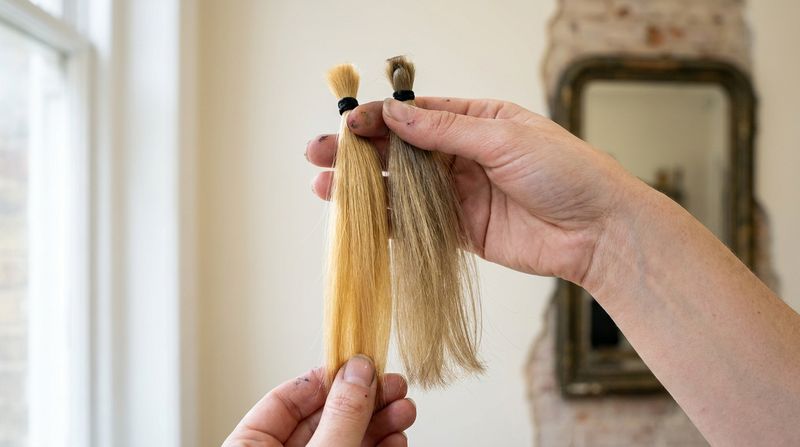
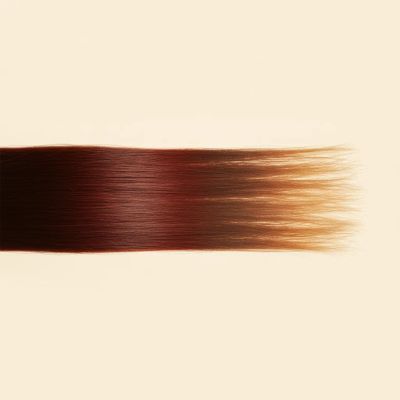
Same lifted base, tone at a different point in its own cycle.
Why this isn’t the same question as “how long does it last”
It’s easy to blend this asymmetry with the “when’s the next appointment” question, but they’re two different things. When each service is actually due — root, tone — is already broken down by lavados and dates in how often to retouch roots and tone: the two clocks. What’s here comes before that scheduling question: why, within a single color service, one part of the result holds untouched while the other starts shifting from the first wash. Once you understand the why, the scheduling in that article makes technical sense, not just practical sense.
The table that sums up the difference
| Lift (lightening) | Tone (deposit) | |
|---|---|---|
| What happens to the fiber | Natural melanin inside the cortex is degraded | Pigment deposits on the already-opened fiber |
| Type of change | Structural, inside the fiber | Surface-level, on the fiber |
| Does it reverse on its own? | No. Only new growth brings virgin melanin | Yes, progressively: every wash and every light exposure reduces it |
| What speeds it up | Nothing reverses it ahead of schedule | Frequent washing, hot water, unprotected sun, heat |
| What’s due at the second visit | Only the root section with visible demarcation | All or part of the mid-lengths and ends, depending on how it faded |
Common mistakes reading this asymmetry
- Reading “the color is gone” when only the tone is gone. The lifted base is still sitting right there underneath. Diagnosing correctly keeps you from repeating a lightening service the fiber doesn’t need.
- Treating tone as if it had the same stability as lift. A shade that “looks great walking out the door” today doesn’t predict how long it holds — that comes down to the client’s real exposure, not the formula alone.
- Logging the lift level and nothing about the tone. The level tells you what you lifted to. It doesn’t tell you what you deposited on top or how long it’s been sitting there. Without that, the next visit goes back to eyeballing what should already be on file. What exactly to log so that doesn’t happen is in what to record after a color correction.
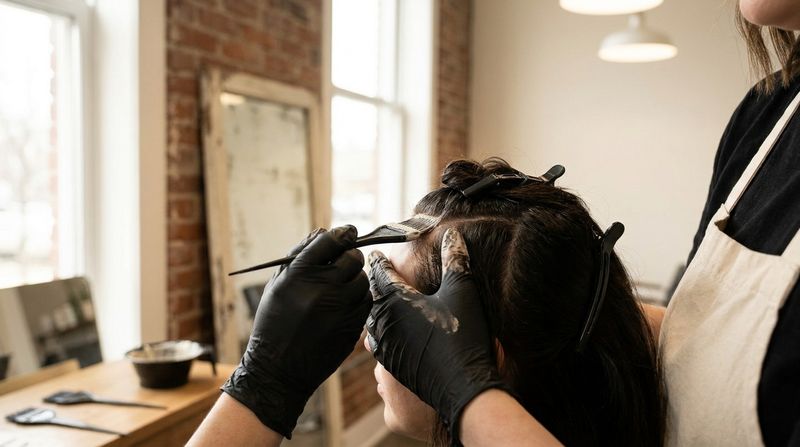
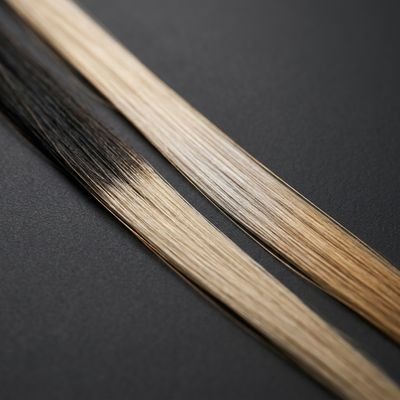
Correcting the deposit that faded. The lift underneath that section doesn’t need touching.
Frequently asked questions
Can lift fade over time, even a little?
Not on its own. What can happen is that accumulated damage from repeated services leaves the fiber less elastic and more porous — and a more porous fiber holds tone applied afterward less well. That affects the second process, not the first.
If the tone has fully faded, is the lifted base underneath safe to reuse?
Generally, yes, if the lift already reached target and there’s no visible fiber damage. What goes on top — full gloss or spot correction — depends on how the tone faded, not on the lift, which is still sitting there as a usable base.
Why do two clients with the exact same lift and the exact same shade lose tone at different rates?
Because tone loss comes from cumulative exposure — washing, light, heat — and that exposure varies from one routine to the next. Two identical formulas on fibers with different histories have no reason to fade the same way.
Does this apply the same way to a direct dye as to a demi-permanent?
The underlying mechanism is the same — a surface deposit that releases over time — but the speed changes depending on how deep each type of product actually penetrates. That’s broken down by color type in how long hair color actually lasts.
Key takeaways
- Lift and tone are two different reactions, not two sides of the same service.
- Lightening degrades melanin inside the cortex: a structural change that doesn’t reverse on its own.
- Tone deposits on top and releases through washing and light — photodegradation documented in studies on artificial hair color.
- Confusing the two leads to re-lifting sections that don’t need it, or skipping a tone check that does.
- Log what tone you applied, not just what level you lifted to — that’s what makes the next visit diagnosable instead of a guess.
Calculate formulas that separate lift and tone with AI
Want every formula to distinguish what needs correcting by lift and what needs correcting by deposit, based on each client’s real history?
How often does a client sit down convinced “the color is gone” when really, only the tone is?
Why does hair lose its reflect before it loses its level?
In the app, we ask you a question like this one, but about your own client.
Up for this week’s case? → More on global color →Related articles

Practice with our colorimetry tools
Calculators, neutralization wheel, AI consultation...
The Blendsor newsletter
Color techniques and trends for professionals. No spam.
You know the theory. What about today's case?
Send a photo to the Blendsor advisor and get an answer grounded in colour theory: toner, developer and timing, with the brands on your shelf.
Ask about your caseWritten by the Blendsor team
Professional hair colorimetry experts with experience in AI-assisted formulation. We combine color science, salon practice and technology to help colorists formulate with precision.