Orange Hair After Bleaching: Why It Happens and How to Fix It
Bleached your hair and it turned orange? Here's why it happens, what not to do, whether blue shampoo works, and how to actually fix it.
Blendsor
Blendsor Team
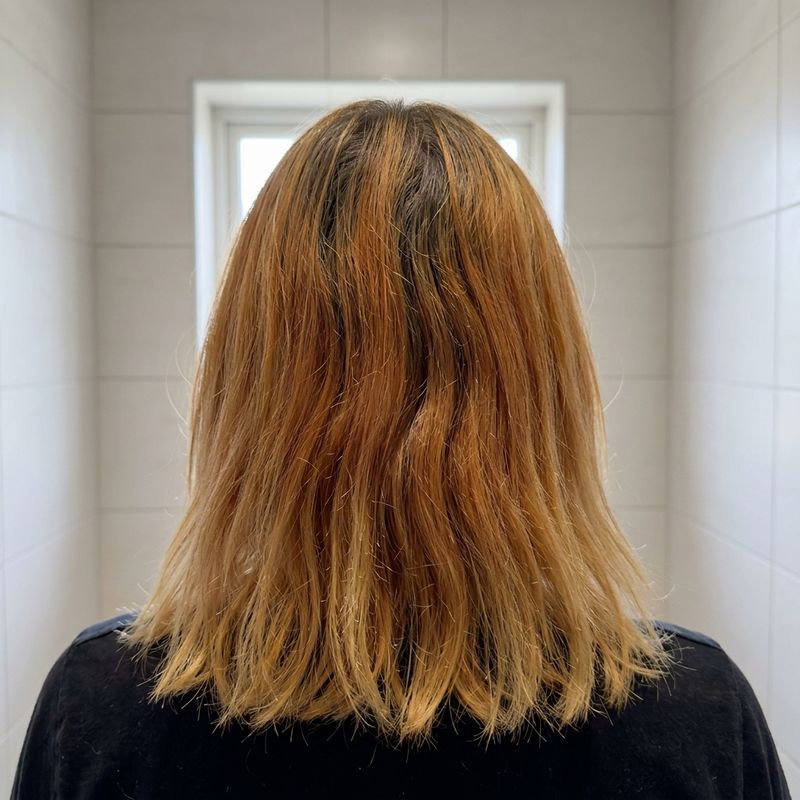
You bleached your hair — at home or at the salon — and the mirror is showing you an orange you never asked for.
Take a breath. You’re not the first person this has happened to, and it’s one of the most-searched hair color problems on Google. It can be fixed professionally — often in a single visit.
But here’s the thing you need to know right now: over the next few hours, what matters most is not what you do — it’s what you don’t do. Orange hair is a scare. Panic is what turns it into an expensive problem.
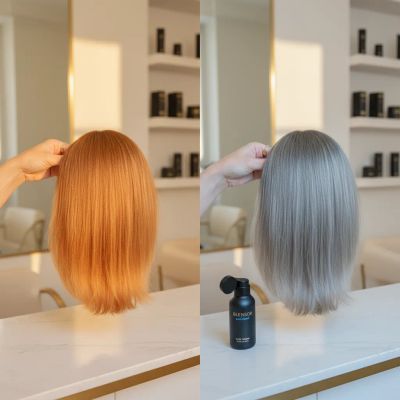
Quick answer: Orange hair after bleaching happens because dark pigments lift first, exposing the warm undertone every head of hair hides underneath. It won’t fade on its own: it needs a professional toner (orange is cancelled by blue, not purple). Blue shampoo only maintains the result — it doesn’t correct it.
Why did your hair turn orange when you bleached it?
Because the orange was already there, hiding. Any hair that isn’t very light blonde stores warm pigments underneath its visible color. Bleach lifts in stages: dark pigments go first and fastest, and as they leave, that reddish-orange base comes into view. Orange isn’t a freak accident — it’s a natural stop on the road to blonde. The problem is getting stuck halfway.
As the Wella Professionals color guide puts it, when lifting hair “some of the underlying pigments in the hair may be exposed” — and the darker your starting point, the warmer those pigments are.
Where your hair lands depends mostly on where it started:
| You started from… | What tends to show up |
|---|---|
| Black or very dark brown | Intense red-orange |
| Medium brown | Full-on orange |
| Light brown | Yellowish orange |
| Dark blonde | Golden yellow |
If you’re curious about the full theory (levels, undertones, neutralizing), it’s all in our colorimetry basics guide. To get out of orange, this page is all you need.
What should you not do right now? (even if every instinct says otherwise)
Half the fix is not making it worse. These are the four most common impulses — and the bill each one comes with:
- Bleaching again tomorrow. Don’t re-bleach at home on freshly bleached hair: every round adds damage your hair can’t repair on its own. A small study, using hair from a single person bleached three times, saw under the microscope how the cuticle came away and the cortex was left exposed (study on PMC). The home test that never lies: on wet hair, gently stretch a strand in several spots, especially mid-lengths and ends, where the product sat longest. If any of them pulls like gum and doesn’t bounce back, color is now the least of your problems: stop and get it in front of a professional.
- Grabbing “a toner” blindly. Most toning products on store shelves are purple, and purple cancels yellow, not orange. Orange is neutralized by blue. The cost of getting it wrong: money spent, orange untouched — and if you overdo it, a dirty grey film on your ends.
- Home remedies. Vinegar, chamomile, cinnamon: they either do nothing against a pigment that lives inside the hair fiber, or they dry out hair that has already been through enough.
- Covering it with a dark box dye in a panic. It works at first. Then the dark fades, the orange peeks back through, and the correction that follows will be longer and more expensive. Removing that dark before any new lightening may take a color remover, and even then the color can creep back if the process isn’t finished properly (why color comes back after color remover).
Can you bleach again if your hair turned orange?
You can, but not today, not at home, and often you don’t even need to. Any new chemical service follows an order, and each step decides whether you move on to the next:
- The fiber comes first. Repeat the wet stretch test from above, in several spots. If any strand stretches like gum and doesn’t bounce back, that section is out for any new bleach: a treatment improves how it feels, but it won’t make it ready to lift again, and sometimes the sensible fix is trimming that part.
- Then the goal. If what you want is to get rid of the orange tone, a toner cancels it without lifting again. You only need more lightening if you’re after a lighter blonde, and that’s more likely if you started from black or very dark brown. And if more lift is needed, a salon doesn’t repeat the whole bleach: the lightener goes only where lift is missing, without overlapping onto what’s already light.
- Two days out, the allergy test. A toner may feel like a light touch-up, but it’s a color service, and Wella asks for this test 48 hours before any of them (Koleston Perfect technical leaflet). Plan on stopping by the salon beforehand to get it done.
- A strand test before the whole head. The product goes on a hidden strand first, to see how the fiber responds and what tone comes out before committing the rest.
- The calendar doesn’t set the time between sessions. There’s no universal waiting period: it depends on how your hair responds, and your colorist reassesses it at every visit.
Does blue shampoo fix orange hair?
No — it disguises it. The orange is your own pigment, revealed inside the fiber. Blue shampoo deposits a veil of color on the outside, and it washes away within a few shampoos. That makes it a great maintenance tool — and a disappointing correction.
| Blue shampoo | Professional toner | |
|---|---|---|
| What it does | Color veil on the surface | Neutralizes inside the fiber |
| How long it lasts | Washes out | Weeks |
| What it’s for | Maintaining a toner you already got | Actually correcting orange |
| If misused | Dull, muddy cast | Needs a diagnosis — that’s why it’s a salon job |
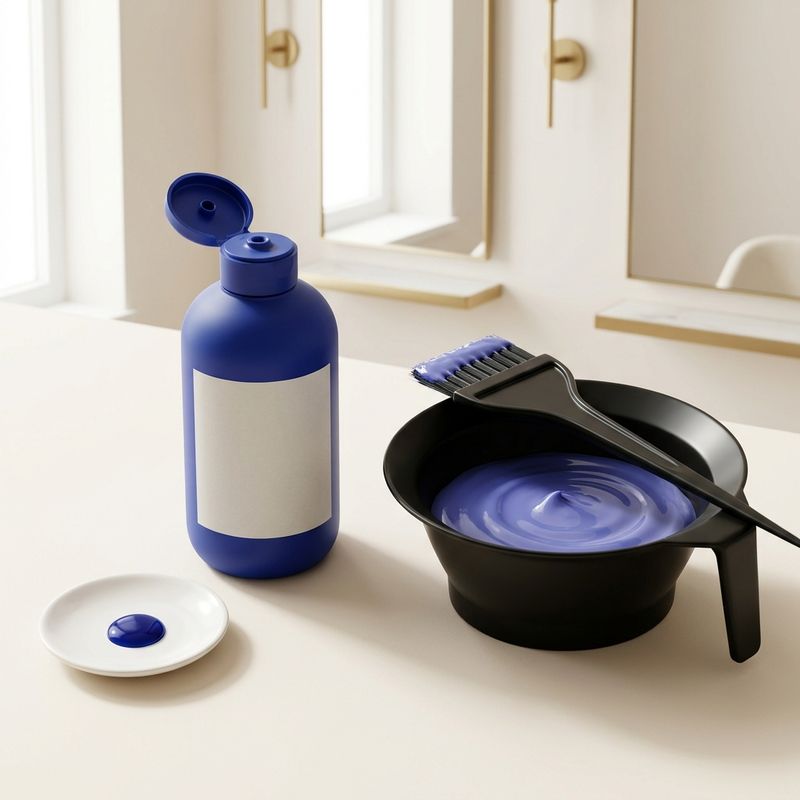
Practical tip: the more carrot (and less gold) your orange is, the less blue shampoo will register. If you see no change by the third wash, don’t push it: it’s not your shampoo, it’s just not its job.
One more thing before you buy: most “toning” shampoos you’ll see in stores are purple, made for yellow tones. To maintain a corrected orange, yours needs to be blue — it says so on the bottle.
Timing matters too: blue shampoo comes in after the toner, on hair that’s already been stabilized. Using it aggressively on raw, freshly bleached orange — porous and absorbing unevenly — only gets you greyish patches on the most damaged areas.
How do you actually get rid of orange hair?
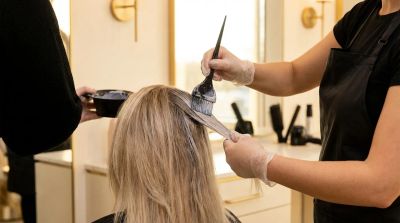
With a toner — you’ll also see it called a gloss — a salon service that deposits just the right tone to cancel the orange inside the fiber, without lifting again.
How many visits? It depends on your row in the table above. If your orange came from a medium or light brown, it’s usually solved in a single toning session, and you see the change the same day. If you started from black or very dark brown and you’re sitting in an intense red-orange, a toner will calm the tone, but a toner can’t lighten, and getting to a clean blonde may take another lightening session later. Your colorist will tell you that in front of the mirror, not after the fact.
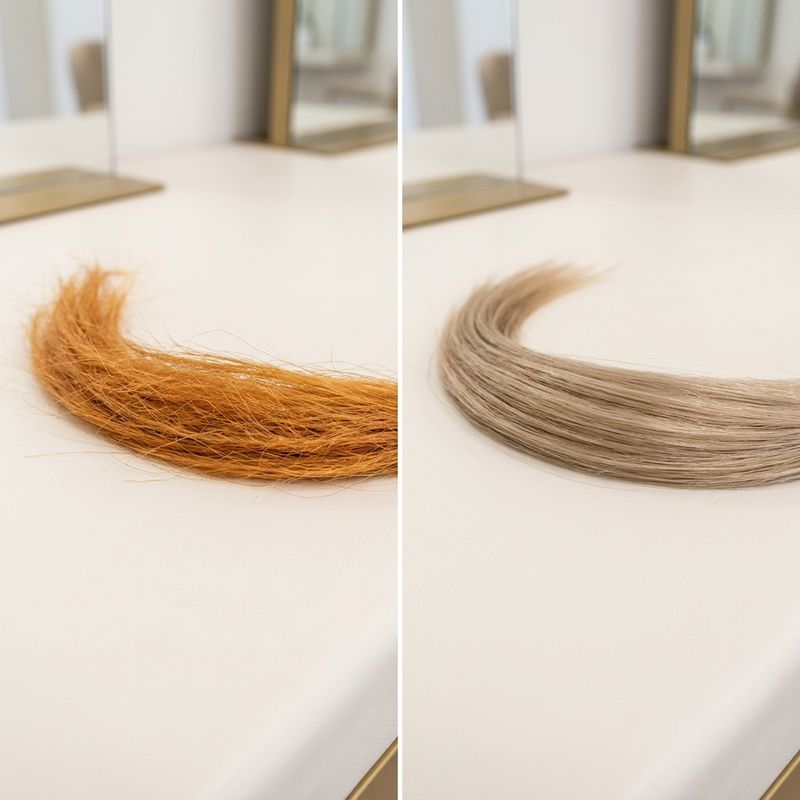
Why is there no reliable at-home recipe? Because the exact tone depends on where your hair stopped lifting: a true orange calls for a blue base; a yellowish orange needs a different mix; and home bleach jobs are rarely even — roots one shade, ends another. A professional assesses it strand by strand and adjusts zone by zone. That doesn’t fit in a tutorial.
The technical version of this service — the chemistry and level charts your colorist works with — lives in our blue toner for orange hair guide. You don’t need it to walk into a salon: it’s there so you can see there’s method behind the toner, not magic.
If your orange leans more toward yellow, the guide you want is a different one: our toner for brassy hair guide tells each type of orange apart and shows which toner family corrects it.
Try it on your photo first
Before deciding which tone you want to land on after the fix, see it with your own eyes: upload a photo to Blendsor’s hair color changer and compare how a beige, a golden or a cool blonde would look on you before you sit in the chair.
Walking in with a clear reference saves misunderstandings. “This isn’t what I asked for” disappears when both of you are looking at the same picture.
How do you ask for this at the salon?
You don’t need to walk in with the name of a tone or any technical vocabulary. Describe three things: what happened, where you want to end up, and what worries you. Diagnosing the exact tone is your colorist’s job.
Three sentences that work as-is:
- “I bleached my hair at home two days ago and it turned orange. I’d like a more neutral blonde without putting my hair through more damage.”
- “What’s safe to do with my hair today: tone now, or treat it and wait?”
- “I’d rather have a natural result, even if it’s less light.”
What will happen at that appointment? The first step isn’t color — it’s checking how your hair is doing (elasticity, porosity, uneven patches). If the fiber is compromised, the plan changes and color waits. That’s not an upsell: it’s the right order.
And a tip in return: skip the jargon you picked up online (“give me a blue-based ash on a level 7”). Asking for the solution instead of describing the problem boxes in the diagnosis — and the diagnosis is exactly what you’re paying for.
Frequently asked questions
Will the orange fade on its own with washing?
No. It’s your own hair’s pigment that bleaching brought into view, not a deposited product that can rinse out. Washing will dull the overall color a bit, but the orange base stays until it’s neutralized.
How long should I wait before bleaching again?
There’s no universal number: it depends on the state of your hair fiber. The practical benchmark is the wet-strand test — if it stretches and doesn’t bounce back, don’t even consider it. And remember: getting out of orange often doesn’t require more bleach — a toner can fix it without further lifting.
How long does a toner last?
Weeks, not months. It fades gradually with washing. That’s where blue shampoo earns its keep: used as often as its label says, it makes the result last longer between visits.
What if my hair feels like chewing gum?
That stretchy texture is the alarm signal of severely damaged fiber. Absolute priority: treatment and rebuilding with a professional. Color can wait; your hair can’t.
In short
- Orange is a natural stop in bleaching: dark pigments lift first and reveal the warm base underneath.
- No immediate re-bleaching, no purple toner, no home remedies: every shortcut comes with a bill.
- Blue shampoo maintains; a professional toner corrects. Different jobs.
- At the salon, describe the problem and the goal — the exact tone comes from the diagnosis.
Already thinking about your next shade? Check what hair color suits you first, and try it on the hair color changer before booking.
Manufacturer sources
Manufacturer documents consulted for this article. A copy of each one is kept, and the passages noted from it are checked against that copy.
Why does hair turn orange after bleaching?
In the app, we ask you a question like this one, but about your own client.
Up for this week’s case? → More on color correction →Related articles
Practice with our colorimetry tools
Calculators, neutralization wheel, AI consultation...
The Blendsor newsletter
Color techniques and trends for professionals. No spam.
You know the theory. What about today's case?
Send a photo to the Blendsor advisor and get an answer grounded in colour theory: toner, developer and timing, with the brands on your shelf.
Ask about your caseWritten by the Blendsor team
Professional hair colorimetry experts with experience in AI-assisted formulation. We combine color science, salon practice and technology to help colorists formulate with precision.