What Does the 8 Mean in Hair Color? Wella Isn't Igora
What does the 8 mean in hair color? On Koleston Perfect, /8 is pearl, which Wella's US store describes as blue. On Igora Royal, -8 is red. Check the brand.
Blendsor
Blendsor Team
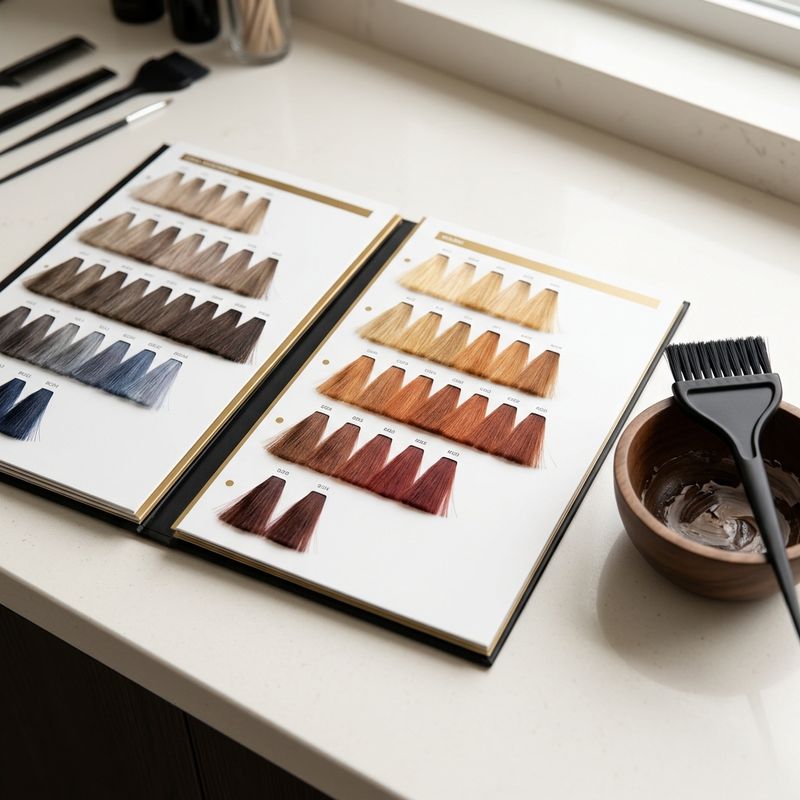
Is the 8 on a formula you just got handed the same 8 that’s on your own chart? Depends entirely on whose chart printed it.
If you formulate every day, you’ve probably lived this: a client brings in a card from another salon, or your team switches lines, and a number that looked completely familiar turns into a color you didn’t expect once it’s on the head.
Here’s what each manufacturer’s own chart says about shade 8 — and what to write on the card so this stops happening.
Quick answer: on Wella’s Koleston Perfect chart, /8 is pearl, a cool, blue-based direction. On Schwarzkopf’s Igora chart, -8 is red, a strong warm tone. Same digit, two companies, opposite directions on the color wheel — and a formula on paper never tells you which one you’re reading.
What does 8 mean on the Koleston Perfect (Wella) chart?
On Wella’s Koleston Perfect chart, /8 is pearl: a cool, blue-based direction. On the blog of its US store, Wella writes it as “/8 is pearl (blue)”, and the same store sells the 10/8 as “Lightest Blonde/Pearl”.
It’s a cool reflect, not one for adding warmth: Wella’s US store blog puts the /8 to work neutralizing orange tinges. If a formula card from Koleston Perfect shows a /8, you already know which way it pulls: cool.
What does 8 mean on the Igora (Schwarzkopf) chart?
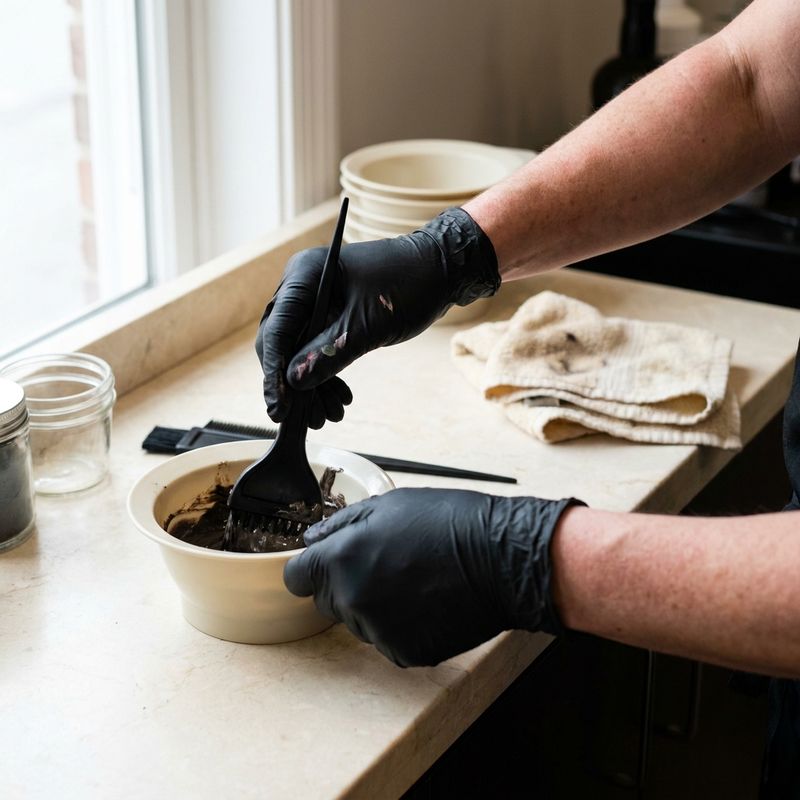
On Schwarzkopf’s Igora chart, -8 is the opposite: red. The Igora Color System wall chart lists it as “-8 Red”.
We saw a similar pattern in our piece on the ash vs. cendré mix-up inside Igora: this brand runs its own alphabet of reflects, and that alphabet doesn’t line up with any other house’s — not even when the number matches exactly. Here the gap is even wider: same digit, different company, landing on the opposite side of the color wheel.
Why does the same number swing from cool to warm depending on the brand?
Because reflect digits are each manufacturer’s private code, not a shared standard across brands. We covered this when writing about what happens when you mix two hair colors: every house decides which color family it assigns to which number, and that decision never transfers from one brand to another.
With 8, the contrast is textbook. Add a third chart to the comparison and the gap gets even clearer:
| Brand | Code | Reflect | Direction |
|---|---|---|---|
| Wella (Koleston Perfect) | /8 | Pearl | Cool, blue |
| Igora (Schwarzkopf) | -8 | Red | Warm, intense |
| L’Oréal (standard key) | .8 | Mocha | Warm, deep |
Three brands, one digit, and none of them agree. Wella sits alone on the cool side; Igora and L’Oréal both land warm, but their results aren’t interchangeable with each other either — mocha isn’t red.
Where does this actually bite you?
The mistake rarely happens with the tube in hand and the physical chart next to it — that’s when you read the label, not your memory. It slips in somewhere else:
- A card a client brings from another salon, with the reflect written as a bare number and no brand next to it.
- A class or training session, where a formula gets passed on by ear and whoever writes it down doesn’t ask which house it came from.
- A brand switch at the salon, where years of habit calls for “the usual 8” without checking whether it’s still the same chart.
In all three cases, the paper says 8 and whoever reads it assumes they know which reflect that is. And on hair that’s already been worked — previous lightening, residual pigment — reading a cool as a warm (or the other way round) shows up far more than it would on virgin hair: the reflect that wasn’t supposed to be there stacks on top of the underlying tone that was already there.
Pro tip: when a formula arrives without a brand attached, don’t assume from habit — ask which chart it came from before you mix. The number alone tells you nothing.
If your salon works with both brands
This is especially easy to trip on when Wella and Igora both sit on the same shelf, or when the team switches between them over the year:
| Situation | What to check | Why it matters |
|---|---|---|
| A formula arriving from another salon | The brand it came from, not just the number | The digit doesn’t travel clean between houses |
| A client asking for “the usual 8” after a brand switch | Whether that old 8 was the old brand’s or the new one’s | /8 and -8 aren’t the same reflect just because they share a number |
| A team card with only the number written down | Add the brand before mixing from memory | A card without the brand is only half the record |

What belongs on the card after this service
The number isn’t the whole record — the brand that printed it is. Writing “8” on the card and leaving out the brand keeps only half the information: whoever opens that card next time — you, six weeks from now, or someone else on the team — needs to know which chart that 8 came from to repeat the exact result.
This connects to something bigger than today’s service: today’s formula sets up the next one. If that 8 was Wella’s /8 pearl, the next person reading the card without the brand attached could easily reach for Igora’s -8 assuming it’s “the same as always” — and it isn’t.
Common mistakes when reading a reflect code across brands
- Assuming the same number means the same thing at every house: the digit isn’t a shared standard — it’s each manufacturer’s own alphabet.
- Writing only the number on the card, without the brand: half the record is lost, and the next person can’t reproduce the result.
- Passing on a formula by ear without checking it against the physical chart afterward: a formula from a class or another colorist always gets verified against the swatch book before it’s applied.
- Trusting the number on a card from outside your salon without asking the brand it came from: if a client’s card just says “8,” ask which line it’s from before translating it to yours.
Frequently asked questions
What does 8 mean on Wella?
On the Koleston Perfect chart, /8 is pearl: a cool, blue-based direction. Wella uses it to neutralize orange tinges, not to add warmth.
What does 8 mean on Igora?
On the Igora chart, -8 is red: a strong warm tone. On the color wheel it sits in the warm half, and Wella’s /8 pearl in the cool half.
Why does the same number give such different results between brands?
Because every manufacturer names its own reflects with its own system, and those systems aren’t standardized across brands. The same digit can mean a completely different color family depending on which house printed it.
How do I avoid the mistake when reading a formula from another brand?
Always check which chart the number came from before applying it on yours. If a card or a passed-on formula only has the digit, ask for the brand — the number by itself isn’t enough.
Does this happen with other digits too, or just 8?
The same mechanism repeats across other numbers: every brand builds a full reflect alphabet, not just for 8. Before trusting a cross-brand equivalence, check it against each brand’s physical chart.
Key takeaways
- On Wella (Koleston Perfect), /8 is pearl, a cool, blue-based reflect
- On Igora (Schwarzkopf), -8 is red, a warm, intense reflect
- Reflect digits are each manufacturer’s own alphabet, not a shared standard
- The mistake rarely happens tube-in-hand — it slips in through cards from outside, training, or a brand switch
- On the card, always write the tone with its brand attached: the number alone is only half the record
Formulate without memorizing every chart’s alphabet
In the Blendsor app, the AI works directly with your brand’s tones and ratios, so you don’t have to memorize which digit means which reflect on every chart. Formulate with Blendsor.
Has a reflect ever come out wrong because you were thinking of the wrong chart?
What does the 8 mean on a box of dye, depending on the brand?
In the app, we ask you a question like this one, but about your own client.
Up for this week’s case? → More on global color →Related articles
Practice with our colorimetry tools
Calculators, neutralization wheel, AI consultation...
The Blendsor newsletter
Color techniques and trends for professionals. No spam.
You know the theory. What about today's case?
Send a photo to the Blendsor advisor and get an answer grounded in colour theory: toner, developer and timing, with the brands on your shelf.
Ask about your caseWritten by the Blendsor team
Professional hair colorimetry experts with experience in AI-assisted formulation. We combine color science, salon practice and technology to help colorists formulate with precision.