Lock In Hair Color Before Summer: A Protocol by Base
Summer color is won in June, not rescued in September. A different preventive protocol for cool blonde, copper and brunette before the holidays.
Blendsor
Blendsor Team
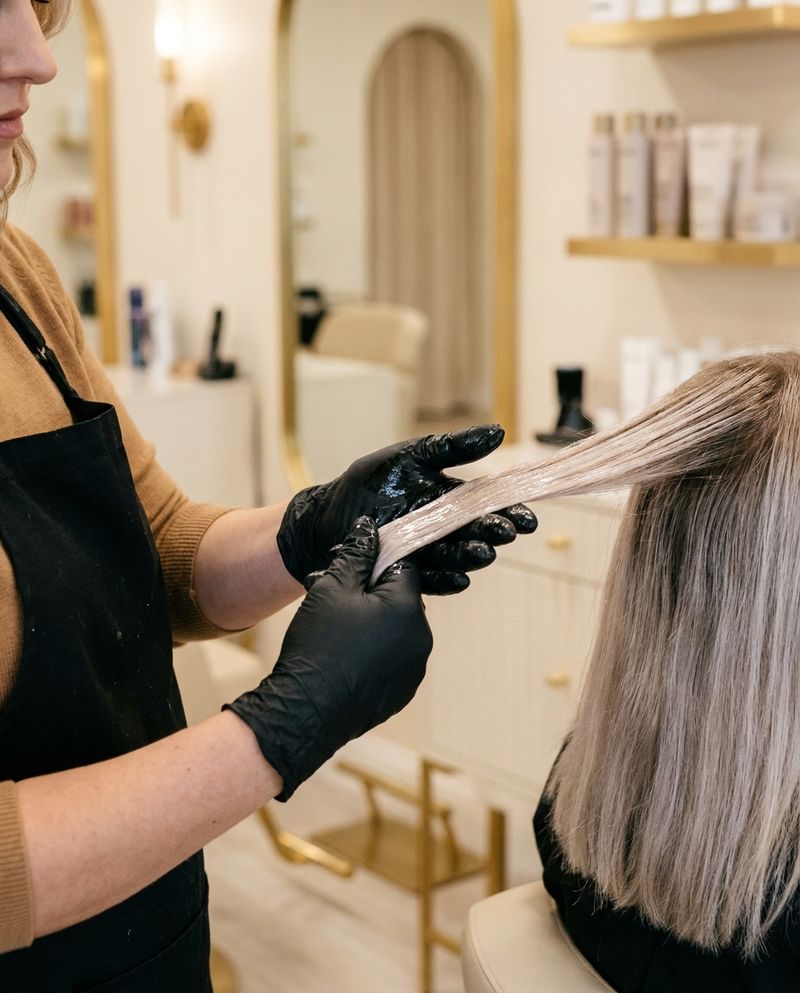
Your client is leaving on holiday next week. Do you know which way her color will shift before she posts that first photo by the pool?
If you have spent years behind the chair, you already know what happens: the blonde comes back with a green veil, the copper dull, the brunette pulling a red undertone that was not there. You have that diagnosed already. What decides the September appointment is not knowing why it happens. It is what you leave done in June.
This article is not about rescuing color in September. It is about locking it in before. And the key decision is that the protection is not the same for every base.
Protection is different depending on the base
Here is the mistake I see most: treating “protect the color from summer” as a single protocol for the whole client list. It is not. Each base has a different enemy, and the preventive action changes.
| Base | Main summer enemy | Priority preventive action |
|---|---|---|
| Cool blonde | The tone goes first (shifts warm or green) | Lock in the reflect: reinforcing gloss + anti-mineral barrier |
| Warm blonde / caramel balayage | Desaturates and the warmth flares up | Shine + UV filter: protect luminosity, not the cool tone |
| Copper | Goes dull and loses shine | Shine + sealing: copper does not shift much, it desaturates |
| Brunette | Opens up and pulls undertone (red on dark base, orange on medium) | Do not stress the cuticle before the trip (careful with clarifiers) |
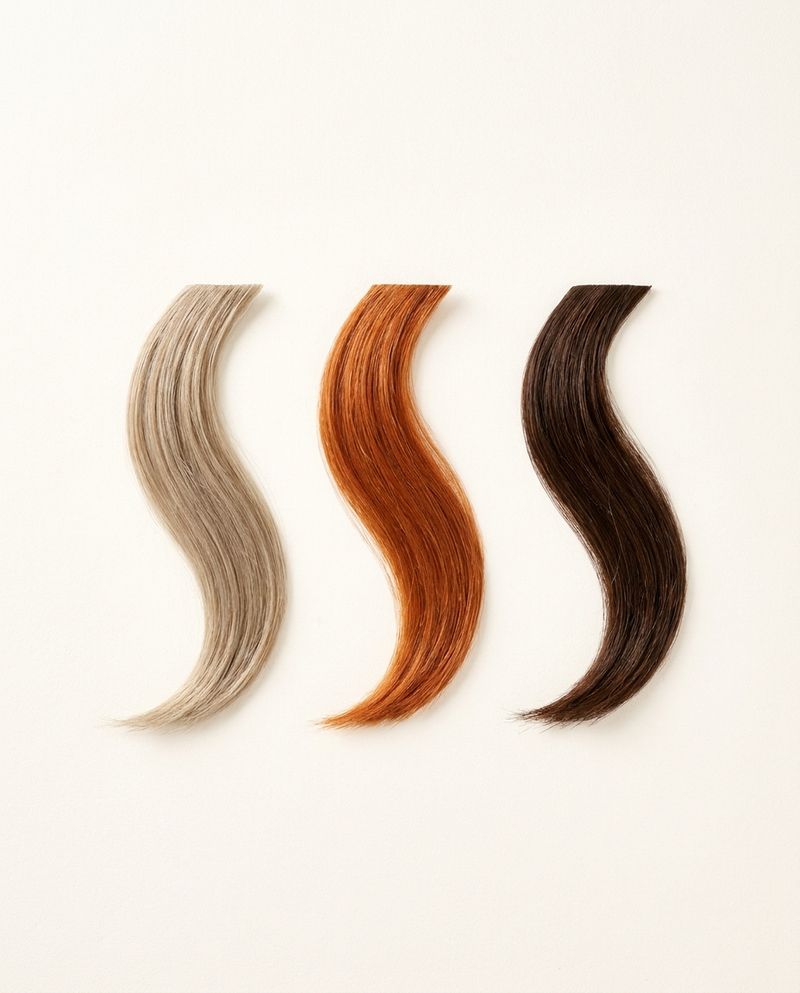
Cool blonde is the most fragile in tone: the ash or pearl goes before the underlying pigment, and that is why it “muddies” toward warm. And if the pool water carries copper, that copper deposits on the porous fiber and pushes it green. For this base, what you protect is the cool reflect, not just the fiber.
Copper does not shift so much as it goes flat. Its problem is desaturation: it turns matte. Here the priority is shine and a barrier that slows the pigment leaving, not correcting a shift.
Brunette is the least obvious case. The undertone that appears is not a mineral deposit like the green in blonde. It is the underlying lift tone that was already there, surfacing when the sun oxidizes the pigment. That is why it depends on the level: on a dark base it pulls red, on a medium one it pulls more orange. The worst preventive move with this client is opening her cuticle with a strong clarifier right before the trip.
Sealing the cuticle: what it really does and what it does not
An acidic seal closes the cuticle after the service. The reason is pH: keratin changes behavior below pH 3.5-4, and from there the fiber contracts and the scales flatten. With the cuticle closed, color escapes more slowly.
But it is worth being honest about what it is. It is not a seal that holds until September: it is a retention that renews every time. The effect comes back with each acidic wash; you do not leave it done in one pass.
Pro tip: the acidic seal is maintenance, not a miracle. If your client is gone for three weeks, what protects her is not what you sealed on the last day in the salon, but that she understands how to keep that pH at home.
Before you seal, check for metal. If the hair has already come back from the pool with green or visible metal, the order is non-negotiable: first you chelate with an EDTA shampoo until the metal is out of the fiber, and only then do you seal or gloss. Never the other way around. If you seal over the metal, you lock it inside and it gets much harder to remove later. Prevention is on clean fiber; on contaminated fiber, you clean first.
UV filter: it slows oxidation, it does not stop it
The UV filter works through a different route than the seal. The seal closes the cuticle; the filter absorbs part of the sun before it oxidizes the pigment.
There is a study that measures it: benzophenone-type filters absorb close to 40% of the radiation and slow the fading. That is the key word, slow. No filter cuts it out entirely, and it also washes off, so your client has to reapply it. Not all products “with sun protection” carry the same filter load.
Why blonde hair turns green in summer (the chemistry to explain it to your client)
When your client asks why her blonde turned green, the short answer is: the copper paints the green, but the chlorine opens the door. Chlorine opens and dries the cuticle and leaves the fiber porous; on that fiber, the copper in the water deposits, and over a yellow base it gives that greenish tone. If you want the full diagnosis of how to read that damage once it has happened, I develop it in how to fix green tones in bleached blonde.
The home maintenance that holds it all
Sealing in the salon is no use if at home she washes with a harsh shampoo and very hot water. Both things matter here: the type of surfactant and the pH. The “sulfate-free” label helps, but on its own it does not tell you whether the wash is gentle; pH is a key factor that label does not capture.
- Gentle, acidic-pH wash: pulls less color and keeps the cuticle closed. Look at the pH and the surfactant type, not just the word on the label.
- Lukewarm water, not hot: heat opens the cuticle and speeds up the leak.
- Reapply the UV filter: after each long swim or strong exposure, because it washes off.
Frequently asked questions
Does an acidic seal protect color all summer?
Not on its own. The seal contracts the cuticle and reduces pigment leak, but it is a temporary effect that renews with acidic maintenance at home. Without that maintenance, the seal from the last salon day does not survive three weeks of pool.
Is protecting a blonde the same as protecting a brunette?
No. Cool blonde loses its tone first (shifts warm or green) and what you protect is the reflect. The brunette pulls a red undertone through photo-oxidation depending on its level, and the priority is not opening its cuticle with clarifiers before the trip. The protocol changes by base.
Is a sulfate-free shampoo enough to maintain color?
It helps, but it is not the deciding factor. What preserves color most is a gentle acidic-pH wash with lukewarm water. “Sulfate-free” does not guarantee the shampoo is gentle; look at the pH and the surfactant type.
In short
- Summer color is won in June: preventive protection decides the September appointment, not the later correction.
- The protocol changes by base: cool blonde = protect tone, copper = shine + barrier, brunette = do not open the cuticle.
- Sealing and UV filter are different things: the seal slows the leak (temporary retention), the UV filter slows oxidation (it has to be reapplied).
Calculate professional formulas with AI
Want to generate protection and color-refresh formulas based on the starting level and the base of each client?
And you — do you already run a pre-holiday protocol differentiated by base, or do you still protect everyone the same way?
Sources: keratin isoelectric point and cuticle behavior by pH — Int J Trichology, 2014. UV absorption by benzophenone-type filters and reduced fading — Locke & Jachowicz, J Cosmet Sci, 2005.
What happens if you don't shield color before summer?
In the app, we ask you a question like this one, but about your own client.
Up for this week’s case? → More on global color →Related articles
Practice with our colorimetry tools
Calculators, neutralization wheel, AI consultation...
The Blendsor newsletter
Color techniques and trends for professionals. No spam.
A client in the chair right now?
The Blendsor advisor gives you the precise formula for this technique with your salon's brands — and saves it to your client's card.
Ask about your caseWritten by the Blendsor team
Professional hair colorimetry experts with experience in AI-assisted formulation. We combine color science, salon practice and technology to help colorists formulate with precision.