Hair Gloss: Professional Technique Guide
Learn what hair gloss is, when to apply it, and the step-by-step technique. Complete guide for professional colorists with formulas and timing.
Blendsor
Blendsor Team
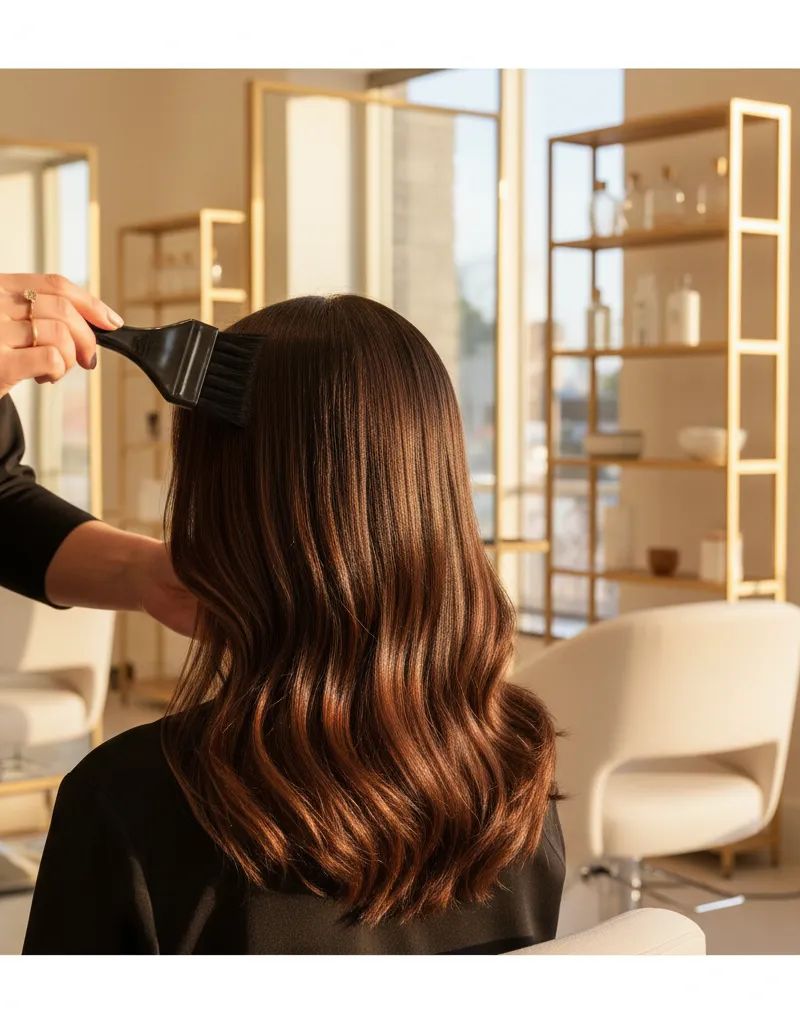
Does your client want magazine-worthy shine without committing to permanent color?
Hair gloss is that versatile tool every colorist should master. It adds spectacular shine, refreshes tone, and can neutralize unwanted undertones—all in one low-commitment service. If you’re looking to master more coloring techniques, check out our complete guide to professional coloring techniques.
But here’s the problem: many colorists confuse gloss with a color rinse, don’t know when to use it, or apply incorrect timing. The result is disappointed clients and missed opportunities.
Today we’ll cover exactly what a gloss is, when it’s the perfect option, and how to apply it step by step.
Quick summary: Hair gloss is a demi-permanent service that deposits pigment in the cuticle without lifting. It lasts 4-8 weeks using 6-10 vol developer. It’s ideal after highlights or balayage, to test a color without commitment, or to neutralize unwanted tones with minimal damage.
What Exactly Is Hair Gloss?
Hair gloss is a demi-permanent service that deposits pigment in the cuticle without penetrating the cortex. It uses 6-10 vol developer, does not lift, lasts 4-8 weeks, and fades without a line of demarcation. It differs from permanent dye in damage level, gray coverage capacity, and duration.
A hair gloss (also called a glaze or demi-permanent treatment) is a color service that deposits pigment in the hair cuticle without penetrating the cortex. It doesn’t lift, lasts 4-8 weeks, and fades without a line of demarcation. It’s the ideal option for adding shine, refreshing tone, or neutralizing unwanted undertones with minimal damage.
| Benefit | Description |
|---|---|
| Intense shine | Seals the cuticle for a mirror-like finish |
| No lift | Doesn’t damage natural pigment |
| Low commitment | 4-8 weeks, fades gradually |
| Versatility | Tones, neutralizes, and refreshes any base |
According to the Society of Cosmetic Chemists, demi-permanent products use low-volume developers that allow color deposit without significant lift.
Unlike permanent dye, gloss:
- Does not lighten natural hair
- Deposits pigment superficially
- Lasts 4-8 weeks (depending on porosity)
- Fades gradually without a line of demarcation
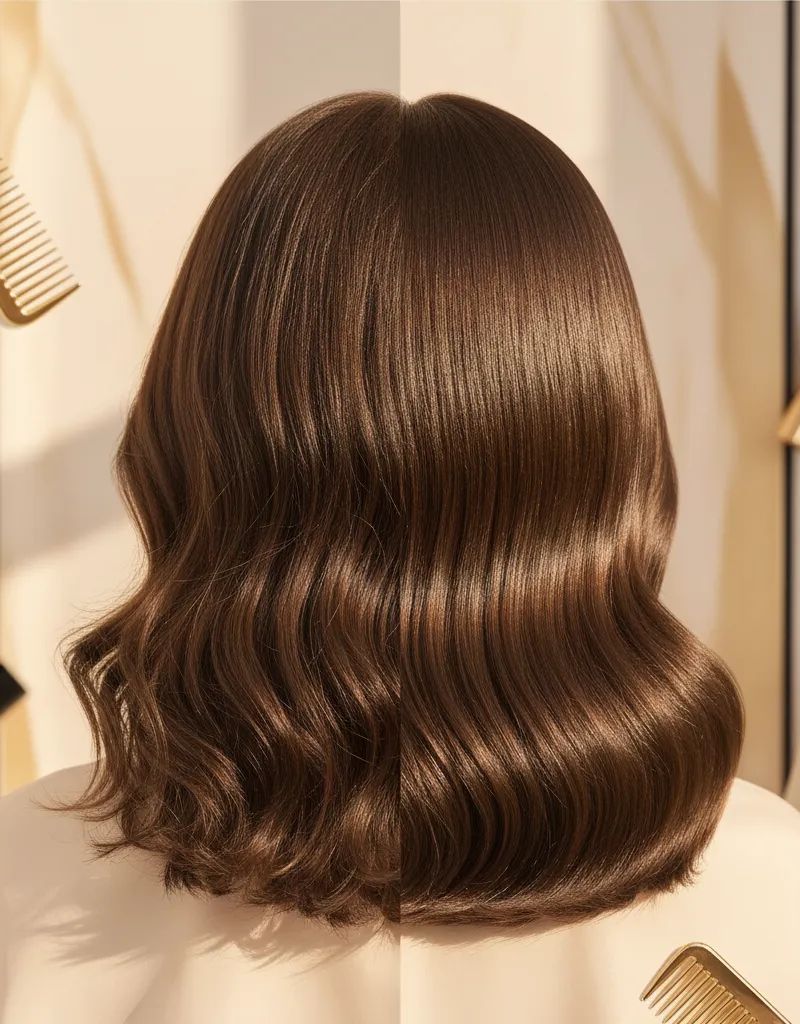
The Visual Result
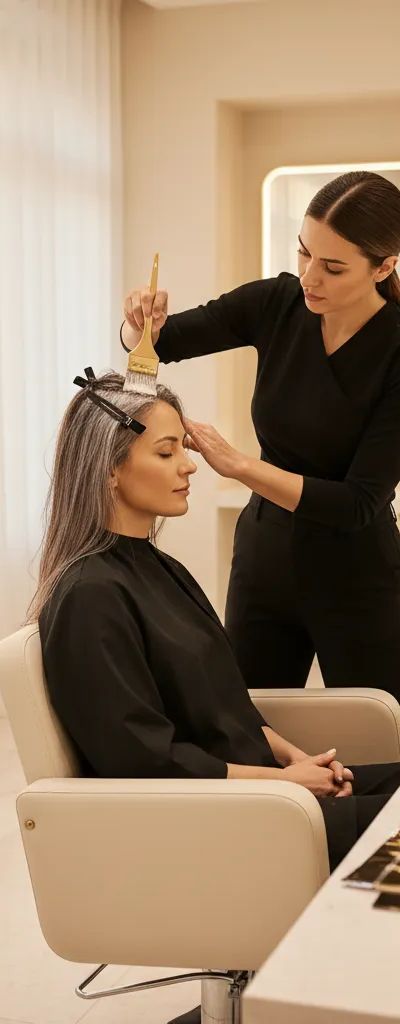
The effect of a well-applied gloss is unmistakable: intense shine, uniform color, and healthy appearance. It’s like applying an Instagram filter in real life.
What Is the Difference Between Gloss, Glaze, and Permanent Dye?
Gloss uses 6-10 vol developer, lasts 4-8 weeks, and deposits without lifting. A glaze is more diluted (1:3 to 1:5), lasts 2-4 weeks, and adds minimal shine without tone change. Permanent dye uses 20-40 vol, lifts 1-4 levels, and covers 100% of gray hair.
This is the most common confusion. Let’s clarify:
| Characteristic | Gloss/Demi | Glaze/Rinse | Permanent Dye |
|---|---|---|---|
| Developer | 6-10 vol | Diluted (1:3 to 1:5) | 20-40 vol |
| Duration | 4-8 weeks | 2-4 weeks | Permanent |
| Gray coverage | Up to 50% (blending) | No coverage | 100% |
| Lift | No | No | Yes (1-4 levels) |
| Damage | Minimal | None | Moderate |
| Service price | Medium | Low | High |
When to Use Each?
- Gloss: When you want lasting color deposit, intense shine, or tone neutralization
- Glaze: To refresh between appointments, shine only without tone change
- Permanent dye: For color changes, full gray coverage, or lightening
Pro tip: A glaze is basically a very diluted gloss. If your client only wants shine without change, a glaze is more economical and faster.
When Should You Use Gloss: What Are the Perfect Indications?
Gloss works best in five situations: after highlights or balayage to unify tone, when a client wants to try a color without commitment, to refresh color between appointments, to neutralize unwanted tones (orange, yellow), and to add shine to natural hair without any color change.
Gloss isn’t for everyone. These are the situations where it shines (literally):
1. After Technical Services
After highlights, balayage, or bleaching, gloss:
- Unifies overall tone
- Adds depth to lightened areas
- Neutralizes any residual yellow
- Seals the cuticle for more shine
2. Clients Who Want to “Try” a Color
Is your client torn between brunette and dark blonde? Gloss is perfect for trying without commitment. If she doesn’t like it, it fades in weeks.
3. Refresh Color Between Appointments
Instead of applying permanent dye every 4-6 weeks, alternate with gloss. It maintains vibrant tone with less accumulated damage.
4. Neutralize Unwanted Tones
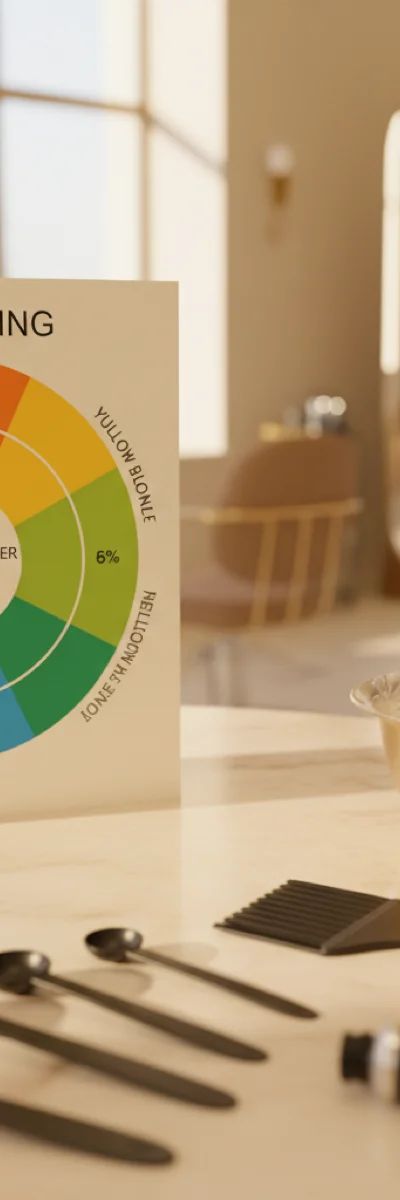
Gloss with specific pigments can neutralize unwanted tones gently. Residual orange, straw yellow, even greenish tones.
5. Add Shine to Natural Hair
Yes, gloss works without color change. A clear gloss or same-level gloss adds spectacular shine to dull hair.
When NOT to Use Gloss
- Clients who want full gray coverage (more than 50%)
- When hair needs to be lightened
- Very porous hair that absorbs too quickly
- If the client expects a dramatic change
How to Apply Hair Gloss Step by Step?
Gloss application follows five steps: diagnose the hair, formulate with 6-10 vol developer at a 1:1 or 1:2 ratio depending on the brand, apply from ends to roots on technical hair, process for 5-30 minutes depending on the objective, and emulsify with water before rinsing without shampoo.
Materials Needed
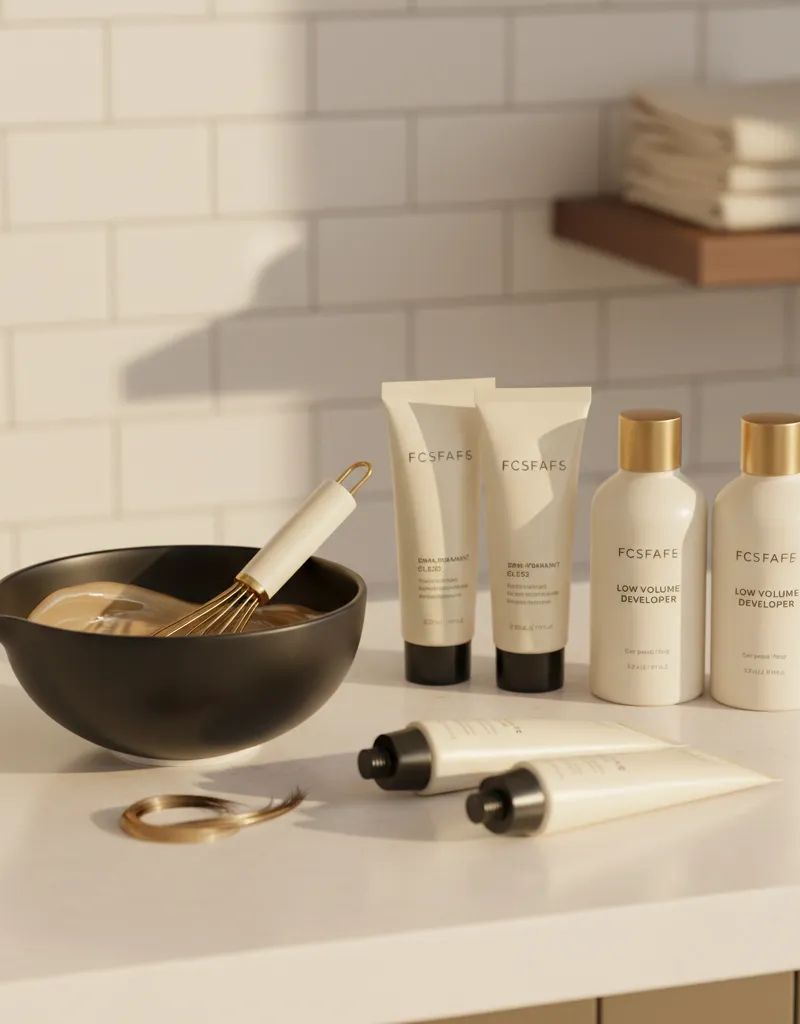
- Demi-permanent color or specific gloss
- 6-10 volume developer (according to brand)
- Bowl and brush
- Gloves
- Timer
- Shampoo and conditioner
Step 1: Diagnosis
Before formulating, assess:
- Current level of the hair
- Porosity (affects absorption and duration)
- History of previous services
- Client’s objective
Step 2: Formulation
The standard ratio is 1:2 (color:developer), but it varies by brand:
| Brand Type | Ratio | Developer |
|---|---|---|
| Redken Shades EQ | 1:1 | Processing solution |
| Wella Color Touch | 1:2 | 6 vol (1.9%) |
| L’Oréal Dia | 1:1.5 | 6 vol |
| Schwarzkopf Igora Vibrance | 1:2 | 6 vol |
To better understand how developers and volumes work, check out our specific guide.
Pro tip: Use lower volume developer for porous hair. It absorbs faster and can go darker.
Step 3: Application
On virgin or uniform hair:
- Apply from roots to ends
- Saturate each section well
- Comb through to distribute evenly
On hair with technical services (highlights, balayage):
- Start with the lightest areas
- Work toward the darker ones
- Avoid product buildup on ends (more porous)
Step 4: Processing Time
| Objective | Time |
|---|---|
| Shine without change | 5-10 min |
| Toning blondes | 10-15 min |
| Color deposit | 15-20 min |
| Maximum deposit | 20-30 min |
Watch the development: Gloss can darken more than expected on porous hair. Better to go short and repeat than overcorrect.
Processing Times by Hair Condition
According to the Society of Cosmetic Chemists, demi-permanent products on high-porosity hair deposit pigment up to 50% faster than on virgin hair. Adjust your timing based on condition:
| Hair Condition | Porosity | Starting Time | Check Interval | Maximum Time |
|---|---|---|---|---|
| Virgin | Low | 15 min | Every 5 min from min 10 | 25 min |
| Previously colored | Medium | 12 min | Every 5 min from min 8 | 20 min |
| Bleached | High | 8 min | Every 3 min from min 5 | 15 min |
| Damaged / very porous | Very high | 5 min | Every 2 min from min 3 | 10 min |
Step 5: Emulsify and Rinse
- Add water and massage (emulsify)
- Rinse with lukewarm water until it runs clear
- Apply conditioner (not shampoo)
- Rinse
Shampoo can remove freshly deposited pigment. Let the color set 24-48 hours before the first wash.
How to Formulate Gloss by Objective?
To neutralize orange: level 8-9 gloss with ash (.1) or violet (.2) reflect, 10-15 minutes. To neutralize yellow: level 9-10 with violet (.2), 5-10 minutes. To add warmth: copper (.4) or gold (.3) reflect, 15-20 minutes. For pure shine: clear or 000 color with the minimum volume available.
To Neutralize Orange (Unwanted Warm Blondes)
- Base: level 8-9 gloss
- Add: ash (.1) or violet (.2)
- Time: 10-15 minutes
To Neutralize Yellow (Very Light Blondes)
- Base: level 9-10 gloss
- Add: violet (.2) or pearl (.12)
- Time: 5-10 minutes (careful with purple!)
To Add Warmth (Coppers, Golds)
- Base: gloss at desired level
- Add: copper (.4) or gold (.3)
- Time: 15-20 minutes
For Shine Without Change (Clear Gloss)
- Color: clear or 000
- Developer: minimum volume available
- Time: 10-15 minutes
What Are the Common Gloss Mistakes and How to Avoid Them?
The five most common mistakes are: leaving gloss too long on porous hair (it can darken up to 50% more than expected), not evaluating the underlying pigment before toning, using 20-30 vol developer instead of 6-10 vol, applying on hair with styling products, and promising 3-month duration when gloss lasts only 4-8 weeks.
1. Excessive Time on Porous Hair
The mistake: Leaving gloss 20+ minutes on bleached hair.
The result: Darker color than expected, sometimes ashy-gray.
The solution: Start with 5-10 minutes and monitor. Better to repeat than correct.
2. Not Considering the Underlying Pigment
The mistake: Applying ash gloss over orange base expecting cool blonde.
The result: Muddy tone, greenish-brown.
The solution: Neutralize the orange first, then tone.
3. Using Wrong Developer
The mistake: Mixing gloss with 20 or 30 volume developer.
The result: Unwanted lift, unnecessary damage.
The solution: Always use the specific developer for the gloss line (6-10 vol maximum).
4. Applying on Dirty Hair
The mistake: Gloss over hair with styling products.
The result: Uneven application, spots.
The solution: Wash with clarifying shampoo before the service.
5. Promising Excessive Duration
The mistake: Saying “it’ll last 3 months” when it’s demi-permanent.
The result: Disappointed client when the color fades.
The solution: Be honest: 4-8 weeks depending on care and washes.
What Maintenance Tips Should You Give Your Client After Gloss?
To extend gloss longevity: wait 48 hours before the first wash, use sulfate-free shampoo, rinse with lukewarm or cold water, apply pigmented treatments every 2 weeks, and avoid excessive heat from flat irons or dryers. With these steps, results extend from 4 to 8 weeks.
For longer-lasting gloss, recommend:
- Wait 48 hours before first wash
- Sulfate-free shampoo to preserve color
- Lukewarm or cold water when rinsing
- Color treatments every 2 weeks
- Avoid excessive heat (flat irons, very hot dryer)
Frequently Asked Questions
Does gloss damage hair?
Not significantly. By not using high-volume developers, gloss doesn’t open the cuticle like permanent dye. In fact, it can improve hair appearance by sealing the cuticle and adding shine. It’s one of the gentlest options for changing or refreshing color.
Can I give gloss to my clients for at-home maintenance?
It’s not recommended to give professional product for home use. However, you can recommend maintenance products like pigmented masks or toning shampoos to extend results between appointments.
Does gloss cover gray hair?
Partially. A gloss can blend up to 50% gray, giving them a “veil” effect rather than full coverage. For more than 50% gray, you need professional gray coverage with permanent dye.
How much to charge for a gloss service?
It depends on your market, but generally gloss is charged at 40-60% of permanent dye price. Consider the product used, application time (shorter), and the added value of shine.
Can I mix different gloss colors?
Yes, mixing works the same as with permanent dye. You can create custom tones by mixing bases and toners. Just make sure to use products from the same line for predictable results. When switching between gloss brands, our hair color brand converter helps you find the closest equivalent shade.
Recommended Gloss Products
These are the professional glosses we recommend most to colorists for their performance, tone variety and consistent results:
- Wella Color Touch — The classic. Wide shade range, partial gray coverage up to 70%, natural result. Ratio 1:2 with 1.9% developer.
- Redken Shades EQ — High-end salon favorite. Gel texture for easy application, even color deposit. Ratio 1:1 with processing solution.
- Schwarzkopf Igora Vibrance — Excellent shine and durability. Ammonia-free formula with polymer technology. Ratio 1:2 with 6 vol developer.
- L’Oreal Dia Light — Ideal for quick neutralizations. Own 6 vol developer, more transparent results. Ratio 1:1.5.
This article contains affiliate links. If you purchase through them, we receive a small commission at no additional cost to you. We only recommend products that trusted professionals endorse.
In Summary
Hair gloss is a versatile tool every professional colorist should master:
- What it is: Demi-permanent color that deposits without lift
- When to use it: Post-techniques, color testing, maintenance, neutralization
- Technique: Low developer (6-10 vol), short times, monitor development
- Common mistakes: Excessive time on porous hair, wrong developer
- Duration: 4-8 weeks depending on care
Gloss can be a profitable add-on service your clients will appreciate. Salon shine, low commitment, and a perfect excuse to see them more often.
Want to calculate gloss formulas with precision? Try Blendsor free. The app suggests formulations based on your client’s goals, including neutralizations and toning.
Related articles
Practice with our free tools
Calculators, neutralization wheel, AI consultation...
The Monday Briefing
Color techniques and trends for professionals. No spam.
Master this technique with exact formulas
Blendsor generates the precise formula for each technique with your brand products. Try the mix calculator or download the app.
Download freeWritten by the Blendsor team
Professional hair colorimetry experts with experience in AI-assisted formulation. We combine color science, salon practice and technology to help colorists formulate with precision.