Metals in Hair: The Invisible Enemy of Bleaching
Discover how hard water metals ruin your bleaching results. Professional protocol for detecting and neutralizing metals with chelating treatment.
Blendsor
Blendsor Team
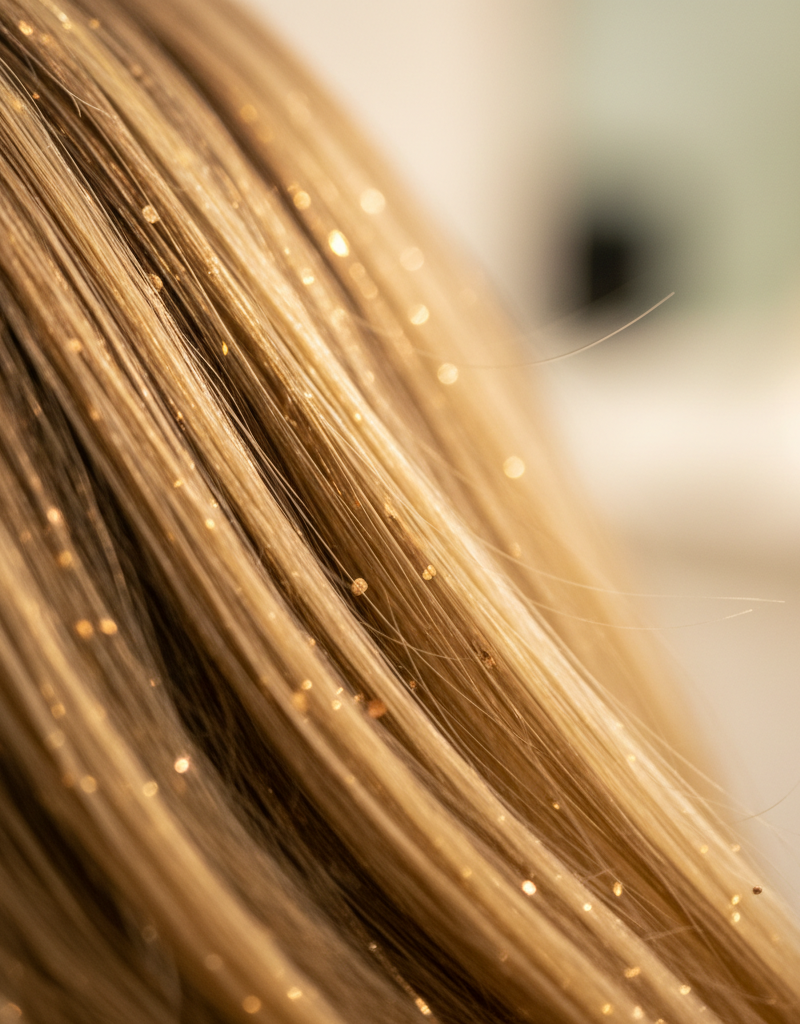
Has your bleaching come out uneven, with greenish tones or unexpected breakage, even though the product was good and the technique was correct?
If you’re a professional colorist, this has probably happened more than once. And you likely blamed the lightener, the processing time, or the developer volume. But the real culprit may be invisible: metals accumulated in the hair fiber.
Metals in hair — primarily iron, copper, and manganese — deposit with every wash through tap water and react unpredictably with peroxide during bleaching. According to the Water Quality Association, over 85% of American homes have hard water with high mineral concentration. This article complements our complete guide to professional coloring techniques with a professional protocol for detecting and neutralizing metals before lightening.
What Are Metals in Hair and Where Do They Come From
Heavy metals in hair are microscopic mineral particles that adhere to the cuticle and penetrate the cortex over time. They’re invisible to the naked eye and don’t alter the hair’s texture or shine under normal conditions. But when they come into contact with an oxidizing agent, everything changes.
There are three main sources of metallic contamination:
| Source | Main Metals | Prevalence | Bleaching Risk |
|---|---|---|---|
| Hard tap water | Iron, calcium, magnesium | Very high (85%+ of US homes) | High: progressive buildup |
| Metallic salt dyes | Lead, bismuth, silver | Medium (henna, box dye) | Very high: exothermic reaction |
| Pool water | Copper (copper sulfate) | Low-medium (seasonal exposure) | Medium-high: green tones |
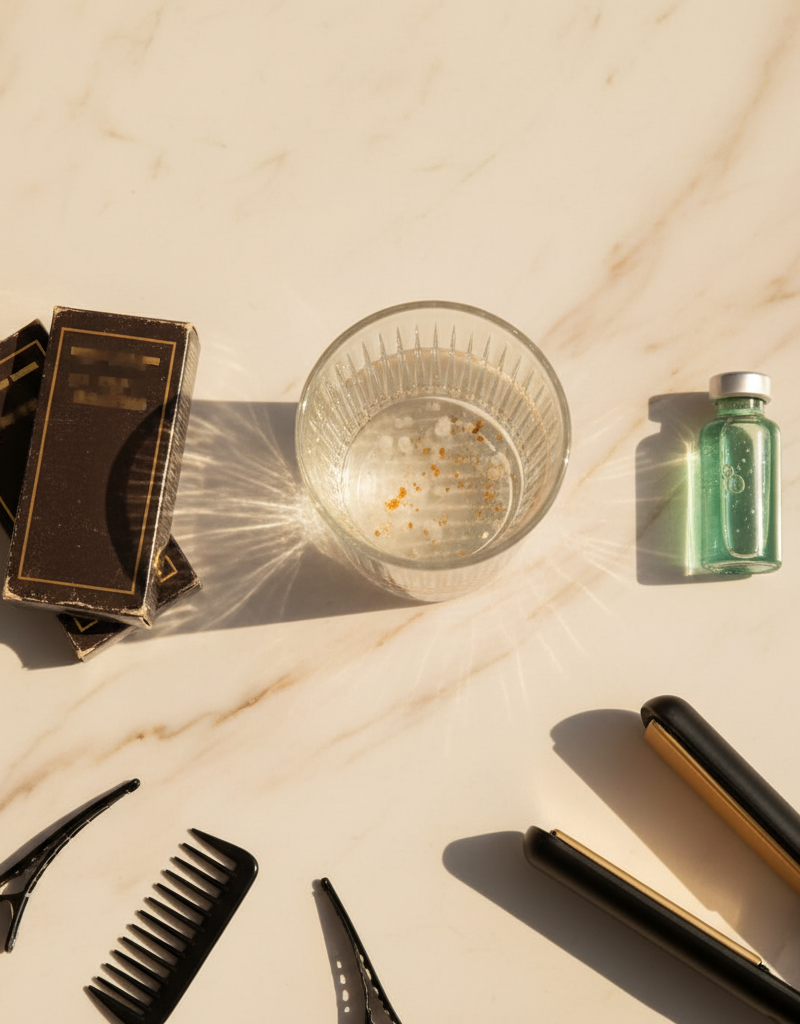
The Hard Water Problem
Hard water areas span most of the United States, UK, and southern Europe. If your salon is in one of these areas, all your clients have metals in their hair. It’s not a question of whether they have them, but how much.
Iron is the most problematic because it reacts directly with the hydrogen peroxide in your developer, generating free radicals that attack the keratin.
Metallic Salts in Box Dyes
When a client arrives with a history of at-home coloring, the alert should be at maximum. Many retail dyes contain metallic salts (lead acetate, bismuth) as progressive coloring agents. These metals accumulate layer upon layer and are extremely reactive with professional lighteners.
Pro tip: Always ask if the client has used box dye, henna, or progressive coloring in the last 12 months. A “just once” can be enough to cause problems.
How Metals Affect Bleaching
When the lightener (which contains hydrogen peroxide) comes into contact with metals deposited in the fiber, an exothermic reaction occurs — meaning it generates heat. This reaction is responsible for the unpredictable results that are so frustrating.
Visible effects include:
- Greenish or bluish tones: Copper reacts with peroxide producing copper oxide, which stains the fiber green
- Uneven lightening: Metals aren’t distributed uniformly, so some zones lighten more than others
- Hair breakage: The excessive heat from the exothermic reaction destroys the disulfide bonds in keratin
- Gummy texture: The fiber loses its internal structure and becomes elastic and brittle
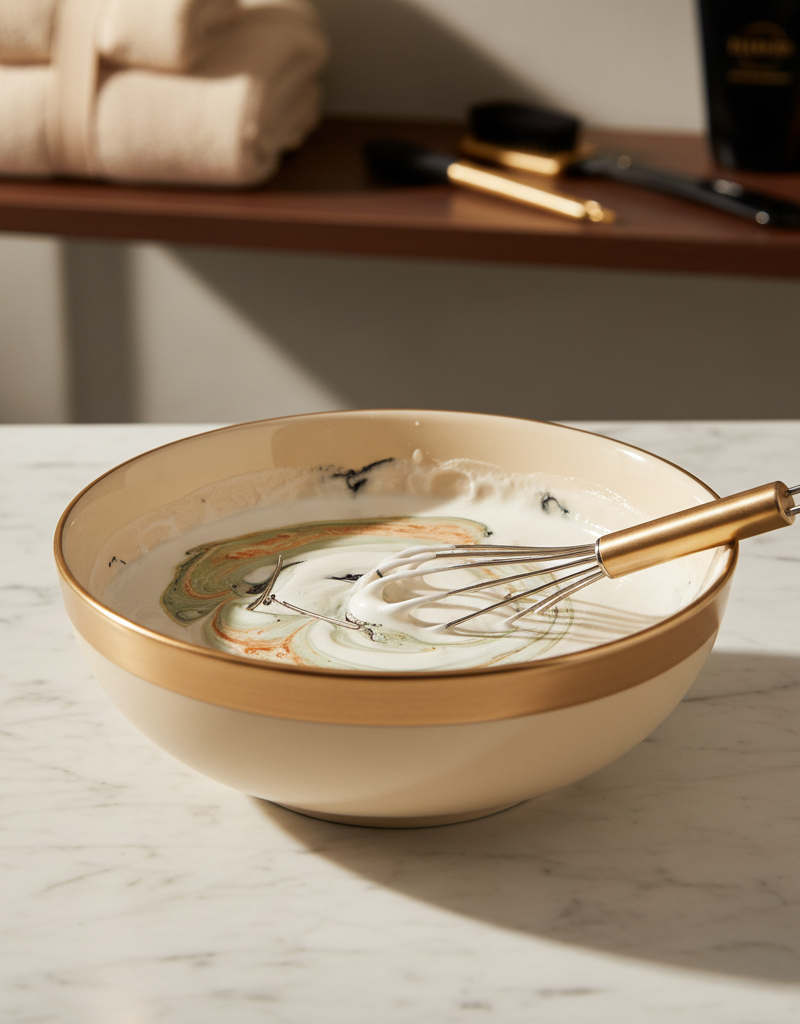
In severe cases, the reaction can be so intense that the lightener bubbles or smokes in the bowl. If you see this during a strand test, stop immediately.
This type of damage is similar to what occurs from poor developer volume selection, a topic we cover in detail in developer volumes: which to use and why.
How to Detect Metals Before Bleaching
Metal detection should be part of your standard hair diagnosis protocol, alongside porosity assessment and service history review.
Strand Test Protocol for Metals
This is the most reliable method and requires no special equipment:
- Cut a small strand from the most exposed area (nape or hairline)
- Prepare a mixture of lightener with the developer you plan to use
- Apply to the strand and observe for 10 minutes
- Evaluate results according to this table:
| Signal During Test | Meaning | Action |
|---|---|---|
| Even lightening, no heat | No significant metals | Proceed normally |
| Mixture heats up quickly | Metals present (moderate level) | Chelate before bleaching |
| Greenish or bluish tones | Copper present | Chelate + reduce developer volume |
| Bubbling or effervescence | High metal concentration | Do not bleach. Intensive chelating treatment first |
| Immediate strand breakage | Metallic salts from previous dyes | Do not bleach. Refer or multi-month treatment |
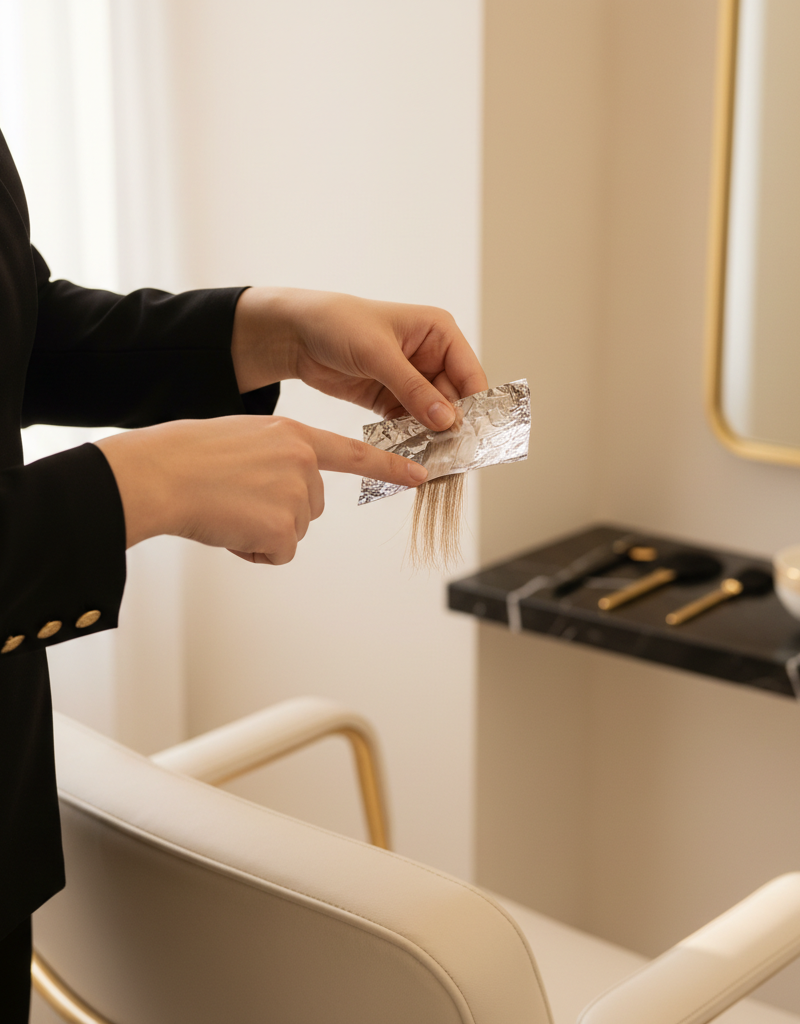
Pro tip: Do the strand test 24 hours in advance if you suspect metals. This gives you time to plan the chelating treatment without schedule pressure.
How to Neutralize Metals with Chelating Shampoo
Chelating shampoo (or chelating treatment) contains agents that bind to metal ions and pull them out of the hair fiber. It’s different from clarifying shampoo, which only removes surface residue.
Pre-Bleaching Chelating Protocol
| Step | Action | Time | Notes |
|---|---|---|---|
| 1 | Wash with chelating shampoo | 5 min contact | Massage well, don’t rinse quickly |
| 2 | Repeat the wash | 5 more min | Two washes is the minimum |
| 3 | Rinse with filtered water (if possible) | 2 min | Hard water re-deposits metals |
| 4 | Dry and repeat strand test | 15 min | Verify metals have been reduced |
| 5 | If test is negative, proceed | — | Use conservative developer volume |
Professional Products with Chelating Action
L’Oréal Professionnel Metal Detox is currently the most well-known line with this specific function. Other professional options include Malibu C Crystal Gel and K18 Molecular Repair. The choice depends on the contamination level and salon budget.
What matters isn’t the brand. What matters is that chelating treatment becomes a non-negotiable step before any lightening service in hard water areas.
Common Mistakes When Bleaching Hair with Metals
These are the most common formulation errors specific to bleaching with metal presence:
-
Not doing a strand test: The most serious and most frequent mistake. Overconfidence in experience doesn’t replace a 10-minute test
-
Increasing developer volume to compensate: If bleaching isn’t lightening as expected, going from 20 to 30 volume with metals present worsens the exothermic reaction. Lower volume, more time is the rule
-
Relying only on verbal questioning: Many clients don’t remember (or don’t know) if their previous dyes contained metallic salts. The strand test doesn’t lie
-
Skipping chelating “because there’s no time”: A 10-15 minute chelating treatment can save you a 3-hour color correction. The math is clear
-
Bleaching without a water filter: If your salon is in a hard water area and you rinse with tap water after chelating, you’re re-depositing the same metals you just removed
Frequently Asked Questions
How do I know if my salon’s water is hard?
You can check your municipal water quality report (publicly available) or use water hardness test strips available at hardware stores. Water with more than 120 mg/L of calcium carbonate is considered hard. If your salon is in the Southwest US, Florida, or most of the UK, it most likely is.
How often should recurring clients get chelating treatment?
For clients with regular lightening services in hard water areas, a pre-service chelating should be standard. For maintenance between appointments, a take-home chelating treatment once a month is sufficient to keep metal levels under control.
Does chelating damage or dry out hair?
No. Professional chelating agents are formulated to act on metal ions without altering the keratin structure or removing natural lipids. It’s not the same as an aggressive clarifying shampoo. In fact, by removing metals, hair usually feels softer after treatment.
Can I bleach if the strand test shows mild metals?
Yes, as long as you do the chelating treatment first and reduce the developer volume. With mild metals (the mixture heats up but doesn’t bubble), a double chelating wash + 20-volume developer with constant monitoring is usually safe. Never use 30 or 40 volume with metals present.
Key Takeaways
- Hard water metals accumulate in hair with every wash and react with lightener unpredictably
- The strand test is mandatory before any lightening service, especially if the client has a history of box dye or lives in a hard water area
- Chelating shampoo is the most effective solution and should be standard protocol in hard water area salons
- Lower volume, more time is the rule when metals are present
- 10 minutes of chelating can save you hours of correction and a client complaint
Calculate Bleaching Formulas with AI
Want to generate personalized lightening formulas based on each client’s history and starting level?
Try Blendsor free - 5 formulas per month, no credit card required.
Related articles


Practice with our free tools
Calculators, neutralization wheel, AI consultation...
Master this technique with exact formulas
Blendsor generates the precise formula for each technique with your brand products. Try the mix calculator or download the app.
Download free