Safe Hair Lightening: How to Prepare the Hair Before Bleaching
Professional protocol for safe hair lightening without damage. Elasticity test, pre-service diagnosis, developer selection, and protective techniques step by step.
Blendsor
Blendsor Team
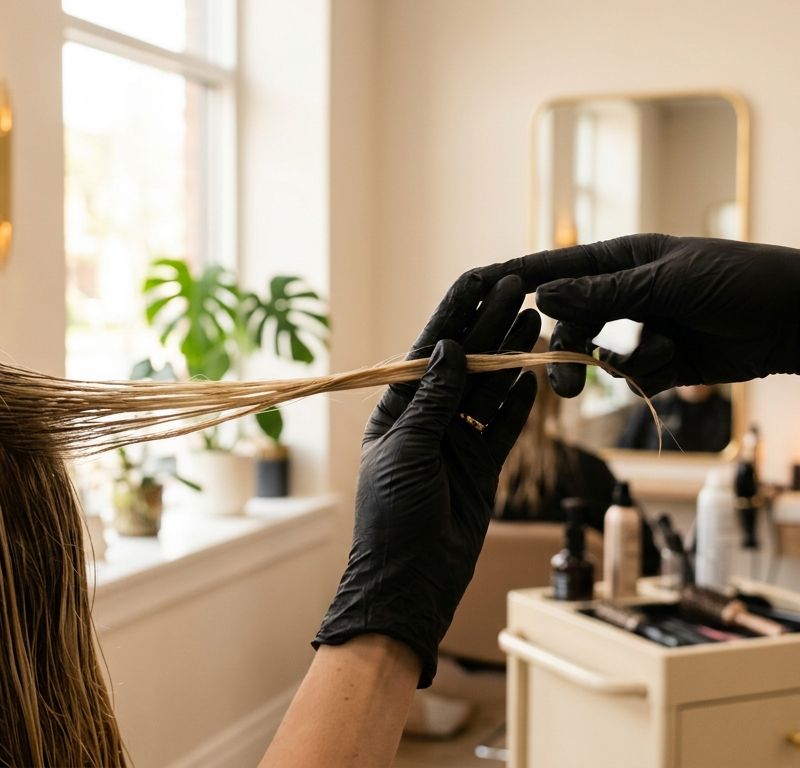
How many times have you started a bleaching service and known within 15 minutes the hair wasn’t going to hold up?
If you work in color, you know that feeling. The client wants a luminous blonde for spring and you’re calculating whether the strand can survive the process. Safe hair lightening doesn’t start in the mixing bowl — it starts during the pre-service assessment, when you decide whether the hair is ready at all.
This guide covers the complete protocol for lightening without compromising hair integrity. From the elasticity test to developer selection, every step you need to deliver the result you promised. For the technical foundation behind the entire process, see our complete professional coloring techniques guide.
Why the Pre-Service Diagnosis Changes Everything
80% of bleaching problems can be prevented before the bleach is even mixed. According to the International Association of Trichologists, the resistance of the hair fiber depends on three factors: porosity, metal deposits, and the condition of the disulfide bonds. If any one of those three is compromised, bleaching becomes a gamble.
The problem is that many colorists assess the hair only visually. You see a level 5, estimate the lift needed, and pick a developer. What you can’t see is the hair’s chemical history: how many times it’s been lightened before, what products have been used, whether hard water has deposited minerals into the fiber.
What to Evaluate Before Touching the Bleach
| Factor | What You’re Looking For | How to Assess It | Risk if Ignored |
|---|---|---|---|
| Porosity | Cuticle condition | Water glass test or tactile test | Uneven absorption, banding |
| Elasticity | Cortex integrity | Stretch a wet strand | Breakage during the service |
| Metals | Mineral deposits | Strand test with bleach | Exothermic reaction, green cast |
| Chemical history | Previous services | Consultation + observation | Over-lightening, snapping |
Professional tip: If the client can’t remember how many times she’s been lightened, assume the worst-case scenario. Better to be conservative with developer volume than to deal with breakage.
The Elasticity Test: Your Safety Net
The hair elasticity test before lightening is the step that separates a colorist who improvises from one who controls the outcome. It takes 30 seconds and can save you hours of correction work.
Take a wet strand from the most processed area (usually mid-lengths and ends). Gently stretch it between your fingers. Healthy hair stretches about 30% of its length and returns to position. If it stretches beyond 50% and doesn’t spring back, the disulfide bonds are compromised.
How to Read the Results
| Result | What It Means | Recommended Action |
|---|---|---|
| Stretches ~30% and returns | Healthy fiber | Safe to lighten |
| Stretches ~50%, returns slowly | Weakened fiber | Max 20 vol, reduce timing by 30% |
| Stretches >50%, doesn’t return | Broken bonds | Do not lighten. Rebuild treatment for 2–4 weeks |
| Snaps when stretched | Severely compromised | Lightening is contraindicated |
The difference between a spectacular result and a catastrophic snap often comes down to this 30-second test. If you want to go deeper on how porosity affects the entire coloring process, read the guide on hair porosity and coloring.
Developer Selection: Less Is More
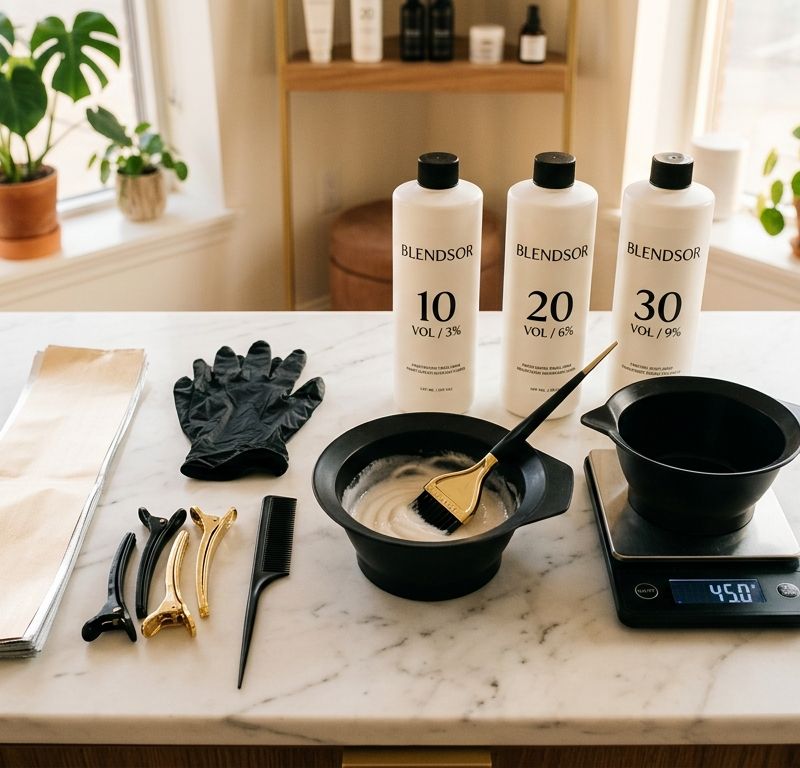
The most common mistake in lightening services is reaching for too high a volume to speed things up. But bleaching doesn’t work that way. A 30 volume developer isn’t “faster” than a 20 — it’s more aggressive. And aggressive doesn’t mean efficient.
For safe hair lightening, the general rule is:
| Volume | Levels of Lift | When to Use |
|---|---|---|
| 10 vol | 0.5–1 level | Toning, color deposit |
| 20 vol | 1–2 levels | Gentle lift, gray coverage, root touch-ups |
| 30 vol | 2–3 levels | Medium lift, highlights |
| 40 vol | 3–4 levels | Virgin, resistant hair only |
If you need more than 3 levels of lift on previously processed hair, don’t increase the volume — split the service into two sessions. Fiber integrity is non-negotiable.
For a complete guide on which developer to use in each situation, see developer volumes: which to use and why.
Salon Temperature Matters
A detail many overlook: the ambient temperature of the salon affects oxidation speed. In summer with the salon at 82°F (28°C), a 30 vol bleach processes faster than in winter at 68°F (20°C). If you’re doing spring lightening services, keep in mind that heat accelerates the process — you may need to reduce exposure time by 10% to 20%.
Pre-Lightening Preparation Protocol
Before starting any lightening service, follow this protocol in order:
- Consultation: Complete chemical history. Ask about relaxers, keratin treatments, previous color, and home products with heavy silicones
- Visual inspection: Look for banding, porous zones, split ends
- Elasticity test: On three distinct sections (roots, mid-lengths, ends)
- Strand test: If you suspect metal deposits, perform a strand test with bleach before the full service
- Developer decision: Based on the results, not the schedule
- Client communication: If the assessment indicates risk, explain alternatives before you begin
Bond Builders Before Lightening: Myth or Necessity?
Pre-lightening treatments like Olaplex No.1 or Fibreplex don’t perform miracles. What they do is reinforce the disulfide bonds during the chemical process, reducing breakage. According to manufacturer data, using a bond protector reduces breakage by up to 68% during lightening.
Are they necessary? If the hair passed the elasticity test without issues and this is the first lightening service, probably not. If there’s a history of chemical services or elasticity is borderline, they’re an investment worth making.
| Situation | Bond Builder? | Reason |
|---|---|---|
| Virgin, healthy hair | Optional | Fiber can handle it without help |
| First lightening on previously processed hair | Recommended | Preventive reinforcement |
| Multiple previous lightening services | Mandatory | Fiber already compromised |
| Borderline elasticity | Mandatory | Without protection, high risk |
Mistakes That Ruin a Safe Lightening Service
Even with a thorough diagnosis, execution errors can turn a safe service into a disaster:
- Applying bleach on silicone-coated hair: Heavy silicones create a barrier that causes uneven lift. If the client uses products with dimethicone, clarify first
- Improper sectioning: Thick sections mean uneven lightening. Work with sections no thicker than ¼ inch (0.5 cm) for a uniform result
- Ignoring body heat: The root zone lightens faster due to scalp heat. On full-head lightening, apply mid-lengths and ends first, roots last
- Not checking every 10 minutes: The bleach won’t tell you when it’s done. Check visually every 10 minutes and remove when you reach the desired underlying pigment level
Professional tip: If you notice the bleach has dried at the ends before the process is complete, don’t leave it on longer. Dry bleach doesn’t lift — it only damages. Remove it, rehydrate the fiber, and assess whether a second application is needed.
Preparing Hair for Spring: Your Action Plan
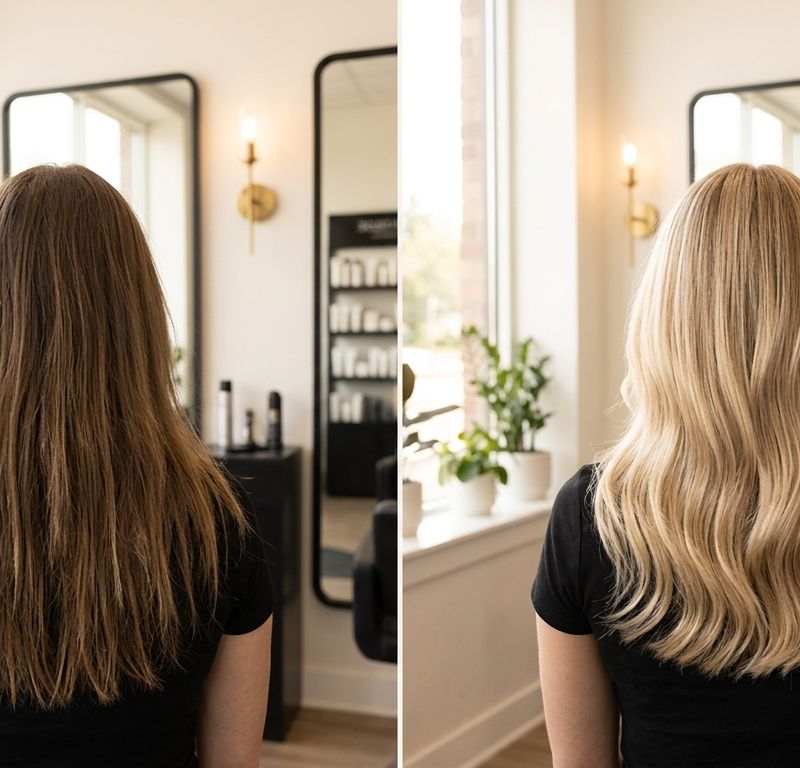
Spring is the peak season for lightening services. Clients want luminosity, lighter dimension, a fresher look. But the hair that arrives at your chair after winter isn’t always ready for it.
3-visit preparation plan:
- Visit 1 (2–4 weeks before): Full assessment + rebuilding treatment if needed. Trim damaged ends
- Visit 2 (1 week before): Deep hydrating treatment. Verify that elasticity has improved
- Visit 3 (service day): Final test + lightening with the full protocol
This plan isn’t for everyone. If the hair is healthy and virgin, a single visit is enough. But for hair with a history of heat, chemical services, or hard water, these three visits are the difference between a result that lasts and a result that snaps.
Frequently Asked Questions
Can I safely lighten gray hair?
Yes, but gray hair has less melanin and a different structure. It needs less processing time and a 20 vol developer is usually sufficient. Gray lifts faster than pigmented hair, so watch those zones closely — especially where gray concentration is highest.
How long should I wait between two lightening sessions?
At minimum 4 weeks, ideally 6. The fiber needs time to recover and intermediate treatments need time to work. If a client is in a rush, explain that two sessions with a gap between them produce better results than one aggressive session.
Is foil lightening safer than open-air lightening?
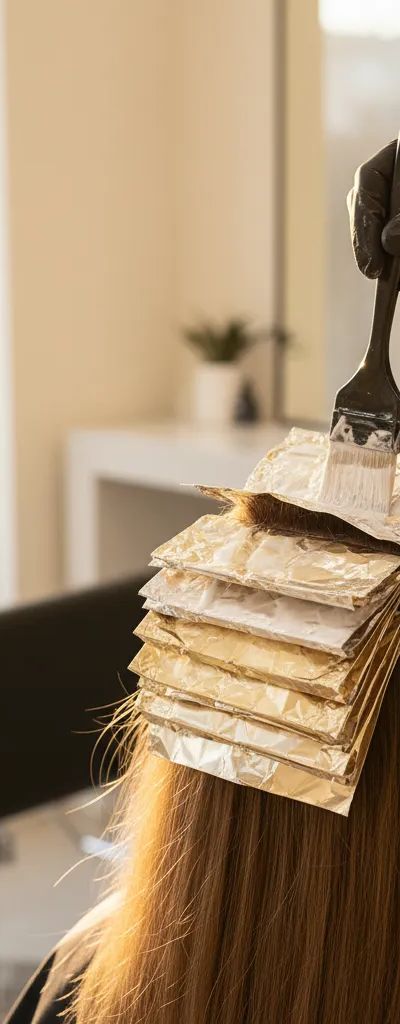
They’re different techniques, not better or worse. Foil concentrates heat and speeds up processing, which lets you use a lower volume developer. Open-air application is gentler but slower. For controlled safe lightening, foil with 20 vol is often the most manageable combination.
How do I know if my water is affecting lightening results?
If your bleaching results keep coming out greenish, unexpectedly orange, or with rough texture despite using quality products, there are likely metals in the water. Install a filter at the shampoo bowl or use a chelating treatment before the service.
Key Takeaways
- Diagnose before you mix: Elasticity test, porosity assessment, and chemical history are non-negotiable
- Choose the developer for safety, not speed: Two gentle sessions beat one aggressive one
- Temperature matters: In summer, reduce timing by 10–20%
- Bond builders: Mandatory on hair with a history of chemical services
- Preparation plan: For compromised hair, start the process weeks before the lightening service
Calculate Professional Formulas with AI
Want to generate personalized lightening formulas based on each client’s starting level and hair condition?
Try Blendsor free — 5 formulas per month, no credit card required.
Related articles


Practice with our free tools
Calculators, neutralization wheel, AI consultation...
The Monday Briefing
Color techniques and trends for professionals. No spam.
Master this technique with exact formulas
Blendsor generates the precise formula for each technique with your brand products. Try the mix calculator or download the app.
Download freeWritten by the Blendsor team
Professional hair colorimetry experts with experience in AI-assisted formulation. We combine color science, salon practice and technology to help colorists formulate with precision.