Baby Copper Hair: Professional Formula for Subtle Copper
How to formulate baby copper hair by natural level (5 to 8) with exact proportions. The subtle copper your clients are requesting this spring 2026.
Blendsor
Blendsor Team
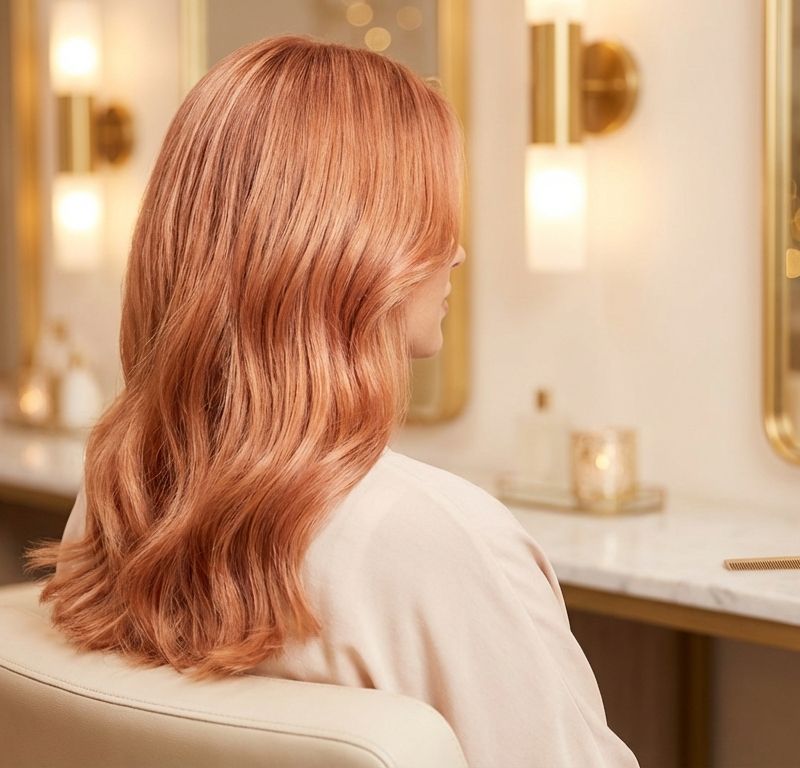
Has your client walked in with a photo of Addison Rae or Emma Stone saying “I want that copper, but not so red”?
If you work with copper tones regularly, you already know this request. And there is a specific name for what she is asking for: baby copper hair. It is the trend that Cosmopolitan US confirmed as spring 2026’s biggest red hair color moment on March 28th. And it comes with a major advantage for the salon: it requires less lift than classic copper, which means less damage and less time in the chair.
Quick summary: Baby copper is a subtle copper between levels 7 and 8, with a peach-rose-gold undertone. It differs from classic copper by its reduced saturation, and from strawberry blonde by its stronger copper base. The formulation key is combining .4 and .34 reflexes with measured doses of .35 (copper-mahogany). It requires lifting only 1-2 levels, not 3-4 like saturated copper. Ideal for clients with natural levels 5 through 8.
What exactly is baby copper hair?
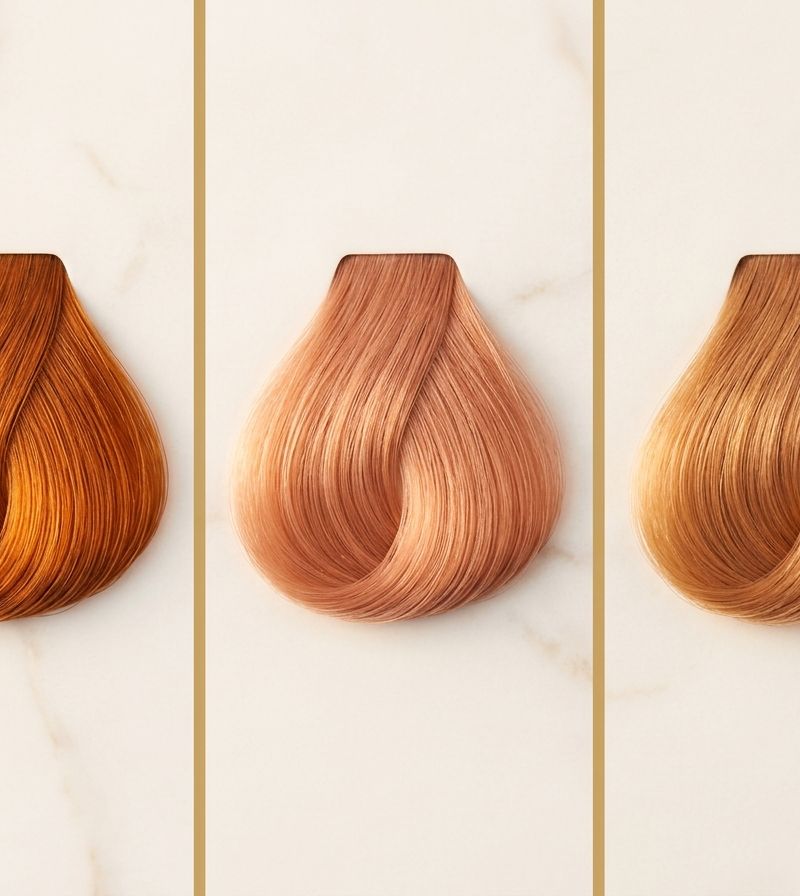
Baby copper hair is a subtle copper between levels 7 and 8 with peach-gold and warm rose undertones. It does not reach the saturation of classic copper, nor the yellow-gold warmth of strawberry blonde — it occupies the space between the two. According to Behind the Chair, muted and rosy copper tones are the fastest-growing salon requests in the first quarter of 2026.
Baby copper is not a saturated copper with the intensity dialed down. It is its own chromatic family. The difference is in the undertones: where classic copper uses a dominant .4 (pure copper) reflex, baby copper blends .4 with .34 (golden-copper) and a touch of .35 (copper-mahogany) to create a more subdued, almost peachy warmth — like ginger freckles on fair skin.
The name says it all: a copper that has not fully grown up yet. Luminous, warm, but without the aggressive orange of classic copper. For many clients who always wanted copper but never dared, this is exactly the way in.
Baby copper vs classic copper vs strawberry blonde
How many times have you had to explain the difference between three tones that look the same in a photo but are completely different formulations? This table saves you that conversation.
| Feature | Baby Copper | Classic Copper | Strawberry Blonde |
|---|---|---|---|
| Target level | 7-8 | 6-8 | 8-9 |
| Dominant undertone | Peach-rose | Orange-copper | Gold-strawberry |
| Main reflexes | .4 + .34 + .35 | .4 + .43 | .3 + .34 + .43 |
| Saturation | Medium-low | High | Medium |
| Lift required | 1-2 levels | 2-3 levels | 2-3 levels |
| Maintenance | Low (7-9 weeks) | Medium (5-7 weeks) | Medium (6-8 weeks) |
| Best for natural level | 5-8 | 4-7 | 6-8 |
Classic copper pushes toward orange. Strawberry blonde pushes toward golden-strawberry. Baby copper sits right in the middle: enough copper to be recognizable, enough rose to stay soft. This is the distinction that sends your client home happy instead of hearing “it came out too orange.”
Professional baby copper formulas by natural level
This is where the difference between colorists shows. The same tone can come out perfect or end up flat orange depending on how you adjust the reflexes to the starting level. Here are the formulas per natural level, consistent with Wella, Schwarzkopf, and L’Oréal systems.
Before formulating: Always assess hair porosity. Highly porous hair absorbs more copper reflex — reduce the processing time or add a bit more .3 (gold) to soften the saturation.
Natural level 5 (dark brown)
From level 5 you need to pre-lighten before depositing color. The target underlying pigment is yellow-orange (approximately level 6-7) so the baby copper settles with the desired softness.
Step 1 — Pre-lightening:
- Bleach mixture with 20 vol (6%)
- Target: level 6-7 (yellow-orange underlying pigment)
- Timing: 25-35 minutes depending on hair resistance
Step 2 — Baby copper toning:
- Wella Koleston Perfect: 7/43 + 7/34 (ratio 2:1) with 20 vol — 30 minutes
- Schwarzkopf Igora Royal: 7-43 + 7-34 (ratio 2:1) with 20 vol — 30 minutes
- L’Oréal INOA: 7.43 + 7.34 (ratio 2:1) with 20 vol — 35 minutes
The result from level 5 is a baby copper with more body and depth. Ideal for clients who want subtle copper but with presence.
Natural level 6 (medium brown)
The ideal starting point for baby copper. From level 6 you can go straight with a permanent oxidative color without pre-lightening, or lift one level with demi-permanent for an even softer result.
Direct option (permanent oxidative):
- Wella Koleston Perfect: 7/4 + 7/34 + 7/35 (ratio 1:1:0.5) with 20 vol — 35 minutes
- Schwarzkopf Igora Royal: 7-4 + 7-34 + 7-35 (ratio 1:1:0.5) with 20 vol — 35 minutes
- L’Oréal INOA: 7.4 + 7.34 (ratio 1:1) with 20 vol — 35 minutes
Gentle option (demi-permanent):
- Wella Color Touch: 7/43 + 7/3 (ratio 2:1) with 1.9% — 20 minutes
- Schwarzkopf Igora Vibrance: 7-43 + 7-3 (ratio 2:1) with 1.9% — 20 minutes
Pro tip: For clients who have never had copper and are afraid it will come out “too orange,” always start with the demi-permanent option. If at the next appointment they want more intensity, move to permanent. Much easier than correcting a saturated copper.
Natural level 7 (dark blonde)
Level 7 is the sweet spot for baby copper. The base already has enough warmth to support the result without overloading, and the lift required is minimal (0-1 levels).
Main formula (classic baby copper result):
- Wella Koleston Perfect: 8/34 + 7/4 (ratio 2:1) with 20 vol — 30 minutes
- Schwarzkopf Igora Royal: 8-34 + 7-4 (ratio 2:1) with 20 vol — 30 minutes
- L’Oréal INOA: 8.34 + 7.4 (ratio 2:1) with 20 vol — 30 minutes
Strawberry copper formula (rosier variant):
- Wella Koleston Perfect: 8/34 + 9/3 + touch of 8/45 (ratio 2:1:0.3) with 10-20 vol — 25 minutes
- Schwarzkopf Igora Royal: 8-34 + 9-3 + 8-46 (ratio 2:1:0.3) with 10-20 vol — 25 minutes
The strawberry copper variant is a natural upgrade for clients who ask for baby copper but reference something more rosy or strawberry-tinted. Celebrities like Madeleine Petsch and Ravyn Lenae are wearing exactly this chromatic range right now.
Natural level 8 (light blonde)
From level 8 you only need to deposit tone. No bleach, no high developers. This is baby copper’s key advantage over classic copper: with the natural level already close to the target, the process involves minimal damage.
Deposit-only formula (minimum damage):
- Wella Koleston Perfect: 8/43 + 8/3 (ratio 1:1) with 10 vol — 20-25 minutes
- Schwarzkopf Igora Royal: 8-43 + 8-3 (ratio 1:1) with 10 vol — 20-25 minutes
- L’Oréal Dia Richesse: 8.43 + 8.3 (ratio 1:1) with 1.9% — 15-20 minutes
Maintenance gloss (between appointments):
- Wella Color Fresh: 8/43 + 8/34 (ratio 1:1) with water — 20 minutes
- To refresh shine without compromising hair structure
Pro tip: On level 8, the most common mistake is adding too much .4 (pure copper). Baby copper on light blonde needs to be subtle — if you see the result drifting toward orange, the formula is off balance. The .34 or .3 proportion should always equal or exceed the .4.
Application technique: why less lift gives better results
This is the part most trend tutorials skip. Baby copper is not just a formula — it is a working philosophy.
Classic copper aims for maximum saturation, which means taking the hair to very light underlying pigment before depositing the color. The result is intense, but the cost in damage and time is high.
Baby copper works the opposite way: the tone’s subtlety needs a base with some natural pigment to modulate the saturation. Over-lightening and then trying to mute the result with complex blends is the path to an expensive correction.
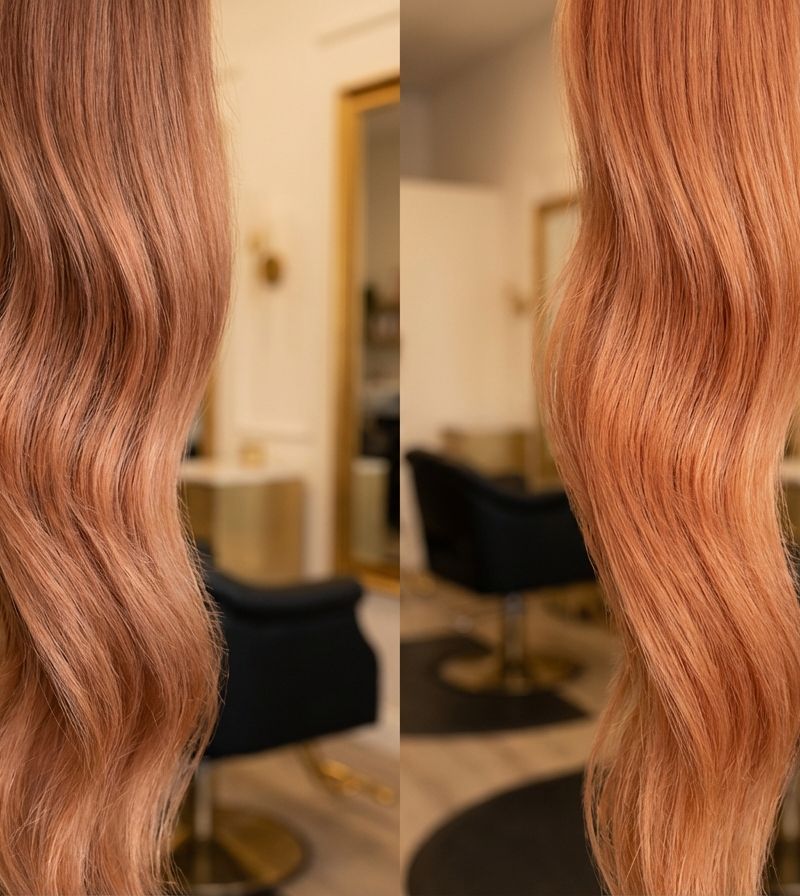
The most efficient baby copper process:
- Diagnosis — Real level, color history, porosity. If there is previous color, identify any cool reflexes that could neutralize the copper result.
- Minimal lift — Only the levels strictly necessary to reach the target (7-8). Nothing more.
- Precise formula — Reflexes .4 + .34 in proportions adjusted to the starting level (see table above). Never .4 alone.
- Time control — Between 20 and 35 minutes depending on the level and process. Check at 20 minutes to evaluate saturation.
- Optional neutralization — If the result has too much orange, a demi gloss with .34 or .3 for 5-10 minutes softens without eliminating the copper.
The result: less time in the chair, less damage, and a client who comes back sooner because maintenance is manageable. Saturated coppers require a touch-up at 5-6 weeks; baby copper holds 7-9 weeks with the right protocol.
This level of precision per client is exactly where tracking formulas properly pays off — level, color history, exact proportions, next appointment timing. The kind of data that makes each copper hair formula repeatable.
Maintenance: how to extend baby copper between appointments
Baby copper has an interesting characteristic: its natural fade is attractive. Unlike a saturated copper that turns into shapeless orange as it fades, baby copper shifts toward peach and gold tones. If your client understands this, the fading process is not a deterioration but an evolution of the tone.
That said, there are specific things that extend the result:
Wash protocol:
- Sulfate-free shampoo specific to color-treated hair — non-negotiable for copper tones
- Cool or lukewarm water when rinsing (heat opens the cuticle and accelerates pigment loss)
- Frequency: maximum 2-3 times per week
Toning mask:
- Once a week, a mask with copper or peach pigment (Wella Color Fresh Mask Peach, for example)
- Leave on for 5-10 minutes on damp hair
UV protection:
- UV oxidizes copper pigments faster than cool tones — capilar photoprotective spray before prolonged sun exposure
Root touch-up:
- For clients starting from natural level 6-7, roots will take 7-9 weeks to become noticeable. From level 5, roots appear earlier (5-6 weeks)
- Offer a root touch-up gloss for clients who want to avoid a full appointment each time
Frequently asked questions
Does baby copper work on dark hair (level 3-4)?
Yes, but it requires a longer process. From level 3-4 you need more aggressive lightening to reach the correct underlying pigment. In those cases, it is better to plan baby copper as a two-session process: first appointment to pre-lighten and even out the base, second appointment to tone with the baby copper formula. Attempting it in a single session from level 3-4 increases the risk of damage and uneven results.
Can baby copper be done with highlights or balayage?
Absolutely. In fact, baby copper as a highlight or balayage technique is one of its most natural-looking versions: lightened sections absorb the subtle copper tone while untreated sections provide depth. The result is dimensional and very easy to maintain. If your client already has existing highlights or balayage, simply tone over the lightened sections with the level 8 baby copper formula.
What is the difference between baby copper and strawberry copper?
Baby copper puts its emphasis on the .4 (copper) reflex modulated with .34 (golden-copper). Strawberry copper pushes more toward gold and .3, adding the strawberry nuance that brings it closer to strawberry blonde. They are two variants within the same family: if your client wants something more copper, go baby copper; if she wants something more strawberry-gold, go strawberry copper.
Which color brands work best for baby copper?
The three most consistent brands for this chromatic family are Wella Koleston Perfect (.4, .34, .35 reflexes are very predictable), Schwarzkopf Igora Royal (the 7-43 and 8-34 family gives very faithful results) and L’Oréal INOA (ideal for sensitive scalp thanks to its ammonia-free system). For maintenance gloss, Wella Color Fresh and Goldwell Colorance are the most salon-recommended options.
Does baby copper suit all skin tones?
Baby copper has a wide adaptability range because its peach-rose undertone complements both warm and neutral skin tones. Cool-undertone skin (pink or bluish undertones) tolerates it better than classic orange copper precisely because of that rose component. The strawberry copper variant is especially flattering on very fair skin with freckles.
In summary
- Baby copper hair is a subtle copper between levels 7-8 with a peach-rose undertone — the space between classic copper and strawberry blonde
- It requires 1-2 levels of lift instead of 3-4: less damage, less time in the chair
- The base formula always combines .4 + .34 — .4 alone gives flat orange, not baby copper
- From level 7 is the ideal scenario: direct formula, no pre-lightening, perfect result
- It lasts 7-9 weeks with the right protocol — one of the most profitable copper services for the salon
- Ginger copper and spring 2026 color trends confirm this chromatic family dominates the season
Calculate your baby copper formula in seconds
Your client walks in with a baby copper reference and you have 30 seconds to adjust the formula to the level in front of you.
Try Blendsor for free — generate personalized formulas by starting level, color history, and brand. 5 formulas per month, no credit card required.
Have you had the baby copper request at your salon yet? At which natural level are you finding it hardest to get the balance right?
Related articles



Practice with our free tools
Calculators, neutralization wheel, AI consultation...
Master this technique with exact formulas
Blendsor generates the precise formula for each technique with your brand products. Try the mix calculator or download the app.
Download freeWritten by the Blendsor team
Professional hair colorimetry experts with experience in AI-assisted formulation. We combine color science, salon practice and technology to help colorists formulate with precision.