Quiet Silver: How to Integrate Grey Hair with Elegance
Quiet Silver integrates grey hair without covering it. Learn the step-by-step formulation, processing times, and the 3 mistakes every colorist must avoid.
Blendsor
Blendsor Team
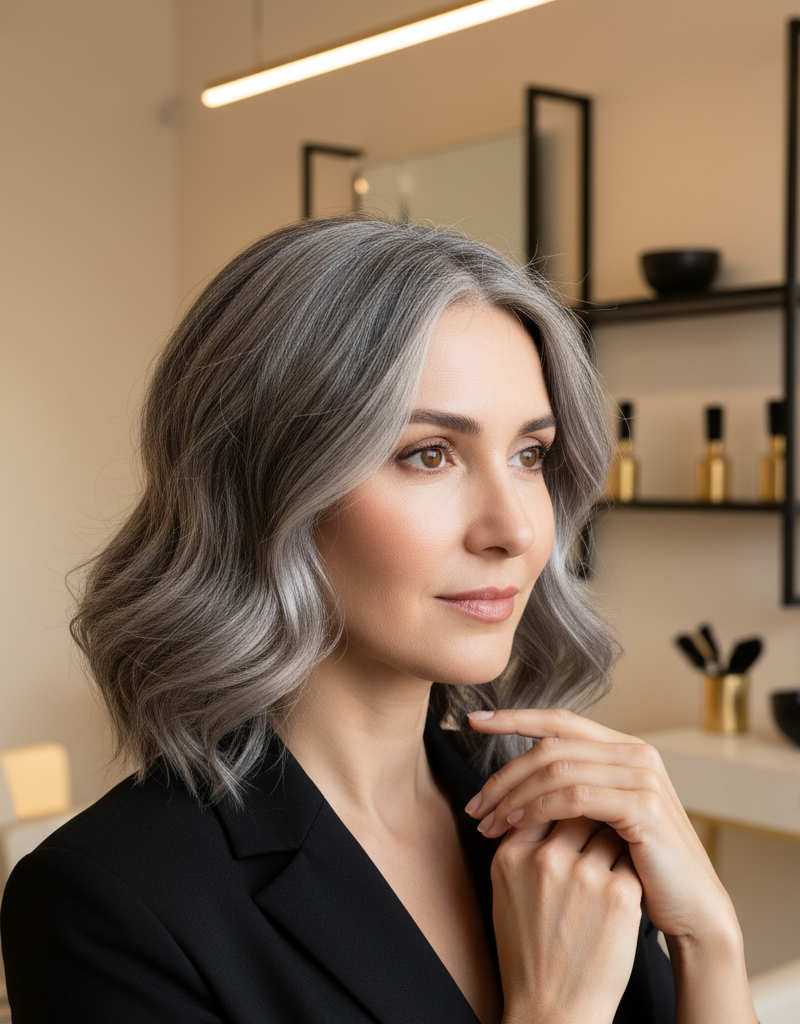
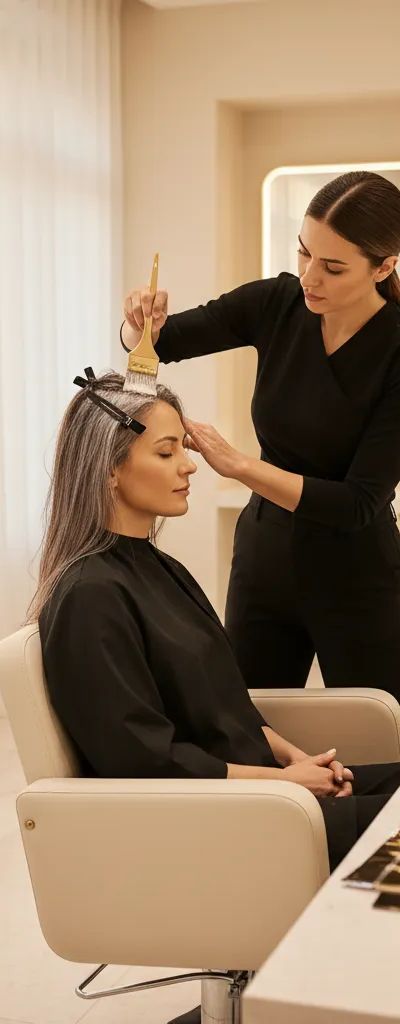
Has a client ever asked you to “leave the greys but make them look good”?
More and more clients walk into the salon with that exact request. They don’t want full coverage. They don’t want to go completely natural either. They want something in between: an elegant transition that doesn’t scream “touch-up needed” after four weeks. That’s precisely what the Quiet Silver trend delivers.
Quiet Silver is a grey integration technique that blends the transition between pigmented hair and natural grey, creating a sophisticated, low-maintenance result. Unlike traditional coverage, it doesn’t aim to eliminate grey hair but to make it part of the color design. In 2026, it has become the most requested alternative to full coverage, according to Pantone trend data and the European salon landscape.
For the foundational science behind how pigments interact with hair fiber, check the colorimetry basics guide.
Covering Grey vs. Integrating Grey: The Key Difference
Before you mix anything, you need to understand the difference in approach. Covering and integrating are not the same thing.
| Aspect | Traditional Coverage | Quiet Silver (Integration) |
|---|---|---|
| Goal | Eliminate 100% of visible grey | Blend grey into the color design |
| Coverage percentage | 90-100% | 30-60% |
| Typical developer | 20 vol (6%) | 10-15 vol (3-4.5%) |
| Product type | Permanent with natural base | Demi-permanent or soft permanent |
| Touch-up frequency | Every 3-4 weeks | Every 8-12 weeks |
| Result | Uniform color, visible regrowth line | Gradual transition, concealed growth |
| Client profile | Wants zero visible grey | Wants natural look and low maintenance |
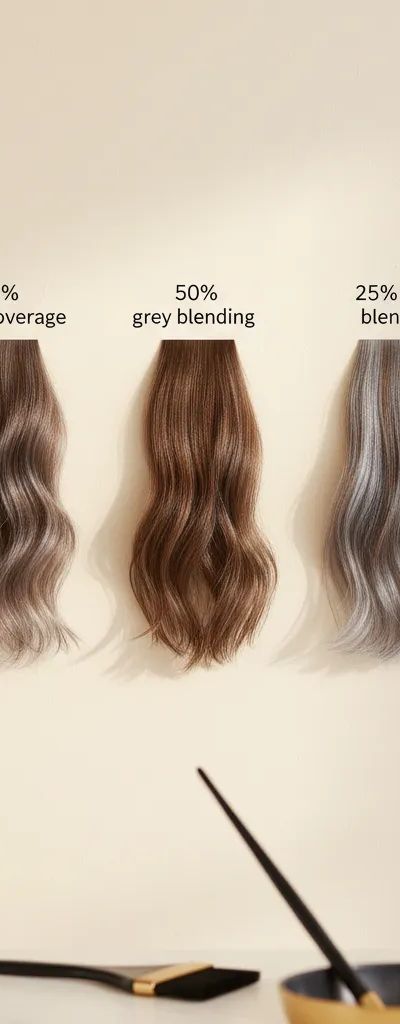
For a deep dive into all five coverage levels (from 0% to 100%), see our article on grey hair coverage levels.
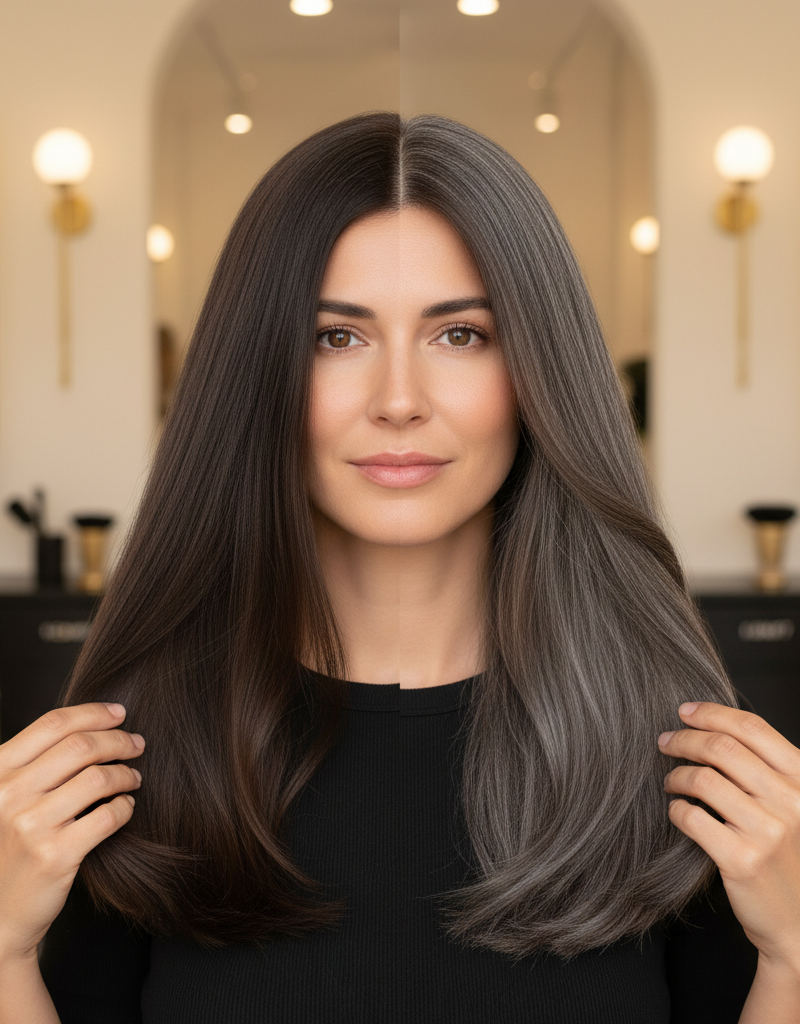
Who Is Quiet Silver For?
Not every client is an ideal candidate. These are the profiles where it works best:
- 30-60% grey: Enough grey to create natural contrast without the silver dominating entirely.
- Unevenly distributed grey: Concentrated streaks around the temples or face frame. Quiet Silver uses that distribution as a design feature.
- Clients tired of frequent touch-ups: They want to space out visits without the regrowth giving them away.
- Base level 5-7: Medium tones integrate grey with color most seamlessly.
If the client has over 80% grey and wants to keep some color, the approach shifts to a global toner. If they want full coverage, refer to our professional grey coverage guide.
Step-by-Step Formulation
Step 1: Diagnosis
Before mixing anything, assess:
- Grey percentage: Estimate the ratio of grey to pigmented hair.
- Distribution: Is it diffuse, concentrated in zones, or in defined streaks?
- Grey hair texture: Is it fine and porous or coarse and resistant (glassy)?
- Natural base: What level is the remaining pigmented hair?
- Expectation: Ask directly: “Do you want to see your grey or do you want it gone?” The answer defines the service.
Step 2: Product Selection
| Product Type | When to Use It | Advantage |
|---|---|---|
| Demi-permanent | Up to 50% grey, fine hair | Deposits without opening the cuticle. Most natural result, soft fade |
| Soft permanent (10 vol) | 40-60% grey, medium texture | Better hold than demi without the harshness of 20 vol |
| Permanent + 20 vol | Resistant glassy grey | Required to penetrate sealed cuticles. Use only on resistant zones |
The general rule: use the least aggressive product that achieves the result. If the grey accepts demi-permanent, don’t escalate to permanent.
Step 3: Base Formula
The key to Quiet Silver is formulating one level lighter than the client’s natural base. This reduces the contrast between pigmented hair and grey without covering it.
Practical example (natural base level 6, 40% grey):
- Formula: Level 7 natural ash (7.01 or equivalent) + 10 vol
- Ratio: 1:1 (color:developer)
- Processing time: 25-30 minutes
- Result: Grey hair partially absorbs the pigment and reads as soft silver highlights. The pigmented hair lifts half a level, reducing overall contrast.
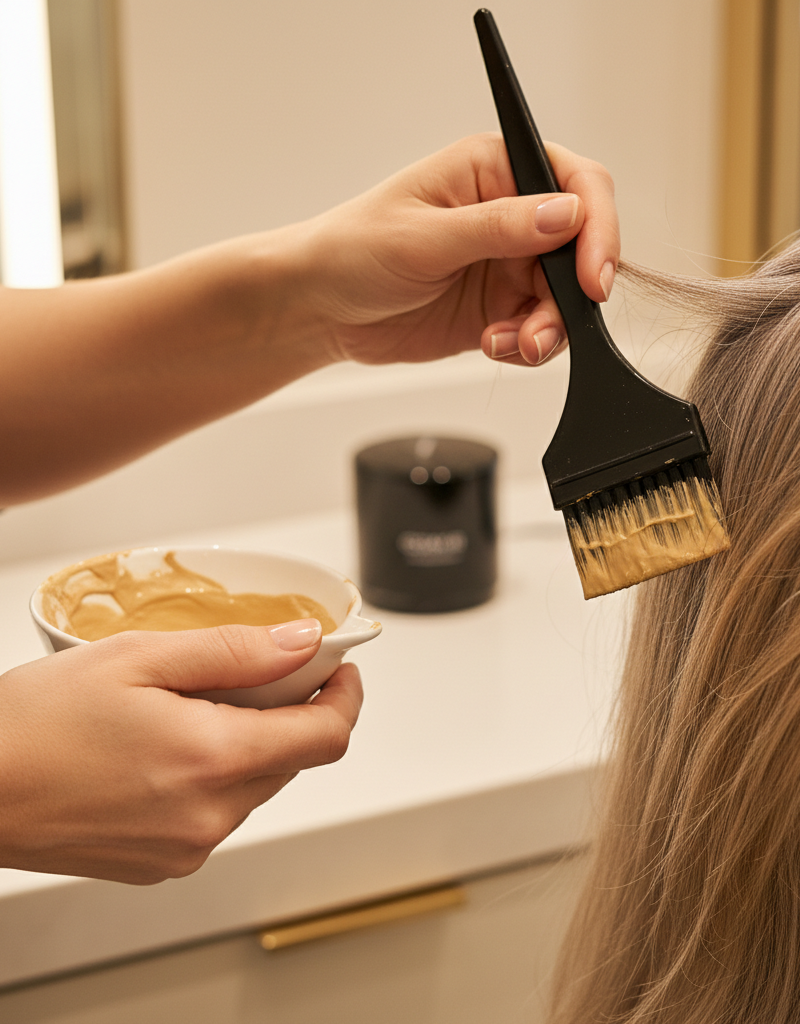
Step 4: Application Technique
Two options depending on the desired result:
Global application (diffuse grey):
- Mix and apply root to ends.
- Emulsify during the last 5 minutes to even out.
- Total time: 25-30 minutes.
Selective application (concentrated grey):
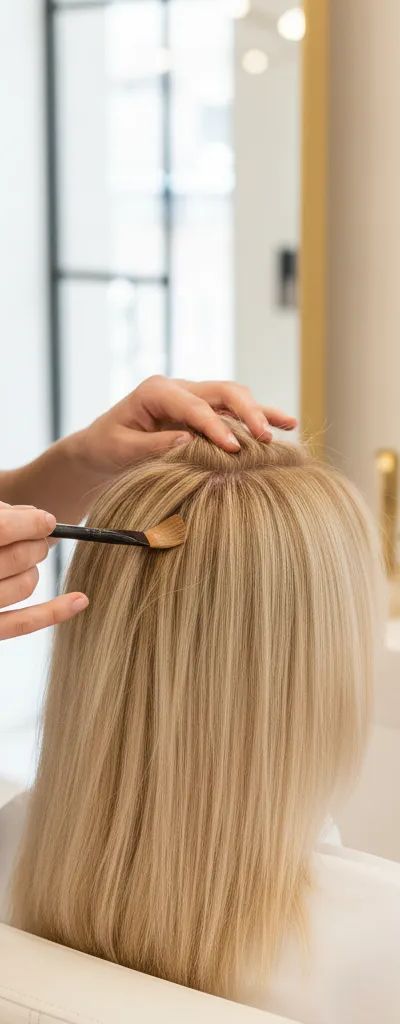
- Apply only to zones with the highest grey concentration.
- Leave pigmented sections product-free.
- Feather the edges with your brush to avoid demarcation lines.
Selective application pairs well with the shadow root technique for added root depth.
Common Mistakes (and How to Avoid Them)
Mistake 1: Using the Same Level as the Natural Base
If your client has a level 6 base and you apply a level 6, the grey will be covered in the traditional sense. To integrate, go one level lighter (level 7). This softens the contrast instead of eliminating it.
Mistake 2: Developer Volume Too High
With 20 or 30 vol, the product opens the cuticle and deposits too much pigment into the grey. The result is coverage, not integration. For Quiet Silver, 10 vol is the standard. Only increase to 15-20 vol if the grey is glassy and rejects color at 10 vol.
Mistake 3: Not Managing Expectations
The client needs to understand they will see grey. The goal is for it to look beautiful, not to disappear. If you don’t align expectations before starting, even the best technical work will feel like a mistake.
Quiet Silver with Blendsor
Blendsor automatically calculates the developer ratio and color level based on grey percentage and natural base. Enter the diagnostic data and the app suggests formulations tailored to the type of integration you’re after.
It’s like having a second pair of eyes confirming your instinct before you mix.
Free to start. Pro from 19 euros per month for unlimited formulation.
Frequently Asked Questions
Is Quiet Silver the Same as Grey Blending?
They are closely related but not identical. Grey blending is the general term for any technique that mixes grey with color without full coverage. Quiet Silver is a specific 2026 trend that takes grey blending to its most subtle extreme: cool tones, near-invisible transitions, and a deliberately silver aesthetic.
How Long Does a Quiet Silver Result Last?
Between 8 and 12 weeks without visible touch-up, depending on growth rate and grey percentage. It is one of the longest-lasting techniques because regrowth doesn’t create a harsh demarcation line.
Can You Do Quiet Silver on Very Dark Hair (Level 2-3)?
Yes, but the contrast between white grey and a dark base is more pronounced. In these cases, consider lifting the base to level 4-5 with gentle lightening before applying the integration color. Alternatively, embrace the contrast as part of the design (what’s known as intentional “salt and pepper”).
Which Professional Brands Have Lines Designed for Grey Integration?
Several brands offer demi-permanent lines formulated for grey blending: Wella Illumina Color, Schwarzkopf Igora Vibrance, Redken Shades EQ, and L’Oreal Dia Light are the most widely used in professional salons.
Related articles
Practice with our free tools
Calculators, neutralization wheel, AI consultation...
Apply this theory with precision
Blendsor analyzes 70+ variables and generates exact formulas based on real colorimetry. Try our free color consultation or download the app.
Download free