Romantic Red Hair: Perfect Valentine's Tones
Discover the most romantic red hair tones for Valentine's: cherry, burgundy, copper. Professional formulas and techniques for vibrant, long-lasting reds.
Blendsor
Blendsor Team
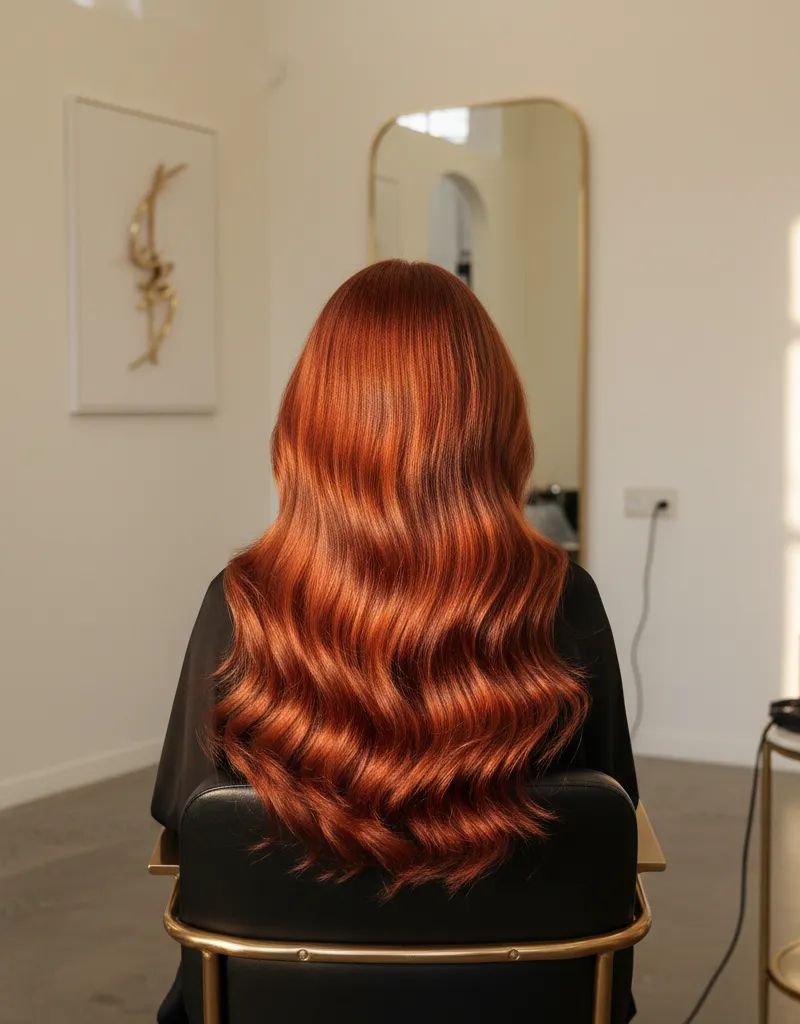
How many clients have asked you for “a red, but special” right before Valentine’s Day? Red is the color of love, passion, confidence. But it’s also the most technical color, the most demanding, the one that fades fastest.
Professional red coloring requires knowledge of substrates, direct pigmentation, and maintenance protocols. It’s not just applying a red tube and hoping. It’s understanding how red pigment behaves at different levels, how to neutralize unwanted undertones, and how to make that color vibrate weeks later.
In this guide, we’ll cover the most romantic reds for this season, how to achieve them based on starting point, and the keys to having your clients fall in love with the result.
Quick summary: The most popular romantic reds in 2026 are intense cherry (level 5-6, violet reflect), burgundy (level 4-5, more durable), passionate copper (level 6-7, golden-metallic reflect), and dark wine red (level 3-4, minimal damage). Red pigment molecules are 40-60% heavier than blue or yellow, which is why maximum vibration lasts only 2-3 weeks. Pre-pigmentation and low developer (10 vol) are the durability keys.
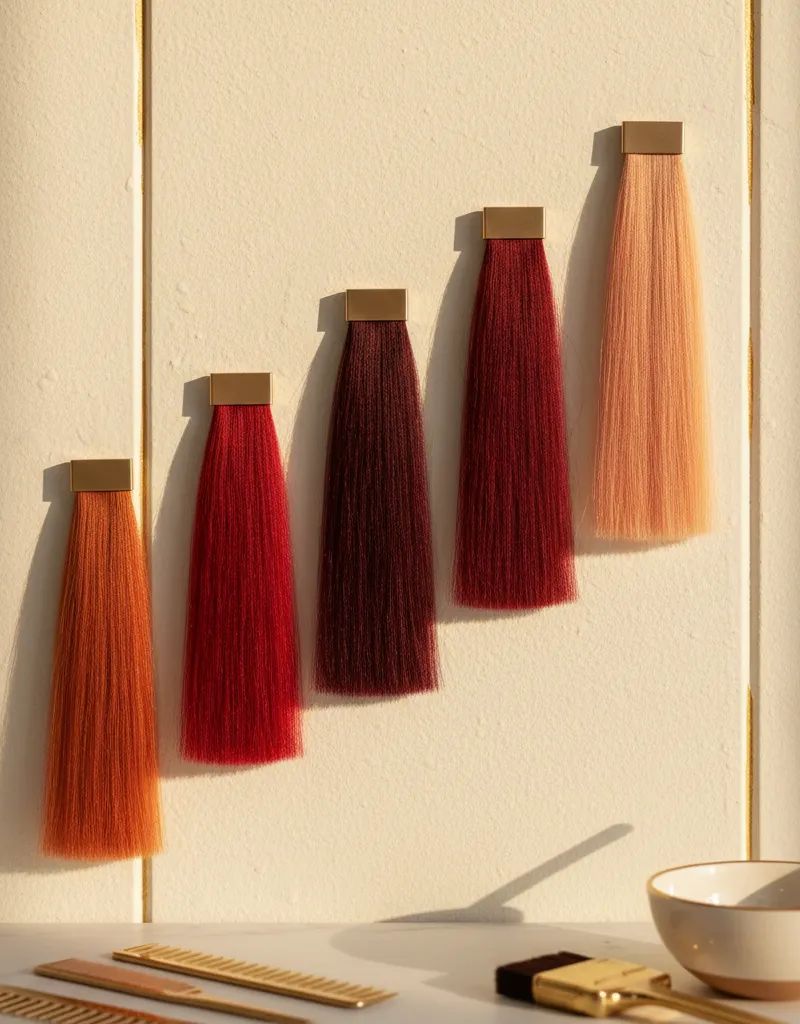
What Are the 5 Romantic Valentine’s Reds?
The five most romantic red tones of the season are: intense cherry (level 5-6, violet reflect), burgundy (level 4-5, elegant and long-lasting), passionate copper (level 6-7, golden-metallic reflect), soft strawberry red (level 7-8, for beginners), and dark wine red (level 3-4, minimum damage). Each requires a specific base and formula.
This year, the reds dominating the season range from warm copper to deep burgundy. Each has its personality and technique.
1. Intense Cherry Red
Characteristics:
- Vibrant red with violet reflect
- Level 5-6
- Maximum intensity and shine
- Ideal for cool skin tones
For whom: Clients who want maximum impact. It’s not subtle. It’s “turn heads on the street.”
Ideal base: Level 6-7 (light brown or dark blonde).
Typical formula on level 6 base:
6.66 (40g) + 6.65 (20g) + 0.66 red booster (5ml)
10 vol developer (65ml) - 1:1 ratio
Time: 30-35 minutes with heat
The double 6 (.66) provides maximum intensity. Pure red booster guarantees lasting vibration.
2. Romantic Burgundy
Characteristics:
- Dark red with violet undertone
- Level 4-5
- Sophisticated, less maintenance
- Works on warm and cool skin tones
For whom: Clients who want elegance with depth. Think red wine, not red apple.
Ideal base: Level 4-6 (medium to light brown).
Typical formula on level 5 base:
5.5 (30g) + 5.6 (25g) + 4.5 (15g)
10 vol developer (70ml)
Time: 35-40 minutes
The mix of mahogany (.5) and red (.6) with a touch of level 4 creates depth without dulling the reflect.
3. Passionate Copper
Characteristics:
- Warm orange-red
- Level 6-7
- Golden-metallic reflect
- Ideal for warm skin tones
According to Pantone, copper tones with metallic reflects have experienced a resurgence in 2026 as symbols of warmth and authenticity.
For whom: Clients who want extreme warmth but not traditional red. Think “sunset” rather than “red rose.”
Ideal base: Level 6-8 (dark to medium blonde).
Typical formula on level 7 base:
7.44 (35g) + 7.43 (25g) + 7.3 (10g)
20 vol developer (70ml)
Time: 30 minutes
The double 4 (.44) gives copper intensity. The .43 adds golden shine. The .3 prevents it from being too orange.
4. Soft Strawberry Red
Characteristics:
- Delicate pinkish red
- Level 7-8
- Less intense, more romantic
- Ideal for red beginners
For whom: Clients who want to try red without total commitment. One foot in, one foot out.
Ideal base: Level 8-9 (medium to light blonde).
Typical formula on level 8 base:
8.64 (30g) + 8.6 (20g) + 9.03 (20g)
10 vol developer (70ml)
Time: 20-25 minutes
The golden base (.3) prevents the red-pink from turning violet. Perfect for Valentine’s without drama.
5. Dark Wine Red
Characteristics:
- Very dark red, almost black
- Level 3-4
- Minimal pre-lightening
- Low maintenance
For whom: Clients with natural dark hair who want a touch of red without lifting. The secret red that only shows under certain lights.
Ideal base: Level 3-5 (dark to medium brown).
Typical formula on level 4 base:
4.6 (40g) + 3.6 (20g) + 0.66 booster (3ml)
20 vol developer (63ml)
Time: 40 minutes
Mixing two levels (3 and 4) creates depth. The booster ensures the red doesn’t fade.
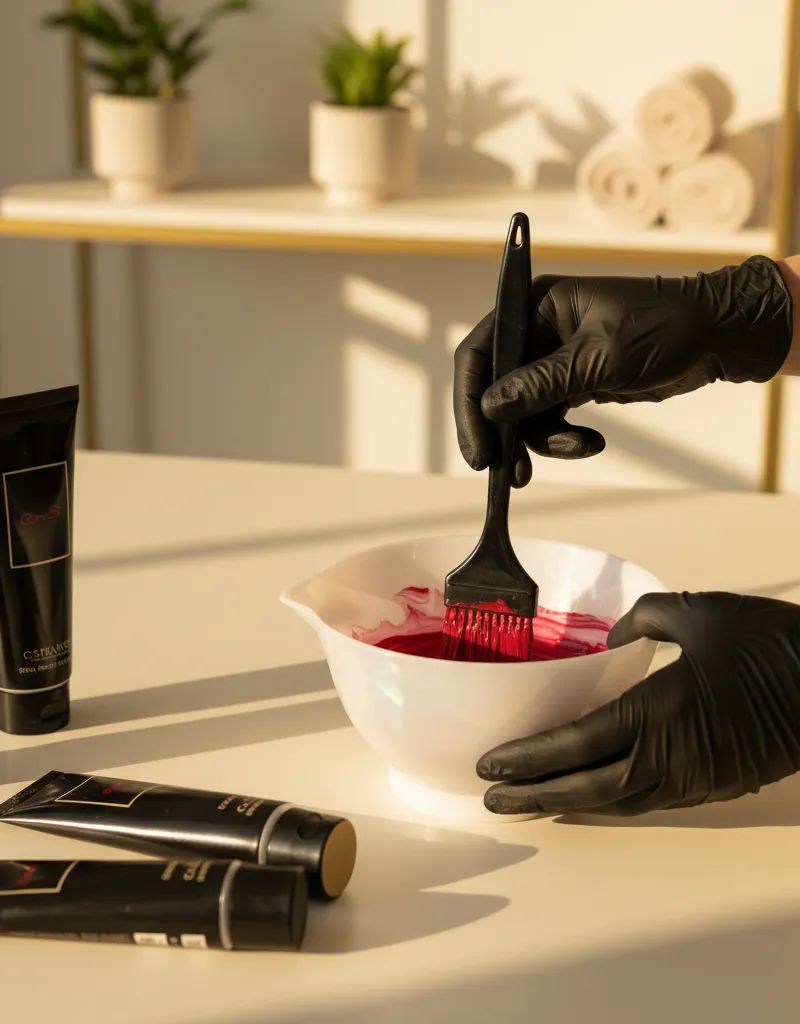
Why Do Red Hair Colors Fade So Fast?
Red pigment molecules have a molecular weight 40-60% greater than blue or yellow pigment, according to the Society of Cosmetic Chemists. This means red penetrates less deeply into the cortex, washes out more easily, and oxidizes faster with heat and UV light. Maximum vibration lasts 2-3 weeks; visible color lasts 4-6 weeks.
Uncomfortable truth: Red is the largest pigment molecule in hair coloring. That means:
- Penetrates less deeply into the cortex
- Washes out more easily
- Oxidizes faster with UV light and heat
According to the Society of Cosmetic Chemists, red pigment molecules have a molecular weight 40-60% greater than blue or yellow pigment, which explains their lower permanence.
What does this mean for you as a colorist?
- It’s not your fault if red fades in 3-4 weeks
- Technique matters less than preparation and maintenance
- Client education is critical
How Do You Achieve Long-Lasting Red Hair Color?
Long-lasting reds require four steps: mandatory pre-pigmentation on level 8+ bases (increases durability by up to 50%), correct base level for each tone, intensified formulas with double reflect (.66) and pure booster, and low developer (maximum 10 vol). Controlled heat during application improves pigment penetration by 20%.
For full anti-fade protocols including underbasing, strategic formulation, and sealing glaze, see our complete guide to long-lasting red hair formulas.
1. Mandatory Pre-Pigmentation
If you’re starting from level 8 or higher and want intense red, you need to pre-pigment.
Pre-pigmentation protocol:
1. Apply red dye + water (1:3) on dry hair
2. NO developer (direct pigmentation)
3. Leave 15-20 minutes
4. Towel dry (DO NOT rinse)
5. Apply final formula on top with developer
This “fills” the hair with red pigment before oxidation, increasing durability by up to 50%.
2. Correct Base Level
| Desired red | Minimum recommended level | If darker | If lighter |
|---|---|---|---|
| Intense cherry | 6 | Lift 1-2 levels | Pre-pigment |
| Burgundy | 5 | OK direct | Pre-pigment |
| Copper | 7 | Lift 2-3 levels | OK direct |
| Strawberry | 8 | Lift 3-4 levels | OK direct |
| Dark wine | 4 | OK direct | Darken first |
Golden rule: It’s easier to darken with red than to lift and apply red after.
3. Intensified Formulas
For vibrant reds that last:
- Use double reflect (.66 instead of .6)
- Add pure booster (0.66 or 0.6 depending on brand)
- Low developer (10 vol maximum unless you need to lift)
- Full time (never less than 30 minutes)
Pro tip: Adding 5-10ml of pure red booster to any red formula increases vibration without darkening. It’s your insurance against fading.
4. Controlled Heat
Reds respond exceptionally well to heat:
- Steamers: +20% penetration
- Thermal caps on foil: Activates pigment
- Dryer on medium power: Accelerates without burning
Never: Extreme heat (over 104°F/40°C) can oxidize red prematurely.
How Do You Apply Red on Different Hair Bases?
The protocol varies by base: on virgin dark hair (level 1-4), dark reds apply directly with 20 vol developer; on recently dyed dark hair, you need a color remover first; on blonde hair (level 7-10), pre-pigmentation is mandatory; on hair with 30-50% gray, combine pre-pigmentation with a 50/50 mix of the red tone and natural base.
On Virgin Dark Hair (Level 1-4)
The good: Maximum durability, minimum damage. The bad: You need to lift if you want vibrant reds (cherry, copper).
For our complete guide to professional coloring techniques, dark reds are one of the most requested services because they combine visual change with low risk.
Protocol without lifting (wine red, burgundy):
Apply level 4.6 or 5.6 formula directly
20 vol developer
Time: 40 minutes with heat
Protocol with pre-lightening (cherry, copper):
1. Gentle bleaching to level 6-7
2. Neutralize orange undertones (see next section)
3. Apply target red formula
On Previously Dyed Dark Hair
Critical: What level is the previous dye? How long ago?
- Recent dye (< 4 weeks): Artificial pigment blocks. You need color remover or soap cap first.
- Old dye (> 3 months): You can apply red directly if it’s faded to level 5-6.
On Blonde Hair (Level 7-10)
The good: Ultra-vibrant reds, quick process. The bad: Fades faster, needs pre-pigmentation.
Mandatory protocol:
- Pre-pigment with red + water (no developer)
- Dry without rinsing
- Apply red formula with 10 vol developer
Alternative without pre-pigment (only for soft reds like strawberry):
Use ultra-intensified formula:
8.66 (30g) + 8.64 (20g) + 0.66 booster (10ml)
10 vol developer (60ml)
On Gray Hair
Special challenge: Gray hair is resistant and lacks base pigment.
Protocol for 30-50% gray:
1. Pre-pigment gray areas (red + water)
2. Leave 20 minutes, dry
3. Apply global formula:
   - 50% target red tone
   - 50% natural tone 1 level darker
   Example: 6.6 (30g) + 5.0 (30g)
For +70% gray: Consider if client accepts 80% coverage. Pure red doesn’t cover gray 100%. Burgundy and dark wines cover better than bright cherries.
When Should You Not Do Red Hair Color?
There are four situations where red is a bad decision: extremely damaged hair (extreme porosity means color lasts only 1 week), henna history (bleaching over henna can produce electric orange or green), clients with zero-maintenance expectations (reds require touch-ups every 4-8 weeks), and a very intense orange undertone that hasn’t been neutralized first.
Be honest with your client. There are situations where red is a bad idea:
1. Extremely Damaged Hair
Signs:
- Zero elasticity (breaks when stretched)
- Extreme porosity (absorbs water instantly)
- Translucent ends
Why not: Red washes out in 1 week on highly porous hair. It’s wasting money and trust.
Alternative: Reconstruction for 4-6 weeks, then assess dark red (less maintenance).
2. Henna History
Never bleach over henna. The result can be:
- Electric orange
- Swamp green
- Irregular bands
Alternative: Darken with dark reds (wine, burgundy) WITHOUT pre-lightening.
3. Expectations of “Zero Maintenance”
If the client says “I don’t want to come back for 6 months,” red is not for them.
Red reality:
- Root touch-up: every 6-8 weeks
- Color refresh: every 4 weeks
- Pigmented shampoo: 2-3 times per week
4. Very Intense Orange Undertone
If you bleached dark hair and it turned intense orange (level 5-6), don’t apply red on top.
Why: Orange + red = carrot red (not the romantic red you want).
Correct protocol:
Check our guide on how to neutralize unwanted tones to eliminate orange before applying red.
1. Neutralize orange with ash:
   7.1 (40g) + 7.01 (20g)
   10 vol developer
   Time: 20 minutes

2. Rinse and dry

3. NOW apply target red
What Are the Right Questions for a Valentine’s Color Consultation?
Before mixing any red formula, you need seven pieces of information: what specific red they’ve seen and liked (photos, not descriptions), whether it’s their first red, how many times per week they wash their hair, whether they’ll use specific products, if they have a deadline event, their complete history (henna, dark dyes, bleaching), and their maintenance budget.
Before mixing anything, diagnose with these questions:
Consultation Checklist
- What red have you seen that you like? (show photos, not descriptions)
- Is this your first red? (expectation management)
- How many times do you wash your hair? (duration prediction)
- Will you use red-specific products? (shampoo, pigmented mask)
- Do you have a specific event? (result deadline)
- History: Henna? Dark dyes? Bleaching?
- Budget for maintenance (products + touch-ups)
The Honest Conversation
You: “Reds are the most beautiful colors but also the most demanding. They fade faster than any other color. We’ll need specific products at home and touch-ups every 4-6 weeks. Are you ready for that?”
Client: [Response]
If no → Offer dark burgundy or red highlights (lower commitment) If yes → Proceed with confidence
How Do You Educate Clients on Red Hair Maintenance?
Red hair maintenance requires five home products (sulfate-free shampoo, red pigmented shampoo 2-3 times per week, weekly pigmented mask, daily UV protector, and oil for ends) and avoiding five enemies: hot water, pool chlorine, unprotected sun exposure, heat styling above 356°F/180°C, and more than 4 washes per week.
Mandatory Home Products
| Product | Function | Frequency |
|---|---|---|
| Sulfate-free shampoo | Prevents pigment washing | Every wash |
| Red pigmented shampoo | Reinforces color | 2-3x week |
| Pigmented mask | Nutrition + color | 1x week |
| UV thermal protector | Prevents oxidation | Daily |
| Oil for ends | Seals cuticle | Daily |
Habits That Kill Red
Red enemies:
- Very hot water (opens cuticle, releases pigment)
- Pool chlorine (oxidizes red to orange)
- Direct sun without protection (bleaches)
- Flat irons/curlers above 356°F/180°C (burns pigment)
- Frequent washing (>4x week)
Professional Touch-Up
Typical calendar for intense cherry red:
- Week 4: Intensive pigmented shampoo (in salon, 15 min)
- Week 6-8: Root touch-up + global gloss
- Week 12: Full color service
- Week 16: Repeat cycle
For darker reds (burgundy, wine), you can extend to 8-10 weeks between services.
What Are the Most Common Red Hair Color Mistakes?
The six most frequent mistakes are: applying red over an orange base without neutralizing first (results in carrot red), not pre-pigmenting light bases (color lasts only 2 weeks), using 30-40 vol developer (dulls the red), insufficient processing time under 25 minutes (superficial color), not adding a pure booster (lack of intensity), and promising clients “permanent red.”
| Mistake | Result | Solution |
|---|---|---|
| Apply red over orange without neutralizing | Carrot red | Neutralize with ash first |
| Not pre-pigmenting light blonde | Red falls out in 2 weeks | Mandatory pre-pigmentation |
| Using 30-40 vol developer | Dull, less vibrant red | Maximum 20 vol, ideal 10 vol |
| Insufficient time (< 25 min) | Superficial color | Minimum 30 minutes always |
| Not adding pure booster | Lack of intensity | Add 5-10ml of 0.66 |
| Promise “permanent red” | Frustrated client | Educate about real duration |
If you need to correct a failed red, check our professional color correction guide for specific protocols.
What Are the Red Hair Trends for 2026?
According to Modern Salon, the five reds dominating 2026 are: Cherry Cola (cherry with subtle brown reflect, easier to maintain), Cinnamon Red (spiced red with cinnamon base, warm but not orange), Burgundy Balayage (gradient with natural dark roots), Copper Flame (ultra-bright metallic copper, requires minimum level 8), and Red Velvet (matte velvety red achieved with .5+.6 tones).
According to Modern Salon, these are the reds dominating this year:
1. “Cherry Cola”
Cherry red with cola reflect (subtle brown). Less intense than pure cherry, easier to maintain.
2. “Cinnamon Red”
Spiced red with cinnamon base. Warm but not orange, red but not vibrant.
3. “Burgundy Balayage”
Burgundy applied with balayage technique (gradient). Natural dark roots, burgundy ends.
4. “Copper Flame”
Ultra-bright copper with metallic tones. Requires minimum level 8.
5. “Red Velvet”
Matte velvety red (no extreme shine). Achieved with mixed .5 + .6 tones.
Frequently Asked Questions
How long does red hair dye last?
Maximum vibration lasts 2-3 weeks. Visible color lasts 4-6 weeks. With pigmented shampoo and specific care, you can extend to 6-8 weeks before touch-up. Dark reds (burgundy, wine) last longer than bright ones (cherry, copper).
Can you do red without bleaching?
Yes, if your natural level is 6 or higher. On levels 1-5 you can achieve dark reds (wine, burgundy) without bleaching, but for vibrant reds (cherry, copper) you need to lift minimum to level 6-7.
Does red damage hair more than other colors?
No. Damage comes from pre-lightening, not from red pigment. A red on adequate level with 10-20 vol developer damages the same as any permanent dye. The problem is that for vibrant reds you often need to bleach first.
What shampoo to use to maintain red?
Mandatory: Sulfate-free shampoo (prevents pigment washing). Recommended: Red-specific pigmented shampoo (reinforces color 2-3x week). Avoid: Clarifying, anti-dandruff, or strong sulfate shampoos.
Can you do red highlights?
Yes, red highlights work perfectly. You can do:
- Red balayage on natural dark base
- Copper highlights with foil for maximum contrast
- Red babylights for subtle dimension
Apply the same rules: pre-pigmentation if base is very light, orange neutralization, maintenance products.
In Summary
- Romantic reds range from vibrant cherry to dark wine, each with its technique
- Mandatory pre-pigmentation on light bases (level 8+) for durability
- Neutralize orange before applying red to avoid carrot tones
- Correct base level is more important than perfect formula
- Client education about maintenance is part of the service
- Reds fade fast (it’s not your fault, it’s chemistry)
- Pigmented shampoo + sulfate-free products are non-negotiable
- Touch-ups every 4-8 weeks depending on red intensity
Red is the color of love, but also the color that most tests your expertise as a colorist. It’s not just applying pigment: it’s understanding chemistry, managing expectations, and creating a maintenance plan that works.
Want to calculate the exact formula for the red your client showed you on Instagram? Use the hair color mixing calculator to preview the result before applying. Or try Blendsor free for a step-by-step formula with pre-pigmentation and neutralization included.
This Valentine’s, make your clients fall in love with their color. With the right technique, romantic red can be your star service this February.
Related articles
Practice with our free tools
Calculators, neutralization wheel, AI consultation...
The Monday Briefing
Color techniques and trends for professionals. No spam.
Master this technique with exact formulas
Blendsor generates the precise formula for each technique with your brand products. Try the mix calculator or download the app.
Download freeWritten by the Blendsor team
Professional hair colorimetry experts with experience in AI-assisted formulation. We combine color science, salon practice and technology to help colorists formulate with precision.