Shadow Root with Foil: Technique, Formulas and Differences
Master the foil shadow root technique step by step: root tap vs root melt vs shadow root explained, formulas by desired result, and mistakes to avoid.
Blendsor
Blendsor Team
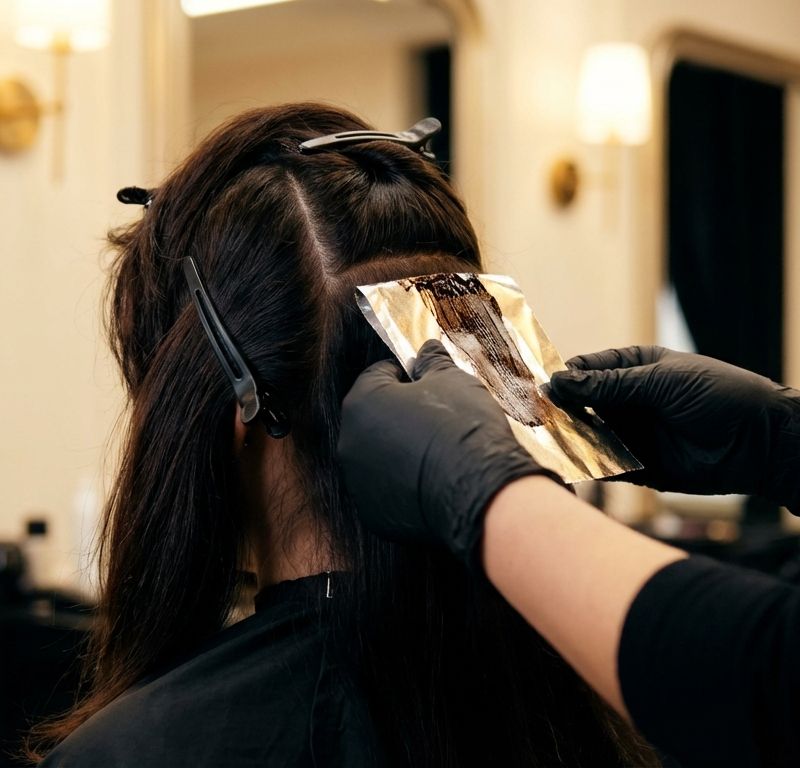
Have you ever had a client ask for “something natural that won’t show when it grows out” and found yourself unsure whether to apply a root tap, a root melt, or a shadow root? You’re not alone. The Instagram debate has been raging for weeks: all three terms get used as if they mean the same thing, and they don’t.
This article exists because Behind The Chair published the foil shadow root technique and then put the formulas behind a paywall. Here you get everything for free.
We’re going to settle the root tap vs root melt vs shadow root debate once and for all, look at why foil changes the shadow root game, and give you concrete formulas for the most requested results in the salon. This technique is part of our complete guide to professional coloring techniques.
Quick summary: Shadow root with foil is the most precise variation of the technique — it uses foil paper to isolate and control exactly how many centimeters of color sit at the root, creating a cleaner and more long-lasting shadow than freehand brush application. It allows you to work with greater definition on fine hair and delivers results that last 10-14 weeks. The key difference between root tap, root melt, and shadow root lies in the working zone and the blending goal.
Root Tap vs Root Melt vs Shadow Root: The Definitive Comparison
This is the question breaking colorist group chats right now. The English terminology has been cross-pollinating for years, and every salon interprets it differently.
Here’s the table I’ve wanted to write for a while:
| Technique | Working Zone | Blending Type | Developer | Result Duration | When to Use |
|---|---|---|---|---|---|
| Root Tap | Root only (1-2 cm) | No true blending, quick touch | 10-20 vol | 4-6 weeks | Express maintenance between appointments |
| Root Melt | Root through mid-lengths (5-10 cm) | Progressive multi-tone fusion | 10-20 vol | 6-8 weeks | Creative transitions, multi-tone effects |
| Shadow Root | Root (1-3 cm) with controlled blending | Gradual downward, imperceptible | 10-20 vol | 8-14 weeks | Low maintenance, maximum natural effect |
The confusion comes from the fact that all three darken the root. But the goal is radically different:
- Root Tap: quick and practical. You cover the root between visits with no artistic pretension. Literally: you give it a tap.
- Root Melt: creative and fluid. You work from root through mid-lengths, fusing tones. It’s a long, soft transition.
- Shadow Root: precise and strategic. You create a defined shadow at the hairline that mimics natural root growth. The longest-lasting result of the three.
Pro tip: When a client says “I want something natural that doesn’t need constant touch-ups,” the answer is shadow root, not root tap. Root tap is a temporary fix. Shadow root is a design decision.
Why Foil Changes the Shadow Root Game
Traditional shadow root technique is done freehand with a brush: you apply product to the root and blend downward with vertical strokes. It works. But it has limitations that foil solves.
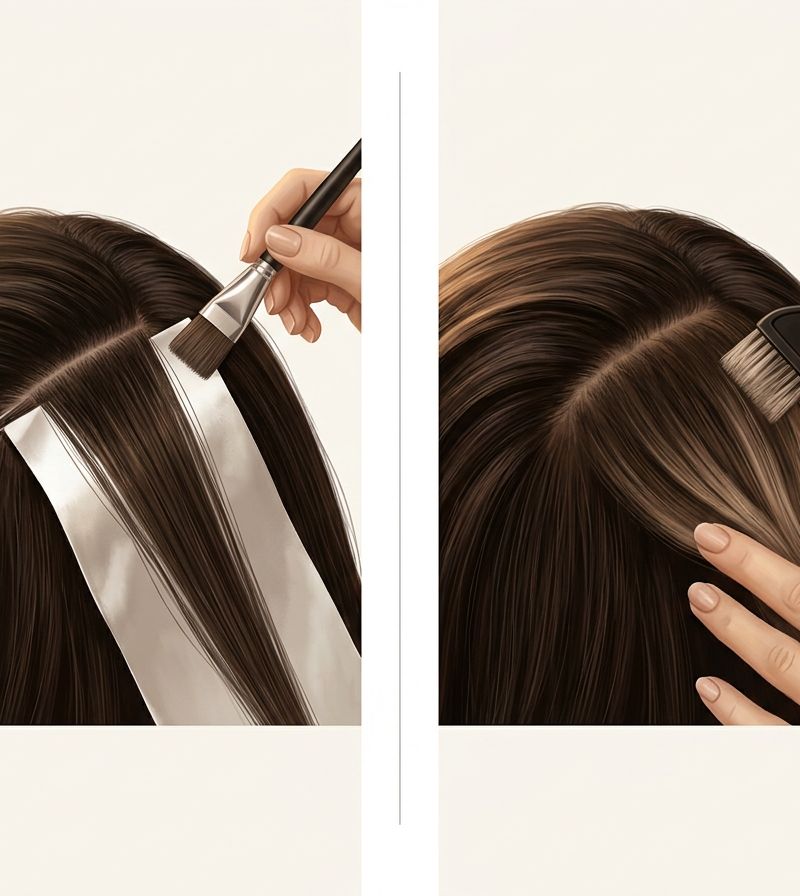
Greater Control Over Placement
With foil you define exactly where the color starts and ends. You can work section by section with no risk of product migrating where you don’t want it. This is especially important when there’s existing color on the lengths that you don’t want contaminated by the shadow.
Ideal for Fine Hair
Freehand brush application can easily overload fine hair, causing the product to spread further than intended. Foil creates a barrier that gives you millimeter-level control. For fine hair or highly porous ends, foil is significantly safer.
Longer-Lasting Result
When isolated with foil, the product processes more uniformly and consistently. The shadow sits more defined at the hairline, which paradoxically makes regrowth less visible: the transition is so clean that the eye can’t detect the starting point.
Cleaner Demarcation Line
This is the strongest argument for foil: you can do a shadow root and a balayage or foilyage in the same service with complete control, without one product affecting the other. The “sandwich” technique (foil shadow + foilyage on lengths) is the combination that’s dominating in 2026, particularly for spring blondes with depth.
Foil Shadow Root Technique: Step by Step
This is the part you won’t find anywhere without paying. Let’s get into the detail.
What You Need
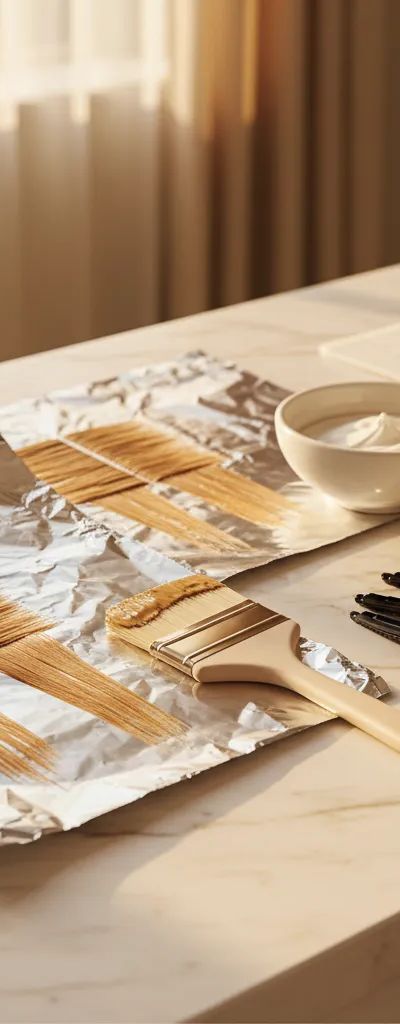
- Foil paper (standard or pre-cut)
- Fine root brush
- Demi-permanent or soft permanent color
- 10-20 vol developer depending on desired result
- Tail comb
- Sectioning clips
Step 1: Initial Assessment (5 Minutes)
Before mixing anything, evaluate:
- Natural root level: What is the client’s actual root level?
- Length level: How many levels of difference exist currently?
- Scalp condition: Any irritation, psoriasis, or sensitivity? Foil retains heat — factor this in.
- Client goal: Does she want a subtle transition (1 level difference) or a more dramatic shadow (2 levels)?
Shadow root golden rule: Maximum 2 levels of difference between the shadow and the lengths. More than two levels creates a “dirty root” effect, not a natural one.
Step 2: Prepare the Formula
The formula depends on the desired result. Jump straight to the formulas-by-result section below. For the general mechanics:
- Color: 1-2 levels darker than the lengths
- Developer: 10 vol for demi-permanent (no lift), 20 vol for soft permanent (very minimal lift)
- Ratio: 1:1 or 1:1.5 depending on manufacturer
- Consistency: creamy but fluid, should not run inside the foil
Step 3: Section the Hair
Work in four quadrants: two at the front (center part) and two at the back. Start at the nape and work up toward the face.
Within each section you take, slice thickness matters: thin slices (1-1.5 cm) for a very subtle, natural shadow root; medium slices (2-2.5 cm) for more coverage.
Step 4: Place Foil and Apply
This step is what distinguishes foil technique from freehand:
- Place the foil under the section, close to the scalp
- Apply product over the first 1-3 cm of root with the fine brush
- Just the right amount: A thin layer is enough. The foil concentrates heat and the product processes with more intensity than in open air
- Blend downward with a vertical stroke, about 2-4 cm into the lengths
- Fold the foil without pressing it tight (you need the product not to migrate)
- Repeat section by section
Pro tip: Don’t apply product right to the foil edge. Leave a 5 mm gap before the fold. If product reaches the edge and the foil brushes the lengths, you can accidentally deposit color where you don’t want it.
Step 5: Processing Time
| Product Type | Time with Foil |
|---|---|
| Demi-permanent (10 vol) | 15-20 minutes |
| Soft permanent (20 vol) | 20-25 minutes |
Important: Foil accelerates processing compared to freehand technique. Check the first foils you placed — they may be ready before the last ones.
Open two or three foils at the 12-minute mark to check development. The shadow should appear slightly darker than the wet surrounding hair when the product is ready.
Step 6: Removal and Finish
- Remove foils carefully, without pulling the section
- Emulsify before rinsing: add a little warm water to the root area and gently massage to soften the color edge
- Rinse with warm water until it runs clear
- Gentle shampoo, not clarifying
- Conditioner on mid-lengths and ends only
Formulas by Desired Result
Here’s what BTC puts behind their paywall. Real formulas for the three most requested results.
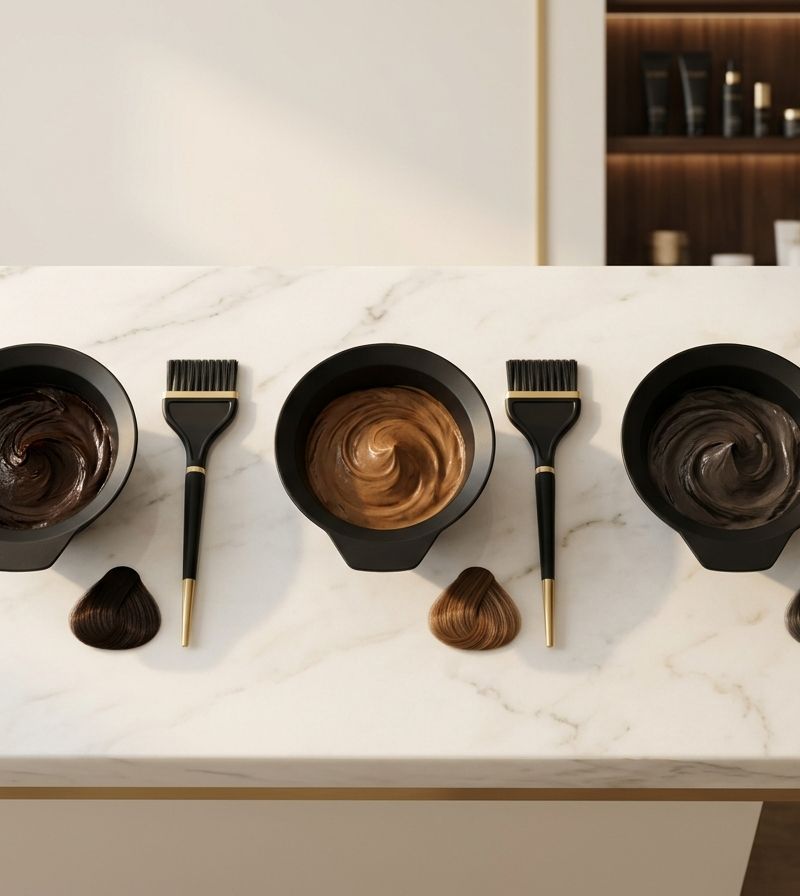
Dimensional Blonde (Base Level 6 → Result Level 8)
For clients starting from natural light brunette or dark blonde who want blonde with root depth. The boy blonde with natural root is the perfect example of this combination.
Shadow root:
- 40g color 6.0 or 6.1 (dark natural/ash brunette)
- 40g 20 vol developer
- Apply 1.5 cm on root
- Blend 3 cm downward
- Time with foil: 20 minutes

Lengths (if completing full service):
- Partial bleach with highlights or balayage to level 8-9
- Toner 9.1 or 10.21 + 10 vol for ash/pearl finish
Why it works: The 6.0 creates the perfect shadow over a level 8 length. A 2-level difference is exactly what you need for the root to read intentional rather than neglected.
Lived-In Bronde
The most requested look for clients who want natural, low-maintenance color. Dark natural root that melts into golden or bronzed brunette on the lengths.
Shadow root:
- 40g color 5.0 (natural brunette) or 5.3 (golden brunette)
- 40g 10 vol developer
- Apply 2 cm on root
- Blend 4 cm (longer transition = softer effect)
- Time with foil: 18 minutes

Lengths:
- Freehand balayage or subtle foilyage
- No toner if you want natural warmth
- Gloss 9.3 or 10.3 + 6 vol if you want uniform warm gold
Why it works: The 5.3 at the root adds warmth that connects to the golden tones on the lengths. The 4 cm blend creates a very gradual transition — classic lived-in bronde.
Platinum with Depth
For platinum clients who want to add root darkness and step away from the “full bleach” look. This shadow root creates strong contrast but reads artistic.
Shadow root:
- 40g color 7.1 or 7.11 (intense ash blonde)
- 40g 20 vol developer
- Apply 1.5-2 cm on root
- Blend 2-3 cm (shorter transition = sharper contrast)
- Time with foil: 20-25 minutes

Lengths:
- Bleach in foils to level 10
- Toner 10.21 + 10 vol or Shades EQ 000 + 09P for pure platinum
Why it works: The contrast between a 7.1 shadow and a level 10 length is technically 3 levels, which is normally too much. But on platinum it works because the ash 7.1 acts as a visual bridge, with no warmth to cut the transition.
Pro tip: For platinum shadow root, never go darker than level 7 in the shadow. Contrast above level 7 already reads natural. If you use a level 5 or 6, the effect will be too dramatic and the root will look dirty within a few weeks as the color fades.
Most Common Mistakes and How to Avoid Them
Foil Leaves a Visible Line at the Color Break
What happens: The edge where the shadow ends is clearly visible, like a hard color change.
Why it occurs: Too much product at the foil edge, or you didn’t emulsify properly before rinsing.
The fix: Before removing the foil, make sure the blend toward the lengths is progressive. When emulsifying, work the transition point with gentle circular movements for 30 seconds per section.
Shadow Comes Out Too Dark
What happens: The client expected “subtle” and the result looks like a dark touch-up.
Why it occurs: Foil accelerates processing — the timing may have been too long, or the formula was a level too dark.
The fix: First time working foil shadow root on a new client, use the minimum recommended time and open a foil at 12 minutes to check. If you see it darkening more than expected, emulsify immediately.
Product Migrates onto the Lengths
What happens: Dark color spots on the light lengths, especially on the first balayage highlights.
Why it occurs: Too much product in the foil, or the mix consistency was too liquid.
The fix: Mix to a creamy consistency and apply just the right amount. The foil retains product better than open air, so you need less than when working freehand.
Processing Timing Conflict with Other Services
What happens: You do shadow root with foil and balayage or foilyage on the lengths in the same session, and the timing doesn’t align.
Why it occurs: Bleach on the lengths may need more time than the shadow. If you remove everything at the same time, either the shadow is underdeveloped or the lengths are overprocessed.
The fix: Always apply the bleach for the lengths first, let it process for 10-15 minutes, then place the shadow root foils. That way, when you remove everything at once, both services have had their correct processing time. For more detail on combining foil services, see our foilyage step by step guide.
Maintenance and Growth Timeline
One of the advantages of foil shadow root is that regrowth is nearly invisible for the first several weeks. Here’s the timeline you can communicate to your client:
| Week | How It Looks |
|---|---|
| 0-2 | Defined shadow, perfect transition |
| 3-5 | Regrowth invisible, natural root integrates with shadow |
| 6-8 | Shadow begins to soften, regrowth barely visible |
| 9-12 | Ideal time for touch-up or shadow refresh |
| 12-16 | If original contrast was subtle, can hold without touch-up |
For the touch-up appointment, you don’t need to redo the full service. In most cases, a quick freehand shadow root is enough for maintenance — reserve the foil technique for when you want to redefine the full look.
Frequently Asked Questions
When should you use foil versus freehand shadow root?
Use foil when: working on fine hair, you want maximum precision, doing shadow + lightening in the same session, or the client has significant existing color you don’t want to contaminate. Use freehand (brush) for: quick maintenance appointments, established clients whose hair behavior you already know, or when you want a more organic and soft transition.
Can you do foil shadow root on previously bleached hair?
Yes, and it’s very common. Bleached hair is highly porous, so foil helps control the shadow from migrating too far into the lengths. Always use 10 vol developer on heavily bleached hair — 20 vol can darken too quickly.
Which color brands work best for foil shadow root?
Any professional demi-permanent or soft permanent color works well. Demis are safer on bleached hair because they’re ammonia-free and the result reads more translucent. Many colorists prefer the demi range for shadow root precisely because the color looks like it lives inside the hair rather than sitting on top.
Is foil shadow root compatible with gray coverage?
Partially. If the client has less than 25% scattered grays, foil shadow root can camouflage them sufficiently. With more than 30% or grays concentrated at the hairline, you’ll need coverage first and shadow root as a finishing step to soften the transition. Check our complete coloring techniques guide for more context on combined services.
How long does the full service take?
Foil shadow root only: 45-60 minutes (including preparation, application, processing, and finish). Shadow root + full balayage or foilyage: 2.5-3.5 hours. Shadow root + toner: 1.5-2 hours.
In Summary
Foil shadow root isn’t a trend. It’s a technique evolution that delivers more control, more precision, and results lasting up to 14 weeks.
Key takeaways:
- Root Tap, Root Melt, and Shadow Root are distinct techniques with distinct goals. They are not synonyms.
- Foil gives more control than freehand, especially on fine hair or when combining services in the same session.
- Processing time with foil is shorter than without — check development from the 12-minute mark.
- Maximum 2 levels of difference between shadow and lengths, except on platinum where you can reach 3 with ash tones.
- Emulsification before rinsing is critical to soften the color edge.
Want to calculate exact formulas for each client without doing the math manually? Try Blendsor free and let the AI analyze the current level and suggest the optimal shadow root formulation for each desired result.
This article is part of our complete guide to professional coloring techniques. If you want to go deeper on foil techniques, don’t miss our guide to foilyage step by step.
Related articles

Practice with our free tools
Calculators, neutralization wheel, AI consultation...
Master this technique with exact formulas
Blendsor generates the precise formula for each technique with your brand products. Try the mix calculator or download the app.
Download freeWritten by the Blendsor team
Professional hair colorimetry experts with experience in AI-assisted formulation. We combine color science, salon practice and technology to help colorists formulate with precision.