Cherry Cola Hair: What It Is and How to Plan It in the Salon
Cherry cola hair: which tone it carries, how it differs from black cherry, and how to plan it in the salon on natural brown or on dark dyed lengths.
Blendsor
Blendsor Team
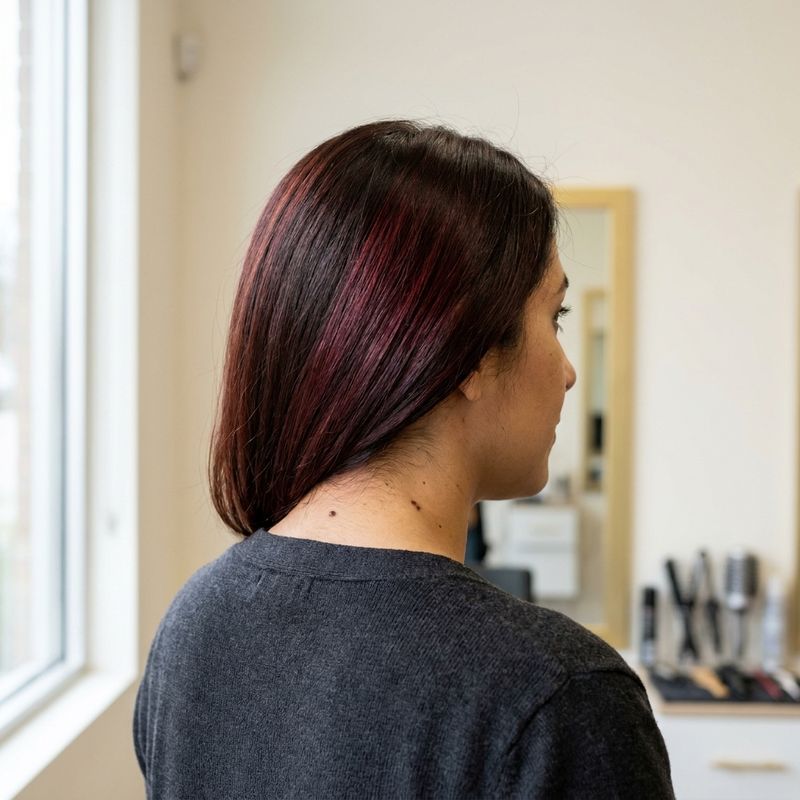
Cherry cola is a trend name. It does not appear in Schwarzkopf’s UK IGORA ROYAL technical manual, and still people ask for it by name, as if it were one more shade.
To formulate it, you still have to decide which brown, which red, and on what hair. Then comes the question that follows: how many appointments, and what does it cost?
What is cherry cola hair?
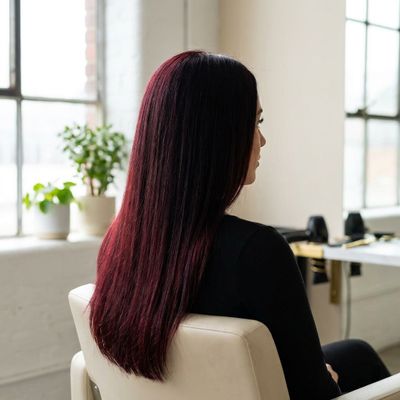
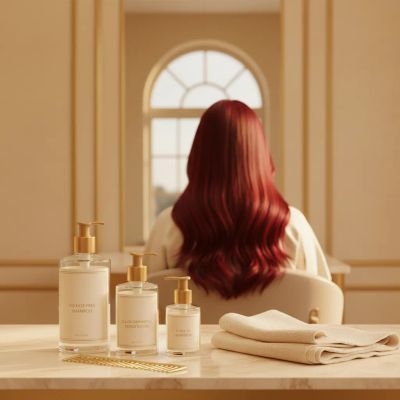
It is usually planned as a brown with a red tone and a touch of violet, a little lighter and with more brown in it than a black cherry. That is our working criterion for ordering the consultation: it is not a measurement and not any brand’s definition. Its charm is in the movement: in light the red shows up, in shade it reads as dark brown.
A trend name can be, in another brand’s chart, the name of a specific shade: one more reason to ask for the shade, not the name. Cherry cola already appears among the reds of the season; this is what it takes in the chair.
Which tone does a cherry cola carry?
A cherry cola is built from two decisions: depth and tone. By depth, a brown: neither nearly black nor light. By tone, a red that a touch of violet pulls toward cherry, with a little brown that gives it the cola look.
As an example, on Schwarzkopf’s IGORA color system wall chart for the US, the first number after the dash is the primary tone direction (the dominant shade) and the second is the secondary tone direction. So, as a salon criterion, a cherry cola can be read as a brown with red as the primary tone direction and violet as the secondary one.
Which shade, or which mix, that is in your brand is in its manual: each brand writes the tone its own way.
Cherry cola or black cherry?
As a salon criterion, black cherry is usually planned close to black, and its red shows mostly in strong light. Cherry cola moves up to a brown with more brown in it, and its red shows with less light.
The reason is simple: the darker the depth, the less light the hair gives back, and the red needs light to show. The three possible depths are worked through in black cherry: the level is decided in the light.
| Black cherry | Cherry cola | |
|---|---|---|
| Planned as | Close to black with a red undertone | Brown with red, a touch of violet and more brown |
| The red shows | Mostly in strong light | With less light |
| Risk at the consultation | Reads flat black indoors | If too dark, reads as nearly black brown |
| The question that orders it | How much strong light is in their day? | Where does this person spend their day? |
The table is criterion, not a measured scale: the light in a salon, in an office and on a street in August are nothing alike.
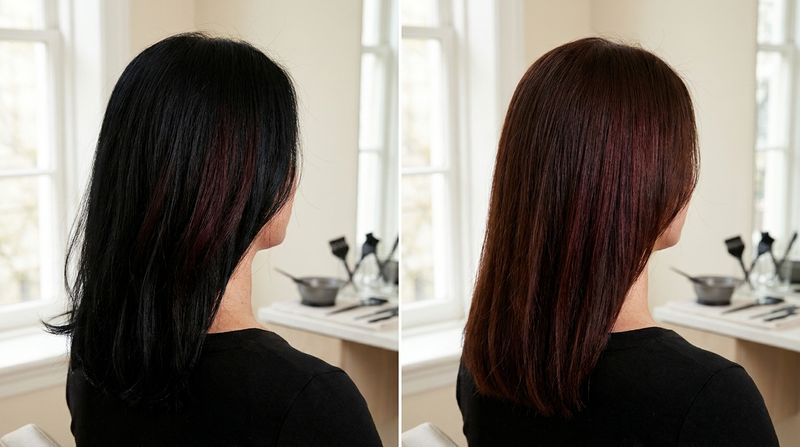
Same window, two depths. The darker the hair, the more light the red needs.
That is why, at the consultation, you ask where this person spends the day. In office light, a cherry cola that went too dark can read as nearly black brown, and they will leave holding the photo on their phone without seeing their red.
How do you plan cherry cola on natural brown hair?
If the hair is its natural dark brown, untouched by color, it is the cleanest case. If the jump is short, the permanent color itself can lift a little and deposit the tone in the same step: the lift table for your brand’s developer is where you check it, not memory.
If it starts from near black and they want the red to show in their light, the jump is longer and the plan grows. And with a lot of gray, coverage joins the tone, and that changes the mix and the plan.
And on dark dyed hair?
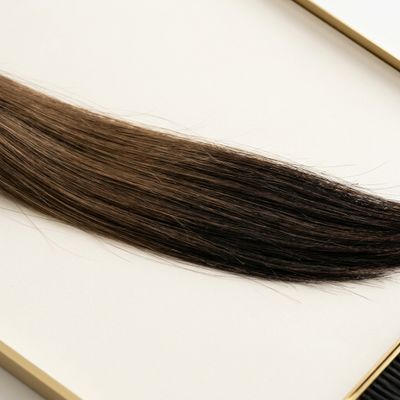
This case asks for more care: natural regrowth and lengths with years of dark brown dye. With that hair, regrowth and lengths are planned separately.
- At the regrowth, the tone goes in as on virgin hair.
- On the lengths there is already color, and how far it will move is not known until you try it. A strand test says so, read dry and in good light, as in correcting dark mid-lengths and ends.
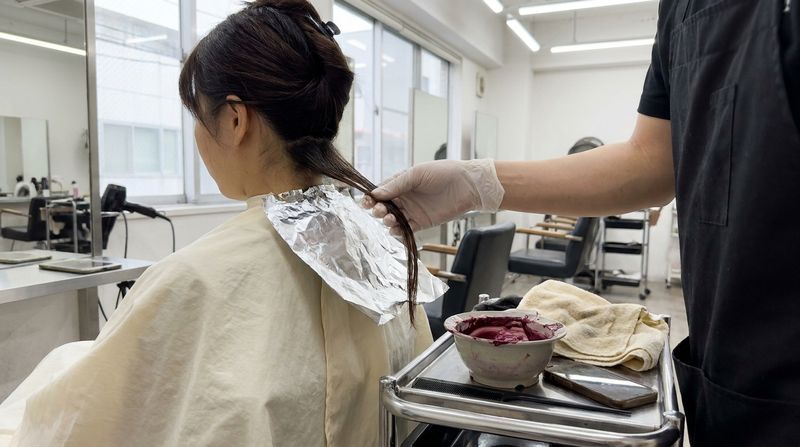
The strand test comes before promising anything about the lengths.
If the red shows with the shade, that may be enough. If the length stays dark and dull, there are two routes, and both are a separate service.
First route: take some of the old color out first
An example of that step: in Schwarzkopf’s UK IGORA ROYAL technical manual, the Bond Enforcing Color Remover is presented as enabling the removal of artificial color build up while maintaining the integrity of the hair. It is a separate step, with its own product, and the manual does not say how much it removes. How to correct lengths that have darkened through build-up is in the mid-lengths and ends article linked above.
Second route: fine highlights that lift
The other route is to carry the red in fine highlights, with a product that lifts, so it shows on the dark without touching the whole length. In IGORA ROYAL, for example, that is the Fashion Lights line. Which shades it carries, and whether any gives the red you are after, is in its manual. If they want to change the whole length, removing the old color is still a separate step.
According to Schwarzkopf’s IGORA ROYAL technical manual for Spain, Fashion Lights lift and color in one step, give intense contrast even on dark or colored bases, are used on bases 6 and darker, and are suitable only for application off-scalp.
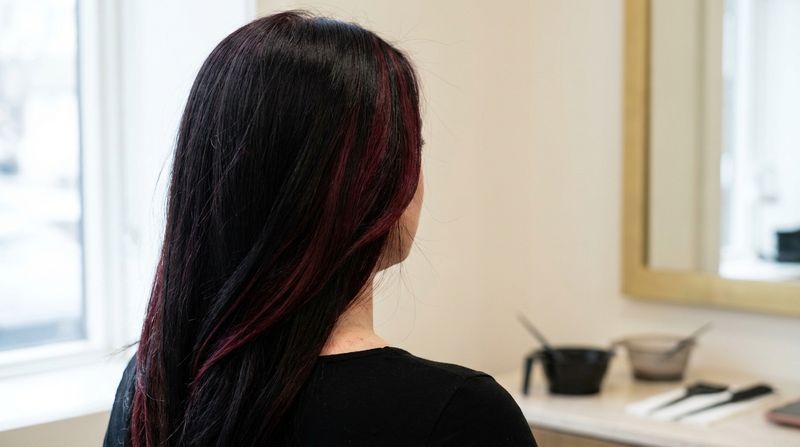
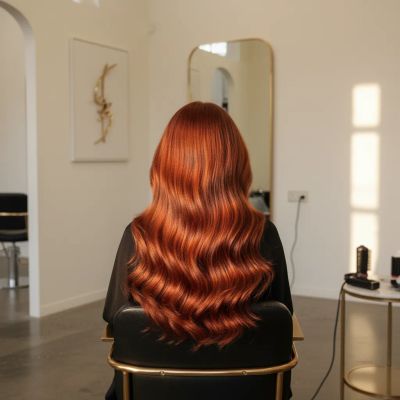
Fine highlights: the red shows on the dark without touching the whole length. Illustrative image.
How many appointments does a cherry cola take, and what does it cost?
At the consultation the question arrives, and you answer it in stages, the same ones you see on that head.
- Allergy test, before the color. It goes at a separate visit, with the color products you are going to use and within the window their instructions give; if they give none, at the very least not on the day of the color appointment. If the plan later adds another product and it is an oxidative color, its test also goes before using it. If it is a product without an oxidant and its instructions say nothing about a test, ask the brand before using it.
- Regrowth, with the shade.
- Lengths, whatever the strand test says. If the red shows with the shade, it may fit in one appointment. If old color has to come out or highlights are needed, it will take more appointments, and how many depends on how that fiber responds.
That is why the price goes appointment by appointment: each one includes what that head needs, whether the shade, removing color, highlights or a treatment. If there are several appointments, give the price of each and say what decides whether another is needed. If they ask for a total, give it as an estimate and say it is confirmed session by session. The strand test, separate or included, is said before it is done.
And there is maintenance. If the red fades before the regrowth is due, it may need a refresh in between: price it from the first appointment. How to formulate so the red lasts is in long-lasting red formulas.
Frequently asked questions
Are cherry cola and black cherry the same?
No. As a salon criterion, black cherry is planned close to black and cherry cola moves up to a brown with more brown in it, so its red shows with less light. The three depths of black cherry are in its own article.
Can you do cherry cola without removing the old color?
It depends on what the strand test says. If the red shows on the lengths with the shade, that may be enough. If the length stays dark and dull, you need to take some color out first or carry the red in fine highlights, and both routes are a separate service.
How long does the red in a cherry cola last?
It depends on each head: if the red loses intensity before the regrowth asks for color, it may need a refresh in between. It helps to price it from the first appointment.
What do you ask before opening the tube?
Where this person spends their day, because light decides how much red will show. What the hair already carries: natural color or years of dye. How much gray there is, because coverage changes the mix. Whether the porosity of the lengths calls for a strand test before promising anything. And, if the plan adds removing color or lifting highlights, how the fiber responds to an elasticity test, on wet hair, before you start.
In summary
- Cherry cola is a trend name: it is not in Schwarzkopf’s UK IGORA ROYAL manual, and for other brands you have to check their manual. What gets formulated is the shade.
- It shows with less light than a black cherry: as a salon criterion, a brown with red, a touch of violet and more brown.
- Regrowth and lengths, separately: what the strand test says decides whether the shade is enough or color has to come out or highlights are needed.
Calculate professional formulas with AI
Want to calculate a cherry cola formula from the starting depth and the chemical history of each person?
Manufacturer sources
Manufacturer documents consulted for this article. A copy of each one is kept, and the passages noted from it are checked against that copy.
Note each one's country: the same line's instructions can differ from one market to another, so follow the directions for the product you use.
What is cherry cola hair and how do you plan it in the salon?
In the app, we ask you a question like this one, but about your own client.
Up for this week’s case? →Related articles
Practice with our colorimetry tools
Calculators, neutralization wheel, AI consultation...
The Blendsor newsletter
Color techniques and trends for professionals. No spam.
You know the theory. What about today's case?
Send a photo to the Blendsor advisor and get an answer grounded in colour theory: toner, developer and timing, with the brands on your shelf.
Ask about your caseWritten by the Blendsor team
Professional hair colorimetry experts with experience in AI-assisted formulation. We combine color science, salon practice and technology to help colorists formulate with precision.