Glazed pecan brunette: professional formula step by step
Learn how to formulate the glazed pecan brunette, the trending brunette of 2026. Formula by level, tonal layering technique and gloss finish for salon results.
Blendsor
Blendsor Team
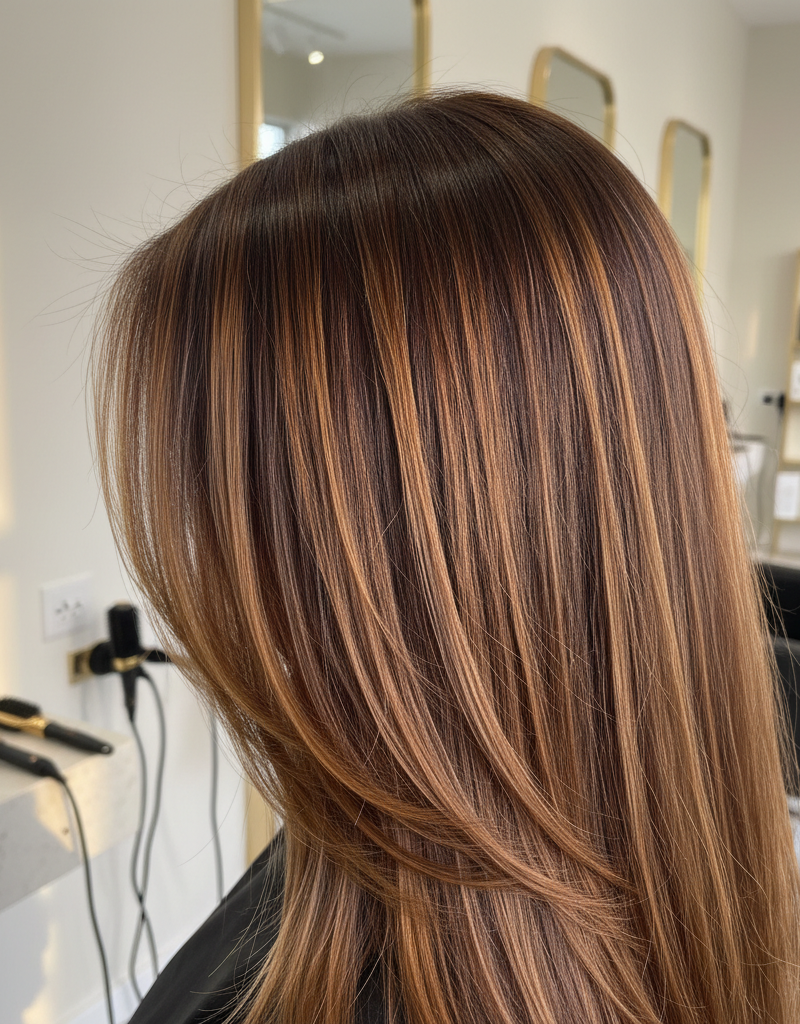
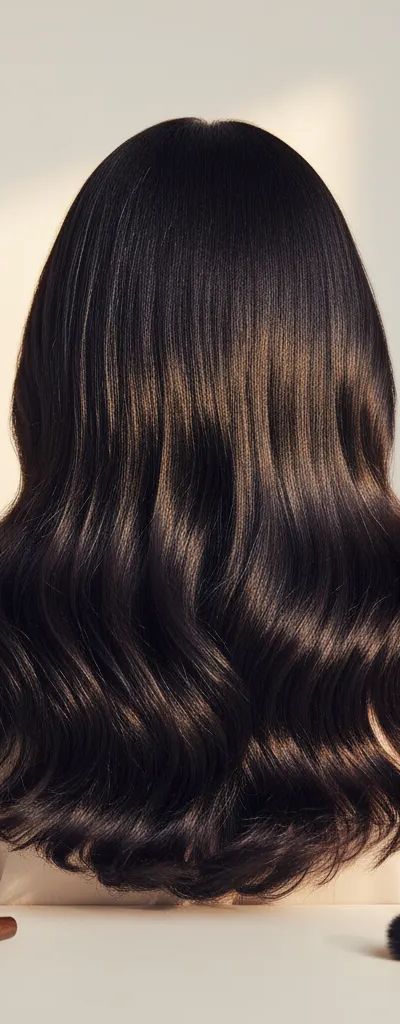
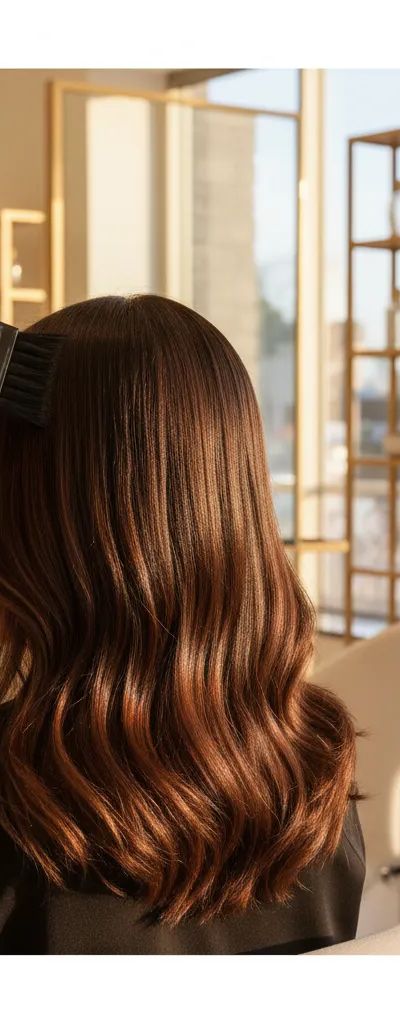
The glazed pecan brunette is a warm brunette with caramel tonal layers and a gloss finish that mimics the shine of a glazed pecan nut. It’s achieved by combining a level 5-6 base with internal reflects in .3 (gold) and .34 (gold copper) tones, sealed with a low-oxidation demi-permanent gloss.
If you’re a professional colorist, clients are already asking for this shade. Sophie Turner and Daisy Edgar-Jones are both wearing it this week, and it’s the first brunette to become a dominant trend after three consecutive seasons of blonde dominance.
The difference from other trending brunettes like the espresso brunette comes down to temperature and dimension: the glazed pecan is warmer, less deep, and has more visible tonal layers.
Here’s the exact formula by starting level, the application technique, and the mistakes that ruin the result.
What is the glazed pecan brunette and why it works
According to Harper’s Bazaar, the glazed pecan brunette is “a rich, warm brunette elevated with an ultra-high gloss finish that gives the hair that glazed effect.” It’s not a single flat shade: it’s multiple layers of warmth that create dimension without aggressive contrast.
The key lies in three elements:
| Element | Function | Visual result |
|---|---|---|
| Level 5-6 brunette base | Depth without darkness | Defined face frame |
| Tonal layers .3 and .34 | Dimensional warmth | Reflects that shift with light |
| Demi-permanent gloss | Seal + shine | Signature “glazed” effect |
Without the final gloss, the result looks like a standard warm brunette. The gloss is what transforms a good brunette into a glazed pecan.
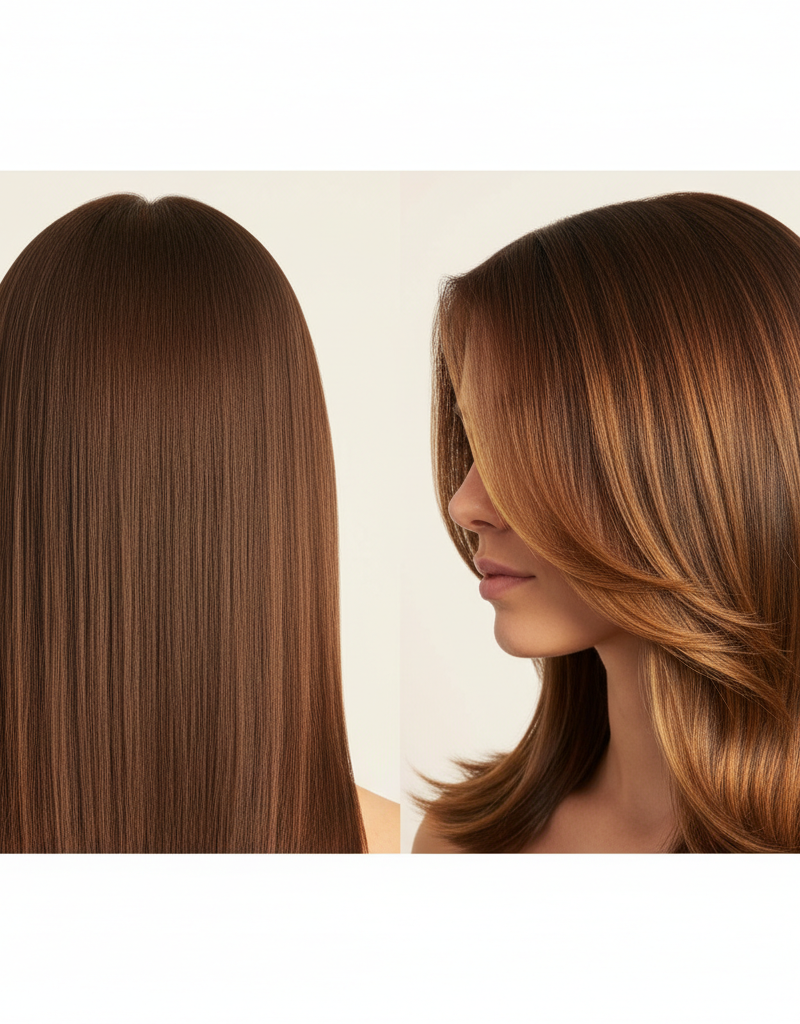
Pro tip: The gloss should be the same level as the base or half a level lighter. If you go two levels up, you lose the pecan depth and the result looks washed out.
Professional formula by starting level
The formulation changes based on the natural level. These are the base ratios you can adjust for the brand you use:
Natural level 4-5 (medium to dark brunette)
| Step | Product | Ratio | Developer |
|---|---|---|---|
| Base | Level 5 shade .3 (gold) | 60% | 20 vol |
| Tonal layer | Level 6 shade .34 (gold copper) | 30% | 20 vol |
| Tint | Level 5 shade .0 (natural) | 10% | 20 vol |
| Final gloss | Level 6 shade .03 (natural gold) | 100% | 5-10 vol |
Natural level 6-7 (light brunette to dark blonde)
| Step | Product | Ratio | Developer |
|---|---|---|---|
| Base | Level 6 shade .3 (gold) | 50% | 10 vol |
| Tonal layer | Level 7 shade .34 (gold copper) | 35% | 10 vol |
| Tint | Level 6 shade .0 (natural) | 15% | 10 vol |
| Final gloss | Level 7 shade .03 (natural gold) | 100% | 5-10 vol |
Natural level 8+ (medium to light blonde)
You need to deposit pigment first. Apply a color bath with level 6 .3 at 10 vol for 10 minutes. Then follow the level 6-7 formula.
This level-based adaptation is what separates a professional result from a DIY job. Learn more about adapting formulas by natural level.
Application technique: tonal layers + gloss
The glazed pecan isn’t achieved with a global application. It requires three phases you can complete in a 90-minute session:
- Full base: Apply the base mix from roots to mids. Processing time: 25-30 minutes
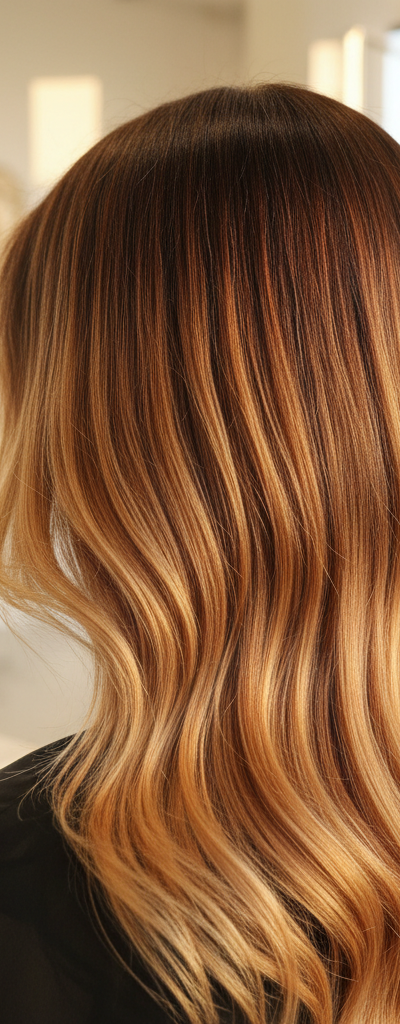
- Tonal layers: With a fine brush, apply the tonal layer mix in alternating sections from mids to ends. This creates the dimension. Processing time: 20 minutes
- Sealing gloss: After rinsing and drying to 80%, apply the demi-permanent gloss from roots to ends. Processing time: 10-15 minutes
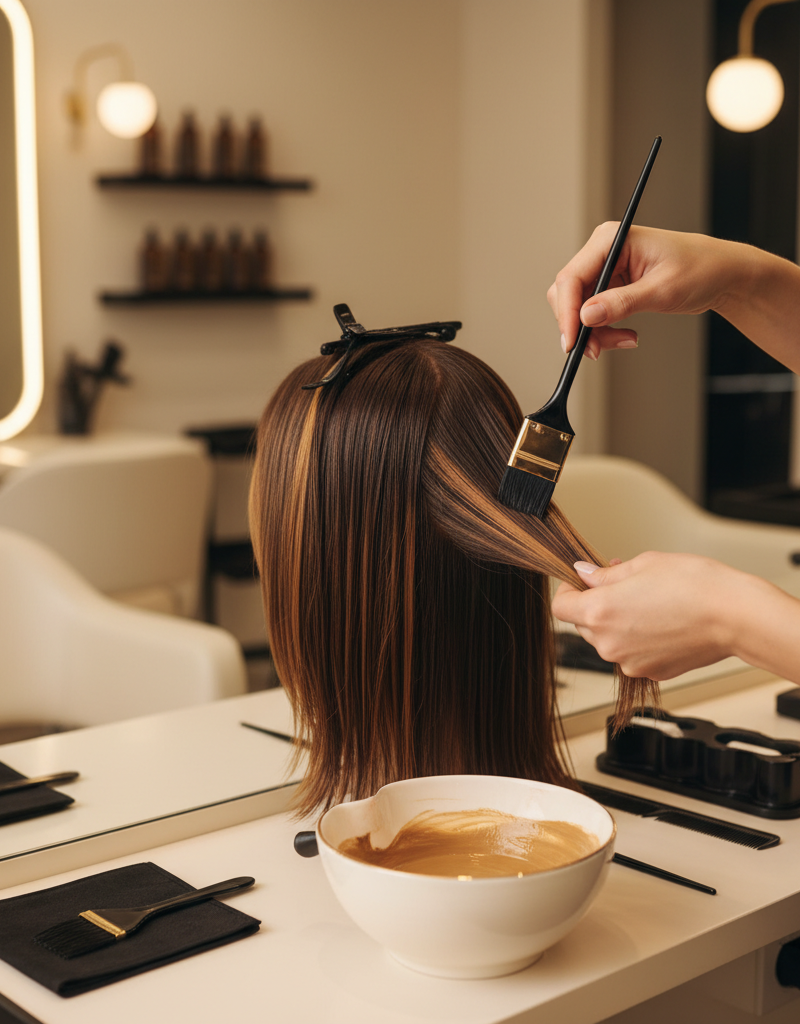
The second phase is critical. If you apply the tonal layer evenly, you lose the dimension and end up with a flat brunette. The distribution should be irregular and concentrated in the areas that catch the most light.
The technique is compatible with color melting if you want even smoother transitions between the base and tonal layers.
Common mistakes with the glazed pecan brunette
Three mistakes that turn a glazed pecan into a generic brunette:
-
Applying the gloss without matching the base undertone: If the base has a cool undertone (.1) and the gloss is warm (.3), the result looks muddy. The gloss should complement the base undertone, not contrast it
-
Using high volume developer on the gloss: The gloss goes with 5-10 vol max. With 20 vol, you lift the cuticle and lose the mirror effect that defines the glazed pecan
-
Skipping the intermediate tonal layer: Without it, you have a nice golden brunette but without the dimensional depth that makes the pecan shift under different lighting
Pro tip: If your client has a history of previous toning, do a strand test before applying the tonal layer. Residual toner can react with the .34 reflect and push too copper.
Frequently asked questions
How long does the glazed pecan brunette last?
The brunette base lasts 6-8 weeks without visible regrowth. The gloss fades in 3-4 weeks, so schedule a maintenance gloss refresh in between to keep the glazed effect. More on how long hair color lasts.
Is it compatible with gray hair?
Yes, but you need to adjust the formula. With over 30% gray, add 20% of shade .0 (natural) to the base mix to ensure coverage. The final gloss helps blend remaining grays without a patchy effect.
What’s the difference from espresso brunette?
The espresso brunette is darker (level 3-4), cooler, and with less visible dimension. The glazed pecan is 2-3 levels lighter, warmer, and with evident tonal layers. Espresso aims for uniform depth; pecan aims for dimension with movement.
Does it work on very damaged or porous hair?
With caution. Porous hair absorbs more warm pigment, so reduce the percentage of shade .34 in the tonal layer and increase the pure .3. Check our guide on porosity and coloring for timing adjustments.
In summary
- The glazed pecan brunette combines a level 5-6 brunette base, tonal layers in .3/.34 and a demi-permanent sealing gloss
- Dimension comes from the tonal layer, not the base. Apply irregularly in light-catching zones
- The gloss is mandatory — without it, there’s no glazed effect. Use 5-10 vol max
- Adapt the formula to the starting level and the hair’s chemical history
Calculate brunette formulas with AI
Want to generate personalized glazed pecan brunette formulas based on the starting level and the brand you use in your salon?
Try Blendsor free - 5 formulas per month, no credit card required.
Related articles
Practice with our free tools
Calculators, neutralization wheel, AI consultation...
Master this technique with exact formulas
Blendsor generates the precise formula for each technique with your brand products. Try the mix calculator or download the app.
Download free