Gray Covers but Comes Back in a Few Weeks: What to Check
Gray that covers but returns within weeks is not the gray that won't cover. How to tell them apart, what a product sheet says and what to log at each visit.
Blendsor
Blendsor Team
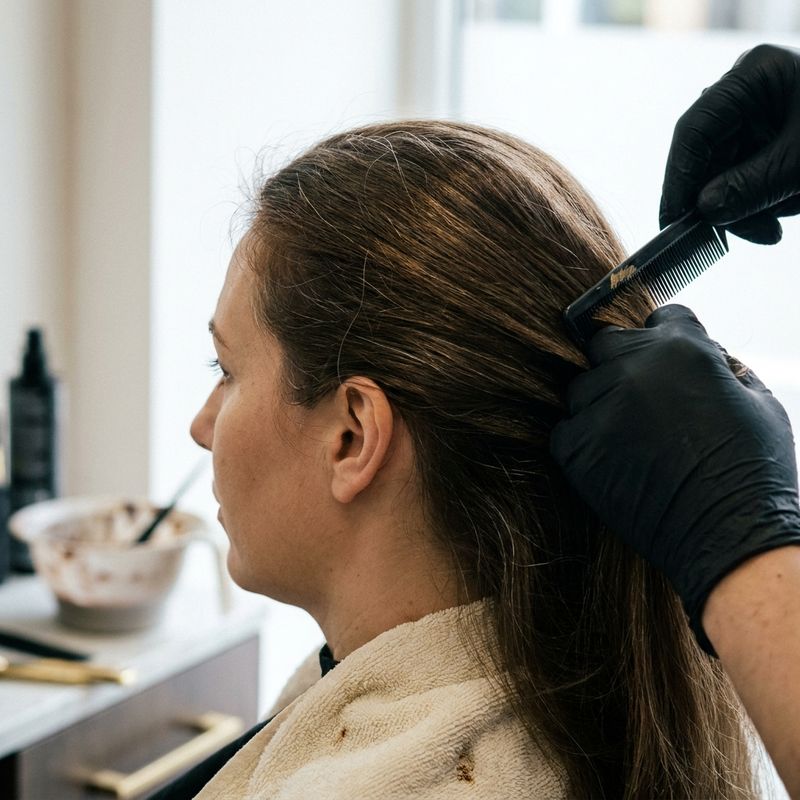
They leave the salon with the temples covered and the mirror agrees. A few weeks later they are back, or they write: “my gray is showing again.” The quick reaction is to change the formula: another shade, another developer, a bit more of a natural shade. Before you change anything, find out one thing: whether that gray didn’t cover, or covered and then showed again.
In the mirror they look alike. They are two different cases, and each one needs its own answer.
Quick summary: Gray that looks see-through shows from day one. Gray that covered looks covered when the client leaves and shows again later, along the section that already had color and not only at the regrowth. One question tells them apart: was it visible when they left, or did it appear afterwards? In Spain, Wella lists Color Touch Plus at up to 70% gray coverage. The 28 washes on Spain’s Color Touch Plus sheet sit in its sentence about color, not the one about gray, and the sheet says nothing about how long covered gray lasts. That sheet can’t back a promise of how long it lasts, so what helps is your own record: what was applied at the root and in the lengths, which of the two cases it was, where it showed, and the starting photo. Each brand, and sometimes each country, sets its own limit: check your manual.
Is gray that doesn’t cover the same problem as gray that covers and comes back?
No. Gray that looks see-through shows from day one: the color did not manage to cover it. Gray that covered looks covered when the client leaves and shows again later, along the section that already had color and not only at the regrowth. Weeks later, both sit in hair that was colored that day, so to tell them apart you have to ask when it started to show.
| See-through, doesn’t cover | Covers, but comes back | |
|---|---|---|
| When it shows | From day one, leaving the salon | A few weeks later |
| The question it raises | Did the color manage to cover it? | What happened to that gray once covered? |
Regrowth is a different matter and not a failure: new hair comes in without color, and its gray shows after any service. Here we mean the gray that sat in the length that already had color.
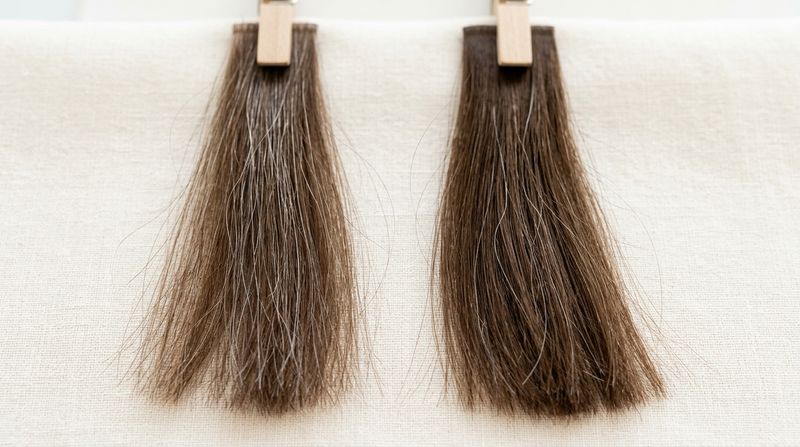
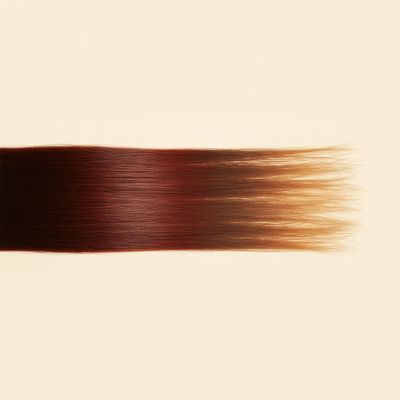
Concept illustration: two colored sections with gray in view. Looking at them doesn’t tell you which one covered and came back; the question of when it started to show does.
How do you tell which one is in front of you?
With three checks that fit in a consultation and need no product:
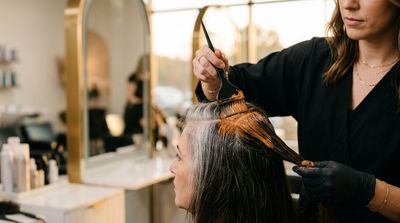
- Look at the whole section, not only the root. Take a section from where it shows most, temples or hairline, and follow it from root to the end of the colored length. White along hair that already had color is not regrowth.
- Ask when it started. “Was it visible when you left, or did it show up afterwards?” The answer separates the two cases before you change the formula.
- Compare against a starting photo. A photo of the temples on the day of the service, with the same light and at the same distance as the one at the follow-up, saves you arguing from memory: in different light, two photos can mislead. For how to assess gray percentage before formulating, see the gray coverage guide.
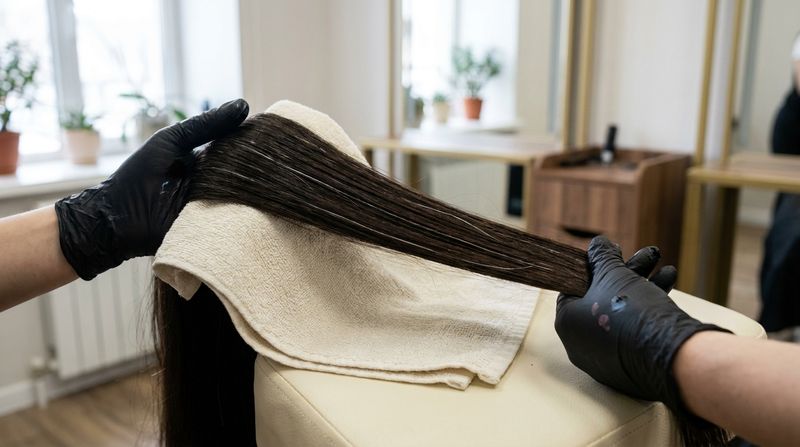
Look at the whole section, root to end, before deciding.
What does a product sheet say about covered gray?
One example: in Spain, Wella lists Color Touch Plus at up to 70% gray coverage, and that “up to” is what the brand advertises for that range, not what every head or every shade will cover. Each brand, and sometimes each country, sets its own limit: check your manual. The 28 washes on Spain’s Color Touch Plus sheet sit in another sentence, the one about color (in our translation from the Spanish: “vibrant color results fade beautifully over 28 washes”), and the sheet says nothing about how long covered gray lasts.
That difference matters in the consultation. The coverage figure is about covering gray, not about how long it stays covered, and the washes for the color can’t be read as the lifespan of covered gray. If someone asks how long it will last, don’t give them a figure the sheet doesn’t give. Tell them you won’t promise a timeframe you can’t guarantee, and that at the next visit you will check how it held up, with today’s photo in front of you.
For color fading in general (not gray coverage), with the figures some sheets give, see how long hair color lasts.
Why does covered gray show again? What we can’t say yet
Spain’s Color Touch Plus sheet doesn’t explain why covered gray shows again, and we won’t invent the cause here. The type of color, the developer, the shade chosen, the washes, the sun: any of them sounds reasonable, and you can’t take any of them as the cause for this client until you’ve checked it. Use them as questions for the consultation, not as a closed answer:
- What type of color was used, and did the root and the lengths get the same? If not, what did the section where it shows again receive?
- What mix and what developer were used, how many minutes did it process, and what does the manual for that line say for that gray percentage?
- Was gray percentage assessed separately for the temples and the rest of the head, or as one number for the whole head?
- How does the chosen shade compare with the client’s natural color?
- Have they had any other chemical service since?
- What has changed in their routine since the service: wash frequency, products, sun?
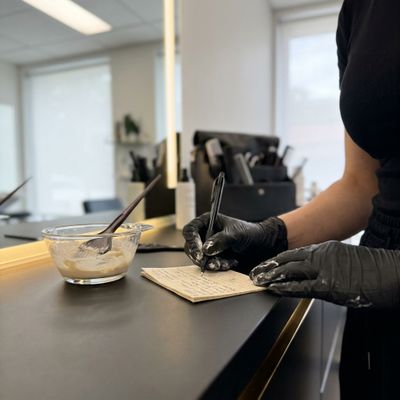
Write the answers down next to the date. When that person comes back with the same complaint, you will have something to compare against instead of going from memory. For what else to keep on the client record for a coverage service, see why gray coverage changes every visit.
What to log so the next visit doesn’t start from zero
- What was applied and where: line and type of color, shade, developer and minutes, and whether root and lengths got the same.
- Which of the two cases it was, in the person’s words: “it looked see-through” or “it covered and came back.”
- Where it shows: temples, hairline or crown, and whether it is along the section or only at the root.
- Date and photo of the service and of the follow-up, in the same light.
- What was applied versus the manual: whether the mix, the developer and the minutes follow what the manual for that line says for that gray percentage.
Compare two client records for the same case:
- Poor record: “Gray: showing again at the temples, client asks for a touch-up.”
- Useful record: “Service, with its date: line, type of color, shade, developer and minutes, and whether root and lengths got the same. Gray read by zone, temples and the rest separately. When they left, the gray was covered. Follow-up, with its date: it shows again along the colored section, at temples and hairline, not only at the new root. What the person says about their routine since then. Photos of both days in the same light. To do: compare what was applied with what the manual for that line says for this gray percentage.”
The second takes more work, and in return the next visit starts from what happened and not from what is remembered.
In the Blendsor app, the “Cover resistant grays” shortcut includes the question that separates the two cases: “What’s the gray doing?” Among its answers, “Looks see-through, won’t cover” and “Covers, but fades in a few weeks” (there, “fades” means the gray showing again, not a wash count) are listed separately, and whatever you pick goes to the advisor along with your request.
Mistakes to avoid with gray that comes back
- Treating them as one. Calling both “stubborn grays” and changing the formula without knowing which one it is.
- Looking only at the root. The new root shows the gray that is there, but what tells you about the case is the length that already had color.
- Promising a lifespan the sheet doesn’t give. “It lasts 28 washes” takes the 28 washes that Spain’s Color Touch Plus sheet gives for color and pins them on the gray.
- Taking a cause as certain without checking it. If the client record notes a cause nobody checked, the next visit starts from it as if it were fact.
Frequently asked questions
How long is “a few weeks”?
It’s how the client describes it when they come back, not a measurement, and that is why the time is logged case by case, with a date and a photo.
Are the washes a product sheet gives how long the coverage lasts?
They can’t be read that way. Spain’s Color Touch Plus sheet gives its 28 washes in the sentence about color, not the one about gray, and doesn’t say how long covered gray lasts.
If gray covers and then comes back, does that mean the product wasn’t good?
You can’t conclude that from the sheet alone: Spain’s Color Touch Plus sheet, for example, doesn’t explain why covered gray shows again. What you can do is confirm what type of color was used, check what the manual for the line you used says for that gray percentage, and log the result.
Can both cases show up on the same head?
Yes, it can happen. That is why it pays to look at each zone separately (temples, hairline, crown) before deciding and log what you see in each: that way you avoid putting a single label on the whole head.
In short
- Two cases: gray that looks see-through shows from day one; gray that covers and comes back reappears along the colored section a few weeks later.
- The sheet gives coverage, not how long covered gray lasts: in Spain, Wella lists Color Touch Plus at up to 70% gray coverage, and the 28 washes on that sheet sit in the sentence about color.
- Unchecked, a cause is a question: the type of color, developer, shade, washes or sun go to the consultation as questions, and the answers are logged with a date and a photo.
- Before changing the formula: gray that doesn’t cover and gray that covers and comes back need different answers, so separate them first.
Formulate gray coverage with Blendsor
Want the coverage formula to start from what the gray is doing on each person?
Which do you see more often behind the chair: gray that won’t cover, or gray that covers and then shows again?
Manufacturer sources
Manufacturer documents consulted for this article. A copy of each one is kept, and the passages noted from it are checked against that copy.
Note each one's country: the same line's instructions can differ from one market to another, so follow the directions for the product you use.
Why does gray cover and then show again a few weeks later?
In the app, we ask you a question like this one, but about your own client.
Up for this week’s case? →Related articles
Practice with our colorimetry tools
Calculators, neutralization wheel, AI consultation...
The Blendsor newsletter
Color techniques and trends for professionals. No spam.
You know the theory. What about today's case?
Send a photo to the Blendsor advisor and get an answer grounded in colour theory: toner, developer and timing, with the brands on your shelf.
Ask about your caseWritten by the Blendsor team
Professional hair colorimetry experts with experience in AI-assisted formulation. We combine color science, salon practice and technology to help colorists formulate with precision.