5 Grey Hair Coverage Levels Explained
Discover the 5 grey hair coverage levels (from 0% to 100%) and learn how to choose the right one based on each client's style and expectations.
Blendsor
Blendsor Team
Do you still think covering grey hair always means 100%? That approach is becoming outdated.
If you work with clients over 40, you’ve probably noticed a shift. More and more women want natural results, low maintenance, and services that respect their transition to grey hair. Not everyone wants to hide every single grey.
Today we’ll explore the 5 grey hair coverage levels every colorist should master. From full coverage to the most subtle grey blending. Because choosing the right level isn’t about technique: it’s about listening to your client.
Quick summary: There are 5 grey hair coverage levels: 100% (full), 75% (high), 50% (grey blending), 25% (soft blending) and 0% (natural transition). According to the Professional Beauty Association, demand for partial coverage services has grown 40% in three years. The right level depends on grey percentage, maintenance frequency, and the client’s relationship with her grey.
What are grey hair coverage levels and which ones exist?
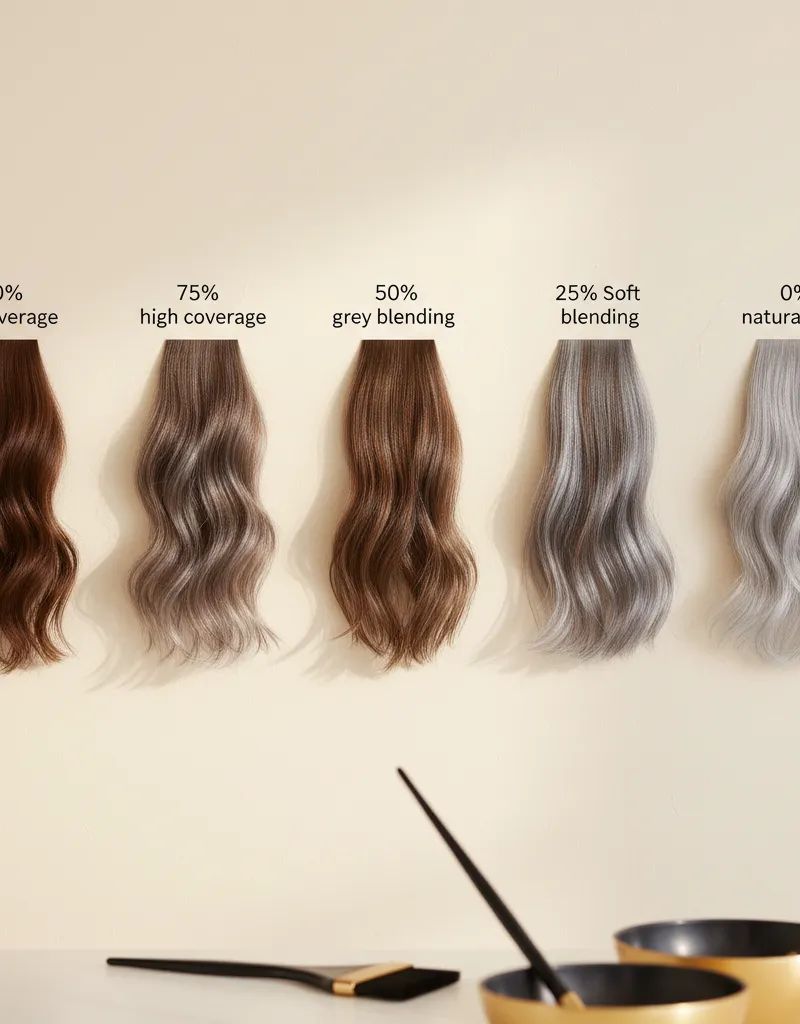
Grey coverage levels define what percentage of visible grey hair will be covered after the service. The 5 levels are:
- Full coverage (100%): Eliminates all visible greys. Touch-up every 3-4 weeks.
- High coverage (75%): Hides most greys but leaves some for a natural look. Touch-up every 4-5 weeks.
- Grey blending (50%): Harmonious mix between color and natural grey. Touch-up every 6-8 weeks.
- Soft blending (25%): Keeps most greys visible, softens contrast. Touch-up every 8-12 weeks.
- No coverage (0%): Doesn’t cover greys; focuses on toning and caring for grey hair. Touch-up every 6-8 weeks (toning only).
According to the Professional Beauty Association, demand for grey blending and partial coverage services has grown 40% in the last three years. Clients no longer want to choose between “all or nothing.”
To understand how colorimetry applies to grey hair, check out our complete colorimetry basics guide.
Why Choosing the Right Level Matters
Choosing the right coverage level affects:
- Natural-looking results: More coverage isn’t always better
- Maintenance frequency: Higher coverage means more touch-ups
- Cumulative damage: Fewer chemicals means healthier hair
- Client satisfaction: Alignment with their expectations
The most common mistake is assuming all clients want full coverage. The reality is that many would prefer a more subtle service if they knew it existed.
Level 1: Full Coverage (100%)
What It Is
Full coverage eliminates 100% of visible grey hair. The hair is uniformly colored, with no trace of natural grey.
Who It’s Ideal For
- Clients who want to completely hide grey hair
- Professionals with strict dress codes
- Those who prefer a more “polished” and uniform look
- Clients with less than 30% grey (maintenance is more manageable)
Basic Technique
To achieve full coverage, you need:
| Factor | Requirement |
|---|---|
| Pre-pigmentation | Mandatory with +50% grey |
| Natural base | 50-60% of the formula |
| Developer | 20 vol (never more) |
| Processing time | 45-50 minutes minimum |
The key is pre-pigmentation. Without it, resistant greys won’t retain color. Check our complete grey coverage guide for the detailed technique.
Maintenance
- Frequency: Every 3-4 weeks
- Commitment: High (roots are very visible)
- Cumulative cost: The highest of all levels
Pro tip: If your client has more than 70% grey and wants full coverage, have an honest conversation about the maintenance commitment before starting.
Level 2: High Coverage (75%)
What It Is
High coverage hides most grey hair but allows some to remain visible. The result is more natural than full coverage because it maintains some tonal variation.
Who It’s Ideal For
- Clients who want “less grey” but not zero
- Those seeking a more natural look
- Gradual transition to less coverage
- Clients with 40-60% grey
Basic Technique
| Factor | Requirement |
|---|---|
| Pre-pigmentation | Recommended (not mandatory) |
| Natural base | 40-50% of the formula |
| Developer | 20 vol |
| Processing time | 40-45 minutes |
The main technical difference: you use less natural base and can skip pre-pigmentation on non-resistant greys.
The Secret to 75%
To achieve exactly 75% coverage:
- Apply to concentrated grey areas: Only in zones with higher grey density
- Leave free zones: Small sections without product
- Emulsify selectively: Don’t bring color to all greys during emulsification
The result is natural grey streaks among the color, adding dimension.
Maintenance
- Frequency: Every 4-5 weeks
- Commitment: Medium-high
- Advantage: Roots are less noticeable than with full coverage
Level 3: Medium Coverage (50%) - Grey Blending
What It Is
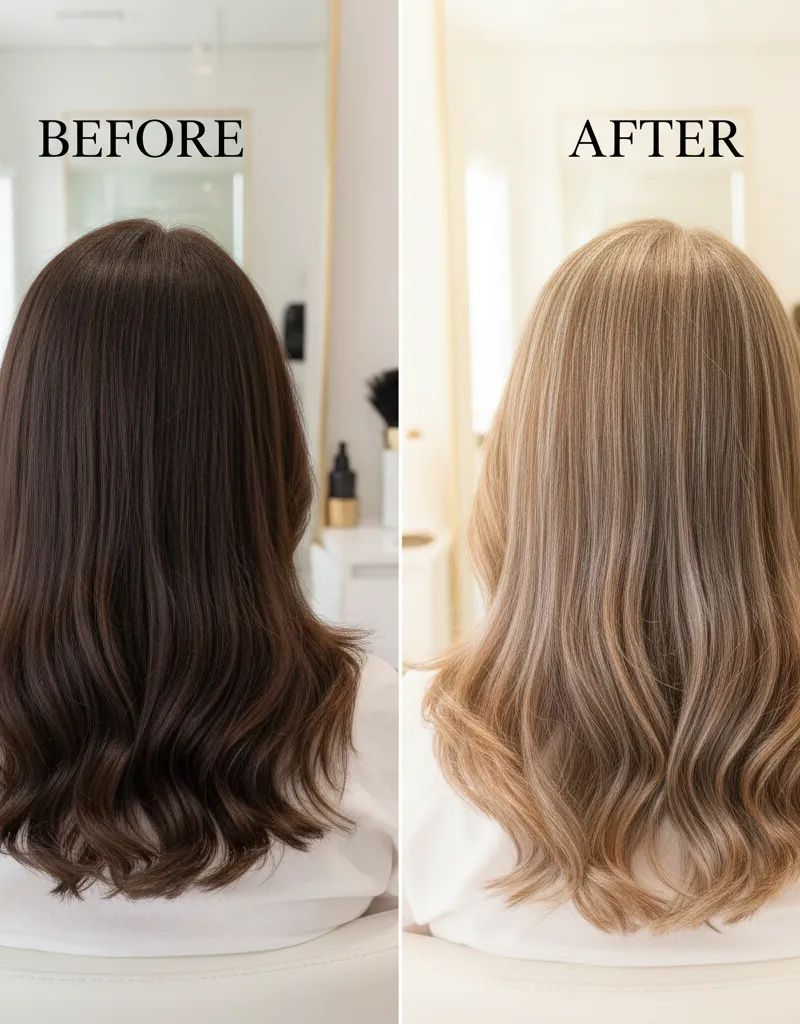
Grey blending is the star technique of recent years. It covers approximately half of the grey hair, creating a harmonious mix between color and natural grey.
Who It’s Ideal For
- Clients transitioning to their natural grey
- Those who want low maintenance
- Modern, current styles
- Clients with 50%+ grey who don’t want to fight against it
Basic Technique
| Factor | Requirement |
|---|---|
| Pre-pigmentation | Not necessary |
| Natural base | 30-40% of the formula |
| Developer | 10-20 vol |
| Processing time | 30-35 minutes |
Grey blending requires a mindset shift: you’re not “covering” greys, you’re creating harmony between grey and color.
Grey Blending Techniques
Option 1: Lowlights
Apply color only to selected strands, leaving greys visible between them.
Option 2: Tone-on-tone
Use a semi-permanent color 1-2 levels lighter than natural. It partially covers and fades naturally.
Option 3: Pigmented gloss
A hair gloss with slight pigment softens contrast without fully covering.
Maintenance
- Frequency: Every 6-8 weeks
- Commitment: Low
- Advantage: Regrowth blends naturally
Pro tip: Grey blending works best when the base color harmonizes with the grey tone. If the grey is warm, use golden tones. If it’s cool, use ash tones.
Level 4: Low Coverage (25%) - Soft Blending
What It Is
Low coverage keeps most greys visible, adding only touches of color to soften the contrast with still-pigmented areas.
Who It’s Ideal For
- Clients embracing their grey
- Advanced transition to natural hair
- Those who want minimal intervention
- Clients with 70%+ grey
Basic Technique
| Factor | Requirement |
|---|---|
| Pre-pigmentation | Never |
| Product | Toner or gloss |
| Developer | 10 vol or no developer |
| Processing time | 15-20 minutes |
Here you’re not covering greys: you’re balancing the remaining hair with the dominant grey.
Soft Blending Techniques
Option 1: Tone the pigmented hair
Instead of coloring greys, tone pigmented areas toward shades that harmonize with the grey.
Option 2: Reverse highlights
Lighten strands of pigmented hair so they approach the grey tone.
Option 3: Silver highlights
Add silver highlights that unify the overall look.
Maintenance
- Frequency: Every 8-12 weeks
- Commitment: Very low
- Advantage: Almost invisible transition
Level 5: No Coverage (0%) - Natural Transition
What It Is
Natural transition doesn’t cover any grey. The service focuses on caring for the hair and, if needed, improving the tone of existing grey.
Who It’s Ideal For
- Clients who have decided to stop coloring
- Those who want brilliant, healthy grey
- Final transition from any other level
- Clients who value authenticity
The “No Coverage” Service
No coverage doesn’t mean no service. You can offer:
| Service | Benefit |
|---|---|
| Silver toning | Removes yellows from grey |
| Shine treatment | Luminous grey, not dull |
| Transition cut | Gradually eliminate previous color |
| Deep care | Hydration for grey hair (drier) |
The Silver Toning Technique
Grey hair can become yellowish due to:
- Sun exposure
- Pollution
- Silicone products
- Hard water
A violet toning every 4-6 weeks keeps grey cool and shiny. Use products specific for silver hair or a diluted violet gloss.
Maintenance
- Frequency: Every 6-8 weeks (toning only)
- Commitment: Minimal
- Advantage: Total freedom, healthy hair
Pro tip: The “natural transition” service can be premium. Clients pay for your expertise in achieving beautiful grey, not for liters of dye.
How do you choose the right grey hair coverage level?
The right level depends on four factors: current grey percentage, how often the client can visit the salon, her attitude toward ageing, and long-term budget. Clients with over 70% grey typically get better results at levels 3-5 than with full coverage. Use the grey coverage calculator to estimate results before the service.
Key Questions
Before deciding the level, you need information:
- What do you want to achieve? (Don’t assume it’s full coverage)
- How often can you come to the salon? (Maintenance realism)
- How do you feel about your greys? (Attitude toward aging)
- Have you considered lower coverage options? (Open possibilities)
The Decision Matrix
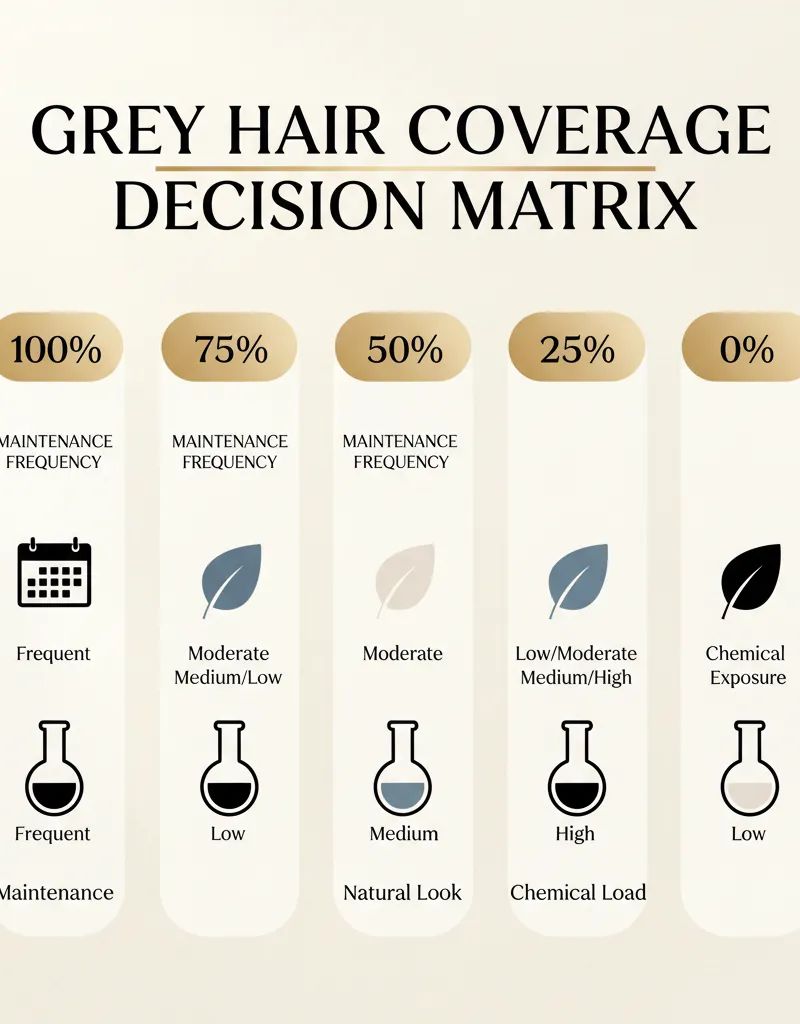
| If the client… | Suggest level |
|---|---|
| Wants zero visible greys | 1 (100%) |
| Wants less grey but natural | 2 (75%) |
| Accepts her greys but wants to soften | 3 (50%) |
| Is in active transition | 4 (25%) |
| Wants to embrace her grey | 5 (0%) |
Additional Factors
- Current grey percentage: With +70% grey, levels 3-5 usually give better results
- Hair texture: Fine hair with full coverage looks “flat”
- Lifestyle: Active clients prefer low maintenance
- Budget: Full coverage is the most expensive long-term option
Why do intermediate grey coverage levels matter in modern colorimetry?
Intermediate levels matter because the Pantone Color Institute has identified silver and grey tones as a sustained trend, not a passing one. Clients no longer see grey as something to obligatorily hide, and salons that only offer “all or nothing” are missing a real differentiation and loyalty opportunity.
The industry is changing. The Pantone Color Institute has highlighted silver and grey tones as a sustained trend, not a passing one. Clients no longer see greys as something to obligatorily hide.
As a colorist, mastering all 5 levels allows you to:
- Offer options: Not all clients know they exist
- Differentiate yourself: Many salons only offer “all or nothing”
- Increase satisfaction: The right level = happy client
- Reduce damage: Less chemistry, healthier hair
- Build loyalty: Customized services create long relationships
Frequently Asked Questions
Can I change coverage levels between appointments?
Yes, but with gradual transitions. Going from 100% to 0% at once is technically possible but visually abrupt. The recommendation is to lower one level every 2-3 appointments for a natural transition.
Does grey blending work with any grey color?
Grey blending works best when there’s controlled contrast. If greys are yellowish, first tone toward cool grey. If pigmented hair is very dark (level 2-3), consider lightening slightly to reduce contrast with grey.
What level do you recommend for clients just starting to get greys?
For clients with less than 30% grey, any level works. The question is: do they prefer to start with high coverage or establish from the beginning a lower maintenance routine? Many clients appreciate starting with grey blending (level 3) because maintenance is more manageable long-term.
How do I price different coverage levels?
Pricing should be based on time, product, and expertise, not just “more coverage = more expensive.” A technical grey blending may require more skill than full coverage. Consider creating specific packages for each level with prices that reflect service value.
Do resistant greys change the level choice?
Resistant (vitreous) greys make any coverage level difficult. However, they’re less problematic in levels 3-5 because you’re not seeking perfect coverage. For levels 1-2 with resistant greys, pre-pigmentation remains mandatory.
In Summary
The 5 grey coverage levels give you a vocabulary to talk with your clients:
- Level 1 (100%): Full coverage, high maintenance
- Level 2 (75%): Majority covered, natural look
- Level 3 (50%): Grey blending, perfect balance
- Level 4 (25%): Soft blending, advanced transition
- Level 5 (0%): No coverage, beautiful grey
The best coverage isn’t the maximum. It’s what your client actually wants and can maintain.
Want to calculate the perfect formula for each level? Try Blendsor free. The AI analyzes grey percentage and suggests formulations adapted to the coverage level your client prefers.
Related articles
Practice with our free tools
Calculators, neutralization wheel, AI consultation...
The Monday Briefing
Color techniques and trends for professionals. No spam.
Apply this theory with precision
Blendsor analyzes 70+ variables and generates exact formulas based on real colorimetry. Try our free color consultation or download the app.
Download freeWritten by the Blendsor team
Professional hair colorimetry experts with experience in AI-assisted formulation. We combine color science, salon practice and technology to help colorists formulate with precision.